Adhyaya 15
Paugaṇḍa Cowherding, Tālavana, the Slaying of Dhenukāsura, and Revival from Poisoned Yamunā Water
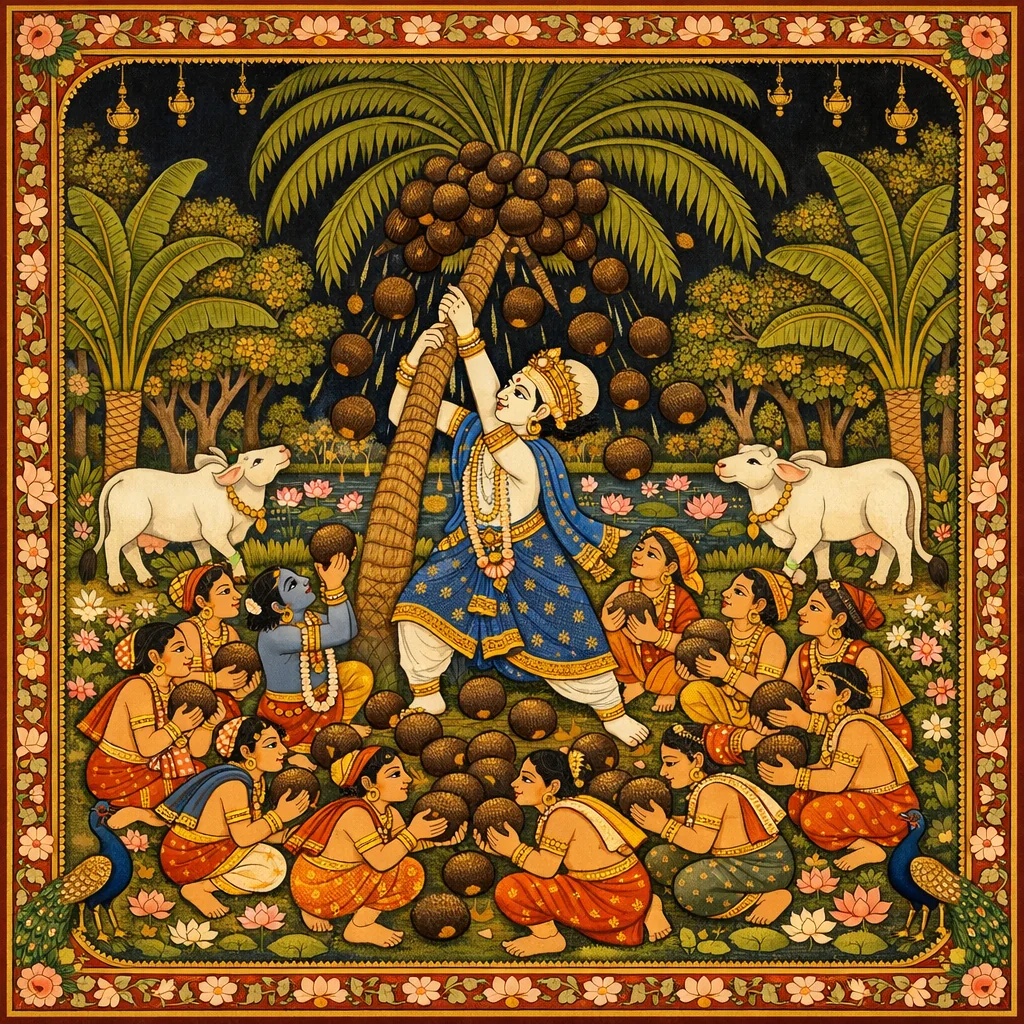
As Kṛṣṇa and Balarāma enter paugaṇḍa, the elders of Vraja authorize Them to tend cows, marking a new stage of Vraja-līlā. The chapter opens with a sanctified Vṛndāvana ecology: trees bow, bees and birds ‘praise’ the Lord, and Kṛṣṇa’s flute-led herding becomes a liturgy of nature responding to Īśa. Kṛṣṇa playfully imitates birds and animals, while the cowherd boys serve Him and Balarāma in intimate friendship (sakhya-rasa), revealing how Bhagavān conceals aiśvarya under yogamāyā. The narrative then pivots to a heroic protection motif: at the boys’ request for fragrant tāla fruits, the brothers enter Tālavana; Balarāma shakes the palms, Dhenukāsura attacks, and is slain, after which the ass-demons are dispatched and the forest becomes accessible and nourishing again—poṣaṇa expressed as ecological and social restoration. Returning to Vraja, the gopīs’ darśana and Yaśodā–Rohiṇī’s motherly care complete the daily cycle. Finally, without Balarāma, Kṛṣṇa revives cows and boys who collapse from poisoned Yamunā water by His nectarean glance, setting up the next movement toward confronting the source of the poison (the Kāliya episode sequence).
Shlokas
Verse 1
श्रीशुक उवाच ततश्च पौगण्डवय:श्रीतौ व्रजे बभूवतुस्तौ पशुपालसम्मतौ । गाश्चारयन्तौ सखिभि: समं पदै- र्वृन्दावनं पुण्यमतीव चक्रतु: ॥ १ ॥
Śukadeva Gosvāmī said: When Lord Rāma and Lord Kṛṣṇa attained the age of paugaṇḍa [six to ten] while living in Vṛndāvana, the cowherd men allowed Them to take up the task of tending the cows. Engaging thus in the company of Their friends, the two boys rendered the land of Vṛndāvana most auspicious by imprinting upon it the marks of Their lotus feet.
Verse 2
तन्माधवो वेणुमुदीरयन् वृतो गोपैर्गृणद्भि: स्वयशो बलान्वित: । पशून् पुरस्कृत्य पशव्यमाविशद् विहर्तुकाम: कुसुमाकरं वनम् ॥ २ ॥
Thus desiring to enjoy pastimes, Lord Mādhava, sounding His flute, surrounded by cowherd boys who were chanting His glories, and accompanied by Lord Baladeva, kept the cows before Him and entered the Vṛndāvana forest, which was full of flowers and rich with nourishment for the animals.
Verse 3
तन्मञ्जुघोषालिमृगद्विजाकुलं महन्मन:प्रख्यपय:सरस्वता । वातेन जुष्टं शतपत्रगन्धिना निरीक्ष्य रन्तुं भगवान् मनो दधे ॥ ३ ॥
The Supreme Personality of Godhead looked over that forest, which resounded with the charming sounds of bees, animals and birds, and which was enhanced by a lake whose clear water resembled the minds of great souls and by a breeze carrying the fragrance of hundred-petaled lotuses. Seeing all this, Lord Kṛṣṇa decided to enjoy the auspicious atmosphere.
Verse 4
स तत्र तत्रारुणपल्लवश्रिया फलप्रसूनोरुभरेण पादयो: । स्पृशच्छिखान् वीक्ष्य वनस्पतीन् मुदा स्मयन्निवाहाग्रजमादिपूरुष: ॥ ४ ॥
The primeval Lord saw that the stately trees, with their beautiful reddish buds and their heavy burden of fruits and flowers, were bending down to touch His feet with the tips of their branches. Thus He smiled gently and addressed His elder brother.
Verse 5
श्रीभगवानुवाच अहो अमी देववरामरार्चितं पादाम्बुजं ते सुमन:फलार्हणम् । नमन्त्युपादाय शिखाभिरात्मन- स्तमोऽपहत्यै तरुजन्म यत्कृतम् ॥ ५ ॥
The Supreme Personality of Godhead said: O greatest of Lords, just see how these trees are bowing their heads at Your lotus feet, which are worshipable by the immortal demigods. The trees are offering You their fruits and flowers to eradicate the dark ignorance that has caused their birth as trees.
Verse 6
एतेऽलिनस्तव यशोऽखिललोकतीर्थं गायन्त आदिपुरुषानुपथं भजन्ते । प्रायो अमी मुनिगणा भवदीयमुख्या गूढं वनेऽपि न जहत्यनघात्मदैवम् ॥ ६ ॥
O Original Personality, these bees must all be great sages and most elevated devotees of Yours, for they are worshiping You by following You along the path and chanting Your glories, which are themselves a holy place for the entire world. Though You have disguised Yourself within this forest, O sinless one, they refuse to abandon You, their worshipable Lord.
Verse 7
नृत्यन्त्यमी शिखिन ईड्य मुदा हरिण्य: कुर्वन्ति गोप्य इव ते प्रियमीक्षणेन । सूक्तैश्च कोकिलगणा गृहमागताय धन्या वनौकस इयान् हि सतां निसर्ग: ॥ ७ ॥
O worshipable one, these peacocks are dancing before You out of joy, these doe are pleasing You with affectionate glances, just as the gopīs do, and these cuckoos are honoring You with Vedic prayers. All these residents of the forest are most fortunate, and their behavior toward You certainly befits great souls receiving another great soul at home.
Verse 8
धन्येयमद्य धरणी तृणवीरुधस्त्वत्- पादस्पृशो द्रुमलता: करजाभिमृष्टा: । नद्योऽद्रय: खगमृगा: सदयावलोकै- र्गोप्योऽन्तरेण भुजयोरपि यत्स्पृहा श्री: ॥ ८ ॥
This earth has now become most fortunate, because You have touched her grass and bushes with Your feet and her trees and creepers with Your fingernails, and because You have graced her rivers, mountains, birds and animals with Your merciful glances. But above all, You have embraced the young cowherd women between Your two arms — a favor hankered after by the goddess of fortune herself.
Verse 9
श्रीशुक उवाच एवं वृन्दावनं श्रीमत् कृष्ण: प्रीतमना: पशून् । रेमे सञ्चारयन्नद्रे: सरिद्रोध:सु सानुग: ॥ ९ ॥
Śukadeva Gosvāmī said: Thus expressing His satisfaction with the beautiful forest of Vṛndāvana and its inhabitants, Lord Kṛṣṇa enjoyed tending the cows and other animals with His friends on the banks of the river Yamunā below Govardhana Hill.
Verse 10
क्वचिद् गायति गायत्सु मदान्धालिष्वनुव्रतै: । उपगीयमानचरित: पथि सङ्कर्षणान्वित: ॥ १० ॥ अनुजल्पति जल्पन्तं कलवाक्यै: शुकं क्वचित् । क्वचित्सवल्गु कूजन्तमनुकूजति कोकिलम् । क्वचिच्च कालहंसानामनुकूजति कूजितम् । अभिनृत्यति नृत्यन्तं बर्हिणं हासयन् क्वचित् ॥ ११ ॥ मेघगम्भीरया वाचा नामभिर्दूरगान् पशून् । क्वचिदाह्वयति प्रीत्या गोगोपालमनोज्ञया ॥ १२ ॥
Sometimes the honeybees in Vṛndāvana became so mad with ecstasy that they closed their eyes and began to sing. Lord Kṛṣṇa, moving along the forest path with His cowherd boyfriends and Baladeva, would then respond to the bees by imitating their singing while His friends sang about His pastimes. Sometimes Lord Kṛṣṇa would imitate the chattering of a parrot, sometimes, with a sweet voice, the call of a cuckoo, and sometimes the cooing of swans. Sometimes He vigorously imitated the dancing of a peacock, making His cowherd boyfriends laugh. Sometimes, with a voice as deep as the rumbling of clouds, He would call out with great affection the names of the animals who had wandered far from the herd, thus enchanting the cows and the cowherd boys.
Verse 11
क्वचिद् गायति गायत्सु मदान्धालिष्वनुव्रतै: । उपगीयमानचरित: पथि सङ्कर्षणान्वित: ॥ १० ॥ अनुजल्पति जल्पन्तं कलवाक्यै: शुकं क्वचित् । क्वचित्सवल्गु कूजन्तमनुकूजति कोकिलम् । क्वचिच्च कालहंसानामनुकूजति कूजितम् । अभिनृत्यति नृत्यन्तं बर्हिणं हासयन् क्वचित् ॥ ११ ॥ मेघगम्भीरया वाचा नामभिर्दूरगान् पशून् । क्वचिदाह्वयति प्रीत्या गोगोपालमनोज्ञया ॥ १२ ॥
Sometimes the honeybees in Vṛndāvana became so mad with ecstasy that they closed their eyes and began to sing. Lord Kṛṣṇa, moving along the forest path with His cowherd boyfriends and Baladeva, would then respond to the bees by imitating their singing while His friends sang about His pastimes. Sometimes Lord Kṛṣṇa would imitate the chattering of a parrot, sometimes, with a sweet voice, the call of a cuckoo, and sometimes the cooing of swans. Sometimes He vigorously imitated the dancing of a peacock, making His cowherd boyfriends laugh. Sometimes, with a voice as deep as the rumbling of clouds, He would call out with great affection the names of the animals who had wandered far from the herd, thus enchanting the cows and the cowherd boys.
Verse 12
क्वचिद् गायति गायत्सु मदान्धालिष्वनुव्रतै: । उपगीयमानचरित: पथि सङ्कर्षणान्वित: ॥ १० ॥ अनुजल्पति जल्पन्तं कलवाक्यै: शुकं क्वचित् । क्वचित्सवल्गु कूजन्तमनुकूजति कोकिलम् । क्वचिच्च कालहंसानामनुकूजति कूजितम् । अभिनृत्यति नृत्यन्तं बर्हिणं हासयन् क्वचित् ॥ ११ ॥ मेघगम्भीरया वाचा नामभिर्दूरगान् पशून् । क्वचिदाह्वयति प्रीत्या गोगोपालमनोज्ञया ॥ १२ ॥
Sometimes the honeybees in Vṛndāvana became so mad with ecstasy that they closed their eyes and began to sing. Lord Kṛṣṇa, moving along the forest path with His cowherd boyfriends and Baladeva, would then respond to the bees by imitating their singing while His friends sang about His pastimes. Sometimes Lord Kṛṣṇa would imitate the chattering of a parrot, sometimes, with a sweet voice, the call of a cuckoo, and sometimes the cooing of swans. Sometimes He vigorously imitated the dancing of a peacock, making His cowherd boyfriends laugh. Sometimes, with a voice as deep as the rumbling of clouds, He would call out with great affection the names of the animals who had wandered far from the herd, thus enchanting the cows and the cowherd boys.
Verse 13
चकोरक्रौञ्चचक्राह्वभारद्वाजांश्च बर्हिण: । अनुरौति स्म सत्त्वानां भीतवद् व्याघ्रसिंहयो: ॥ १३ ॥
Sometimes He would cry out in imitation of birds such as the cakoras, krauñcas, cakrāhvas, bhāradvājas and peacocks, and sometimes He would run away with the smaller animals in mock fear of lions and tigers.
Verse 14
क्वचित् क्रीडापरिश्रान्तं गोपोत्सङ्गोपबर्हणम् । स्वयं विश्रमयत्यार्यं पादसंवाहनादिभि: ॥ १४ ॥
When His elder brother, fatigued from playing, would lie down with His head upon the lap of a cowherd boy, Lord Kṛṣṇa would help Him relax by personally massaging His feet and offering other services.
Verse 15
नृत्यतो गायत: क्वापि वल्गतो युध्यतो मिथ: । गृहीतहस्तौ गोपालान् हसन्तौ प्रशशंसतु: ॥ १५ ॥
Sometimes, as the cowherd boys danced, sang, moved about and playfully fought with each other, Kṛṣṇa and Balarāma, standing nearby hand in hand, would glorify Their friends’ activities and laugh.
Verse 16
क्वचित् पल्लवतल्पेषु नियुद्धश्रमकर्शित: । वृक्षमूलाश्रय: शेते गोपोत्सङ्गोपबर्हण: ॥ १६ ॥
Sometimes Lord Kṛṣṇa grew tired from fighting and lay down at the base of a tree, resting upon a bed made of soft twigs and buds and using the lap of a cowherd friend as His pillow.
Verse 17
पादसंवाहनं चक्रु: केचित्तस्य महात्मन: । अपरे हतपाप्मानो व्यजनै: समवीजयन् ॥ १७ ॥
Some of the cowherd boys, who were all great souls, would then massage His lotus feet, and others, qualified by being free of all sin, would expertly fan the Supreme Lord.
Verse 18
अन्ये तदनुरूपाणि मनोज्ञानि महात्मन: । गायन्ति स्म महाराज स्नेहक्लिन्नधिय: शनै: ॥ १८ ॥
My dear King, other boys would sing enchanting songs appropriate to the occasion, and their hearts would melt out of love for the Lord.
Verse 19
एवं निगूढात्मगति: स्वमायया गोपात्मजत्वं चरितैर्विडम्बयन् । रेमे रमालालितपादपल्लवो ग्राम्यै: समं ग्राम्यवदीशचेष्टित: ॥ १९ ॥
In this way the Supreme Lord, whose soft lotus feet are personally attended by the goddess of fortune, concealed His transcendental opulences by His internal potency and acted like the son of a cowherd. Yet even while enjoying like a village boy in the company of other village residents, He often exhibited feats only God could perform.
Verse 20
श्रीदामा नाम गोपालो रामकेशवयो: सखा । सुबलस्तोककृष्णाद्या गोपा: प्रेम्णेदमब्रुवन् ॥ २० ॥
Once, some of the cowherd boys — Śrīdāmā, the very close friend of Rāma and Kṛṣṇa, along with Subala, Stokakṛṣṇa and others — lovingly spoke the following words.
Verse 21
राम राम महाबाहो कृष्ण दुष्टनिबर्हण । इतोऽविदूरे सुमहद् वनं तालालिसङ्कुलम् ॥ २१ ॥
[The cowherd boys said:] O Rāma, Rāma, mighty-armed one! O Kṛṣṇa, destroyer of the miscreants! Not far from here is a very great forest filled with rows of palm trees.
Verse 22
फलानि तत्र भूरीणि पतन्ति पतितानि च । सन्ति किन्त्ववरुद्धानि धेनुकेन दुरात्मना ॥ २२ ॥
In that Tālavana forest many fruits are falling from the trees, and many are already lying on the ground. But all the fruits are being guarded by the evil Dhenuka.
Verse 23
सोऽतिवीर्योऽसुरो राम हे कृष्ण खररूपधृक् । आत्मतुल्यबलैरन्यैर्ज्ञातिभिर्बहुभिर्वृत: ॥ २३ ॥
O Rāma, O Kṛṣṇa! Dhenuka is a most powerful demon and has assumed the form of an ass. He is surrounded by many friends who have assumed a similar shape and who are just as powerful as he.
Verse 24
तस्मात् कृतनराहाराद् भीतैर्नृभिरमित्रहन् । न सेव्यते पशुगणै: पक्षिसङ्घैर्विवर्जितम् ॥ २४ ॥
The demon Dhenuka has eaten men alive, and therefore all people and animals are terrified of going to the Tāla forest. O killer of the enemy, even the birds are afraid to fly there.
Verse 25
विद्यन्तेऽभुक्तपूर्वाणि फलानि सुरभीणि च । एष वै सुरभिर्गन्धो विषूचीनोऽवगृह्यते ॥ २५ ॥
In the Tāla forest are sweet-smelling fruits no one has ever tasted. Indeed, even now we can smell the fragrance of the tāla fruits spreading all about.
Verse 26
प्रयच्छ तानि न: कृष्ण गन्धलोभितचेतसाम् । वाञ्छास्ति महती राम गम्यतां यदि रोचते ॥ २६ ॥
O Kṛṣṇa! Please get those fruits for us. Our minds are so attracted by their aroma! Dear Balarāma, our desire to have those fruits is very great. If You think it’s a good idea, let’s go to that Tāla forest.
Verse 27
एवं सुहृद्वच: श्रुत्वा सुहृत्प्रियचिकीर्षया । प्रहस्य जग्मतुर्गोपैर्वृतौ तालवनं प्रभू ॥ २७ ॥
Hearing the words of Their dear companions, Kṛṣṇa and Balarāma laughed and, desiring to please them, set off for the Tālavana surrounded by Their cowherd boyfriends.
Verse 28
बल: प्रविश्य बाहुभ्यां तालान् सम्परिकम्पयन् । फलानि पातयामास मतङ्गज इवौजसा ॥ २८ ॥
Lord Balarāma entered the Tāla forest first. Then with His two arms He began forcefully shaking the trees with the power of a maddened elephant, causing the tāla fruits to fall to the ground.
Verse 29
फलानां पततां शब्दं निशम्यासुररासभ: । अभ्यधावत् क्षितितलं सनगं परिकम्पयन् ॥ २९ ॥
Hearing the sound of the falling fruits, the ass demon Dhenuka ran forward to attack, making the earth and trees tremble.
Verse 30
समेत्य तरसा प्रत्यग् द्वाभ्यां पद्भ्यां बलं बली । निहत्योरसि काशब्दं मुञ्चन् पर्यसरत् खल: ॥ ३० ॥
The powerful demon rushed up to Lord Baladeva and sharply struck the Lord’s chest with the hooves of his hind legs. Then Dhenuka began to run about, braying loudly.
Verse 31
पुनरासाद्य संरब्ध उपक्रोष्टा पराक् स्थित: । चरणावपरौ राजन् बलाय प्राक्षिपद् रुषा ॥ ३१ ॥
Moving again toward Lord Balarāma, O King, the furious ass situated himself with his back toward the Lord. Then, screaming in rage, the demon hurled his two hind legs at Him.
Verse 32
स तं गृहीत्वा प्रपदोर्भ्रामयित्वैकपाणिना । चिक्षेप तृणराजाग्रे भ्रामणत्यक्तजीवितम् ॥ ३२ ॥
Lord Balarāma seized Dhenuka by his hooves, whirled him about with one hand and threw him into the top of a palm tree. The violent wheeling motion killed the demon.
Verse 33
तेनाहतो महातालो वेपमानो बृहच्छिरा: । पार्श्वस्थं कम्पयन् भग्न: स चान्यं सोऽपि चापरम् ॥ ३३ ॥
Lord Balarāma threw the dead body of Dhenukāsura into the tallest palm tree in the forest, and when the dead demon landed in the treetop, the tree began shaking. The great palm tree, causing a tree by its side also to shake, broke under the weight of the demon. The neighboring tree caused yet another tree to shake, and this one struck yet another tree, which also began shaking. In this way many trees in the forest shook and broke.
Verse 34
बलस्य लीलयोत्सृष्टखरदेहहताहता: । तालाश्चकम्पिरे सर्वे महावातेरिता इव ॥ ३४ ॥
Because of Lord Balarāma’s pastime of throwing the body of the ass demon into the top of the tallest palm tree, all the trees began shaking and striking against one another as if blown about by powerful winds.
Verse 35
नैतच्चित्रं भगवति ह्यनन्ते जगदीश्वरे । ओतप्रोतमिदं यस्मिंस्तन्तुष्वङ्ग यथा पट: ॥ ३५ ॥
My dear Parīkṣit, that Lord Balarāma killed Dhenukāsura is not such a wonderful thing, considering that He is the unlimited Personality of Godhead, the controller of the entire universe. Indeed, the entire cosmos rests upon Him just as a woven cloth rests upon its own horizontal and vertical threads.
Verse 36
तत: कृष्णं च रामं च ज्ञातयो धेनुकस्य ये । क्रोष्टारोऽभ्यद्रवन् सर्वे संरब्धा हतबान्धवा: ॥ ३६ ॥
The other ass demons, close friends of Dhenukāsura, were enraged upon seeing his death, and thus they all immediately ran to attack Kṛṣṇa and Balarāma.
Verse 37
तांस्तानापतत: कृष्णो रामश्च नृप लीलया । गृहीतपश्चाच्चरणान् प्राहिणोत्तृणराजसु ॥ ३७ ॥
O King, as the demons attacked, Kṛṣṇa and Balarāma easily seized them one after another by their hind legs and threw them all into the tops of the palm trees.
Verse 38
फलप्रकरसङ्कीर्णं दैत्यदेहैर्गतासुभि: । रराज भू: सतालाग्रैर्घनैरिव नभस्तलम् ॥ ३८ ॥
The earth then appeared beautifully covered with heaps of fruits and with the dead bodies of the demons, which were entangled in the broken tops of the palm trees. Indeed, the earth shone like the sky decorated with clouds.
Verse 39
तयोस्तत् सुमहत् कर्म निशम्य विबुधादय: । मुमुचु: पुष्पवर्षाणि चक्रुर्वाद्यानि तुष्टुवु: ॥ ३९ ॥
Hearing of this magnificent feat of the two brothers, the demigods and other elevated living beings rained down flowers and offered music and prayers in glorification.
Verse 40
अथ तालफलान्यादन्मनुष्या गतसाध्वसा: । तृणं च पशवश्चेरुर्हतधेनुककानने ॥ ४० ॥
People now felt free to return to the forest where Dhenuka had been killed, and without fear they ate the fruits of the palm trees. Also, the cows could now graze freely upon the grass there.
Verse 41
कृष्ण: कमलपत्राक्ष: पुण्यश्रवणकीर्तन: । स्तूयमानोऽनुगैर्गोपै: साग्रजो व्रजमाव्रजत् ॥ ४१ ॥
Then lotus-eyed Lord Śrī Kṛṣṇa, whose glories are most pious to hear and chant, returned home to Vraja with His elder brother, Balarāma. Along the way, the cowherd boys, His faithful followers, chanted His glories.
Verse 42
तं गोरजश्छुरितकुन्तलबद्धबर्ह- वन्यप्रसूनरुचिरेक्षणचारुहासम् । वेणुम्क्वणन्तमनुगैरुपगीतकीर्तिं गोप्यो दिदृक्षितदृशोऽभ्यगमन् समेता: ॥ ४२ ॥
Lord Kṛṣṇa’s hair, powdered with the dust raised by the cows, was decorated with a peacock feather and forest flowers. The Lord glanced charmingly and smiled beautifully, playing upon His flute while His companions chanted His glories. The gopīs, all together, came forward to meet Him, their eyes very eager to see Him.
Verse 43
पीत्वा मुकुन्दमुखसारघमक्षिभृङ्गै- स्तापं जहुर्विरहजं व्रजयोषितोऽह्नि । तत्सत्कृतिं समधिगम्य विवेश गोष्ठं सव्रीडहासविनयं यदपाङ्गमोक्षम् ॥ ४३ ॥
With their beelike eyes, the women of Vṛndāvana drank the honey of the beautiful face of Lord Mukunda, and thus they gave up the distress they had felt during the day because of separation from Him. The young Vṛndāvana ladies cast sidelong glances at the Lord — glances filled with bashfulness, laughter and submission — and Śrī Kṛṣṇa, completely accepting these glances as a proper offering of respect, entered the cowherd village.
Verse 44
तयोर्यशोदारोहिण्यौ पुत्रयो: पुत्रवत्सले । यथाकामं यथाकालं व्यधत्तां परमाशिष: ॥ ४४ ॥
Mother Yaśodā and mother Rohiṇī, acting most affectionately toward their two sons, offered all the best things to Them in response to Their every desire and at the various appropriate times.
Verse 45
गताध्वानश्रमौ तत्र मज्जनोन्मर्दनादिभि: । नीवीं वसित्वा रुचिरां दिव्यस्रग्गन्धमण्डितौ ॥ ४५ ॥
By being bathed and massaged, the two young Lords were relieved of the weariness caused by walking on the country roads. Then They were dressed in attractive robes and decorated with transcendental garlands and fragrances.
Verse 46
जनन्युपहृतं प्राश्य स्वाद्वन्नमुपलालितौ । संविश्य वरशय्यायां सुखं सुषुपतुर्व्रजे ॥ ४६ ॥
After dining sumptuously on the delicious food given Them by Their mothers and being pampered in various ways, the two brothers lay down upon Their excellent beds and happily went to sleep in the village of Vraja.
Verse 47
एवं स भगवान् कृष्णो वृन्दावनचर: क्वचित् । ययौ राममृते राजन् कालिन्दीं सखिभिर्वृत: ॥ ४७ ॥
O King, the Supreme Lord Kṛṣṇa thus wandered about the Vṛndāvana area, performing His pastimes. Once, surrounded by His boyfriends, He went without Balarāma to the Yamunā River.
Verse 48
अथ गावश्च गोपाश्च निदाघातपपीडिता: । दुष्टं जलं पपुस्तस्यास्तृष्णार्ता विषदूषितम् ॥ ४८ ॥
At that time the cows and cowherd boys were feeling acute distress from the glaring summer sun. Afflicted by thirst, they drank the water of the Yamunā River. But it had been contaminated with poison.
Verse 49
विषाम्भस्तदुपस्पृश्य दैवोपहतचेतस: । निपेतुर्व्यसव: सर्वे सलिलान्ते कुरूद्वह ॥ ४९ ॥ वीक्ष्य तान् वै तथाभूतान् कृष्णो योगेश्वरेश्वर: । ईक्षयामृतवर्षिण्या स्वनाथान् समजीवयत् ॥ ५० ॥
As soon as they touched the poisoned water, all the cows and boys lost their consciousness by the divine power of the Lord and fell lifeless at the water’s edge. O hero of the Kurus, seeing them in such a condition, Lord Kṛṣṇa, the master of all masters of mystic potency, felt compassion for these devotees, who had no Lord other than Him. Thus He immediately brought them back to life by showering His nectarean glance upon them.
Verse 50
विषाम्भस्तदुपस्पृश्य दैवोपहतचेतस: । निपेतुर्व्यसव: सर्वे सलिलान्ते कुरूद्वह ॥ ४९ ॥ वीक्ष्य तान् वै तथाभूतान् कृष्णो योगेश्वरेश्वर: । ईक्षयामृतवर्षिण्या स्वनाथान् समजीवयत् ॥ ५० ॥
As soon as they touched the poisoned water, all the cows and boys lost their consciousness by the divine power of the Lord and fell lifeless at the water’s edge. O hero of the Kurus, seeing them in such a condition, Lord Kṛṣṇa, the master of all masters of mystic potency, felt compassion for these devotees, who had no Lord other than Him. Thus He immediately brought them back to life by showering His nectarean glance upon them.
Verse 51
ते सम्प्रतीतस्मृतय: समुत्थाय जलान्तिकात् । आसन् सुविस्मिता: सर्वे वीक्षमाणा: परस्परम् ॥ ५१ ॥
Regaining their full consciousness, the cows and boys stood up out of the water and began to look at one another in great astonishment.
Verse 52
अन्वमंसत तद् राजन् गोविन्दानुग्रहेक्षितम् । पीत्वा विषं परेतस्य पुनरुत्थानमात्मन: ॥ ५२ ॥
O King, the cowherd boys then considered that although they had drunk poison and in fact had died, simply by the merciful glance of Govinda they had regained their lives and stood up by their own strength.
Frequently Asked Questions
Dhenukāsura’s rule makes Tālavana inaccessible, blocking both human movement and the natural bounty (tāla fruits). Balarāma’s slaying of the ass-demon is poṣaṇa: the Lord removes a violent obstruction so Vraja’s community and animals can live and graze without fear. It also signals that divine play includes real protection—bhakti is nurtured in a world made safe by Bhagavān’s intervention.
The chapter highlights Balarāma as the Lord’s elder brother and the embodiment of strength and support (balam). His leading role displays complementary līlā: Kṛṣṇa and Balarāma jointly protect Vraja, while distinct pastimes showcase different facets of divine agency—Balarāma as the powerful remover of obstacles and Kṛṣṇa as the intimate attractor and merciful protector.
The text states He restored them by His nectarean glance (kṛpā-dṛṣṭi). The theological point is that life is sustained by Bhagavān’s will: even when devotees are overwhelmed by a lethal condition, the Lord—“master of all mystic potency”—can reverse deathlike collapse, demonstrating absolute sovereignty coupled with compassion.
Trees, bees, peacocks, deer, cuckoos, and the Yamunā-Govardhana landscape are depicted as responsive worshipers. They symbolize the dhāma principle: Vṛndāvana is not neutral nature but a sacred realm where all beings participate in īśānukathā through sound (buzzing/singing), gesture (bowing/dancing), and offering (fruits/flowers), mirroring how bhakti permeates creation.