Dashati 1
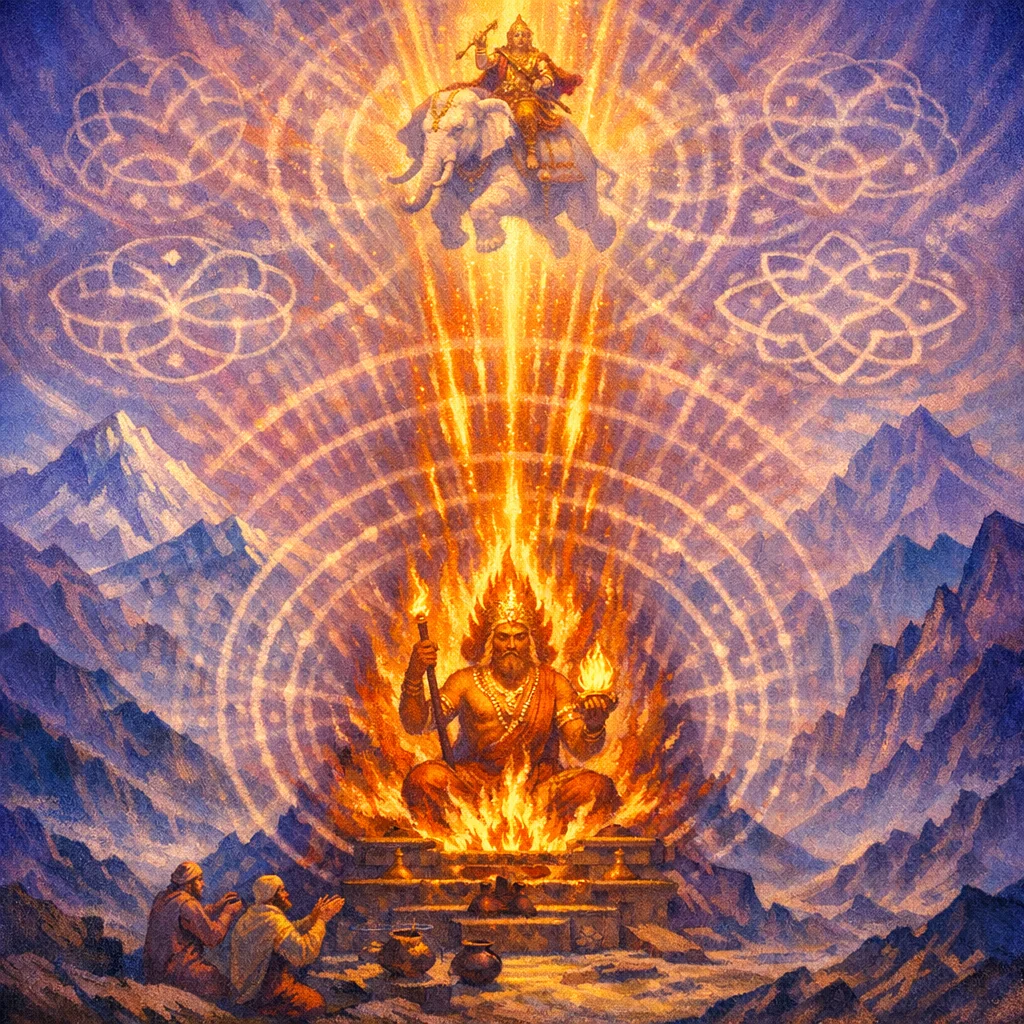
Agni’s manifold presence invoked to establish and empower the sacrifice
Agni
Invocatory and energizing—urgent ‘come-hither’ movement with ritual brightness
R̥ṣi attribution is not provided in the input; these verses are RV-derived in many recensions but dashati-level r̥ṣi identification should be taken from the Anukramaṇī of the relevant Sāmaveda śākhā.
บทสรรเสริญนี้อัญเชิญอัคนีในความเป็นไฟและรูปพิธีกรรมอันหลากหลาย ให้เสด็จเข้าสู่ยัญพิธีเพื่อสถาปนาและเพิ่มพลังแก่การบูชา ทำให้เครื่องบูชาสำเร็จผล อัคนีคือไฟดึกดำบรรพ์ที่ถูกจุดขึ้นใหม่เสมอด้วยถ้อยคำสรรเสริญและอาหุติ ทั้งสามกองไฟ—คฤหปัตยะ อาหวนียะ และทักษิณะ—เป็นอัคนีองค์เดียวกัน พร้อมกันนั้นยังเรียกอินทระเป็นพันธมิตรผู้ยินดีในคำสรรเสริญ ให้มาถึงด้วยแรงขับของบทขับร้อง เพื่อหนุนกำลังแห่งพิธี คำกล่าว/พรหมัน (วาจัส) ถูกย้ำว่าเป็นพลังพิธีกรรมที่ทำให้เทพ ‘มาถึง’ และทำให้การกระทำอันถูกต้องบังเกิดผล
Mantras
Mantra 1
विश्वेभिरग्ने अग्निभिरिमं यज्ञमिदं वचः चनो घाः सहसा यहो
อัคนี (Agni) เอ๋ย ด้วยไฟทั้งปวงของท่าน จงเสด็จมาสู่ยัญพิธีนี้ และสู่บทสรรเสริญของเรานี้; จงเสด็จมาเพื่อเรา ด้วยฤทธานุภาพ โอ้ผู้ทรงพลัง.
Mantra 2
ऊर्ज्जो नपातमा हुवे ऽग्निं पावकशोचिषम् अस्मिन्यज्ञे स्वध्वरे
ข้าพเจ้าขออัญเชิญอัคนี (Agni) ผู้เป็นบุตรแห่งพลังหล่อเลี้ยง ผู้มีเปลวรัศมีชำระให้บริสุทธิ์ ขอทรงเสด็จมาสถิตในยัชญะ (yajña) นี้ ในพิธีอันจัดวางดีแล้ว (svadhvara) นี้เถิด
Mantra 3
स नो मित्रमहस्त्वमग्ने शुक्रेण शोचिषा देवैरा सत्सि बर्हिषि
โอ้อัคนี ผู้เป็นมือแห่งมิตรผู้เกื้อกูล (mitramahas) ด้วยเปลวเพลิงอันผ่องใส (śukra śociṣ) จงเสด็จมาพร้อมเหล่าเทพ เพื่อความผาสุกของเรา แล้วประทับลงบนหญ้าศักดิ์สิทธิ์ บัรหิส (barhis) เถิด
Frequently Asked Questions
It repeatedly calls Agni to the sacrifice in all his forms and explains, by implication, that praise and offering make him present and powerful within the rite.
Indra is invited as a supportive, praise-delighting deity—his arrival is ‘carried’ by the hymn, complementing Agni who carries the oblations.
It points to Agni’s manifold manifestations used in sacrifice—especially the household and altar fires—understood as one divine Agni functioning in different stations.