Dashati 8
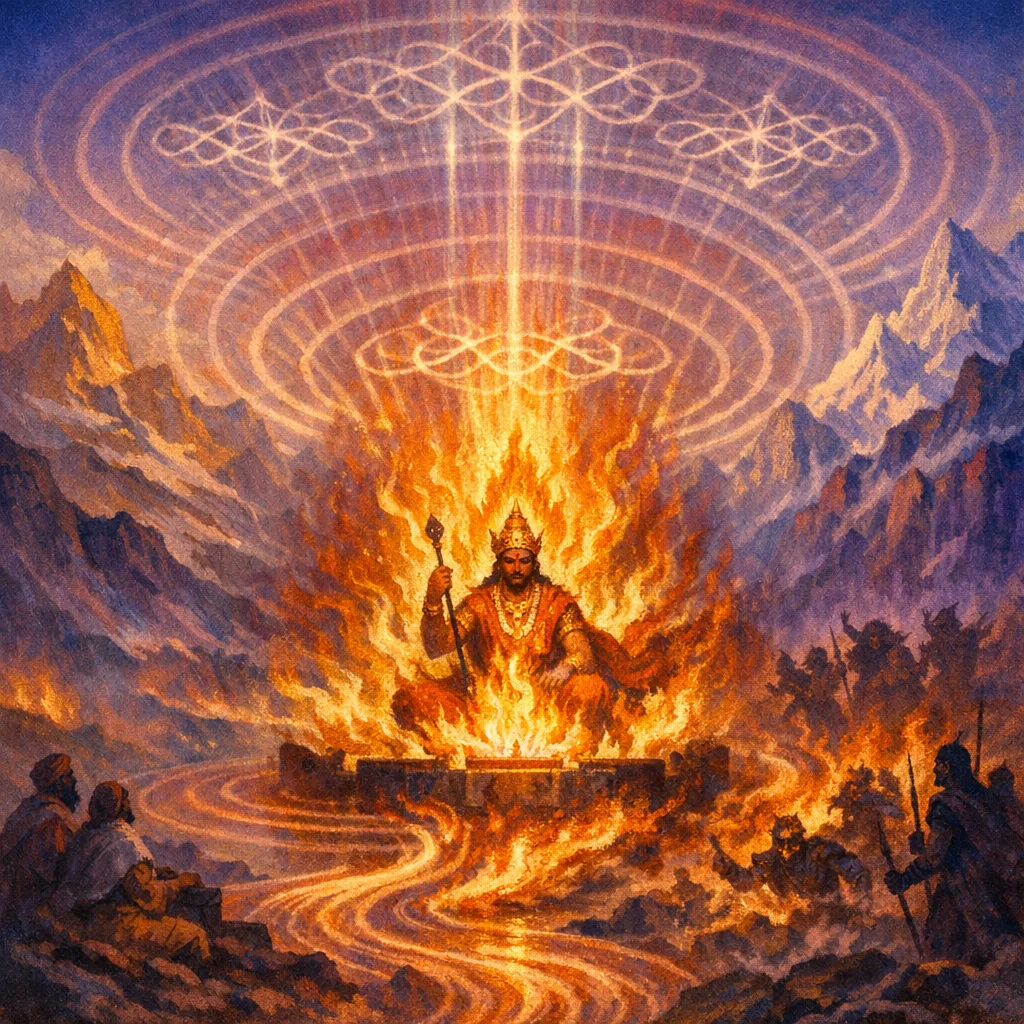
Agni as the sustaining and protecting sacrificial fire who grants prosperity and defends the rite
Agni
Invocatory and protective—steadily affirmative with a sharpened martial intensity in the rakṣas-destroying lines
As an early Agneya set in the Sāmavedic arrangement the decad draws on Ṛgvedic Agni materials of mixed hymn provenance; individual verse seers may vary with Pūṣan material often linked to Aṅgiras traditions.
Applicable within Soma-yajña chant cycles where Agni is praised as the ritual mouth and protector; also suitable for apotropaic moments guarding the offering from rakṣas.
Mantras
Mantra 1
अबोध्यग्निः समिधा जनानां प्रति धेनुमिवायतीमुषासम् यह्वा इव प्र वयामुज्जिहानाः प्र भानवः सस्रते नाकमच्छ
Agni hath awoke by the fuel of men, in answer to the Dawn advancing like a cow (to her calf); like swift coursers, stretching onward, his splendours have streamed forth towards heaven.
Mantra 2
प्र भूर्जयन्तं महां विपोधां मूरैरमूरं पुरां दर्माणम् नयन्तं गीर्भिर्वना धियं धा हरिश्मश्रुं न वार्मणा धनर्चिम्
Forth (we praise) the great purifier, the awakener, unbewildered amid the bewildering; the establisher of strongholds, led onward by hymns: do thou, O (Agni), set in us the thought (fit) for sacrifice; whose flame is wealth, as one with tawny beard is clad in armour.
Mantra 3
शुक्रं ते अन्यद्यजतं ते अन्यद्विषुरूपे अहनी द्यौरिवासि विश्वा हि माया अवसि स्वधावन्भद्रा ते पूषन्निह रातिरस्तु
One form of thine is bright, another is adorable; of diverse aspect art thou, like heaven, in day and night: for thou protectest by all thy powers, O possessor of svadhā; may thy auspicious bounty, O Pūṣan, be here (bestowed).
Mantra 4
इडामग्ने पुरुदंसं सनिं गोः शश्वत्तमं हवमानाय साध स्यान्नः सूनुस्तनयो विजावाग्ने सा ते सुमतिर्भूत्वस्मे
Agni, (accept) the iḍā; thou, the bestower of many gifts, the giver of cattle, accomplish for the invoker that most enduring (prosperity): may there be for us a son, offspring abounding in progeny; and, Agni, may that thy favour be towards us.
Mantra 5
प्र होता जातो महान्नभोविन्नृषद्मा सीददपां विवर्ते दधद्यो धायी सुते वयांसि यन्ता वसूनि विधते तनूपाः
Forth (is manifested) the Hotṛ, born great, sky-knowing, seated among men; he takes his seat amid the circling waters; he who, sustaining (all), the supporter, at the Soma-pressing controls the (swift) powers, and bestows riches upon the worshipper, the guardian of his person.
Mantra 6
प्र सम्राजमसुरस्य प्रश्स्तं पुंसः कृष्टीनामनुमाद्यस्य इन्द्रस्येव प्र तवसस्कृतानि वन्दद्वारा वन्दमाना विवष्टु
Let the highly-praised sovereign, the mighty lord, the delight of the tribes of men, shine forth; and, like Indra, let his deeds of strength be made manifest, whilst (we), praising by the gates of adoration, celebrate him.
Mantra 7
अरण्योर्निहितो जातवेदा गर्भ इवेत्सुभृतो गर्भिणीभिः दिवेदिव ईड्यो जागृवद्भिर्हविष्मद्भिर्मनुष्येभिरग्निः
Agni Jātavedas, deposited in the araṇis, like an embryo borne by pregnant (mothers), is day by day to be adored by wakeful men bringing oblations.
Mantra 8
सनादग्ने मृणसि यातुधानान्न त्वा रक्षांसि पृतनासु जिग्युः अनु दह सहमूरान्कयादो मा ते हेत्या मुक्षत दैव्यायाः
From of old, Agni, thou destroyest the Yātudhānas; the Rākṣasas have not conquered thee in battles: burn up, moreover, the flesh-devourers with their bodies; let them not escape thy divine weapon.
Frequently Asked Questions
To praise Agni as the one who receives the offering, fulfills the sacrifice, grants lasting prosperity and offspring, and protects the rite by destroying hostile forces.
Sāmavedic groupings are often ritual-melodic sequences; Pūṣan can be included as a supportive deity for nourishment, safe passage, and auspicious giving alongside Agni’s central ritual role.
They are hostile beings in the hymn language; in ritual interpretation they also represent obstructions and impurities that threaten the offering, which Agni is asked to burn away with his divine power.