Adhyaya 274
Brahmāstra-prayogaḥ: Daśagrīvasya Māyā-vadhaḥ (Rāma–Rāvaṇa Encounter under Illusion)
Upa-parva: Mārkaṇḍeya-ākhyāna (Embedded Itihāsa Narratives within Āraṇyaka-parva)
Mārkaṇḍeya narrates a battlefield escalation after Daśagrīva (Rāvaṇa) becomes enraged at the fall of a beloved son and advances in a jeweled chariot, supported by armed rākṣasa forces. Vānara and ṛkṣa leaders (including Hanūmān and Jāmbavān) counter and disrupt the enemy ranks with improvised force (trees), prompting Rāvaṇa to deploy māyā: successive manifestations of armed rākṣasas appear, then further illusions replicate the forms of Rāma and Lakṣmaṇa to destabilize recognition and coordination. Lakṣmaṇa alerts Rāma to neutralize the counterfeit forms; Rāma responds with divine weaponry, containing the deceptive surge. At this juncture Mātali, Indra’s charioteer, arrives with a radiant, victorious chariot, urging rapid engagement; Rāma hesitates, suspecting deception, until Vibhīṣaṇa verifies authenticity and counsels immediate action. Rāma charges, withstands and severs a formidable projectile (likened to Indra’s thunderbolt), then confronts a barrage of weapons that induces fear among vānara troops. Rāma prepares a supreme arrow and invokes the Brahmāstra; celestial observers register the act as decisive. The Brahmāstra-struck Rāvaṇa is described as consumed by extraordinary fire, leaving no bodily residue, and the narrative marks this as a climactic demonstration of sanctioned, discriminating force overcoming engineered illusion.
Chapter Arc: जयद्रथ को पराजित कर द्रौपदी का उद्धार करने के बाद, धर्मराज युधिष्ठिर मुनिगणों के बीच बैठते हैं; संकट की कथा सुनकर ऋषि शोकाकुल हैं और सभा में प्रश्नों की अग्नि सुलग उठती है। → युधिष्ठिर, द्रौपदी के अपहरण-जैसे अनपेक्षित अपमान को अपने भाग्य-दोष और वनवास की विडंबना से जोड़कर, मार्कण्डेय से पूछते हैं—क्या कहीं उनसे अधिक दुर्भाग्यवान कोई है? वे द्रौपदी की निष्कलंकता, धर्मनिष्ठा और ब्राह्मण-सेवा का स्मरण कर पीड़ा को और तीव्र कर देते हैं। → युधिष्ठिर का आत्मविलाप चरम पर पहुँचता है: ‘अयोनिजा, वेदी से उत्पन्न, पाण्डु की स्नुषा—ऐसी शुचिता को स्पर्श करने वाला यह कलंक कैसे घटा?’ वे काल, दैव और ‘भवितव्य’ की अटलता का संकेत करते हुए भी अपने मन की न्याय-व्यथा को रोक नहीं पाते। → मार्कण्डेय के समक्ष प्रश्न स्पष्ट रूप लेता है—धर्म का पालन करने वालों पर भी विपत्ति क्यों आती है, और क्या यह सब काल-दैव की रचना है? अध्याय का अंत युधिष्ठिर के प्रश्न-रूप में ठहरता है, जिससे आगे उपाख्यान/उपदेश का द्वार खुलता है। → मार्कण्डेय इस प्रश्न का उत्तर किस दृष्टि से देंगे—दैव-प्रधान, कर्म-प्रधान, या धर्म-संकट के समाधान के रूप में किसी प्राचीन आख्यान द्वारा?
Shlokas
Verse 1
इस प्रकार श्रीमहाभारत वनपर्वके अन्तर्गत जयद्रथविगोक्षणपर्वमें दो यौ बद्दत्तरवाँ अध्याय पूरा हुआ ॥/ २७२ ॥। (दाक्षिणात्य अधिक पाठका ई “लोक मिलाकर कुल ८१३ श्लोक हैं) उन “5 (9) #...# >_5..# (रामोपाख्यानपर्व) त्रिसप्तत्यधिकद्धिशततमो< ध्याय: अपनी दुरवस्थासे दुःखी हुए युधिष्ठटिरका मार्कण्डेय मुनिसे प्रश्न करना जनमेजय उवाच एवं ह्वतायां कृष्णायां प्राप्प क्लेशमनुत्तमम् । अत ऊर्ध्व॑ नरव्याप्रा: किमकुर्वत पाण्डवा:,जनमेजयने पूछा--इस प्रकार द्रौपदीका अपहरण होनेपर महान् क्लेश उठानेके पश्चात् मनुष्योंमें सिंहके समान पराक्रमी पाण्डवोंने कौन-सा कार्य किया?
Janamejaya said: “When Kṛṣṇā (Draupadī) had been carried off and the Pāṇḍavas—tiger-like among men—had fallen into unsurpassed distress, what did they do thereafter?”
Verse 2
वैशम्पायन उवाच एवं कृष्णां मोक्षयित्वा विनिर्जित्य जयद्रथम् । आसांचक्रे मुनिगणैर्धर्मराजो युधिषिर:,वैशम्पायनजी बोले--जनमेजय! इस प्रकार जयद्रथको जीतकर द्रौपदीको छुड़ा लेनेके पश्चात् धर्मराज युधिष्ठिर मुनिमण्डलीके साथ बैठे हुए थे
Vaiśampāyana said: Having thus rescued Kṛṣṇā (Draupadī) and decisively defeated Jayadratha, Dharmarāja Yudhiṣṭhira sat down together with the assembled company of sages—signaling a return from crisis to counsel, restraint, and dharmic deliberation after the act of protection and just retribution.
Verse 3
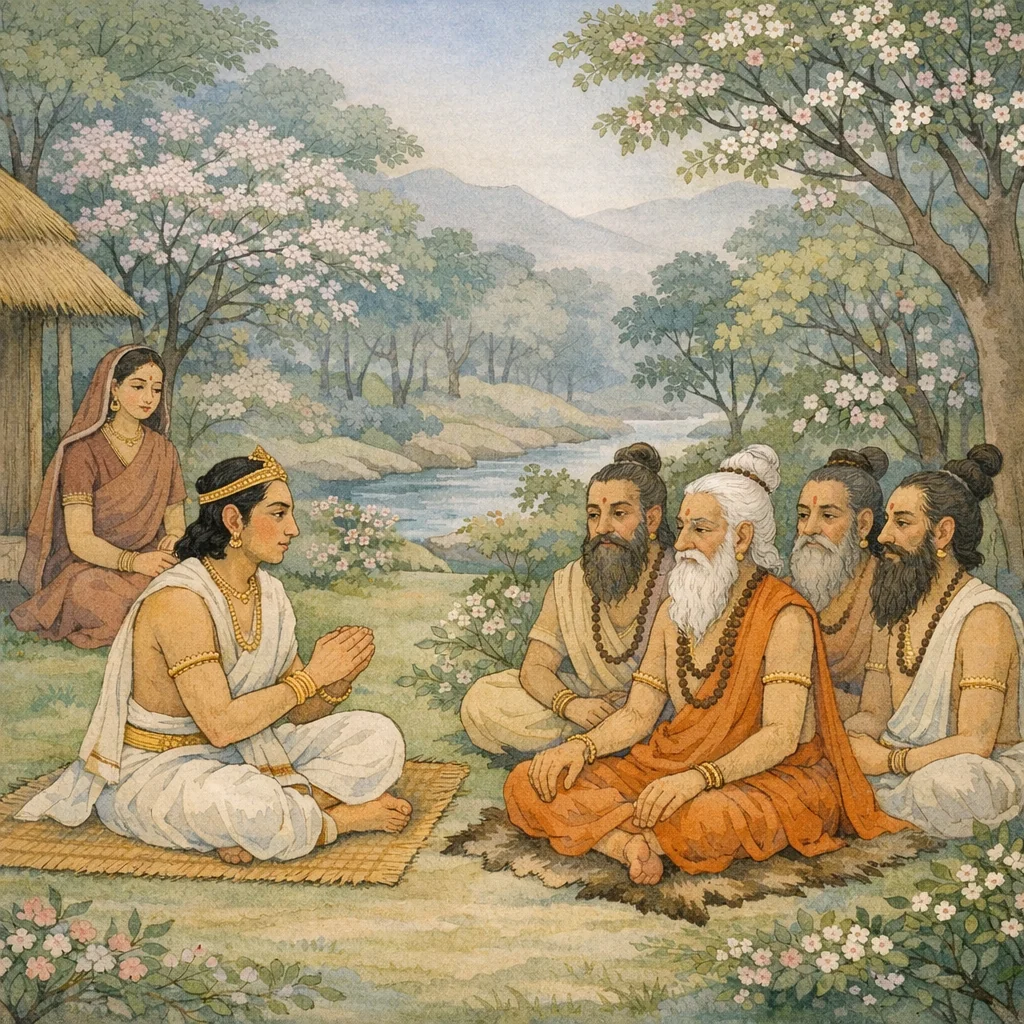
तेषां मध्ये महर्षीणां शृण्वतामनुशोचताम् । मार्कण्डेयमिदं वाक्यमब्रवीत् पाण्डुनन्दन:,महर्षिलोग भी पाण्डवोंपर आये हुए संकटको सुनते और उसके लिये बारंबार शोक प्रकट करते थे। उन्हींमेंसे मार्कण्डेयजीको लक्ष्य करके पाण्डुनन्दन युधिष्ठिरने इस प्रकार कहा
Verse 4
युधिषछ्िर उवाच भगवन् देवर्षीणां त्वं ख्यातो भूतभविष्यवित् । संशयं परिपृच्छामि छिन्धि मे हृदि संस्थितम्,युधिष्ठिर बोले--भगवन्! आप भूत, भविष्य और वर्तमान--तीनों कालोंके ज्ञाता हैं। देवर्षियोंमें भी आपका नाम विख्यात है। अतः आपसे मैं अपने हृदयका एक संदेह पूछता हूँ, उसका निवारण कीजिये
Yudhiṣṭhira said: “Revered one, you are renowned among the divine seers as a knower of what has been and what is yet to come. Therefore I ask you about a doubt lodged in my heart—please cut it away and resolve it.”
Verse 5
द्रुपदस्य सुता होषा वेदिमध्यात् समुत्थिता । अयोनिजा महाभागा स्नुषा पाण्डोर्महात्मन:,यह परम सौभाग्यशालिनी ट्रुपदकुमारी यज्ञकी वेदीसे प्रकट हुई है; अतः अयोनिजा है (इसे गर्भवासका कष्ट नहीं सहन करना पड़ा है)। इसे महात्मा पाण्डुकी पुत्रवधू होनेका गौरव भी मिला है
Yudhiṣṭhira said: “The daughter of Drupada—Hoṣā—arose from the very midst of the sacrificial altar. Born not from a womb, she is greatly fortunate; and she has also attained the honored status of being the daughter-in-law of the great-souled Pāṇḍu.”
Verse 6
मनन््ये कालश्व भगवान् दैवं च विधिनिर्मितम् । भवितव्यं च भूतानां यस्य नास्ति व्यतिक्रम:,मेरी समझमें भगवान् काल, विधिनिर्मित दैव और समस्त प्राणियोंकी भवितव्यता अर्थात् उनके लिये होनेवाली घटना-ये तीनों ही प्रबल हैं; इनको कोई टाल नहीं सकता
Yudhiṣṭhira said: “I hold that Time itself is a sovereign power; and so too is destiny, fashioned by the ordinance of law. And there is the inevitable course appointed for all beings—something that admits of no transgression. No one can avert what must come to pass.”
Verse 7
इमां हि पत्नीमस्माकं धर्मज्ञां धर्मचारिणीम् | संस्पृशेदीदृशो भाव: शुचिं स्तैन्यमिवानृतम्,अन्यथा हमारी इस पत्नीको, जो धर्मको जाननेवाली तथा धर्मके पालनमें तत्पर रहनेवाली है, ऐसा भाव (अपह॒त होनेका लांछन) कैसे स्पर्श कर सकता था? यह तो ठीक वैसा ही है, जैसे किसी शुद्ध आचार-विचारवाले मनुष्यपर झूठे ही चोरीका कलंक लग जाय
Yudhiṣṭhira said: “How could such a suspicion ever touch our wife—one who knows dharma and lives by dharma? To impute such a taint to one who is pure is as unfounded as falsely branding an upright person with theft.”
Verse 8
न हि पापं कृतं किंचित् कर्म वा निन्दितं क्वचित् | द्रौपद्या ब्राह्मणेष्वेव धर्म: सुचरितो महान्,इसने कभी कोई पाप या निन्दित कर्म नहीं किया है। द्रौपदीने ब्राह्मणोंके प्रति सेवा- सत्कार आदिके रूपमें महान् धर्मका आचरण किया है
Yudhiṣṭhira said: “Indeed, she has not committed any sin at all, nor has she ever performed any blameworthy deed. Rather, Draupadī has practiced a great and exemplary dharma—shown especially through service, honor, and proper regard toward the brāhmaṇas.”
Verse 9
तां जहार बलाद राजा मूढबुद्धिर्जयद्रथ: । तस्या: संहरणात् पाप: शिरस: केशपातनम्,ऐसी स्त्रीका भी मूढ़बुद्धि पापी राजा जयद्रथने बलपूर्वक अपहरण किया। इस अपहरणके ही कारण उसका सिर मूँड़ा गया, वह अपने सहायकों-सहित युद्धमें पराजित हुआ तथा हमलोग सिन्धु-देशकी सेनाका संहार करके पुनः द्रौपदीको लौटा लाये हैं
Yudhiṣṭhira said: “That woman was carried off by force by the king Jayadratha, a sinner of deluded understanding. Because of that abduction, his hair was shorn from his head in disgrace.”
Verse 10
पराजयं च संग्रामे ससहाय: समाप्तवान् | प्रत्याहृता तथा स्माभिहतत्वा तत् सैन्धवं बलम्,ऐसी स्त्रीका भी मूढ़बुद्धि पापी राजा जयद्रथने बलपूर्वक अपहरण किया। इस अपहरणके ही कारण उसका सिर मूँड़ा गया, वह अपने सहायकों-सहित युद्धमें पराजित हुआ तथा हमलोग सिन्धु-देशकी सेनाका संहार करके पुनः द्रौपदीको लौटा लाये हैं
Yudhiṣṭhira said: “He met defeat in battle along with his allies; and we, having slain that Sindhu king’s force, brought her back again. Thus that sinful, deluded ruler Jayadratha, who abducted a woman by violence, was humbled—his outrage became the cause of his disgrace and defeat.”
Verse 11
तद् दारहरणं प्राप्तमस्माभिरवितर्कितम् । ज्ञातिभिविंप्रवासश्न मिथ्याव्यवसितैरियम्,इस प्रकार हमने जिसे कभी सोचातक न था, वह अपनी पत्नीका अपहरणरूप अपमान हमें प्राप्त हुआ और मिथ्या व्यवसायमें लगे हुए बान्धवोंने हमें देशसे निर्वासित कर दिया है
Verse 12
अस्ति नूनं मया कश्चिदल्पभाग्यतरो नर: । भवता दृष्टपूर्वो वा श्रुतपूर्वोपि वा भवेत्,अतः मैं पूछता हूँ, क्या संसारमें मेरे-जैसा मन्दभाग्य मनुष्य कोई और भी है अथवा आपने पहले कभी मुझ-जैसे भाग्यहीनको कहीं देखा या सुना है?
Yudhiṣṭhira said: “Surely there must exist some man even more ill-fated than I. Have you ever seen—or even heard of—someone as unfortunate as me?”
Verse 273
इति श्रीमहाभारते वनपर्वणि रामोपाख्यानपर्वणि युधिष्ठिरप्रश्ने त्रिसप्तत्यधिकद्धिशततमो<ध्याय:
Thus, in the revered Mahābhārata, within the Vana Parva, in the section known as the Rāmopākhyāna, in connection with Yudhiṣṭhira’s question, ends the two-hundred-and-seventy-fourth chapter (i.e., the chapter numbered 274).
Frequently Asked Questions
The dilemma is epistemic and ethical: how to act decisively when perception is manipulated by māyā—balancing caution against deception with the duty to protect allies and end destabilizing violence.
Effective action depends on discernment and qualified counsel: verify reality, do not be driven solely by fear or spectacle, and apply force with measured authorization when lesser means cannot restore order.
No explicit phalaśruti is stated in this excerpt; the meta-function is exemplary—demonstrating how illusion is countered through disciplined recognition, counsel, and sanctioned astra-prayoga within a broader dharma framework.