Adhyaya 25
द्वैतवनगमनम् (Dvāitavana-gamanam) — Journey and Settlement at Dvaita Forest-Lake
Upa-parva: Dvāitavana-nivāsa (Settlement at Dvैतवन / Dvaita Forest-Lake Episode)
Vaiśaṃpāyana reports that, after prior movements, Yudhiṣṭhira addresses his brothers regarding the necessity of residing for twelve years in an uninhabited forest and instructs them to survey a suitable region rich in game and birds, pleasant, auspicious, and fit for sustained habitation. Arjuna responds with deference, characterizing Yudhiṣṭhira as widely learned through association with elder sages (including Dvaipāyana and Nārada) and therefore best positioned to determine what is truly beneficial. Arjuna then recommends the famed, sacred Dvāitavana lake-forest, described as abundant in flowers and fruits and frequented by many kinds of birds, proposing it as their residence for the full term. Yudhiṣṭhira concurs, and the Pāṇḍavas proceed with numerous brāhmaṇas—both agnihotra practitioners and other ascetics—along with svādhyāyins, mendicants, and japa-oriented forest dwellers. The chapter offers an ecological catalogue: large trees and flowering groves, melodious birds, elephant herds, and the presence of siddhas and ṛṣis. Yudhiṣṭhira dismounts, enters the woodland with his brothers and companions, is received respectfully by ascetic communities, and seats himself beneath a great flowering tree; the others likewise dismount and attend, marking the orderly establishment of a dharma-centered exile residence.
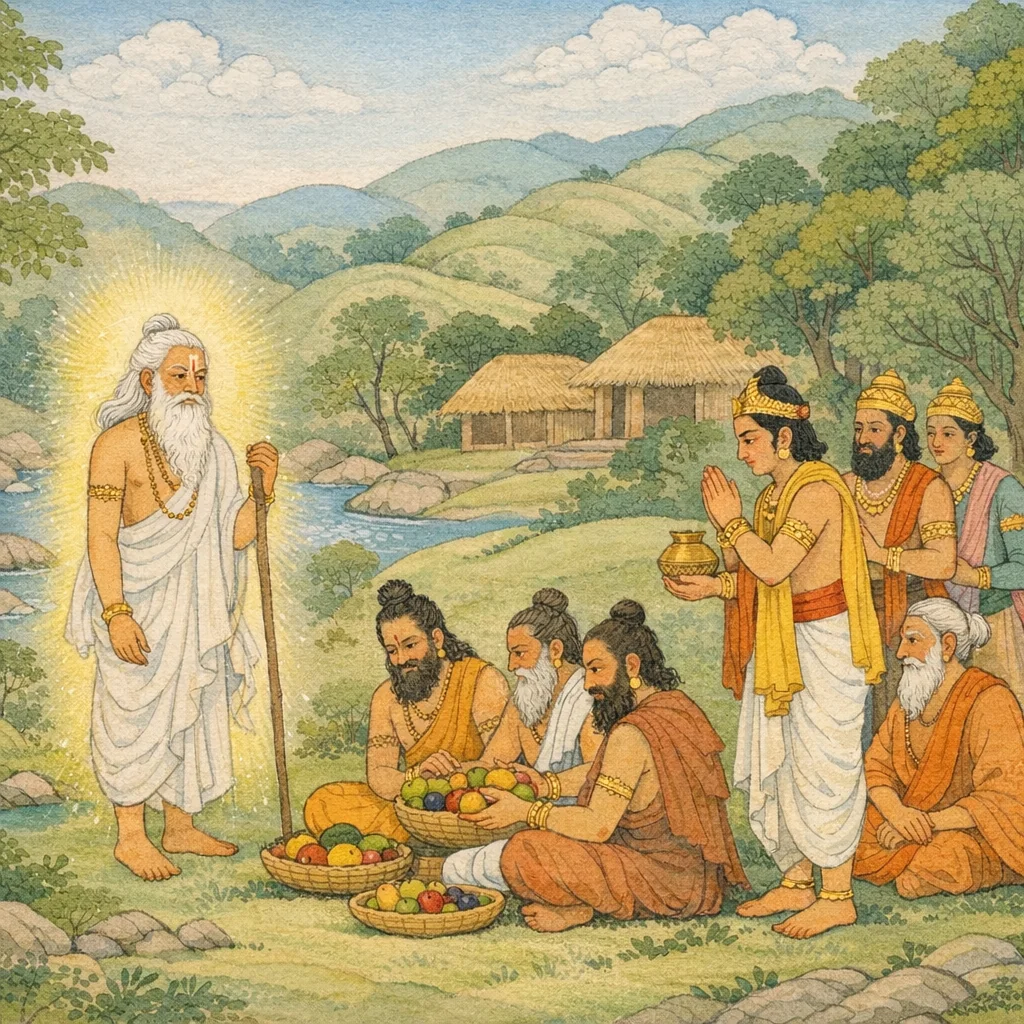
Chapter Arc: द्वैतवन के कानन में पाण्डवों का निवास—जहाँ युधिष्ठिर वन के मुनियों और यतियों को मूल-फल से तृप्त करते हैं, वहीं एक तेजोमय महर्षि का आगमन कथा को धर्म-उपदेश की ओर मोड़ देता है। → वनवास की कठोरता के बीच युधिष्ठिर का मन ‘बल’ (शक्ति/सामर्थ्य) और ‘धर्म’ की सीमा पर ठहरता है—क्या राजधर्म का त्याग कर तपोवन में टिके रहना ही श्रेष्ठ है, या प्रतिज्ञा-पालन के साथ भविष्य के कर्तव्य हेतु शक्ति-संचय भी आवश्यक है? → महर्षि मार्कण्डेय युधिष्ठिर को धर्म का आदेश देते हुए उदाहरणों से दृढ़ करते हैं—राम का पितृ-आज्ञा पालन, सत्यव्रती अलर्क का त्याग, और ‘बलस्येति चरेदधर्मम्’ का निषेध: केवल बल के भरोसे अधर्म का आचरण मत करो। → युधिष्ठिर महर्षि का विधिवत् पूजन करते हैं; धौम्य पाण्डवों के लिए पितृवत् श्राद्ध-इष्टि आदि कर्म संपन्न कराते हैं। उपदेश का निष्कर्ष स्पष्ट होता है—प्रतिज्ञा के अनुसार वनवास पूर्ण करो; उसी तेज से आगे चलकर कौरवों से श्री और राज्य पुनः प्राप्त करोगे। → महर्षि धौम्य और पाण्डवों से विदा लेकर उत्तर दिशा की ओर प्रस्थान करते हैं—उत्तर की ओर बढ़ती यह गति अगले प्रसंगों (अर्जुनाभिगमन/आगामी यात्राओं) का संकेत बन जाती है।
Shlokas
Verse 1
#2:8 #23:.7 () हि 2 7 पञ्चविशो< ध्याय: महर्षि मार्कण्डेयका पाण्डवोंको धर्मका आदेश देकर उत्तर दिशाकी ओर प्रस्थान वैशम्पायन उवाच तत् कानने प्राप्य नरेन्द्रपुत्रा: सुखोचिता वासमुपेत्य कृच्छम् । विजहुरिन्द्रप्रतिमा: शिवेषु सरस्वतीशालवनेषु तेषु,वैशम्पायनजी कहते हैं--जनमेजय! सुख भोगनेके योग्य राजकुमार पाण्डव इन्द्रके समान तेजस्वी थे। वे वनवासके संकटमें पड़कर द्वैतवनमें प्रवेश करके वहाँ सरस्वतीतटवर्ती सुखद शालवनोंमें विहार करने लगे
Vaiśampāyana said: Having reached that forest, the sons of the king—accustomed to comfort yet now forced into hardship—took up residence there. Those princes, radiant like Indra, began to pass their days in the auspicious śāla-groves along the Sarasvatī, finding a measure of peace amid the trials of exile. The passage underscores how royal privilege is tempered by adversity, and how endurance and right conduct (dharma) are sustained even when life is overturned.
Verse 2
यतींश्व॒ राजा स मुनींश्व॒ सर्वा- स्तस्मिन् वने मूलफलैरुदग्रै: । द्विजातिमुख्यानृषभ: कुरूणां संतर्पयामास महानुभाव:,कुरुश्रेष्ठ महानुभाव राजा युधिष्ठिरने उस वनमें रहनेवाले सम्पूर्ण यतियों, मुनियों और श्रेष्ठ ब्राह्मणोंको उत्तम फल-मूलोंके द्वारा तृप्त किया। अत्यन्त तेजस्वी पुरोहित धौम्य पिताकी भाँति उस महावनमें रहनेवाले राजकुमार पाण्डवोंके यज्ञ-याग, पितृ-श्राद्ध तथा अन्य सत्कर्म करते-कराते रहते थे
Vaiśampāyana said: That great-souled king—foremost among the Kurus—dwelling in that forest, satisfied all the ascetics and sages there, and the leading twice-born Brahmins as well, by providing excellent roots and fruits. The scene underscores Yudhiṣṭhira’s dharmic kingship even in exile: honoring spiritual guests and sustaining the forest community through rightful generosity.
Verse 3
इष्टी क्ष पित्रयाणि तथा क्रियाश्र महावने वसतां पाण्डवानाम् | पुरोहितस्तत्र समृद्धतेजा- श्व॒कार धौम्य: पितृवन्नपाणाम्,कुरुश्रेष्ठ महानुभाव राजा युधिष्ठिरने उस वनमें रहनेवाले सम्पूर्ण यतियों, मुनियों और श्रेष्ठ ब्राह्मणोंको उत्तम फल-मूलोंके द्वारा तृप्त किया। अत्यन्त तेजस्वी पुरोहित धौम्य पिताकी भाँति उस महावनमें रहनेवाले राजकुमार पाण्डवोंके यज्ञ-याग, पितृ-श्राद्ध तथा अन्य सत्कर्म करते-कराते रहते थे
Vaiśaṃpāyana said: While the Pāṇḍavas were dwelling in the great forest, their sacrificial rites and offerings to the ancestors, along with other prescribed religious observances, were duly maintained. There, the radiant family priest Dhaumya performed these duties for the princes like a father—ensuring that even in exile their life remained anchored in dharma through worship, ancestral reverence, and disciplined conduct.
Verse 4
अपेत्य राष्ट्राद् वसतां तु तेषा- मृषि: पुराणोडतिथिराजगाम । तमाश्रमं तीव्रसमृद्धतेजा मार्कण्डेय: श्रीमतां पाण्डवानाम्,राज्यसे दूर होकर वनमें निवास करनेवाले श्रीमान् पाण्डवोंके उस आश्रमपर उद्दीप्त तेजस्वी पुरातन महर्षि मार्कण्डेयजी अतिथिके रूपमें आये
Vaiśampāyana said: After they had been driven far from the kingdom and were living in the forest, an ancient sage came to them as a guest. The venerable Mārkaṇḍeya—radiant with intense, well-established spiritual power—arrived at the hermitage of the illustrious Pāṇḍavas. The episode underscores how, even in exile and loss, righteousness is sustained through honoring holy guests and receiving guidance from the wise.
Verse 5
तमागतं ज्वलितहुताशनप्रभं महामना: कुरुवृषभो युधिष्ठिर: । अपूजयत् सुरऋषिमानवार्चितं महामुनि हानुपमसत्त्ववीर्यवान्,उनकी अंग-कान्ति प्रज्वलित अग्निके समान उदभासित हो रही थी। देवताओं, ऋषियों तथा मनुष्योंद्वारा पूजित महामुनि मार्कण्डेयको आया देख अनुपम धैर्य और पराक्रमसे सम्पन्न महामनस्वी कुरुश्रेष्ठ युधिष्ठिरने उनकी यथावत् पूजा की
Vaiśampāyana said: When the great-souled Yudhiṣṭhira, the bull among the Kurus, saw the great sage Mārkaṇḍeya arrive—radiant like blazing fire, and revered by gods, seers, and men—he honored him duly. The scene underscores a dharmic ideal: true strength and kingship express themselves through humility, reverence for wisdom, and proper hospitality toward the spiritually accomplished.
Verse 6
स सर्वविद् द्रौपदी वीक्ष्य कृष्णां युधिष्ठिरं भीमसेनार्जुनौ च । संस्मृत्य राम॑ मनसा महात्मा तपस्विमध्येडस्मयतामितौजा:,अमित तेजस्वी तथा सर्वज्ञ महात्मा मार्कण्डेयजी ट्रुपदकुमारी कृष्णा, युधिष्ठिर, भीमसेन, अर्जुन (और नकुल-सहदेव)-को देखकर मन-ही-मन श्रीरामचन्द्रजीका स्मरण करके तपस्वियोंके बीचमें मुसकराने लगे
Vaiśaṃpāyana said: The all-knowing great-souled Mārkaṇḍeya, seeing Draupadī (Kṛṣṇā) along with Yudhiṣṭhira, Bhīmasena, and Arjuna, inwardly remembered Rāma; and, amid the assembled ascetics, the mighty one smiled—suggesting a compassionate recognition of their ordeal and a recollection of an earlier exemplar of dharma tested by suffering.
Verse 7
त॑ं धर्मराजो विमना इवाब्रवीत् सर्वे द्विया सन्ति तपस्विनो5मी । भवानिदं कि स्मयतीव हृष्ट- स्तपस्विनां पश्यतां मामुदीक्ष्य,तब धर्मराज युधिष्ठिरने उदासीन-से होकर पूछा--'मुने! ये सब तपस्वी तो मेरी अवस्था देखकर कुछ संकुचित-से हो रहे हैं, परंतु क्या कारण है कि आप इन सब महात्माओंके सामने मेरी ओर देखकर प्रसन्नतापूर्वक यों मुसकराते-से दिखायी देते हैं?
Then Dharmarāja (Yudhiṣṭhira), as though downcast and uneasy, spoke: “All these twice-born sages here are ascetics. Seeing me, they seem to grow restrained and withdrawn. Yet why is it that you, looking at me in the presence of these tapasvins, appear delighted and smile as if in gentle amusement?”
Verse 8
मार्कण्डेय उवाच न तात हृष्यामि न च स्मयामि प्रहर्षजो मां भजते न दर्प: । तवापदं त्वद्य समीक्ष्य राम॑ सत्यव्रतं दाशरथिं स्मरामि,मार्कण्डेयजी बोले--तात! न तो मैं हर्षित होता हूँ और न मुसकराता ही हूँ। हर्षजनित अभिमान कभी मेरा स्पर्श नहीं कर सकता। आज तुम्हारी यह विपत्ति देखकर मुझे सत्यप्रतिज्ञ दशरथनन्दन श्रीरामचन्द्रजीका स्मरण हो आया
Mārkaṇḍeya said: “Dear child, I neither exult nor do I smile; the pride that springs from elation does not touch me. Seeing your calamity today, I am reminded of Rāma, the son of Daśaratha, steadfast in truth and faithful to his vow.”
Verse 9
स चापि राजा सह लक्ष्मणेन वने निवासं पितुरेव शासनात् । धन्वी चरन् पार्थ मयैव दृष्टो गिरे: पुरा ऋष्यमूकस्य सानौ,कुन्तीनन्दन! प्राचीनकालकी बात है राजा रामचन्द्रजी भी अपने पिताकी आज्ञासे ही केवल धनुष हाथमें लिये लक्ष्मणके साथ वनमें निवास एवं भ्रमण करते थे। उस समय ऋष्यमूकपर्वतके शिखरपर मैंने ही उनका भी दर्शन किया था
Mārkaṇḍeya said: “And that king (Rāma) too, together with Lakṣmaṇa, lived and wandered in the forest solely in obedience to his father’s command, bearing his bow. O son of Pṛthā, long ago I myself saw him on the slope of Mount Ṛṣyamūka, O son of Kuntī.” The verse highlights exemplary filial obedience and steadfast adherence to dharma even amid hardship.
Verse 10
सहसतनेत्रप्रतिमो महात्मा यमस्य नेता नमुचेश्व हन्ता । पितुर्निदेशादनघ: स्वधर्म वासं वने दाशरथिक्षकार,दशरथनन्दन श्रीराम सर्वथा निष्पाप थे। इन्द्र उनके दूसरे स्वरूप थे। वे यमराजके भी नियन्ता और नमुचि-जैसे दानवोंके नाशक थे, तो भी उन महात्माने पिताकी आज्ञासे अपना धर्म समझकर वनमें निवास किया
Mārkaṇḍeya said: That great-souled Rāma—like the thousand-eyed Indra, a ruler even over Yama and a slayer of demons such as Namuci—though himself spotless, accepted his father’s command as his own dharma and therefore took up residence in the forest. The verse highlights the ethical ideal that obedience to a righteous parental command and steadfastness in one’s duty can be upheld even by one of supreme power.
Verse 11
स चापि शक्रस्य समप्रभावो महानुभाव: समरेष्वजेय: । विहाय भोगानचरद् वनेषु नेशे बलस्येति चरेदधर्मम्,जो इन्द्रके समान प्रभावशाली थे, जिनका अनुभव महान् था तथा जो युद्धमें सर्वदा अजेय थे, उन्होंने भी सम्पूर्ण भोगोंका परित्याग करके वनमें निवास किया था। इसलिये अपनेको बलका स्वामी समझकर अधर्म नहीं करना चाहिये
Markandeya said: “Even he—equal in splendor to Indra, of great stature and experience, and unconquerable in battles—renounced enjoyments and lived in the forests. Therefore, one should not commit unrighteousness, thinking, ‘I am the lord of strength.’”
Verse 12
भूपाश्चन नाभागभगीरथादयो महीमिमां सागरान्तां विजित्य । सत्येन ते5प्यजयंस्तात लोकान् नेशे बलस्येति चरेदधर्मम्,नाभाग और भगीरथ आदि राजाओंने भी समुद्रपर्यन्त पृथ्वीको जीतकर सत्यके द्वारा उत्तम लोकोंपर विजय पायी। इसलिये तात! अपनेको बलका स्वामी मानकर अधर्मका आचरण नहीं करना चाहिये
Markandeya said: “Kings such as Nabhaga and Bhagiratha too conquered this earth bounded by the ocean; yet it was through truthfulness that they attained victory over the higher worlds. Therefore, dear one, do not practice adharma on the notion that you are the master of power.”
Verse 13
अलर्कमाहुर्नरवर्य सनन््तं सत्यव्रतं काशिकरूषराजम् | विहाय राज्यानि वसूनि चैव नेशे बलस्येति चरेदधर्मम्,नरश्रेष्ठू काशी और करूषदेशके राजा अलर्कको सत्यप्रतिज्ञ संत बताया गया है। उन्होंने राज्य और धन त्यागकर धर्मका आश्रय लिया है। अत: अपनेको अधिक शक्तिशाली समझकर अधर्मका आचरण नहीं करना चाहिये
O best of men, they speak of Alarka—the king of Kāśī and Karūṣa—as a venerable sage-like ruler, steadfast in truth. Having renounced his kingdoms and his wealth, he took refuge in dharma. Therefore, one should not commit adharma on the pretext, ‘I am strong.’
Verse 14
धात्रा विधियों विहित: पुराणै- स्तं पूजयन्तो नरवर्य सन्त: । सप्तर्षय: पार्थ दिवि प्रभान्ति नेशे बलस्येति चरेदधर्मम्,मनुष्योंमें श्रेष्ठ कुन्तीकुमार! विधाताने पुरातन वेदवाक्योंद्वारा जो अग्निहोत्र आदि कर्मोका विधान किया है, उसका समादर करनेके कारण ही साधु सप्तर्षिगण देवलोकमें प्रकाशित हो रहे हैं। अतः अपनेको शक्तिशाली मानकर कभी अधर्मका आचरण नहीं करना चाहिये
Mārkaṇḍeya said: “O best of men, O Pārtha! The ordinances—such as the Agnihotra and other sacred rites—were laid down by the Creator through the ancient authoritative utterances. Because the righteous honor and uphold that sacred order, the Seven Sages shine resplendent in heaven. Therefore, do not ever practice adharma on the pretext, ‘I am strong.’”
Verse 15
महाबलानू् पर्वतकूटमात्रान् विषाणिन: पश्य गजान् नरेन्द्र । स्थितान् निदेशे नरवर्य धातु- नेंशे बलस्येति चरेदधर्मम्,कुन्तीनन्दन महाराज युधिष्ठिर! पर्वतशिखरके समान ऊँचे और बड़े-बड़े दाँतोंवाले इन महाबली गजराजोंकी ओर तो देखो। ये भी विधाताके आदेशका पालन करनेमें लगे हैं। इसलिये मैं शक्तिका स्वामी हूँ ऐसा समझकर कभी अधर्माचरण न करे
Mārkaṇḍeya said: “O king, look at these mighty elephants—huge as mountain-peaks, bearing great tusks. Even they stand engaged in obeying the ordinance of the Creator. Therefore, O best of men, one should never commit adharma under the conceit, ‘I am the master of power.’”
Verse 16
सर्वाणि भूतानि नरेन्द्र पश्य तथा यथावद् विहितं विधात्रा । स्वयोनित: कर्म सदा चरन्ति नेशे बलस्येति चरेदधर्मम्,नरेन्द्र! देखो, ये समस्त प्राणी विधाताके विधानके अनुसार अपनी योनिके अनुरूप सदा कार्य करते रहते हैं, अत: अपनेको बलका स्वामी समझकर अधर्म न करे
Verse 17
सत्येन धर्मेण यथार्हवृत्त्या हिया तथा सर्वभूतान्यतीत्य । यशश्न तेजश्न तवापि दीप्त॑ विभावसोर्भास्करस्येव पार्थ,कुन्तीनन्दन! तुम अपने सत्य, धर्म, यथायोग्य बर्ताव तथा लज्जा आदि सदगुणोंके कारण समस्त प्राणियोंसे ऊँचे उठे हुए हो। तुम्हारा यश और तेज अग्नि तथा सूर्यके समान प्रकाशित हो रहा है
Mārkaṇḍeya said: By truthfulness, by righteousness, by conduct befitting your station, and by modesty, you have risen above all living beings. Your fame and your splendor shine forth—like Fire and like the Sun—O Pārtha, son of Kuntī.
Verse 18
यथाप्रतिज्ञं च महानुभाव कृच्छूं वने वासमिमं निरुष्य । ततः श्रियं तेजसा तेन दीप्ता- मादास्यसे पार्थिव कौरवेभ्य:,महानुभाव नरेश! तुम अपनी प्रतिज्ञाके अनुसार इस कष्टसाध्य वनवासकी अवधि पूरी करके कौरवोंके हाथसे अपनी तेजस्विनी राजलक्ष्मीको प्राप्त कर लोगे
Verse 19
वैशग्पायन उवाच तमेवमुक्त्वा वचन महर्षि- स्तपस्विमध्ये सहित सुहृद्धि: । आमन्त्र्य धौम्यं सहितांश्ष पार्था- सतत: प्रतस्थे दिशमुत्तरां स:,वैशम्पायनजी कहते हैं--जनमेजय! तपस्वी महात्माओंके बीचमें अपने सुहृदोंके साथ बैठे हुए धर्मराज युधिष्ठिरसे पूर्वोक्त बातें कहकर महर्षि मार्कण्डेय धौम्य एवं समस्त पाण्डवोंसे विदा ले उत्तर दिशाकी ओर चल दिये
Vaiśampāyana said: Having thus spoken these words, the great sage Mārkaṇḍeya—seated among ascetics together with his well-wishers—took leave of Dhaumya and the Pārthas (the Pāṇḍavas) and then set out steadily toward the northern direction. The scene underscores the etiquette of departure and the continuity of the sages’ guidance: counsel is given, leave is respectfully taken, and the seeker’s path continues.
Verse 25
इति श्रीमहाभारते वनपर्वणि अर्जुनाभिगमनपर्वणि द्वैतवनप्रवेशे पठचरविंशो5ध्याय:
Thus ends the twenty-fifth chapter of the Vana Parva of the Śrī Mahābhārata, within the section concerning Arjuna’s coming, describing the Pāṇḍavas’ entry into the Dvaita forest. This closing colophon situates the narrative ethically as a transition into forest-dwelling and disciplined endurance during exile.
Frequently Asked Questions
The decision of where and how to reside for twelve years: balancing austerity with protection and sustainability for a large dependent community while maintaining dharma in an uninhabited wilderness.
Legitimate leadership is shown as consultative and welfare-oriented: Yudhiṣṭhira invites assessment, Arjuna offers reasoned counsel, and the final choice integrates auspiciousness, resources, and community stability.
No explicit phalaśruti is presented in this chapter; its meta-significance is implicit in the sacralization of place (Dvāitavana as puṇya) and the portrayal of dharma practiced through orderly settlement and reverence to ascetics.