Adhyaya 237
Duryodhana’s Account of Gandharva Defeat and the Pandavas’ Intervention (दुर्योधनवर्णितो गन्धर्वसंग्रामः)
Upa-parva: Gandharva-saṃgrāma / Duryodhana-bandhana Episode (Āraṇyaka-parva context)
Duryodhana addresses Karṇa (Rādheya), stating he will not fault him for prior words spoken without full knowledge, and recounts how the Gandharvas fought for a long time against him and his brothers, producing mutual losses. He emphasizes their superior illusion-based capacities and aerial mobility, noting that the engagement became asymmetrical once they fought from the sky. Duryodhana describes defeat and captivity of his party—including attendants, ministers’ sons, and their conveyances—being carried away through the aerial route. Some of his soldiers and ministers then approach the Pandavas and request refuge-protection, reporting that Duryodhana is being taken by sky-dwelling Gandharvas and urging his release to prevent any generalized violation against Kuru women. Yudhiṣṭhira, characterized as dharmic, persuades his brothers and orders the liberation effort. The Pandavas go to the location and attempt conciliation; when the Gandharvas do not release the captives, Arjuna, Bhīma, and the twins discharge volleys of arrows. The Gandharvas withdraw upward while dragging the captives, until Arjuna surrounds the field with a net of arrows and employs superhuman weapons. Recognizing Arjuna, Citraseṇa reveals himself, embraces him, exchanges welfare inquiries, and both sides remove armor, unify in a non-hostile posture, and honor one another—marking a transition from conflict to diplomatic recognition.
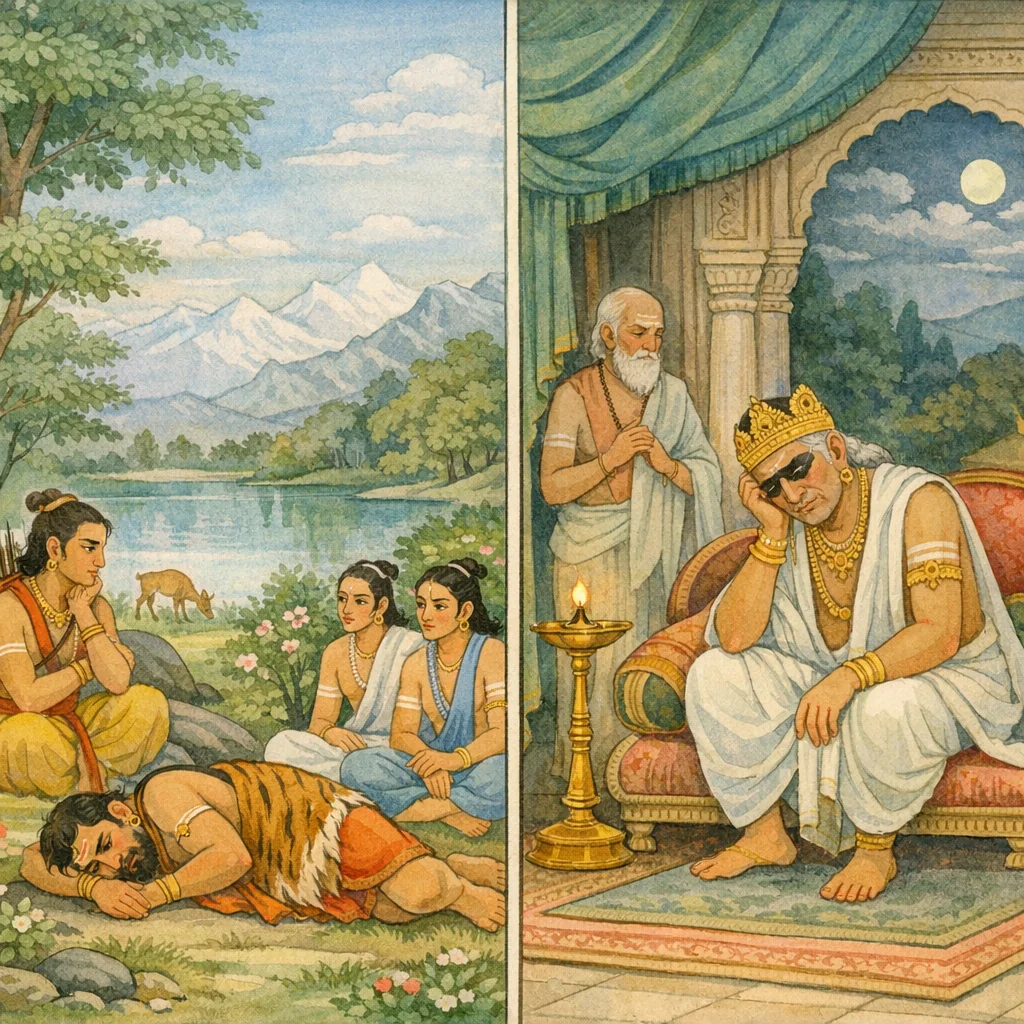
Chapter Arc: जनमेजय के प्रश्न पर वैशम्पायन बताते हैं कि वन में पाण्डव तप, स्वाध्याय और संयम के साथ रमणीय सरोवरों, पर्वतों और नदी-प्रदेशों में विचर रहे थे—पर भीतर-ही-भीतर उनका क्षात्र-तेज अपमान की आग से जल रहा था। → वनवास में ऋषि-मुनि पाण्डवों के पास आते हैं, उनका सत्कार होता है; पर अर्जुन, यमज और भीम—तीनों के भीतर असह्य अमर्ष बढ़ता जाता है: अर्जुन क्रोध से सो नहीं पाता, नकुल-सहदेव जागते रहते हैं, और भीम रण-काल की प्रतीक्षा में भूमि पर करवटें बदलता है—धर्म और सत्य उन्हें अभी रोक रहे हैं। → उधर हस्तिनापुर में पाण्डवों का समाचार सुनकर धृतराष्ट्र का हृदय विदीर्ण होता है; वह स्वीकार करता है कि शकुनि के द्यूत-प्रपंच और दुर्योधन-आश्रित होकर उसने ‘साधु प्रवृत्त’ पाण्डवों के साथ अन्याय किया—और यही कुरुवंश का ‘अन्तकाल’ बन सकता है। → धृतराष्ट्र की खेद-भरी वाणी से राज्य की नींव में छिपा भय प्रकट होता है: पाण्डव धर्म-बंधन में बँधे हैं, पर उनका क्रोध संचित है; और राजा जानता है कि अन्याय का फल टल नहीं सकता। → धृतराष्ट्र की बात सुनकर शकुनि एकान्त में दुर्योधन को उकसाता है और कर्ण के पास जाकर उसे भी भड़काता है—अल्पबुद्धि दुर्योधन हर्षित हो उठता है, मानो आने वाले संकट को आमंत्रण दे रहा हो।
Shlokas
Verse 1
हम () ऑफ अदा (घोषयात्रापर्व) षट्त्रिशदधिकद्धिशततमो< ध्याय: पाण्डवोंका समाचार सुनकर धृतराष्ट्रका खेद और चिन्तापूर्ण उद्गार जनमेजय उवाच एवं वने वर्तमाना नराग्र्या: शीतोष्णवातातपकर्शिताड्रा: । सरस्तदासाद्य वनं च पुण्यं ततः परं किमकुर्वन्त पार्था:,जनमेजयने पूछा--मुने! इस प्रकार वनमें रहकर सर्दी, गर्मी, हवा और धूपका कष्ट सहनेके कारण जिनके शरीर अत्यन्त कृश हो गये थे, उन नरश्रेष्ठ पाण्डवोंने पवित्र द्वैतवनमें पूर्वोक्त सरोवरके पास पहुँचकर फिर कौन-सा कार्य किया?
Janamejaya said: “O sage, after living in the forest and enduring the hardships of cold, heat, wind, and sun—so that their bodies grew exceedingly lean—when those foremost of men, the Pāṇḍavas, reached that lake and the holy forest, what did the sons of Pṛthā do next?”
Verse 2
वैशम्पायन उवाच सरस्तदासाद्य तु पाण्डुपुत्रा जन समुत्सृज्य विधाय वेशम् । वनानि रम्याण्यथ पर्वतांश्र नदीप्रदेशांश्व॒ तदा विचेरु:,वैशम्पायनजी बोले--राजन! उस (रमणीय) सरोवरपर आकर पाण्डवोंने वहाँ आये हुए जनसमुदायको विदा कर दिया और अपने रहनेके लिये कुटी बनाकर वे आस-पासके रमणीय वनों, पर्वतों तथा नदीके तटप्रदेशोंमें विचरने लगे
Vaiśampāyana said: Having reached that lake, the sons of Pāṇḍu dismissed the gathered people. After arranging their dwelling and adopting the attire suited to forest life, they then wandered through the lovely woods, the mountains, and the stretches along the riverbanks—settling into the disciplined rhythm of exile.
Verse 3
तथा वने तान् वसत: प्रवीरान् स्वाध्यायवन्तक्ष तपोधनाश्ष । अभ्याययुर्वेदविद: पुराणा- स्तान् पूजयामासुरथो नराग्र्या:,इस तरह वनमें रहते हुए उन वीरशिरोमणि पाण्डवोंके पास बहुत-से स्वाध्यायशील, वेदवेत्ता एवं पुरातन तपस्वी ब्राह्मण आते थे और वे नरश्रेष्ठ पाण्डव उनकी यथोचित सेवा- पूजा करते थे
Vaiśampāyana said: While those foremost heroes were dwelling in the forest, many ancient ascetics—rich in austerity, devoted to Vedic study, and learned in the Vedas—came to visit them. The best of men, the Pāṇḍavas, duly honored and served those Brahmin sages with fitting reverence.
Verse 4
ततः कदाचित् कुशल: कथासु विप्रो5भ्यगच्छद् भुवि कौरवेयान् । स तै: समेत्याथ यदृच्छयैव वैचित्रवीर्य नृपमभ्यगच्छत्,तदनन्तर किसी समय कथा-वार्तामें कुशल एक ब्राह्मण उस वन्यभूमिमें पाण्डवोंके पास आया और उनसे मिलकर वह घूमता-घामता अकस्मात् राजा धृतराष्ट्रके दरबारमें जा पहुँचा
Then, at one time, a Brahmin—skilled in discourse and well-versed in news—came upon the Kauravas on the earth. After meeting with them, he wandered on, and by mere chance he arrived before King Dhṛtarāṣṭra, the descendant of Vicitravīrya. The verse underscores how seemingly accidental encounters can become channels through which information and moral pressure move between rival houses.
Verse 5
अथोपटदिष्ट: प्रतिसत्कृतश्न वृद्धेन राज्ञा कुरुसत्तमेन । प्रचोदित: संकथयाम्बभूव धर्मानिलेन्द्रप्रभवान् यमौ च,कुरुकुलमें श्रेष्ठ एवं वयोवृद्ध राजा धृतराष्ट्रने उसका बहुत आदर-सत्कार किया। जब वह आसनपर बैठ गया, तब महाराजके पूछनेपर युधिष्ठिर, भीमसेन, अर्जुन तथा नकुल- सहदेवके समाचार सुनाने लगा
Then, having been duly instructed and respectfully honored by the aged king—foremost among the Kurus—he, when prompted, began to relate the account: the righteous conduct and condition of the twins born of the Wind-god and Indra, and of the other sons as well. In ethical tone, the verse highlights the king’s proper hospitality toward a guest and the ensuing truthful report concerning the Pāṇḍavas’ welfare and dharma.
Verse 6
कृशांश्व वातातपकर्शिताड्रान् दुःखस्थ चोग्रस्य मुखे प्रपन्नान् । तां चाप्यनाथामिव वीरनाथां कृष्णां परिक्लेशगुणेन युक्ताम्,उसने बताया--“इस समय पाण्डव हवा और गर्मी आदिका कष्ट सहन करनेके कारण अत्यन्त कृश हो गये हैं। भयंकर दुःखके मुँहमें पड़ गये हैं और वीरपत्नी द्रौपदी भी अनाथकी भाँति सब ओरसे क्लेश-ही-क्लेश भोग रही है”
Vaiśampāyana said: “At this time the Pāṇḍavas have become exceedingly emaciated, worn down by wind and scorching heat. They have fallen into the very jaws of dreadful suffering. And Kṛṣṇā (Draupadī)—though protected by heroic husbands—endures affliction on every side, as if she were without any refuge.”
Verse 7
ततः कथास्तस्य निशम्य राजा वैचित्रवीर्य: कृपयाभितप्त: । वने तथा पार्थिवपुत्रपौत्रान् श्रुत्वा तथा दुःखनदीं प्रपन्नान्,ब्राह्मणकी ये बातें सुनकर विचित्रवीर्यनन्दन राजा धृतराष्ट्र दयासे द्रवित हो बहुत दुःखी हो गये। जब उन्होंने सुना कि राजाके पुत्र और पौत्र होकर भी पाण्डव इस प्रकार दुःखकी नदीमें डूबे हुए हैं, तब उनका हृदय करुणासे भर आया और वे लंबी-लंबी साँसे खींचते हुए किसी प्रकार धैर्य धारण करके सब कुछ अपनी ही करतूतका परिणाम समझकर यों बोले --
Hearing those accounts, the king—descended from Vicitravīrya—was scorched by compassion. And when he learned that the Pāṇḍavas, though sons and grandsons of kings, had in the forest fallen into a very river of suffering, his heart filled with pity; drawing long breaths, he steadied himself with difficulty and, taking it as the fruit of his own deeds, spoke.
Verse 8
प्रोवाच दैन्याभिहतान्तरात्मा नि:श्वासवातोपहतस्तदानीम् । वाचं कथंचित् स्थिरतामुपेत्य तत् सर्वमात्मप्रभवं विचिन्त्य,ब्राह्मणकी ये बातें सुनकर विचित्रवीर्यनन्दन राजा धृतराष्ट्र दयासे द्रवित हो बहुत दुःखी हो गये। जब उन्होंने सुना कि राजाके पुत्र और पौत्र होकर भी पाण्डव इस प्रकार दुःखकी नदीमें डूबे हुए हैं, तब उनका हृदय करुणासे भर आया और वे लंबी-लंबी साँसे खींचते हुए किसी प्रकार धैर्य धारण करके सब कुछ अपनी ही करतूतका परिणाम समझकर यों बोले --
Vaiśaṃpāyana said: Struck within by misery and shaken then by the gusts of heavy sighing, he somehow steadied his voice. Reflecting that all this had arisen from his own doing, he spoke—his heart softened with compassion on hearing how the Pāṇḍavas, though born as sons and grandsons of kings, were nevertheless drowning in a river of suffering.
Verse 9
कथं नु सत्य: शुचिरार्यवृत्तो ज्येष्ठ: सुतानां मम धर्मराज: । अजातशणत्रु: पृथिवीतले सम शेते पुरा राडकवकूटशायी,“अहो! जो मेरे सभी पुत्रोंमें बड़े तथा सत्यवादी, पवित्र और सदाचारी हैं तथा जो पहले रंकु मृगके (नरम) रोओंसे बने हुए बिछौनोंपर सोया करते थे, वे अजातशत्रु धर्मराज युधिष्ठटिर आजकल भूमिपर कैसे शयन करते होंगे?
Vaiśampāyana said: 'How is it that my Dharma-king—truthful, pure, and steadfast in noble conduct, the eldest among my sons—Ajātaśatru, who once lay upon soft beds made of raṅku-deer hair, now lies level upon the bare earth? Alas, how must Yudhiṣṭhira be sleeping today?'
Verse 10
प्रबोध्यते मागधसूतपूमै- नित्यं स्तुवद्धि: स्वयमिन्द्रकल्प: । पतत्त्रिसड्घै: स जघन्यरात्रे प्रबोध्यते नूनमिडातलस्थ:,“जिन्हें कभी मागधों और सूतोंका समुदाय प्रतिदिन स्तुति-पाठ करके जगाता था, जो साक्षात् इन्द्रके समान तेजस्वी और पराक्रमी हैं, वे ही राजा युधिष्छिर निश्चय ही अब भूमिपर सोते और पक्षियोंके कलरव सुनकर रातके पिछले पहरमें जागते होंगे”
Vaiśampāyana said: He who was once awakened each day by the bards of Magadha and the Sūtas, chanting constant praises—he, radiant and mighty like Indra himself—now surely lies upon the bare earth, and in the last watch of the night is roused by the cries of flocks of birds. The verse underscores the reversal of fortune: royal honor and public acclaim give way to austere endurance, inviting reflection on impermanence and the disciplined acceptance of hardship.
Verse 11
कथं नु वातातपकर्शिताड्रो वृकोदर: कोपपरिप्लुताड़: । शेते पृथिव्यामतथोचिताड्: कृष्णासमक्षं वसुधातलस्थ:,'भीमसेनका शरीर हवा और धूपका कष्ट सहन करनेसे अत्यन्त दुर्बल हो गया होगा। उनका अंग-अंग क्रोधसे काँपता और फड़कता होगा। वे द्रौपदीके सामने कैसे धरतीपर शयन करते होंगे? उनका शरीर ऐसा कष्ट भोगनेयोग्य नहीं है
Vaiśampāyana said: “How indeed does Vṛkodara lie upon the bare earth—his body worn down by wind and sun, his limbs flooded with anger and trembling—there on the ground, in Kṛṣṇā’s very presence, though such hardship is not fitting for one of his strength and station?”
Verse 12
तथार्जुन: सुकुमारो मनस्वी वशे स्थितो धर्मसुतस्य राज्ञ: । विदूयमानैरिव सर्वगात्रै- र्धुवं न शेते वसतीरमर्षात्,“इसी प्रकार सुकुमार एवं मनस्वी अर्जुन, जो सदा धर्मराज युधिष्ठिरके अधीन रहते हैं, अमर्षके कारण उनके सारे अंगोंमें संताप हो रहा होगा और निश्चय ही उन्हें अपनी कुटियामें अच्छी तरह नींद नहीं आती होगी
Vaiśampāyana said: “So too Arjuna—tender in body yet strong in resolve—who remains under the authority of the king, Dharma’s son (Yudhiṣṭhira): with all his limbs as though burning with inner torment, surely does not sleep well in his dwelling, consumed by indignation.”
Verse 13
यमौ च कृष्णां च युधिष्छिरं च भीम च दृष्टवा सुखविप्रयुक्तम् | विनिः:श्वसन् सर्प इवोग्रतेजा ध्रुव॑ न शेते वसतीरमर्षात्,'अर्जुनका तेज बड़ा ही भयंकर है। वे नकुल, सहदेव, द्रौपदी, युधिष्ठिर तथा भीमसेनको सुखसे वंचित देखकर सर्पके समान फुककारते होंगे और अमर्षके कारण निश्चय ही उन्हें नींद नहीं आती होगी
Vaiśaṃpāyana said: “Seeing the twin brothers, Kṛṣṇā (Draupadī), Yudhiṣṭhira, and Bhīma deprived of happiness, Arjuna—of fierce splendor—must be breathing hard like an enraged serpent. Out of indignation at their suffering, he surely does not sleep, even while dwelling away from them.”
Verse 14
तथा यमौ चाप्यसुखौ सुखाहं समृद्धरूपावमरौ दिवीव । प्रजागरस्थौ ध्रुवमप्रशान्तौ धर्मेण सत्येन च वार्यमाणौ,“इसी प्रकार सुख भोगनेके योग्य नकुल और सहदेवका भी सुख छिन गया है। वे दोनों भाई स्वर्गके देवता अश्विनीकुमारोंकी भाँति रूपवान् हैं। वे भी निश्चय ही अशान्तभावसे सारी रात जागते हुए भूमिपर सोते होंगे। धर्म और सत्य ही उन्हें तत्काल आक्रमण करनेसे रोके हुए हैं
Vaiśaṃpāyana said: “So too the twin brothers—though worthy of enjoying happiness—have been deprived of it. Radiant in form like the divine Aśvin twins of heaven, they surely lie awake through the night, restless and unappeased. Only dharma and truth restrain them, holding them back from launching an immediate assault.”
Verse 15
समीरणेनाथ समो बलेन समीरणस्यैव सुतो बलीयान् । स धर्मपाशेन सितोग्रजेन ध्रुवं विनि:श्वस्य सहत्यमर्षम्,“जो बलमें वायुके समान हैं, वायुदेवताके ही अत्यन्त बलवान पुत्र हैं, वे भीमसेन भी अपने बड़े भाईके द्वारा धर्मके बन्धनमें बाँध लिये गये हैं। निश्चय ही इसीलिये चुपचाप लम्बी साँसें खींचते हुए वे क्रोधको सहन करते हैं
Vaiśampāyana said: Equal in strength to the Wind itself, indeed the mighty son of the Wind—Bhīmasena—has been bound by his elder brother with the noose of dharma. Therefore, surely, he endures his anger, breathing out long, restrained sighs, submitting his power to righteousness rather than to impulse.
Verse 16
स चापि भूमौ परिवर्तमानो वर्ध सुतानां मम काड्क्षमाण: । सत्येन धर्मेण च वार्यमाण: काल प्रतीक्षत्यधिको रणे<न्यै:,“रणभूमिमें भीमसेन दूसरोंकी अपेक्षा सदा अधिक पराक्रमी सिद्ध होते हैं। वे मेरे पुत्रोंके वधकी कामना करते हुए धरतीपर करवटें बदल रहे होंगे। सत्य और धर्मने ही उन्हें रोक रखा है; अतः वे भी अवसरकी ही प्रतीक्षा कर रहे हैं
And he too, rolling restlessly upon the ground, longing for the slaughter of my sons, is held back only by truth and by dharma. Therefore, though he surpasses others in battle, he merely waits for the right moment.
Verse 17
अजातशयत्रौ तु जिते निकृत्या दुःशासनो यत् परुषाण्यवोचत् । तानि प्रविष्टानि वृकोदराड्ू दहन्ति कक्षाग्निरिवेन्धनानि,“अजातशत्रु युधिष्ठिरको जूएमें छलपूर्वक हरा दिये जानेपर दुःशासनने जो कड़वी बातें कही थीं, वे भीमसेनके शरीरमें घुसकर जैसे आग तृण और काष्ठके समूहको जला डालती है, उसी प्रकार उन्हें दग्ध कर रही होंगी
Vaiśaṃpāyana said: When Ajātaśatru (Yudhiṣṭhira) had been defeated by deceit, the harsh words that Duḥśāsana spoke entered Bhīma (Vṛkodara) like a consuming fire; they burn within him just as a forest-blaze devours dry fuel. The verse underscores how humiliation and injustice, once inflicted, become an inner conflagration that drives resolve toward retribution and the restoration of dharma.
Verse 18
न पापकं ध्यास्यति धर्मपुत्रो धनंजयश्चाप्यनुवर्त्स्यते तम् । अरण्यवासेन विवर्धते तु भीमस्य कोपोडग्निरिवानिलेन,“धर्मपुत्र युधिष्ठिर मेरे अपराधपर ध्यान नहीं देंगे। अर्जुन भी उन्हींका अनुसरण करेंगे। परंतु इस वनवाससे भीमसेनका क्रोध तो उसी प्रकार बढ़ रहा होगा, जैसे हवा लगनेसे आग धधक उठती है
Vaiśampāyana said: “Dharmaputra Yudhiṣṭhira will not brood over any wrongdoing; and Dhanañjaya Arjuna too will follow his lead. Yet, because of this forest-exile, Bhīma’s anger keeps swelling—like fire flaring up when fanned by the wind.”
Verse 19
स तेन कोपेन विदहा[मानः: करं करेणाभिनिपीड्य वीर: । विनि:श्वसत्युष्णमतीव घोरं दहन्निवेमान् मम पुत्रपौत्रान्,“उस क्रोधसे जलते हुए वीरवर भीमसेन हाथसे हाथ मलकर इस प्रकार अत्यन्त भयंकर गर्म-गर्म साँस खींच रहे होंगे, मानो मेरे इन पुत्रों और पौत्रोंको अभी भस्म कर डालेंगे
Vaiśampāyana said: Inflamed by that anger, the heroic Bhīmasena pressed one hand against the other, and breathed out hot, exceedingly dreadful breaths—as though he would burn to ashes my sons and grandsons then and there. The scene underscores how wrath, when unchecked, turns a righteous grievance into a force that threatens to consume an entire lineage.
Verse 20
गाण्डीवधन्वा च वृकोदरश्न संरम्भिणावनन््तककालकल्पौ । न शेषयेतां युधि शत्रुसेनां शरान् किरन्तावशनिप्रकाशान्
Vaiśampāyana said: Arjuna, wielder of the Gāṇḍīva, and Bhīma (Vṛkodara), both fierce in their onset and like the very end-time of endless ages, would leave no remnant of the enemy host in battle, as they showered arrows blazing like lightning. The verse heightens the epic’s moral tension: heroic prowess is portrayed as awe-inspiring and almost cosmic, yet it is directed toward the grim necessity of war where entire armies can be annihilated.
Verse 21
“गाण्डीवधारी अर्जुन तथा भीमसेन जब क्रोधमें भर जायँगे, उस समय यमराज और कालके समान हो जायँगे। वे रणभूमिमें विद्युत्के समान चमकनेवाले बाणोंकी वर्षा करके शत्रुसेनामेंसे किसीको भी जीवित नहीं छोड़ेंगे ।। दुर्योधन: शकुनि: सूतपुत्रो दुःशासनश्वापि सुमन्दचेता: । मधु प्रपश्यन्ति न तु प्रपात॑ यद् द्यूतमालम्ब्य हरन्ति राज्यम्,“दुर्योधन, शकुनि, सूतपुत्र कर्ण तथा दुःशासन--ये बड़े ही मूढ़बुद्धि हैं, क्योंकि जूएके सहारे दूसरेके राज्यका अपहरण कर रहे हैं। (ये अपने ऊपर आनेवाले संकटको नहीं देखते हैं) इन्हें वक्षकी शाखासे टपकता हुआ केवल मधु ही दिखायी देता है, वहाँसे गिरनेका जो भारी भय है, उधर इनकी दृष्टि नहीं है
Vaiśampāyana said: When Arjuna, bearer of the Gāṇḍīva, and Bhīmasena are filled with wrath, they will become like Yama and Time itself. On the battlefield they will pour down a storm of lightning-bright arrows and leave no one alive in the enemy host. Duryodhana, Śakuni, Karṇa the sūta’s son, and Duḥśāsana are of utterly deluded understanding: relying on gambling, they seize another’s kingdom. They see only the honey dripping from the branch, not the dreadful fall that awaits them—blind to the calamity their unrighteous act is drawing near.
Verse 22
शुभाशुभं कर्म नरो हि कृत्वा प्रतीक्षते तस्य फल सम कर्ता | स तेन मुहृत्यवश: फलेन “मोक्ष: कथं स्यात् पुरुषस्य तस्मात्,मनुष्य शुभ और अशुभ कर्म करके उसके स्वर्ग-नरकरूप फलकी प्रतीक्षा करता है। वह उस फलसे विवश होकर मोहित होता है। ऐसी दशामें मूढ़ पुरुषका उस मोहसे कैसे छुटकारा हो सकता है?
Vaiśampāyana said: Having performed deeds that are auspicious and inauspicious, a man waits for their corresponding results. Overpowered, even for a moment, by those fruits, he becomes deluded. In such a condition, how could that person attain liberation from that very delusion?
Verse 23
क्षेत्र सुकृष्टे हुपिते च बीजे देवे च वर्षत्यूतुकालयुक्तम् । न स्यात् फलं तस्य कुतः प्रसिद्धि- रन्यत्र दैवादिति चिन्तयामि,“मैं सोचता हूँ कि अच्छी तरह जोते हुए खेतमें बीज बोया जाय तथा ऋतुके अनुसार ठीक समयपर वर्षा भी हो, फिर भी उसमें फल न लगे, तो इसमें प्रारब्धके अतिरिक्त अन्य किसी कारणकी सिद्धि कैसे की जा सकती है?
Vaiśampāyana said: “Even when a field is well ploughed, the seed is properly sown, and the god (of rain) sends showers at the right season, if the crop still yields no fruit—how could one establish any cause for that failure other than destiny? This is what I reflect upon.”
Verse 24
कृतं मताक्षेण यथा न साधु साधुप्रवृत्तेन च पाण्डवेन । मया च दुष्पुत्रवशानुगेन तथा कुरूणामयमन्तकाल:,'द्यूतप्रेमी शकुनिने जूआ खेलकर कदापि अच्छा नहीं किया। साधुतामें लगे हुए युधिष्ठिरने भी जो उसे तत्काल नहीं मार डाला, यह भी अच्छा नहीं किया। इसी प्रकार कुपुत्रके वशमें पड़कर मैंने भी कोई अच्छा काम नहीं किया है। इसीका फल है कि यह कौरवोंका अन्तकाल आ पहुँचा है
Vaiśampāyana said: “What was done by the dice-eyed (Śakuni) was in no way good; and even by the Pāṇḍava, though devoted to righteous conduct, it was not good—because he did not strike him down at once. I too, having yielded to the sway of a wicked son, have done nothing good. As the consequence of this, the hour of destruction for the Kurus has now arrived.”
Verse 25
ध्रुवं प्रवास्यत्यसमीरितो 5पि ध्रुवं प्रजास्यत्युत गर्भिणी या । ध्रुवं दिनादौ रजनीप्रणाश- स्तथा क्षपादौ च दिनप्रणाश:,“निश्चय ही बिना किसी प्रेरणाके भी हवा चलेगी ही, जो गर्भिणी है, वह समयपर अवश्य ही बच्चा जनेगी। दिनके आदिमें रजनीका नाश अवश्यम्भावी है तथा रात्रिके प्रारम्भमें दिनका भी अन्त होना निश्चित है। (इसी प्रकार पापका फल भी किसीके टाले नहीं टल सकता)
Vaiśaṃpāyana said: “Even without being stirred, the wind will surely blow; and the woman who is with child will surely give birth in due time. At the beginning of day, the night’s end is inevitable; and at the beginning of night, the day’s end is equally certain. In the same way, the consequence of wrongdoing cannot be averted—its fruition comes by necessity.”
Verse 26
क्रियेत कस्मादपरे च कुर्यु- वित्त न दद्यु: पुरुषा: कथंचित् । प्राप्यार्थकालं च भवेदनर्थ: कथं न तत् स्यथादिति तत् कुतः स्थात्,“यदि यह विश्वास हो जाय तो हम लोभके वश होकर न करनेयोग्य काम क्यों करें और दूसरे भी क्यों करें एवं बुद्धिमान् मनुष्य भी उपार्जित धनका दान क्यों न करें? अर्थके उपयोगका समय प्राप्त होनेपर यदि उसका सदुपयोग न किया जाय तो वह अनर्थका हेतु हो जाता है। अतः विचार करना चाहिये कि उस धनका सदुपयोग क्यों नहीं होता और कैसे हो?
Vaiśampāyana said: “If such a conviction were to arise, then why, driven by greed, would people do what ought not to be done—and why would others follow suit? And how could even prudent men ever refrain from giving away the wealth they have acquired? For when the proper time comes to put wealth to use, if it is not rightly employed it turns into a cause of harm. Therefore one must reflect: why does that wealth fail to be used well, and how can it be made to serve its true purpose?”
Verse 27
कथं न भिद्येत न च स्रवेत न च प्रसिच्येदिति रक्षितव्यम् | अरक्ष्यमाणं शतधा प्रकीर्येद् ध्रुव न नाशो5स्ति कृतस्य लोके,“यदि प्राप्त हुए धनका यथावत् वितरण न किया जायगा तो वह कच्चे घड़ेमें रखे हुए जलकी भाँति चूकर व्यर्थ नष्ट क्यों न होगा? यह सोचकर उसकी रक्षा करना ही कर्तव्य है। यदि यथायोग्य विभाजनके द्वारा धनकी रक्षा न की जायगी तो वह सैकड़ों प्रकारसे बिखर जायगा। जगतमें किये हुए कर्म-फलका नाश नहीं होता--यह निश्चित है। (इससे यही सिद्ध होता है कि उसका यथायोग्य वितरण कर देना ही उचित है)”
Vaiśampāyana said: “One must guard wealth with the thought: ‘How may it neither break apart, nor leak away, nor be wasted by spilling?’ For if it is not protected, it will scatter in a hundred ways. It is certain that in this world the fruit of what one has done does not perish; therefore, the proper course is to preserve it through fitting allocation and distribution, rather than letting it be lost like water kept in an unbaked clay pot.”
Verse 28
गतो हाूरण्यादपि शक्रलोकं धनंजय: पश्यत वीर्यमस्य । अस्त्राणि दिव्यानि चतुर्विधानि ज्ञात्वा पुनर्लेकमिमं प्रपन्न:,“देखो, अर्जुनमें कितनी शक्ति है! वे वनसे भी इन्द्रलोकको चले गये और वहाँसे चारों प्रकारके दिव्यास्त्र सीखकर पुन: इस लोकमें लौट आये
Vaiśampāyana said: “Behold the prowess of Dhanaṃjaya (Arjuna)! From the forest itself he went to Śakra’s world, and there, having mastered the fourfold classes of divine weapons, he returned again to this human realm.” The verse highlights disciplined acquisition of power under rightful authority, and the ethical expectation that extraordinary force be gained through legitimate training and then brought back for the protection of dharma rather than for personal pride.
Verse 29
स्वर्ग हि गत्वा सशरीर एव को मानुष: पुनरागन्तुमिच्छेत् । अन्यत्र कालोपहताननेकान् समीक्षमाणस्तु कुरून् मुमूर्षून्,“सदेह स्वर्गमें जाकर कौन मनुष्य इस संसारमें पुनः लौटना चाहेगा। अर्जुनके पुनः मर्त्यलोकमें लौटनेका कारण इसके सिवा दूसरा नहीं है कि ये बहुसंखयक कौरव कालके वशीभूत हो मृत्युके निकट पहुँच गये हैं और अर्जुन इनकी इस अवस्थाको अच्छी तरह देख रहे हैं
Vaiśampāyana said: “Having gone to heaven in this very body, what human being would wish to return again? Only for another reason would one come back—namely, on seeing many Kurus struck down by Time, hovering on the brink of death.”
Verse 30
धनुग्रहिश्चार्जुन: सव्यसाची धनुश्न तद् गाण्डिवं भीमवेगम् | अस्त्राणि दिव्यानि च तानि तस्य त्रयस्य तेज: प्रसहेत को<त्र,“सव्यसाची अर्जुन अद्वितीय धनुर्थर हैं। उनके उस गाण्डीव धनुषका वेग भी बड़ा भयानक है, और अब तो अर्जुनको वे दिव्यास्त्र भी प्राप्त हो गये हैं। इस समय इन तीनोंके सम्मिलित तेजको यहाँ कौन सह सकता है?”
Vaiśampāyana said: Arjuna, the ambidextrous master of the bow, stands ready with that Gāṇḍīva whose force is terrifying. And now those divine weapons too have come into his possession. Who here could withstand the combined splendor and power of these three? (The statement underscores the moral weight of strength when aligned with rightful purpose: such power, once gathered, becomes decisive and nearly unopposable.)
Verse 31
निशम्य तद् वचन पार्थिवस्य दुर्योधनं रहिते सौबलो5थ । अबोधयत् कर्णमुपेत्य सर्व स चाप्यह्ृष्टो>भवदल्पचेता:,एकान्तमें कही हुई राजा धृतराष्ट्रकी उपर्युक्त सारी बातें सुनकर सुबलपुत्र शकुनिने दुर्योधन और कर्णके पास जाकर ज्यों-की-त्यों कह सुनायी। इससे मन्दमति दुर्योधन उदास एवं चिन्तित हो गया
Vaiśampāyana said: Having heard those words of the king, Śakuni, son of Subala, met Duryodhana in private and reported everything exactly as it had been said; he also approached Karṇa and informed him. Hearing it, the small-minded Duryodhana became joyless—sinking into dejection and anxious thought, for counsel rooted in restraint and duty did not please his ambition.
Verse 235
इस प्रकार श्रीमहाभारत वनपर्वके अन्तर्गत द्रौपदीसत्यभागासंवादपर्वमें श्रीकृष्णका द्वारकाको प्रस्थानविषयक दो सौ पैंतीसवाँ अध्याय पूरा हुआ
Thus ends the two hundred and thirty-fifth chapter of the Vana Parva of the Śrī Mahābhārata, within the section on the dialogue concerning Draupadī and Satyabhāmā, describing Śrī Kṛṣṇa’s departure for Dvārakā. The closing formula marks the completion of this narrative unit and signals a transition: counsel and reflection give way to action, as Kṛṣṇa returns to his royal and dharmic responsibilities.
Verse 236
इति श्रीमहाभारते वनपर्वणि घोषयात्रापर्वणि धृतराष्ट्रखेदवाक्ये षट्त्रिंशदधिकद्धिशततमो< ध्याय:,इस प्रकार श्रीमह्याभारत वनपर्वके अन्तर्गत घोषयात्रापर्वमें धृतराष्ट्रके खेदयुक्त वचनसे सम्बन्ध रखनेवाला दो सौ छत्तीसवाँ अध्याय पूरा हुआ
Thus, in the Śrī Mahābhārata, within the Vana Parva—specifically the Ghoṣa-yātrā section—ends the two-hundred-and-thirty-sixth chapter, connected with Dhṛtarāṣṭra’s grief-laden words. The colophon marks the close of this unit, emphasizing the moral weight of a king’s sorrow and the consequences that follow from attachment, partiality, and the unfolding of fate within dharma.
Frequently Asked Questions
Whether the Pandavas should act to free a hostile rival: the episode frames rescue as a duty tied to kinship, royal dignity, and protection of dependents, even when political advantage could be gained by inaction.
The chapter models a graded response: begin with sāntva (peaceful request), escalate only when necessary, and aim for restoration of order rather than punitive excess—especially when broader social norms (protection of women and non-combatants) are implicated.
No explicit phalaśruti is presented in these verses; the meta-significance is conveyed narratively through outcome—recognition and mutual honoring—implying that disciplined force aligned with dharma culminates in stability and reputational integrity.