Adhyaya 64
उपहार-विधानम्, यक्षपूजा, रत्ननिध्युद्धारः (Offerings to Tryambaka; Yakṣa honors; Excavation of the Treasure)
Upa-parva: Rudra–Kubera Upahāra and Ratnanidhi-Uddhāra Episode (Āśvamedhika-parva context)
Brahmins request that an upahāra be performed for Tryambaka (Śiva) before they proceed to their own aims. Vaiśaṃpāyana reports that Yudhiṣṭhira complies, offering to Girīśa according to rule. The purohita kindles and satisfies the fire with consecrated ghee, prepares a mantra-perfected caru, and presents bali comprising flowers, sweets (modaka), milk-rice (pāyasa), meats, parched grains (lāja), and other offerings, completing the sviṣṭakṛt portion in Vedic order. Additional bali is offered to Kubera (yakṣendra), Maṇibhadra, other yakṣas, and bhūta-overlords; the ritual space is described as resplendent with kṛsara, meat, and sesame-mixed nivāpas. After worshiping Rudra and his gaṇas, the king—placing Vyāsa in the lead—approaches the ‘ratnanidhi’ (treasure repository) and honors the wealth-lord (Kubera) and the guardians of the nidhis with flowers and food. With auspicious proclamations (puṇyāha) by the Brahmins, Yudhiṣṭhira has the treasure excavated: numerous vessels and implements are raised in great quantity, with numerical and weight markers provided. The inventory expands to transport capacity—camels, horses, elephants, carts, chariots, and uncounted attendants—highlighting large-scale logistics. The king then re-honors the deities, departs toward Nāgāhvaya (Hastināpura) with purohita and Vyāsa’s permission, and the great host moves city-ward, strained by the heavy burden of wealth yet bringing satisfaction to the Kurus.
Chapter Arc: कुरु-सम्राट युधिष्ठिर, सूत-मागध-वन्दियों की स्तुतियों से घिरे, श्वेत छत्र के नीचे पूर्णिमा के चन्द्रमा-सा दीप्तिमान होकर हिमालय-प्रदेश की ओर बढ़ते हैं—जहाँ महायज्ञ की तैयारी को ही धर्म का नया रण बनना है। → राजा ब्राह्मणों को अग्रभाग में रखकर, वेद-वेदाङ्ग-पारग पुरोहितों सहित, यज्ञ-शिविर के लिए उपयुक्त स्थान चुनवाते हैं। शुभ नक्षत्र, शुभ दिवस, और विधिपूर्वक ‘निवेश’ (छावनी/यज्ञ-आवास) की रचना—इन सबमें सूक्ष्म नियमों का दबाव बढ़ता जाता है; एक त्रुटि भी यज्ञ-फल को कलुषित कर सकती है। → द्विजश्रेष्ठ निर्णायक स्वर में कहते हैं—‘शुभ नक्षत्र-दिवस निश्चित है; अब जो अनन्तर (अगला) कर्तव्य है, वही किया जाए।’ इसी क्षण युधिष्ठिर की राजसत्ता, ब्राह्मण-आज्ञा के अधीन होकर, यज्ञ-धर्म के अनुशासन में पूर्णतः समर्पित दिखाई देती है। → राजा उस देश-प्रदेश में—जहाँ उत्तम द्रव्य, जलाशय, सरिताएँ, वन-उपवन और पर्वत-संपदा उपलब्ध है—वहीं ठहरकर सामग्री-आनयन और शिविर-रचना का उपक्रम आरम्भ कराते हैं; ब्राह्मणों द्वारा नियमानुसार छावनी का विन्यास कराया जाता है। → यज्ञ-शिविर का ढाँचा खड़ा हो चुका है; अब ‘द्रव्य-आनयन’ और आगे की विधियाँ किस क्रम से, किन बाधाओं के बीच, पूर्ण होंगी—यह अगले अध्यायों के लिए द्वार खोलता है।
Shlokas
Verse 1
(दाक्षिणात्य अधिक पाठके ८६ श्लोक मिलाकर कुल ३२३ “लोक हैं) नफमशा (3) असऔ मनन चतु:षष्टितमो<5 ध्याय: पाण्डवोंका हिमालयपर पहुँचकर वहाँ पड़ाव डालना और रातमें उपवासपूर्वक निवास करना वैशम्पायन उवाच ततस्ते प्रययुर्ह्रष्टा: प्रहृषनरवाहना: । रथघोषेण महता पूरयन्तो वसुंधराम्,वैशम्पायनजी कहते हैं--जनमेजय! पाण्डवोंके साथ जो मनुष्य और वाहन थे, वे सब-के-सब बड़े हर्षमें भरे हुए थे। वे स्वयं भी अपने रथके महान् घोषसे इस पृथ्वीको गुँजाते हुए प्रसन्नतापूर्वक यात्रा कर रहे थे
Vaiśampāyana said: Then they set out, delighted—men and their mounts all brimming with joy—filling the earth with the mighty rumble of their chariots as they traveled onward in high spirits.
Verse 2
संस्तूयमाना: स्तुतिभि: सूतमागधवन्दिभि: । स्वेन सैन्येन संवीता यथादित्या: स्वरश्मिभि:,सूत, मागध और वन्दीजन अनेक प्रकारके प्रशंसासूचक वचनोंद्वारा उनके गुण गाते चलते थे। अपनी सेनासे घिरे हुए पाण्डव ऐसे जान पड़ते थे, मानो अपनी किरणमालाओंसे मण्डित सूर्य प्रकाशित हो रहे हों
Vaiśampāyana said: As the bards—sūtas, māgadhas, and vandins—moved along singing their praises with many eulogies, the Pāṇḍavas, encircled by their own army, appeared like the suns themselves, radiant and splendid, as though adorned and surrounded by their own rays. The scene underscores rightful kingship made visible: public acclaim and disciplined protection together manifest royal dignity after the great war.
Verse 3
पाण्डुरेणातपत्रेण प्रियमाणेन मूर्थनि । बभौ युधिष्ठिरस्तत्र पौर्णमास्यथामिवोडुराट्,राजा युधिष्ठिरके मस्तकपर श्वेत छत्र तना हुआ था, जिससे वे वहाँ पूर्णमासीके चन्द्रमाके समान शोभा पा रहे थे
Vaiśaṃpāyana said: With a white royal parasol held above his head, Yudhiṣṭhira shone there—like the moon on the night of the full moon. The image underscores the king’s rightful sovereignty and auspicious, dharma-aligned rule after the trials of war.
Verse 4
जयाशिष: प्रह्ृष्टानां नराणां पथि पाण्डव: । प्रत्यगृह्नाद् यथान्यायं यथावत् पुरुषर्षभ:,मार्गमें बहुत-से मनुष्य प्रसन्न होकर राजा युधिष्ठिरको विजयसूचक आशीर्वाद देते थे और वे पुरुषशिरोमणि नरेश यथोचितरूपसे सिर झुकाकर उन यथार्थ वचनोंको ग्रहण करते थे
Verse 5
तथैव सैनिका राजन् राजानमनुयान्ति ये । तेषां हलहलाशब्दो दिवं स्तब्ध्वा व्यतिष्ठत,राजन! राजा युधिष्ठटिरके पीछे-पीछे जो बहुत-से सैनिक चल रहे थे, उनका महान् कोलाहल आकाशको स्तब्ध करके गूँज उठता था
Vaiśampāyana said: “In the same way, O king, the many soldiers who followed behind King Yudhiṣṭhira raised such a mighty din that it seemed to arrest the sky itself and resound there.”
Verse 6
सरांसि सरितश्नैव वनान्युपवनानि च । अत्यक्रामन्महाराजो गिरिं चाप्यन्वपद्यत
Vaiśampāyana said: The great king pressed onward, crossing lakes and rivers, passing through forests and groves; and he also proceeded along the mountain route—moving steadily ahead in his royal progress.
Verse 7
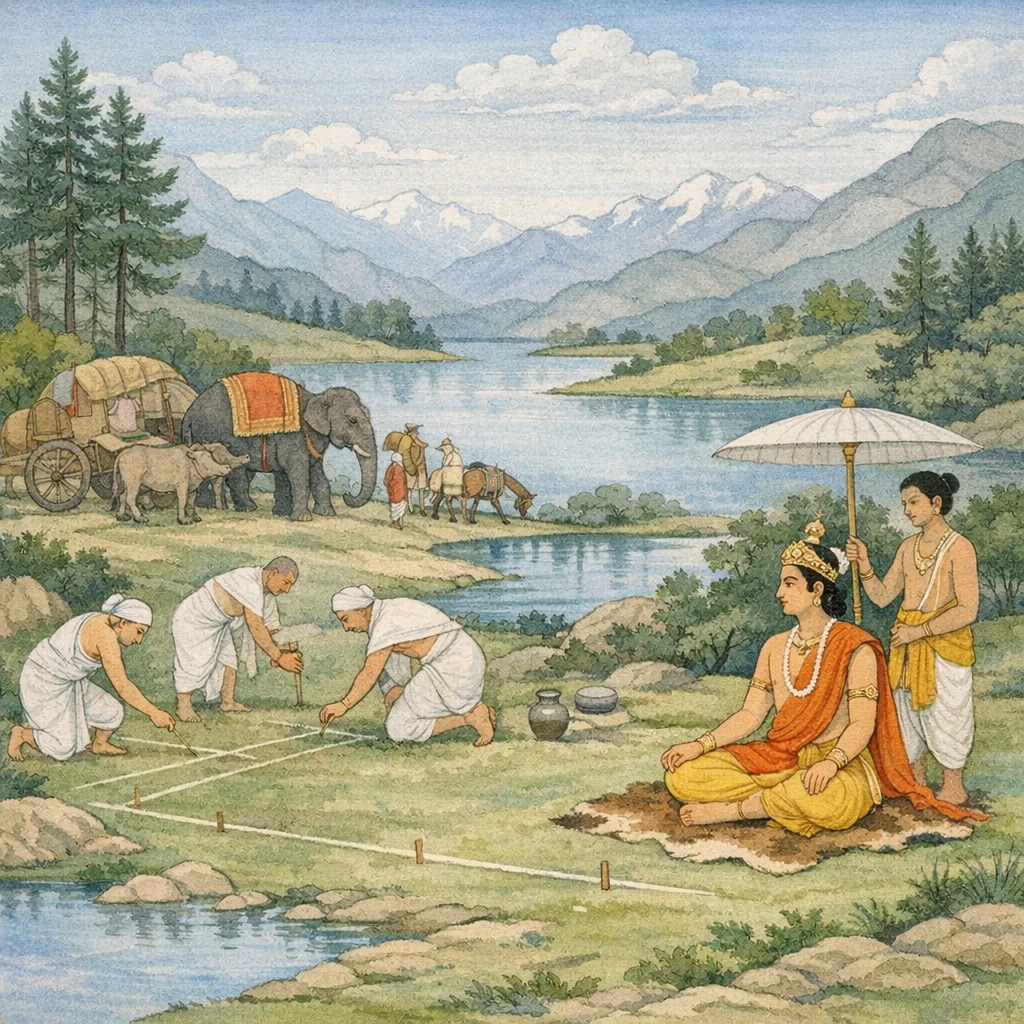
चक्रे निवेशनं राजा पाण्डव: सह सैनिकै: । शिवे देशे समे चैव तदा भरतसत्तम,कुरुवंशी भरतश्रेष्ठ) वहाँ एक समतल एवं सुखद स्थानमें पाण्डुपुत्र राजा युधिष्ठिरने तप, विद्या और इन्द्रिय-संयमसे युक्त ब्राह्मणों एवं वेद-वेदांगके पारगामी विद्वान राजपुरोहित धौम्य मुनिको आगे रखकर सैनिकोंके साथ पड़ाव डाला। बहुत-से राजा, ब्राह्मण और पुरोहितने यथोचित रीतिसे शान्तिकर्म करके युधिष्ठिर और उनके मन्त्रियोंको विधिपूर्वक बीचमें रखकर उन्हें सब ओरसे घेर रखा था
Vaiśampāyana said: Then the Pāṇḍava king, together with his troops, established a camp in an auspicious region on level ground, O best of the Bharatas. The scene underscores orderly kingship after conflict: choosing a safe, wholesome place and settling the army in a disciplined manner, preparing for rites and governance in accordance with dharma.
Verse 8
अग्रतो ब्राह्मणान् कृत्वा तपोविद्यादमान्वितान् | पुरोहितं च कौरव्य वेदवेदाड़पारगम् । आनिनिवेश्यं च राजानो ब्राह्मणा: सपुरोधस:,कुरुवंशी भरतश्रेष्ठ) वहाँ एक समतल एवं सुखद स्थानमें पाण्डुपुत्र राजा युधिष्ठिरने तप, विद्या और इन्द्रिय-संयमसे युक्त ब्राह्मणों एवं वेद-वेदांगके पारगामी विद्वान राजपुरोहित धौम्य मुनिको आगे रखकर सैनिकोंके साथ पड़ाव डाला। बहुत-से राजा, ब्राह्मण और पुरोहितने यथोचित रीतिसे शान्तिकर्म करके युधिष्ठिर और उनके मन्त्रियोंको विधिपूर्वक बीचमें रखकर उन्हें सब ओरसे घेर रखा था
Vaiśampāyana said: Placing in front the brāhmaṇas endowed with austerity, learning, and self-restraint—and also the royal priest, O descendant of Kuru, who had mastered the Vedas and their auxiliaries—the king made camp. Around him were many kings, brāhmaṇas, and priests, who, after performing the appropriate rites of pacification in due form, kept Yudhiṣṭhira and his ministers properly positioned at the center and protected on all sides. The scene underscores that royal action is to be guided and safeguarded by disciplined learning, ritual propriety, and restraint.
Verse 9
कृत्वा शान्तिं यथान्यायं सर्वश: पर्यवारयन् । कृत्वा तु मध्ये राजानममात्यांश्व॒ यथाविधि,कुरुवंशी भरतश्रेष्ठ) वहाँ एक समतल एवं सुखद स्थानमें पाण्डुपुत्र राजा युधिष्ठिरने तप, विद्या और इन्द्रिय-संयमसे युक्त ब्राह्मणों एवं वेद-वेदांगके पारगामी विद्वान राजपुरोहित धौम्य मुनिको आगे रखकर सैनिकोंके साथ पड़ाव डाला। बहुत-से राजा, ब्राह्मण और पुरोहितने यथोचित रीतिसे शान्तिकर्म करके युधिष्ठिर और उनके मन्त्रियोंको विधिपूर्वक बीचमें रखकर उन्हें सब ओरसे घेर रखा था
Vaiśaṃpāyana said: Having duly performed the rites of pacification in the proper manner, they then surrounded them on all sides. Placing the king—together with his ministers—in the middle according to prescribed rule, they formed a protective encirclement, affirming that royal action should proceed only after ritual order, counsel, and communal safeguarding have been established.
Verse 10
षट्पदं नवसंख्यानं निवेशं चक्रिरे द्विजा: । मत्तानां वारणेन्द्राणां निवेशं च यथाविधि
Vaiśampāyana said: The brahmins arranged the encampment in the prescribed manner—setting out the sixfold and ninefold divisions—and they also established, according to rule, the proper stations for the lordly elephants that were in rut.
Verse 11
अस्मिन् कार्ये द्विजश्रेष्ठा नक्षत्रे दिवसे शुभे,इति निश्चित्य विप्रेन्द्रा: क्रियतां यदनन्तरम् । “विप्रवरो! किसी शुभ नक्षत्र और शुभ दिनको इस कार्यकी सिद्धिके लिये आपलोग जो भी ठीक समझें, वह उपाय करें। ऐसा न हो कि यहीं लटके रहकर हमारा बहुत अधिक समय व्यतीत हो जाय। द्विजेन्द्रणण! इस विषयमें कुछ निश्चय करके इस समय जो करना उचित हो, उसे आप लोग अविलम्ब करें'
Vaiśampāyana said: “O best of twice-born ones, having determined an auspicious constellation and a favorable day for the success of this undertaking, O foremost of brāhmaṇas, do at once whatever should be done next. Do not let excessive time be wasted by remaining suspended in indecision; decide the matter and promptly carry out what is proper.”
Verse 12
यथा भवन्तो मन्यन्ते कर्तुमर्हन्ति तत् तथा । न न: कालात्ययो वै स्यादिहैव परिलम्बताम्
Vaiśaṃpāyana said: “Do exactly as you deem fit and are entitled to do. Only, let there not be any loss of time for us—let it be carried out here and now, without delay.”
Verse 13
श्रुत्वैतद् वचन राज्ञो ब्राह्मणा: सपुरोधस: । इदमूचुर्वचो हृष्टा धर्मराजप्रियेप्सव:,धर्मराज राजा युधिष्ठिरकी यह बात सुनकर उनका प्रिय करनेकी इच्छावाले ब्राह्मण और पुरोहित प्रसन्नतापूर्वक इस प्रकार बोले--
Vaiśampāyana said: Hearing these words of the king, the Brahmins—together with the royal priest—delighted and eager to do what would please Dharmarāja, spoke the following in joy. The scene underscores the ethical ideal of learned counsel offered not for self-interest but for the righteous king’s welfare and satisfaction.
Verse 14
अद्यैव नक्षत्रमहश्न पुण्यं यतामहे श्रेष्ठतमक्रियासु । अम्भोभिरद्येह वसाम राज- न्नुपोष्यतां चापि भवद्धिरद्य,“राजन! आज ही परम पवित्र नक्षत्र और शुभ दिन है; अतः आज ही हम श्रेष्ठतम कर्म करनेका प्रयत्न आरम्भ करते हैं। हमलोग तो आज केवल जल पीकर रहेंगे और आपलोगोंको भी आज उपवास करना चाहिये'
Vaiśampāyana said: “O King, today itself is marked by an auspicious constellation and a holy day. Therefore, let us begin today our effort toward the most excellent rites. As for us, we shall remain here today taking only water; and you too should observe a fast today.”
Verse 15
श्र॒ुत्वा तु तेषां द्विजसत्तमानां कृतोपवासा रजनीं नरेन्द्रा: । ऊषु: प्रतीता: कुशसंस्तरेषु यथाध्वरे प्रज्वलिता हुताशा:,जन श्रेष्ठ ब्राह्मणोंका यह वचन सुनकर समस्त पाण्डव रातमें उपवास करके कुशकी चटाइयोंपर निर्भय होकर सोये। वे ऐसे जान पड़ते थे, मानो यज्ञमण्डपमें पाँच वेदियोंपर स्थापित पाँच अग्नि प्रज्वलित हो रहे हों
Vaiśaṃpāyana said: Hearing the words of those foremost among the twice-born, the kings (the Pāṇḍavas) observed a fast through the night and lay down, reassured, upon beds of kuśa grass. They appeared like sacred fires blazing in a sacrifice—steady, purified, and disciplined—set upon the ritual ground.
Verse 16
ततो निशा सा व्यगमन्महात्मनां संशृण्वतां विप्रसमीरिता गिर: | ततः प्रभाते विमले द्विजर्षभा वचोडब्रुवन् धर्मसुतं नराधिपम्,तदनन्तर ब्राह्मणोंकी कही हुई बातें सुनते हुए महात्मा पाण्डवोंकी वह रात सकुशल व्यतीत हुई। फिर निर्मल प्रभातका उदय होनेपर उन श्रेष्ठ ब्राह्मणोंने धर्मनन्दन राजा युधिष्ठिरसे इस प्रकार कहा
Then that night passed safely for the great-souled Pāṇḍavas as they listened to the words spoken by the brāhmaṇas. When the pure, clear dawn arose, those foremost among the twice-born addressed Dharmasuta Yudhiṣṭhira, the king of men, with their counsel—signaling that ethical instruction and right conduct were to guide the next course of action.
Verse 63
तस्मिन् देशे च राजेन्द्र यत्र तद् द्रव्यमुत्तमम् । राजन! अनेकानेक सरोवरों, सरिताओं, वनों, उपवनों तथा पर्वतको लाँचकर महाराज युधिष्ठिर उस स्थानमें जा पहुँचे, जहाँ वह (राजा मरुत्तका रखा हुआ) उत्तम द्रव्य संचित था
Vaiśampāyana said: O best of kings, in that region where the excellent treasure lay, King Yudhiṣṭhira—having crossed many lakes, rivers, forests, groves, and mountains—arrived at the very place where that supreme wealth, once stored away by King Marutta, had been amassed. The passage underscores the righteous king’s determined journey toward a resource meant to serve a larger sacrificial and dharmic purpose, rather than private indulgence.
Verse 64
इति श्रीमहाभारते आश्वमेधिके पर्वणि अनुगीतापर्वणि द्रव्यानयनोपक्रमे चतु:षष्टितमो5ध्याय:
Thus, in the Śrī Mahābhārata, within the Aśvamedhika Parva—specifically in the Anugītā section—this concludes the sixty-fourth chapter, which begins the episode concerning the procuring and bringing of materials. The narrator marks a formal transition, signaling the next phase of action and instruction in the unfolding account.
Verse 103
कारयित्वा स राजेन्द्रो ब्राह्मणानिदमब्रवीत् । ब्राह्मणोंने जो छावनी वहाँ बनायी थी, उसमें पूर्वसे पश्चिमको और उत्तरसे दक्षिणको जानेवाली तीन-तीनके क्रमसे कुल छ: सड़कें थीं तथा उस छावनीके नौ खण्ड थे। महाराज युधिष्ठिरने मतवाले गजराजोंके रहनेके लिये भी स्थानका विधिवत् निर्माण कराकर ब्राह्मणोंसे इस प्रकार कहा--
After having the required arrangements duly made, the king—foremost among rulers—addressed the Brahmins. In the narrative context, this marks Yudhiṣṭhira’s orderly, dharma-guided preparation of the encampment and facilities (including proper space for the elephants), showing governance that honors ritual propriety and the needs of all participants.
Verse 126
इति निश्चित्य विप्रेन्द्रा: क्रियतां यदनन्तरम् । “विप्रवरो! किसी शुभ नक्षत्र और शुभ दिनको इस कार्यकी सिद्धिके लिये आपलोग जो भी ठीक समझें, वह उपाय करें। ऐसा न हो कि यहीं लटके रहकर हमारा बहुत अधिक समय व्यतीत हो जाय। द्विजेन्द्रणण! इस विषयमें कुछ निश्चय करके इस समय जो करना उचित हो, उसे आप लोग अविलम्ब करें'
Having thus reached a decision, the foremost of the twice-born said: “O best of Brahmins, choose an auspicious lunar mansion and a favorable day, and employ whatever means you deem proper to ensure the success of this undertaking. Let it not happen that, by remaining suspended here in indecision, we waste an excessive amount of time. Therefore, having settled this matter, do at once what should be done next.”
Frequently Asked Questions
How royal wealth and state capacity should be accessed and mobilized: the narrative resolves this by placing acquisition under ritual authorization, auspicious witness, and deference to custodial divinities rather than treating it as unilateral seizure.
Legitimate governance operates through procedure: correct rites, proper intermediaries (purohita), and public auspicious speech convert resources into socially acceptable instruments for collective welfare.
No explicit phalaśruti formula is stated in these verses; the chapter’s meta-function is implicit—linking ritual correctness and auspicious proclamation to the sanctioned movement of wealth within a dharmic polity.