Adhyaya 33
Adhyāya 33: Brāhmaṇa-Upadeśa on Buddhi, Āśrama-Forms, and Inner Freedom
Upa-parva: Āśvamedhika (Aśvamedha-related) Didactic Encounters Sub-episode
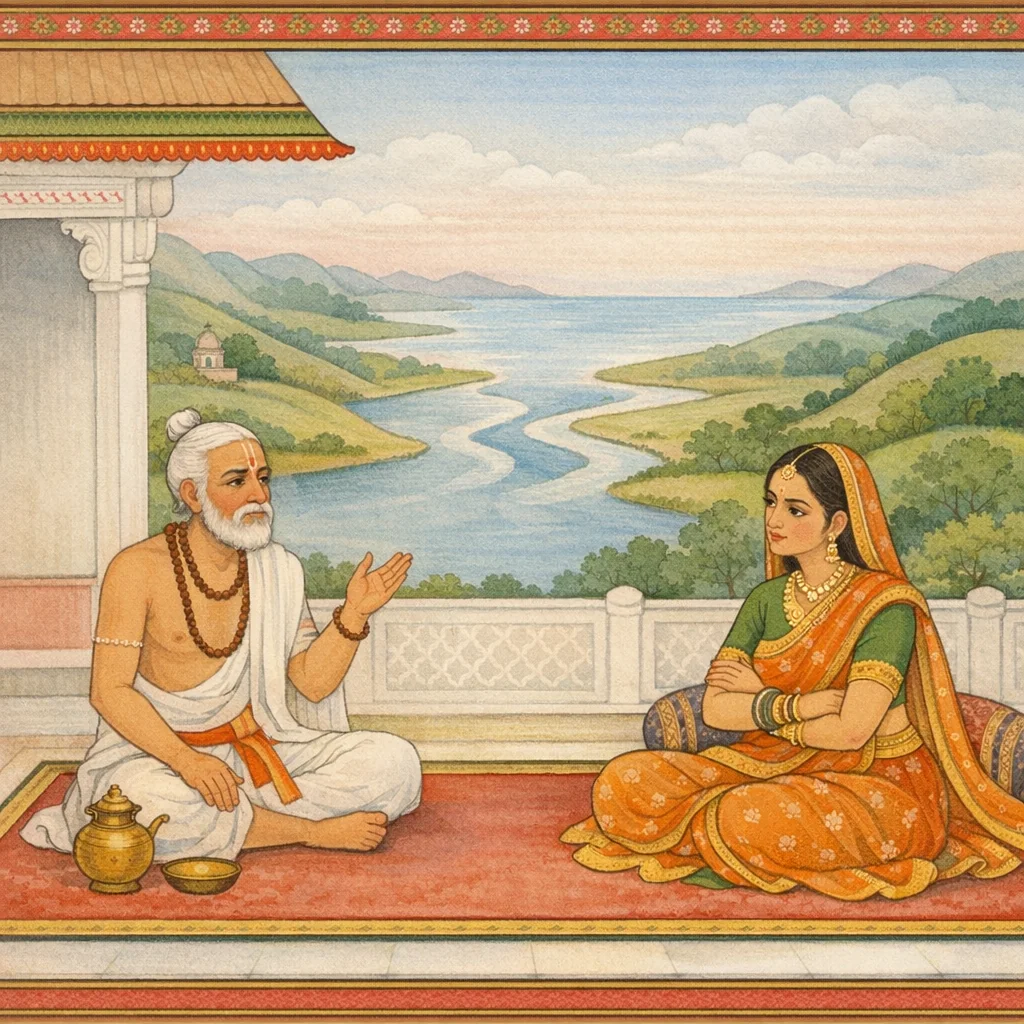
This chapter is a compact didactic statement delivered by a brāhmaṇa speaker. He first rejects an interlocutor’s surface inference about his identity, asserting that he is not what is perceived by the eye and that his presence pervades all that exists. He then employs a force metaphor—like fire as the end of wood—to indicate an inevitable, consuming principle associated with him, shifting the discussion from social appearance to ontological function. The discourse proceeds to relativize external power and possessions: even universal kingship is framed as secondary to buddhi, which is declared his true wealth. The speaker articulates a unifying thesis of the brāhmaṇa path: whether in household life, forest residence, teacher’s dwelling, or mendicancy, a single focused intelligence is to be cultivated through many outward signs without distraction. Those of varied marks and stations whose intelligence is characterized by calm are said to converge into one state, like rivers into the sea. The chapter concludes by asserting that the path is traversed by buddhi, not by the body; embodied action is bounded and the body is a bond of karma. Therefore, the addressee is told not to fear the other world, and that by sustained contemplation aligned with the speaker’s nature, she will attain union with his selfhood.
Chapter Arc: ब्राह्मण की पत्नी, बाह्य आचरण और गृहस्थ-जीवन के संकेतों से ब्राह्मण को ‘साधारण’ मानकर तिरस्कार/फटकार देती है; तभी ब्राह्मण ईशावास्य-वाक्य की छाया में ‘किसका धन?’ का प्रश्न उठाकर अपने ज्ञान-निष्ठ स्वरूप का उद्घाटन करता है। → पत्नी की दृष्टि ‘शुभ-अशुभ’ और देह-आधारित पहचान पर टिकी है; ब्राह्मण उसे चुनौती देता है कि वह जैसा दिखता है वैसा नहीं—वह सर्वव्यापक आत्मतत्त्व की ओर संकेत करता है, और बताता है कि स्थावर-जंगम समस्त जगत् में वही व्याप्त है तथा काल/अन्तक-रूप से सबका संहार भी वही है। → ब्राह्मण निर्णायक रूप से कहता है कि पृथ्वी-स्वर्ग का राज्य भी जिस ‘बुद्धि’ से जाना जाता है वही उसका धन है; एक ही पन्थ (ब्रह्मचर्य-गार्हस्थ्य-वानप्रस्थ-संन्यास) में भिन्न चिह्नों के बावजूद शमात्मिका एक बुद्धि की उपासना होती है—और यह मार्ग देह से नहीं, बुद्धि से गम्य है; कर्म आद्यन्तवान हैं और शरीर कर्म-बन्धन है। → वह पत्नी को आश्वस्त करता है कि परलोक का भय न रखे; तद्भाव-भावना में रत होकर वह उसी आत्मस्वरूप को प्राप्त होगी—जैसे नदियाँ अंततः सागर में एक भाव को प्राप्त होती हैं।
Shlokas
Verse 1
अपना बा | अड-४#-रू-+ > मा गृधः कस्य स्विद्धनम् । (ईशावास्योपनिषद् १) त्रयस्त्रिंशो5 ध्याय: ब्राह्मणका पत्नीके प्रति अपने ज्ञाननिष्ठ स्वरूपका परिचय देना ब्राह्मण उवाच नाहं तथा भीरु चरामि लोके यथा त्वं मां तर्जयसे स्वबुद्ध्या विप्रो$स्मि मुक्तो5स्मि वनेचरो5स्मि गृहस्थधर्मा व्रतवांस्तथास्मि,ब्राह्मणने कहा--भीरु! तुम अपनी बुद्धिसे मुझे जैसा समझकर फटकार रही हो, मैं वैसा नहीं हूँ। मैं इस लोकमें देहाभिमानियोंकी तरह आचरण नहीं करता। तुम मुझे पाप- पुण्यमें आसक्त देखती हो; किंतु वास्तवमें मैं ऐसा नहीं हूँ। मैं ब्राह्मण, जीवन्मुक्त महात्मा, वानप्रस्थ, गृहस्थ और ब्रह्मचारी सब कुछ हूँ। इस भूतलपर जो कुछ दिखायी देता है, वह सब मेरेद्वारा व्याप्त है
The Brahmin said: “O timid one, I do not move through this world in the way you, by your own notions, rebuke and judge me. I am not bound to the ordinary, body-centered conduct of people. I am a Brahmin; I am liberated; I am a forest-dweller; and yet I also uphold the discipline of the householder and the life of vows.”
Verse 2
नाहमस्मि यथा मां त्वं पश्यसे च शुभाशुभे । मया व्याप्तमिदं सर्व यत् किंचिज्जगतीगतम्,ब्राह्मणने कहा--भीरु! तुम अपनी बुद्धिसे मुझे जैसा समझकर फटकार रही हो, मैं वैसा नहीं हूँ। मैं इस लोकमें देहाभिमानियोंकी तरह आचरण नहीं करता। तुम मुझे पाप- पुण्यमें आसक्त देखती हो; किंतु वास्तवमें मैं ऐसा नहीं हूँ। मैं ब्राह्मण, जीवन्मुक्त महात्मा, वानप्रस्थ, गृहस्थ और ब्रह्मचारी सब कुछ हूँ। इस भूतलपर जो कुछ दिखायी देता है, वह सब मेरेद्वारा व्याप्त है
The Brahmin said: “I am not as you imagine me to be, O one who judges in terms of auspicious and inauspicious. All this—whatever exists in the world—is pervaded by me.”
Verse 3
ये केचिज्जन्तवो लोके जड्मा: स्थावराश्ष ह | तेषां मामन्तकं विद्धि दारूणामिव पावकम्,संसारमें जो कोई भी स्थावर-जंगम प्राणी हैं, उन सबका विनाश करनेवाला मृत्यु उसी प्रकार मुझे समझो, जिस प्रकार कि लकड़ियोंका विनाश करनेवाला अग्नि है
“Whatever beings there are in this world—moving and unmoving—know me to be their End, the destroyer called Death, just as fire is the destroyer of wood. In this way, understand that mortality is universal and inescapable, and that all embodied existence is subject to dissolution.”
Verse 4
राज्यं पृथिव्यां सर्वस्यामथवापि त्रिविष्टपे तथा बुद्धिरियं वेत्ति बुद्धिरेव धनं मम,सम्पूर्ण पृथ्वी तथा स्वर्गपर जो राज्य है, उसे यह बुद्धि जानती है; अतः बुद्धि ही मेरा धन है
The Brahmin said: “Whether it be sovereignty over the entire earth or even in Triviṣṭapa (heaven), this very intellect understands what such dominion truly is. Therefore, intellect alone is my wealth.”
Verse 5
एक: पन्था ब्राह्मणानां येन गच्छन्ति तद्विद: । गृहेषु वनवासेषु गुरुवासेषु भिक्षुषु,ब्रह्मचर्य, गार्हस्थ्य, वानप्रस्थ और संन्यास आश्रममें स्थित ब्रह्मवेत्ता ब्राह्मण जिस मार्गसे चलते हैं, उन ब्राह्मणोंका वह मार्ग एक ही है
The Brahmin said: “There is but one path for Brahmins who truly know (Brahman)—the path by which the wise proceed. Whether they dwell in homes, live in the forest, stay with a teacher, or live by alms; whether established in the āśramas of studenthood, householdership, forest-dwelling, or renunciation—those Brahmins who are knowers of Brahman move by a single, unified way.”
Verse 6
लिज्रैर्बहुभिरव्यग्रैरेका बुद्धिरुपास्यते । नानालिड्जाश्रमस्थानां येषां बुद्धि: शमात्मिका
The Brahmin said: “Though people bear many outward marks and live in diverse stations of life, the one true understanding is to be revered and cultivated. For those who dwell in different signs and āśramas, their guiding intelligence is the same when it is grounded in inner peace and self-restraint.”
Verse 7
बुद्ध्यायं गम्यते मार्ग: शरीरेण न गम्यते । आद्यन्तवन्ति कर्माणि शरीरं कर्मबन्धनम्,यह मार्ग बुद्धिगम्य है, शरीरके द्वारा इसे नहीं प्राप्त किया जा सकता। सभी कर्म आदि और अन्तवाले हैं तथा शरीर कर्मका हेतु है
The Brahmin said: “This path is to be reached through discernment; it cannot be attained by the body. All actions have a beginning and an end, and the body itself is the tether by which one becomes bound to action.”
Verse 8
तस्मात् ते सुभगे नास्ति परलोककृतं भयम् | तद्भावभावनिरता ममैवात्मानमेष्यसि,इसलिये देवि! तुम्हें परलोकके लिये तनिक भी भय नहीं करना चाहिये। तुम परमात्मभावकी भावनामें रत रहकर अन्तमें मेरे ही स्वरूपको प्राप्त हो जाओगी
Therefore, O fortunate lady, you need not fear anything concerning the next world. Absorbed in contemplation of that supreme Reality, you will in the end attain my very Self—freed from anxiety about the fruits of action and established in the highest good.
Verse 33
इति श्रीमहाभारते आश्वमेधिके पर्वणि अनुगीतापर्वणि ब्राह्मणगीतासु त्रयस्त्रिंशो 5ध्याय:
Thus, in the Śrī Mahābhārata, within the Aśvamedhika Parva—specifically in the Anugītā section—ends the thirty-third chapter of the Brāhmaṇa-gītās. This is a colophon marking the close of a unit of teaching attributed to a brāhmaṇa speaker, situating the discourse within the ethical and spiritual reflections that follow the war and accompany the rite of the horse-sacrifice.
Verse 63
ते भावमेकमायान्ति सरित: सागर यथा | क्योंकि वे लोग बहुत-से व्याकुलतारहित चिह्लोंको धारण करके भी एक बुद्धिका ही आश्रय लेते हैं। भिन्न-भिन्न आश्रमोंमें रहते हुए भी जिनकी बुद्धि शान्तिके साधनमें लगी हुई है, वे अन्तमें एकमात्र सत्स्वरूप ब्रह्मको उसी प्रकार प्राप्त होते हैं, जिस प्रकार सब नदियाँ समुद्रको प्राप्त होती हैं
The brāhmaṇa said: “Just as all rivers finally reach the ocean, so do those whose minds, though living in different disciplines and outward modes of life, are steadily directed toward peace and the highest good—ultimately attain the one supreme Reality.”
Frequently Asked Questions
The tension between judging identity and authority by external social markers versus recognizing an inward criterion—discernment and tranquility—as the decisive measure of spiritual orientation.
Cultivate a single, undistracted buddhi across any life-stage; the path is navigated by discernment rather than bodily status, and calm intelligence enables convergence toward one final state.
Yes in instructional form: the listener is told there is no need to fear the other world, and that sustained contemplation aligned with the speaker’s nature culminates in attaining (or merging with) that selfhood.