Adhyaya 191
Kuntī’s Benediction to Draupadī and the Alliance Gifts (कुन्त्याः स्नुषाशीर्-वचनम् तथा दान-प्रतिग्रहः)
Upa-parva: Draupadī-vivāha (Marriage Alliance and Reception Episode)
Vaiśaṃpāyana describes Drupada’s confidence after joining with the Pāṇḍavas, followed by the arrival of Drupada’s women who approach Kuntī with reverential gestures. Draupadī, dressed in fine linen and adorned with auspicious bridal marks, stands with folded hands after paying respects to her mother-in-law. Kuntī offers a formal benediction, praising Draupadī’s qualities and invoking paradigmatic marital exemplars (Indrāṇī, Svāhā, Rohiṇī, Damayantī, Bhadrā, Arundhatī, Lakṣmī) to articulate ideals of prosperity, fidelity, ritual partnership, and hospitality. The blessing extends to social duties—honoring guests, elders, and teachers—and to royal aspirations: lawful consecration alongside a dharma-oriented king and prosperity through great rites. Subsequently, Kṛṣṇa/Madhusūdana dispatches extensive gifts to the newly married Pāṇḍavas—jewels, gold ornaments, textiles, furnishings, attendants, animals, chariots, and large quantities of gold. Yudhiṣṭhira receives them with joy, aligning material acceptance with relational goodwill toward Govinda.
Chapter Arc: कुम्हार के घर में गुप्त रूप से बसे पाण्डवों के बीच दिनभर की घटनाओं की फुसफुसाहट है—सभा में अद्भुत धनुर्धारण, लक्ष्य-वेध, और द्रौपदी के मन का अनकहा विषाद। → सायंकाल भिक्षा लाकर पाण्डव युधिष्ठिर को निवेदन करते हैं; कुन्ती अन्न-वितरण का नियम देती है और भीम के लिए विशेष भाग का संकेत करती है। उसी बीच बाहर नगर-राजनीति उबलती है—द्रुपद का पुत्र धृष्टद्युम्न, सभा में सुनी गई ‘अज्ञात’ वीरता और द्रौपदी की व्याकुलता की खबरों से बेचैन होकर सत्य जानने को लौटता/दौड़ता है। → धृष्टद्युम्न पाण्डवों की कही हुई युद्ध-कथाएँ, दिव्यास्त्रों और रण-कौशल का वर्णन सुनकर (और द्रौपदी को विषण्ण देखकर) निर्णायक रूप से समझ लेता है कि यह साधारण ब्राह्मण नहीं—यहीं कोई महावीर छिपा है; वह द्रुपद के प्रश्नों का उत्तर खोजने हेतु प्रत्यक्ष पहचान की दिशा में कदम बढ़ाता है। → अध्याय का अंत इस निष्कर्ष-भूमि पर टिकता है कि धृष्टद्युम्न सत्य-खोज की प्रक्रिया में लौट/प्रत्यागमन कर चुका है—द्रुपद के मन में प्रश्न सघन हैं, और पाण्डवों की गुप्तता अब बाहरी दृष्टि के निकट आ रही है। → धृष्टद्युम्न द्रुपद को क्या बताएगा—और क्या पाण्डवों की पहचान खुलते ही द्रौपदी-विवाह का निर्णय राजसभा में पलट जाएगा?
Shlokas
Verse 1
ऑपन--माज बक। अकाल एकनवर्त्याधिकशततमो< ध्याय: 3 म्नका गुप्तरूपसे वहॉका सब हाल देखकर राजा पास आना तथा द्रौपदीके विषयमें द्रुपदका प्रश्न वैशम्पायन उवाच धृष्टद्युम्नस्तु पाउ्चाल्य: पृष्ठत: कुरुनन्दनौ । अन्वगच्छत् तदा यान्तौ भार्गवस्य निवेशने,वैशम्पायनजी कहते हैं--जनमेजय! जब कुरु-नन्दन भीमसेन और अर्जुन कुम्हारके घर जा रहे थे, उसी समय पांचालराजकुमार धृष्टद्युम्न गुप्तरूपसे उनके पीछे लग गये
Vaiśampāyana said: O Janamejaya, as the Kuru princes—Bhīmasena and Arjuna—were proceeding toward the dwelling of the Bhārgava (the Brahmin/descendant of Bhṛgu, i.e., the potter’s house where they were staying in disguise), the Pāñcāla prince Dhṛṣṭadyumna, having assumed a concealed identity, followed behind them, observing their movements. The episode underscores vigilance and strategic caution in a time of uncertainty, where concealment and careful pursuit serve the larger aims of rightful alliance and protection.
Verse 2
सोऊज्ञायमान: पुरुषानवधाय समन्ततः । स्वयमारान्निलीनो5भूद् भार्गवस्य निवेशने,उन्होंने चारों ओर अपने सेवकोंको बैठा दिया और स्वयं भी अज्ञातरूपसे कुम्हारके घरके पास ही छिपे रहे
Realizing that he might be recognized, he stationed men all around as a protective watch; and he himself remained hidden nearby, close to the dwelling associated with the Bhārgava, acting in secrecy to avoid detection and to control the situation.
Verse 3
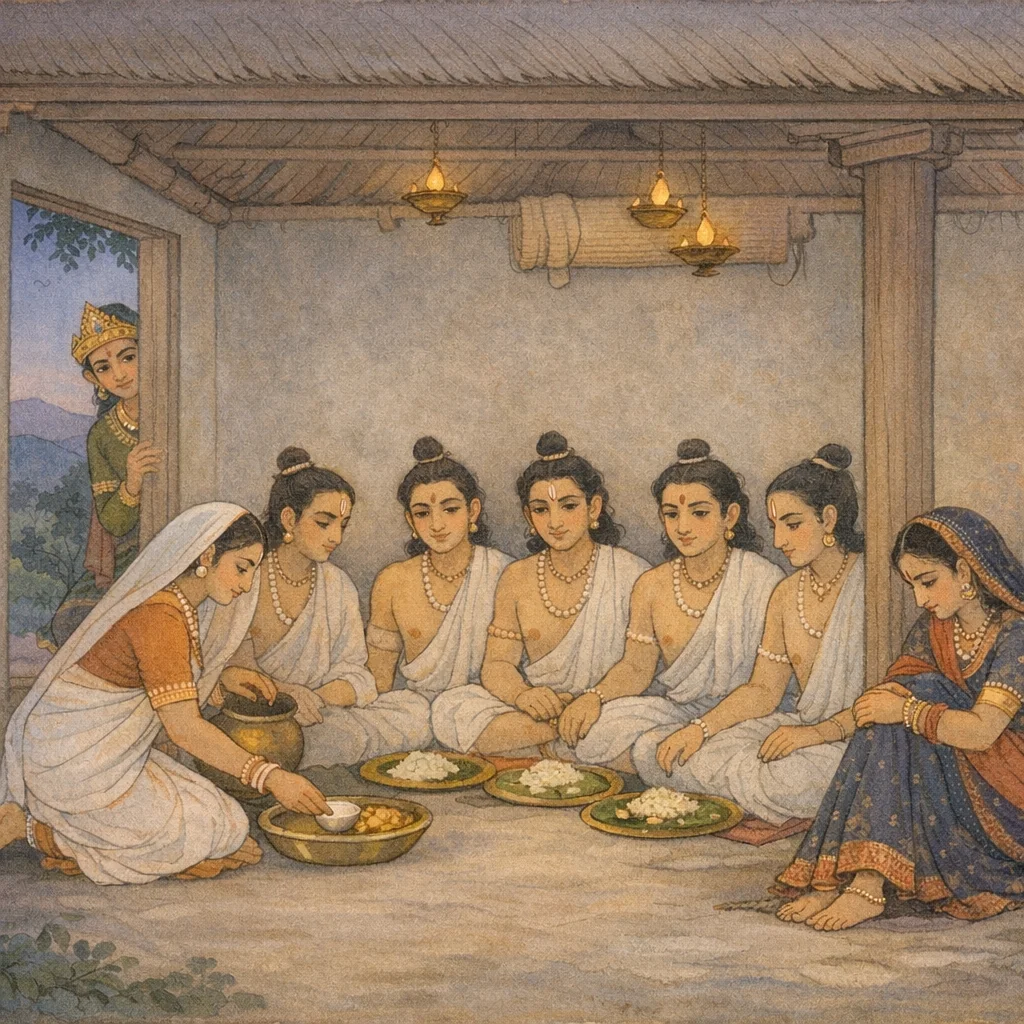
सायं च भीमस्तु रिपुप्रमाथी जिष्णुर्यमौ चापि महानुभावौ । भैक्ष॑ चरित्वा तु युधिष्ठिराय निवेदयाज्चक्करुरदीनसत्त्वा:,सायंकाल होनेपर शत्रुओंका मान मर्दन करनेवाले भीमसेन, अर्जुन और महानुभाव नकुल-सहदेवने भिक्षा लाकर युधिष्ठिरको निवेदन की। इन सबका अन्तःकरण उदार था
When evening came, Bhīma—crusher of foes—along with Jiṣṇu (Arjuna) and the twin brothers Nakula and Sahadeva, all of great spirit, went out to beg for alms and then presented what they had obtained to Yudhiṣṭhira. Their hearts were generous and unbroken, showing disciplined humility and service even amid hardship.
Verse 4
ततस्तु कुन्ती द्रुपदात्मजां ता- मुवाच काले वचन वदान्या । त्वमग्रमादाय कुरुष्व भद्रे बलिं च विप्राय च देहि भिक्षाम्,तब उदारह॒दया कुन्तीने उस समय द्रौपदीसे कहा--“भद्रे! तुम भोजनका प्रथम भाग लेकर उससे देवताओंको बलि अर्पण करो तथा ब्राह्मणको भिक्षा दो
Then Kuntī, timely and gracious in speech, addressed Drupada’s daughter: “O auspicious one, first take the initial portion of the meal and offer the due oblation (bali) to the divine powers; and give alms/food as a mendicant’s share to a brāhmaṇa.” The verse highlights household dharma: before personal enjoyment, one honors the sacred order through offerings and hospitality.
Verse 5
ये चान्नमिच्छन्ति ददस्व तेभ्य: परिश्रिता ये परितो मनुष्या: । ततकश्न शेषं॑ प्रविभज्य शीघ्र- मर्थ चतुर्धा मम चात्मनश्न,“तथा अपने आस-पास जो दूसरे मनुष्य आश्रितभावसे रहते और भोजन चाहते हैं, उन्हें भी अन्न परोसो। तदनन्तर जो शेष बच जाय, उसके शीघ्र ही इस प्रकार विभाग करो। अन्नका आधा भाग एकके लिये रखो, फिर शेषके छ: भाग करके चार भाइयोंके लिये चार भाग अलग-अलग रख दो, उसके बाद मेरे लिये और अपने लिये भी एक-एक भाग पृथक्- पृथक् परोस दो
Vaiśampāyana said: “Serve food also to those people nearby who depend on you and ask for a meal. Then, quickly divide what remains: set aside a half-portion for one, apportion shares for the four brothers, and finally serve separate portions for me and for yourself as well.” The instruction highlights responsible hospitality—feeding dependents first—and careful, fair distribution of limited resources within the household/community.
Verse 6
अर्ध तु भीमाय च देहि भगद्रे य एष नागर्षभतुल्यरूप: । गौरो युवा संहननोपपन्न एषो हि वीरो बहुभुक् सदैव,“कल्याणी! ये जो गजराजके समान शरीरवाले हृष्ट-पुष्ट गोरे युवक बैठे हैं, इनका नाम भीम है, इन्हें अन्नका आधा भाग दे दो। वीरवर भीम सदासे ही अधिक भोजन करनेवाले हैं!
Verse 7
सा हृष्टरूपेव तु राजपुत्री तस्या वच: साधु विशड्कमाना । यथाददुक्त प्रचकार साध्वी ते चापि सर्वे बुभुजुस्तदन्नम्,सासकी आज्ञाका पालन करनेमें ही अपना कल्याण मानती हुई साध्वी राजकुमारी द्रौपदीने अत्यन्त प्रसन्न होकर कुन्तीदेवीने जैसा कहा था, ठीक वैसा ही किया। सबने उस अन्नका भोजन किया
The princess, Draupadī, delighted as though transformed by joy, respectfully heeding Kuntī’s words without hesitation, did exactly as she had been told. Thereupon, all of them ate that food. The episode underscores the ethic of disciplined obedience to rightful elders and the harmony that follows when one acts in accordance with a trusted command.
Verse 8
कुशैस्तु भूमौ शयनं चकार माद्रीपुत्र: सहदेवस्तरस्वी | यथा स्वकीयान्यजिनानि सर्वे संस्तीर्य वीरा: सुषुपुर्धरण्याम्,तदनन्तर वेगवान् वीर माद्रीकुमार सहदेवने धरतीपर कुशकी शय्या बिछा दी। फिर समस्त पाण्डव वीर अपने-अपने मृगचर्म बिछाकर भूमिधर ही सोये
Vaiśampāyana said: Then the swift and valiant Sahadeva, son of Mādrī, made a bed upon the ground with kuśa grass. Thereafter, just as each of the heroes spread out his own deerskin, all the warriors lay down and slept upon the earth—accepting simple, disciplined rest in keeping with their austere way of life.
Verse 9
अगस्त्यशास्तामभितो दिशं तु शिरांसि तेषां कुरुसत्तमानाम् | कुन्ती पुरस्तात् तु बभूव तेषां पादान्तरे चाथ बभूव कृष्णा,उन कुरुश्रेष्ठ पाण्डवोंके सिर दक्षिण दिशाकी ओर थे। कुन्ती उनके मस्तककी ओर और द्रौपदी पैरोंकी ओर पृथ्वीपर ही पाण्डवोंके साथ सोयी, मानो उन कुशासनोंपर वह उनके पैरोंकी तकिया बन गयी। वहाँ उस परिस्थितिमें रहकर भी द्रौपदीके मनमें तनिक भी दुःख नहीं हुआ और उसने उन कुरुश्रेष्ठ वीरोंका किंचिन्मात्र भी तिरस्कार नहीं किया
Vaiśampāyana said: The heads of those best of the Kurus lay turned toward the southern quarter, the direction presided over by Agastya. Kuntī lay in front of them, near their heads, while Kṛṣṇā (Draupadī) lay on the ground at their feet, as though she had become a pillow beneath their feet upon the kuśa-grass seats. Even while living in such circumstances, Draupadī felt not the slightest sorrow in her heart, nor did she show even the least contempt toward those heroic Kurus.
Verse 10
अशेत भूमौ सह पाण्डुपुत्रै: पादोपधानीव कृता कुशेषु । न तत्र दुःखं मनसापि तस्या न चावमेने कुरुपुड्वांस्तान्,उन कुरुश्रेष्ठ पाण्डवोंके सिर दक्षिण दिशाकी ओर थे। कुन्ती उनके मस्तककी ओर और द्रौपदी पैरोंकी ओर पृथ्वीपर ही पाण्डवोंके साथ सोयी, मानो उन कुशासनोंपर वह उनके पैरोंकी तकिया बन गयी। वहाँ उस परिस्थितिमें रहकर भी द्रौपदीके मनमें तनिक भी दुःख नहीं हुआ और उसने उन कुरुश्रेष्ठ वीरोंका किंचिन्मात्र भी तिरस्कार नहीं किया
Vaiśaṃpāyana said: She lay on the bare ground together with the sons of Pāṇḍu, as if she had become a pillow for their feet upon the beds of kuśa grass. Yet in that condition her mind felt not the slightest sorrow, nor did she show any contempt for those foremost of the Kurus. The scene underscores steadfastness in adversity and reverence for the virtuous even amid hardship.
Verse 11
ते तत्र शूरा: कथयाम्बभूवुः कथा विचित्रा: पृतनाधिकारा: । अस्त्राणि दिव्यानि रथांश्व नागान् खडगान् गदाश्षापि परश्वधांश्ष,वे शूरवीर पाण्डव वहाँ सेनापतियोंके योग्य अद्भुत कथाएँ कहने लगे। उन्होंने नाना प्रकारके दिव्यास्त्रों, रथों, हाथियों, तलवारों, गदाओं और फरसोंके विषयमें भी चर्चाएँ कीं
There, those valiant men—fit to command armies—began exchanging many wondrous accounts. They discussed celestial weapons and also chariots, horses, elephants, swords, maces, and battle-axes, as warriors do when preparing their minds and skills for war.
Verse 12
तेषां कथास्ता: परिकीर्त्यमाना: पाञज्चालराजस्य सुतस्तदानीम् | शुश्राव कृष्णां च तदा विषण्णां ते चापि सर्वे ददृशुर्मनुष्या:,उनकी कही हुई वे सभी बातें उस समय पांचालराजकुमार धृष्टद्युम्नने सुनीं और उन सभी लोगोंने वहाँ सोयी हुई द्रौपदीको भी देखा
As those accounts were being recounted, the son of the king of Pāñcāla—Dhṛṣṭadyumna—heard them at that very time. Then he also heard of Kṛṣṇā (Draupadī) in her sorrow, and all those people there likewise saw her lying asleep. The verse underscores how spoken reports become immediate moral and political realities, drawing witnesses into the unfolding duty to respond to another’s distress.
Verse 13
धृष्टद्युम्नो राजपुत्रस्तु सर्व वृत्तं तेषां कथित चैव रात्रौ । सर्व रज्ञे द्रपदायाखिलेन निवेदयिष्यंस्त्वरितो जगाम,तदनन्तर राजकुमार धृष्टद्युम्न रातमें पाण्डवोंका इतिहास तथा उनकी कही हुई सारी बातें राजा ट्रुपदको पूर्णरूपसे सुनानेके लिये बड़ी उतावलीके साथ राजभवनमें गये
Vaiśampāyana said: That night, the prince Dhṛṣṭadyumna heard from them the entire account of events. Eager to report everything in full to King Drupada, he hurried at once to the royal palace—moved by a sense of duty to inform his father and to act promptly in a matter of great consequence.
Verse 14
पाज्चालराजस्तु विषण्णरूप- स्तान् पाण्डवानप्रतिविन्दमान: । धृष्टद्युम्नं पर्यपृच्छन्महात्मा क्व सा गता केन नीता च कृष्णा,पांचालराज ट्रुपद पाण्डवोंका पता न पानेके कारण बहुत खिन्न थे। धृष्टद्युम्मके आनेपर महात्मा द्रुपदने उससे पूछा--“बेटा! मेरी पुत्री कृष्णा कहाँ गयी? कौन उसे ले गया?
Vaiśampāyana said: The king of the Pāñcālas, Drupada, was downcast, for he could not find the Pāṇḍavas. When Dhṛṣṭadyumna arrived, that noble-hearted king questioned him: “Where has my daughter Kṛṣṇā gone? By whom has she been taken?” The verse highlights a father’s anxious responsibility and the ethical urgency of safeguarding a woman’s agency and honor amid political uncertainty.
Verse 15
कच्चिन्न शूद्रेण न हीनजेन वैश्येन वा करदेनोपपन्ना । कच्चित् पदं मूर्थ्नि न पड़कदिग्धं कच्चिन्न माला पतिता श्मशाने,“कहीं किसी शूद्रने अथवा नीच जातिके पुरुषद्वारा ऊँची जातिकी स्त्रीसे उत्पन्न मनुष्यने या कर देनेवाले वैश्यने तो मेरी पुत्रीको प्राप्त नहीं कर लिया? और इस प्रकार उन्होंने मेरे सिरपर अपना कीचड़से सना पाँव तो नहीं रख दिया? मालाके समान सुकुमारी और हृदयपर धारण करनेयोग्य मेरी लाडली पुत्री श्मशानके समान अपवित्र किसी पुरुषके हाथमें तो नहीं पड़ गयी?
Vaiśampāyana said: “Has my daughter not been obtained by a Śūdra, or by a man of low birth, or by a Vaiśya who lives by paying tribute? Have they not, as it were, set their mud-smeared foot upon my head? Has my beloved daughter—tender like a garland, fit to be cherished close to the heart—not fallen into the hands of some man as impure as a cremation ground?”
Verse 16
कच्चित् सवर्णप्रवरो मनुष्य उद्रिक्तवर्णोप्युत एव कच्चित् । कच्चिन्न वामो मम मूर्श्नि पाद: कृष्णाभिमर्शेन कृतोड्द्य पुत्र,“क्या द्रौपदीको पानेवाला मनुष्य अपने समान वर्ण (क्षत्रियकुल)-का ही कोई श्रेष्ठ पुरुष है? अथवा वह अपनेसे भी श्रेष्ठ ब्राह्मणकुलका है?” बेटा! मेरी कृष्णाका स्पर्श कर किसी निम्नवर्णवाले मनुष्यने आज मेरे मस्तकपर अपना बायाँ पैर तो नहीं रख दिया?
Vaiśampāyana said: “Tell me, my son—was the man who won Kṛṣṇā (Draupadī) a distinguished hero of the same social order (a Kṣatriya), or was he perhaps of an even higher order, a Brāhmaṇa? And tell me this as well: by touching Kṛṣṇā, has some low-born man today, as it were, set his left foot upon my head?”
Verse 17
कच्चिन्न तप्स्ये परमप्रतीत: संयुज्य पार्थेन नरर्षभेण । वदस्व तत्त्वेन महानुभाव को<सौ विजेता दुहितुर्ममाद्य,“क्या ऐसा सौभाग्य होगा कि मैं नरश्रेष्ठ अर्जुनसे द्रौयदीका विवाह करके अत्यन्त प्रसन्न होऊँ और कभी भी संतप्त न हो सकूँ? महानुभाव पुत्र! ठीक-ठीक बताओ, आज जिसने मेरी पुत्रीको जीता है, वह पुरुष कौन है?
Vaiśampāyana said: “Will it truly be my good fortune that, by uniting my daughter with Pārtha—Arjuna, the bull among men—I shall be supremely content and never again know grief? O noble son of great spirit, tell me truthfully: who is the man that has won my daughter today?”
Verse 18
विचित्रवीर्यस्थ सुतस्य कच्चित् कुरुप्रवीरस्य प्रियन्ति पुत्रा: । कच्चित् तु पार्थेन यवीयसाद्य भधनुर्गुहीतं निहतं च लक्ष्यम्,“क्या कुरुकुलके श्रेष्ठ वीर विचित्रवीर्यकुमार पाण्डुके शूरवीर पुत्र अभी जीवित हैं? क्या आज कुन्तीके सबसे छोटे पुत्र अर्जुनने ही उस धनुषको उठाया और लक्ष्यको मार गिराया था?”
Vaiśampāyana said: “Are the beloved sons of Pāṇḍu—son of the heroic Vicitravīrya and foremost among the Kurus—well and thriving? And was it indeed the youngest Pārtha, Arjuna, who first took up the bow and struck down the target?”
Verse 190
इस प्रकार श्रीमहाभारत आदिपर्वके अन्तर्गत स्वयंवरपर्वमें बलराम और श्रीकृष्णका आगमनविषयक एक सौ नब्बेवाँ अध्याय पूरा हुआ
Thus concludes the one hundred and ninetieth chapter of the Svayaṃvara section within the Ādi Parva of the Śrī Mahābhārata, describing the arrival of Balarāma and Śrī Kṛṣṇa. The narrator marks the completion of this episode, signaling a transition in the story as these eminent figures enter the scene and the narrative moves forward to the next development.
Verse 191
इति श्रीमहा भारते आदिपर्वणि स्वयंवरपर्वणि धृष्टट्युम्नप्रत्यागमने एकनवत्यधिकशततमो< ध्याय:,इस प्रकार श्रीमह्याभारत आदिपर्वके अन्तर्गत स्वयंवरपर्वमें धृष्ट्युग्नका प्रत्यागमनविषयक एक सौ इक्यानबेवाँ अध्याय पूरा हुआ
Thus, in the revered Mahābhārata, within the Ādi Parva, in the section concerning the svayaṃvara, the one hundred and ninety-first chapter—dealing with the return of Dhṛṣṭadyumna—comes to an end. This colophon marks the completion of the chapter and situates the narrative within its larger ethical frame, where dynastic alliances and rightful conduct (dharma) are advanced through formally sanctioned rites and political decisions.
Frequently Asked Questions
Rather than a binary dilemma, the chapter presents a normative integration problem: how a new bride is ethically incorporated into a multi-husband royal household through public blessing, ritual comportment, and role-definition as a stabilizing agent of dharma.
Dharma is operationalized through conduct—reverence within family hierarchy, disciplined hospitality, and ritual partnership—while political stability is reinforced by transparent reciprocity and socially legible rites of recognition.
No explicit phalaśruti is stated; the implicit meta-layer is that blessings, guest-honoring, and properly received gifts function as instruments of auspicious continuity (śrī) and legitimacy within the epic’s ethical-political order.