Adhyaya 156
कुन्ती-युधिष्ठिर-संवादः — Kuntī’s Counsel on Departing for Pāñcāla
Upa-parva: Pāñcāla-gamana (Journey toward Pāñcāla / Drupada’s city) — Ādi Parva episode-context
Vaiśaṃpāyana reports that the Kaurava-related heroes (here, the Kuntī-born Pāṇḍavas) react with shock and mental unease, described metaphorically as pierced by a dart. Observing her sons’ disorientation, Kuntī addresses Yudhiṣṭhira with a practical assessment: their extended stay in a brahmin’s residence and repeated enjoyment of the same pleasant surroundings no longer provides relief, and the alms-based livelihood is not as viable as before. She proposes relocating to Pāñcāla, characterized as prosperous, novel in experience, and ruled by Yajñasena (Drupada), reputed to be supportive of brahmins. Kuntī adds that prolonged residence in one place is, in her judgment, unsuitable. Yudhiṣṭhira accepts her guidance as serving their highest welfare, while noting he cannot independently predict his younger brothers’ preferences. Vaiśaṃpāyana concludes: Kuntī informs Bhīma, Arjuna, and the twins; they assent, and after taking leave of the brahmin host, Kuntī and her sons set out toward Drupada’s city.
Chapter Arc: हिडिम्बवध के पश्चात वन-पथ पर चलते पाण्डव अनेक जनपदों—मत्स्य, त्रिगर्त, पंचाल और कीचक-प्रदेश—के रमणीय वन-उपवन, सरोवर और मार्गों को देखते हुए आगे बढ़ते हैं; पर यह सौन्दर्य उनके निर्वासन की छाया को ढँक नहीं पाता। → सुरक्षा और गोपनीयता हेतु वे जटाधारी, वल्कल-मृगचर्मधारी तपस्वियों का वेश धारण कर कुन्ती सहित भटकते हैं। लोक-जीवन के बीच से गुजरते हुए भी वे अपने तेज और शास्त्र-ज्ञान (वेद-उपनिषद्, वेदाङ्ग, नीतिशास्त्र) को भीतर सँभाले रखते हैं—राजधर्म और वनधर्म के बीच का द्वन्द्व तीव्र होता जाता है। → एकचक्रा में प्रवेश के प्रसंग में महर्षि वेदव्यास का साक्षात्कार होता है। व्यास पाण्डवों को आश्रय/निवास में ठहराकर स्नेहपूर्वक आश्वस्त करते हैं और उनके प्रति अपना विशेष अनुराग प्रकट करते हैं—यह संकेत देते हुए कि दीनता और बाल्यावस्था में मनुष्यों का स्नेह स्वाभाविकतः अधिक होता है, और पाण्डवों के प्रति उनका स्नेह अब और बढ़ गया है। → व्यास पाण्डवों को निर्देश देते हैं कि वे एक मास तक यहीं प्रतीक्षा करें; वे देश-काल का विचार कर पुनः लौटेंगे और तब उन्हें ‘परम मुद’ (श्रेष्ठ कल्याण/आनन्द) की प्राप्ति होगी। पाण्डव हाथ जोड़कर आज्ञा स्वीकार करते हैं और व्यास यथागत प्रस्थान करते हैं। → एक मास की प्रतीक्षा के बाद व्यास क्या योजना/उपाय लेकर लौटेंगे—और एकचक्रा में पाण्डवों पर कौन-सा नया संकट या अवसर उतरने वाला है?
Shlokas
Verse 1
इस प्रकार श्रीमहाभारत आदिपर्वके अन्तर्गत हिडिम्बवधपर्वमें घटोत्कचकी उत्पत्तिविषयक एक सौ चौवनवाँ अध्याय पूरा हुआ ॥/ १५४ ॥/ (दाक्षिणात्य अधिक पाठके ३३ श्लोक मिलाकर कुल ७९ श्लोक हैं) अपर बक। है २ >> - कोई-कोई उत्कचका अर्थ “ऊपर उठे हुए बालोंवाला' भी करते हैं। पञ्चपञ्चाशर्दाधिकशततमो< ध्याय: पाण्डवोंको व्यासजीका दर्शन और उनका एकचक्रा नगरीमें प्रवेश वैशम्पायन उवाच ते वनेन वन॑ गत्वा घ्नन्तो मृगगणान् बहून् । अपक्रम्य ययू राजंस्त्वरमाणा महारथा:,वैशम्पायनजी कहते हैं--राजन्! वे महारथी पाण्डव उस स्थानसे हटकर एक वनसे दूसरे वनमें जाकर बहुत-से हिंसक पशुओंको मारते हुए बड़ी उतावलीके साथ आगे बढ़े
Vaiśampāyana said: O King, those great chariot-warriors (the Pāṇḍavas), leaving that place behind, moved on in haste—passing from one forest to another—killing many groups of wild beasts as they went. The verse sets a transitional scene of exile and movement: the brothers press forward urgently, sustaining themselves in the wilderness while the moral weight of life in the forest (violence for survival and protection) quietly frames their journey.
Verse 2
मत्स्यांस्त्रिगर्तानू पज्चालान् कीचकानन्तरेण च । रमणीयान् वनोद्देशान् प्रेक्षमाणा: सरांसि च,मत्स्य, त्रिगर्त, पंचाल तथा कीचक--इन जनपदोंके भीतर होकर रमणीय वनस्थलियों और सरोवरोंको देखते हुए वे लोग यात्रा करने लगे
Vaiśampāyana said: Passing through the lands of the Matsyas, Trigartas, Pañcālas, and the Kīcakas, they continued their journey, gazing upon delightful stretches of forest and upon lakes—moving onward while taking in the beauty of the countryside.
Verse 3
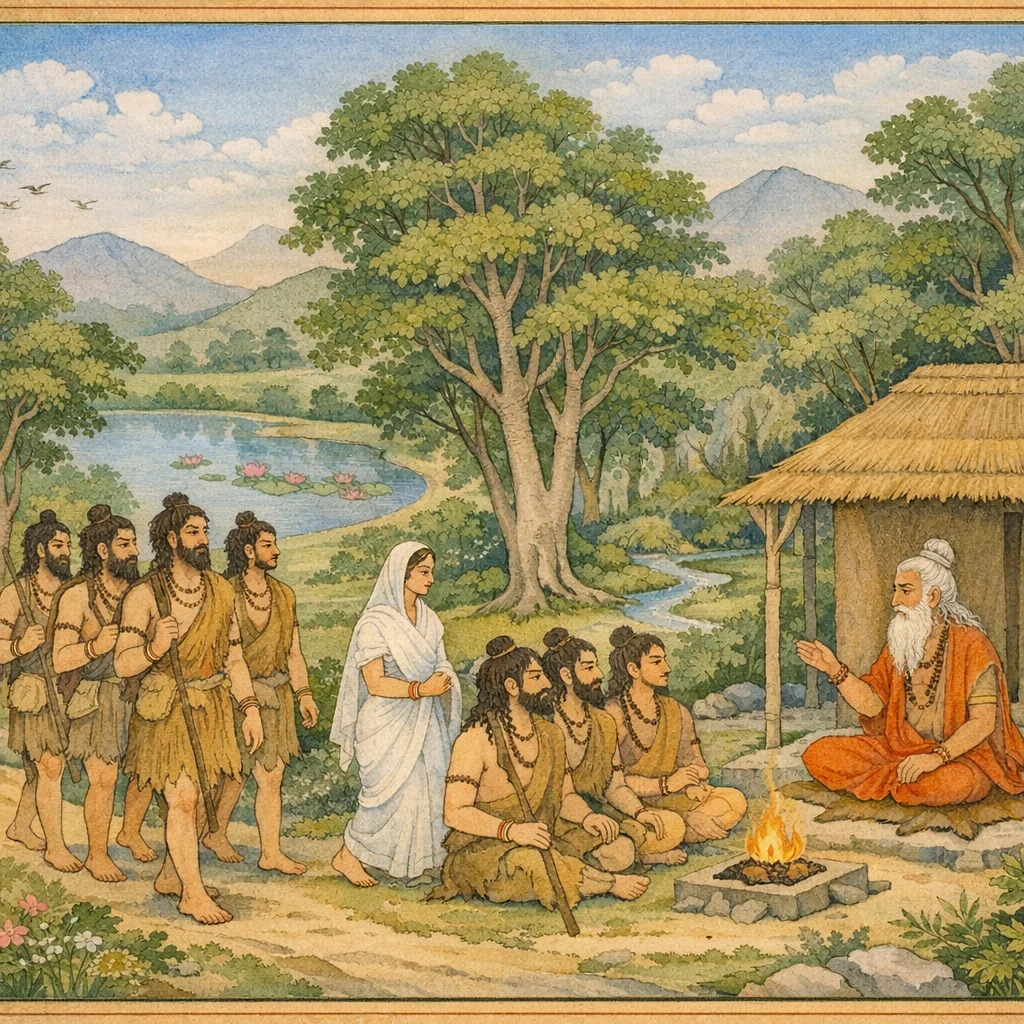
जटा: कृत्वा55त्मन: सर्वे वल्कलाजिनवासस: । सह कुन्त्या महात्मानो बिशभ्रतस्तापसं वपु:,उन सबने अपने सिरपर जटाएँ रख ली थीं। वल्कल और मृगचर्मसे अपने शरीरको ढक लिया था और तपस्वीका-सा वेष धारण कर रखा था। इस प्रकार वे महारथी महात्मा पाण्डव माता कुन्तीदेवीके साथ कहीं तो उन्हें पीठपर ढोते हुए तीव्र गतिसे चलते थे, कहीं इच्छानुसार धीरे-धीरे पाँव बढ़ाते थे और कहीं पुन: अपनी चाल तेज कर देते थे
Vaiśampāyana said: All of them, having matted their hair, wore garments of bark and deerskin. Those great-souled men, together with Kuntī, assumed the appearance of ascetics—signaling their withdrawal from royal life and their resolve to endure hardship in accordance with dharma.
Verse 4
क्वचिद् वहन्तो जननीं त्वरमाणा महारथा: । क्वचिच्छन्देन गच्छन्तस्ते जग्मु: प्रसभं पुन:,उन सबने अपने सिरपर जटाएँ रख ली थीं। वल्कल और मृगचर्मसे अपने शरीरको ढक लिया था और तपस्वीका-सा वेष धारण कर रखा था। इस प्रकार वे महारथी महात्मा पाण्डव माता कुन्तीदेवीके साथ कहीं तो उन्हें पीठपर ढोते हुए तीव्र गतिसे चलते थे, कहीं इच्छानुसार धीरे-धीरे पाँव बढ़ाते थे और कहीं पुन: अपनी चाल तेज कर देते थे
Vaiśampāyana said: The great chariot-warriors, bearing their mother, at times hurried forward with speed; at times they proceeded at a measured pace as they wished; and at times again they pressed on forcefully. The scene underscores their disciplined endurance and filial duty as they move through hardship with resolve, adjusting their pace to protect and support their mother.
Verse 5
बाह्यां वेदमधीयाना वेदाड़्नि च सर्वश: । नीतिशास्त्र च सर्वज्ञा ददृशुस्ते पितामहम्,पाण्डवलोग सब शाम्त्रोंके ज्ञाता थे और प्रतिदिन उपनिषद् वेद-वेदांग तथा नीतिशास्त्रका स्वाध्याय किया करते थे। एक दिन जब वे स्वाध्यायमें लगे थे, पितामह व्यासजीका दर्शन हुआ
Verse 6
तेडभिवाद्य महात्मानं॑ कृष्णद्वैपायनं तदा । तस्थु: प्राउजलय: सर्वे सह मात्रा परंतपा:,शत्रुओंको संताप देनेवाले पाण्डवोंने उस समय महात्मा श्रीकृष्णद्वैपायनको प्रणाम किया और अपनी माताके साथ वे सब लोग उनके आगे हाथ जोड़कर खड़े हो गये
Vaiśampāyana said: Then the Pāṇḍavas—scorchers of their foes—paid reverent homage to the great-souled Kṛṣṇa Dvaipāyana (Vyāsa). With their mother beside them, they all stood before him with hands joined in respectful salutation, embodying disciplined humility toward a spiritual elder.
Verse 7
व्यास उवाच मयेदं व्यसन पूर्व विदितं भरतर्षभा: । यथा तु तैरधर्मेण धार्तराष्ट्र्विवासिता:,तब व्यासजीने कहा--भरतश्रेष्ठ पाण्डुकुमारो! मैंने पहले ही तुमलोगोंपर आये हुए इस संकटको जान लिया था। धुृतराष्ट्रके पुत्रोंने तुम्हें जिस प्रकार अधर्मपूर्वक राज्यसे बहिष्कृत किया है, वह सब जानकर तुम्हारा परम हित करनेके लिये मैं यहाँ आया हूँ। इसके लिये तुम्हें विषाद नहीं करना चाहिये; यह सब तुम्हारे भावी सुखके लिये हो रहा है
Vyāsa said: “O bulls among the Bharatas, I had already foreseen this calamity that has befallen you. I know how the sons of Dhṛtarāṣṭra, acting unrighteously, have driven you into exile from the kingdom. It is for your highest good that I have come here; therefore you should not sink into grief—this is unfolding as a prelude to your future welfare.”
Verse 8
तद् विदित्वास्मि सम्प्राप्तश्चिकीर्षु: परमं हितम् । न विषादोऊत्र कर्तव्य: सर्वमेतत् सुखाय व:,तब व्यासजीने कहा--भरतश्रेष्ठ पाण्डुकुमारो! मैंने पहले ही तुमलोगोंपर आये हुए इस संकटको जान लिया था। धुृतराष्ट्रके पुत्रोंने तुम्हें जिस प्रकार अधर्मपूर्वक राज्यसे बहिष्कृत किया है, वह सब जानकर तुम्हारा परम हित करनेके लिये मैं यहाँ आया हूँ। इसके लिये तुम्हें विषाद नहीं करना चाहिये; यह सब तुम्हारे भावी सुखके लिये हो रहा है
Vyāsa said: “Knowing all this, I have come here, intent on accomplishing your highest good. You should not give way to grief in this matter; all of this is unfolding for your future happiness.”
Verse 9
समास्ते चैव मे सर्वे यूयं चैव न संशय: । दीनतो बालतश्रैव स्नेहं कुर्वन्ति मानवा: । तस्मादभ्यधिक: स्नेहो युष्मासु मम साम्प्रतम्,इसमें संदेह नहीं कि मेरे लिये तुमलोग और धुतराष्ट्रके पुत्र दुर्योधन आदि सब समान ही हैं। फिर भी जहाँ दीनता और बचपन है, वहीं मनुष्य अधिक स्नेह करते हैं; इसी कारण इस समय तुमलोगोंपर मेरा अधिक स्नेह है
Vyāsa said: “Without doubt, to me you all are the same—just as Dhṛtarāṣṭra’s sons, Duryodhana and the rest, are the same. Yet people naturally show greater tenderness where there is helplessness and childhood. Therefore, at this moment my affection is stronger toward you.”
Verse 10
स्नेहपूर्व चिकीर्षामि हित॑ वस्तन्निबोधत । इदं नगरमभ्याशे रमणीयं निरामयम् । वसतेह प्रतिच्छन्ना ममागमनकाड्क्षिण:,मैं स्नेहपूर्वक तुमलोगोंका हित करना चाहता हूँ। इसलिये मेरी बात सुनो। यहाँ पास ही जो यह रमणीय नगर है, इसमें रोग-व्याधिका भय नहीं है। अतः तुम सब लोग यहीं छिपकर रहो और मेरे पुनः आनेकी प्रतीक्षा करो
Vyāsa said: “Out of affection I wish to do what is beneficial for you; therefore, understand my words. Nearby there is a delightful city, free from the fear of illness and affliction. Stay there in concealment, and wait, longing for my return.”
Verse 11
वैशम्पायन उवाच एवं स तान् समाश्चास्य व्यास: सत्यवतीसुत:ः । एकचक्रामभिगत: कुन्तीमाश्चासयत् प्रभु:,वैशम्पायनजी कहते हैं--जनमेजय! इस प्रकार पाण्डवोंको भलीभाँति आश्वासन देकर सत्यवतीनन्दन भगवान् व्यास उन सबके साथ एकचक्रा नगरीके निकट गये। वहाँ उन्होंने कुन्तीको इस प्रकार सान्त्वना दी
Vaiśampāyana said: Having thus reassured them, Vyāsa—the mighty son of Satyavatī—went with them to the vicinity of the city of Ekacakrā. There he consoled Kuntī, strengthening her resolve amid their hardship and uncertainty.
Verse 12
व्यास उवाच जीवत्पुत्रि सुतस्ते5यं धर्मनित्यो युधिष्ठिर: । धर्मेण पृथिवीं जित्वा महात्मा पुरुषर्षभ: । पथिव्यां पार्थिवान् सर्वान् प्रशासिष्यति धर्मराट्,व्यासजी बोले--जीवित पुत्रोंवाली बहू! तुम्हारे ये पुत्र नरश्रेष्ठ महात्मा धर्मराज युधिष्ठिर सदा धर्मपरायण हैं; अतः ये धर्मसे ही सारी पृथ्वीको जीतकर भूमण्डलके सम्पूर्ण राजाओंपर शासन करेंगे
Vyāsa said: “O daughter-in-law whose sons are still alive, this son of yours—Yudhiṣṭhira—is ever steadfast in dharma. Conquering the earth by dharma, that great-souled bull among men will rule over all the kings upon the earth as a righteous sovereign.”
Verse 13
पृथिवीमखिलां जित्वा सर्वां सागरमेखलाम् । भीमसेनार्जुनबलादू भोक्ष्यते नात्र संशय:,भीमसेन और अर्जुनके बलसे समुद्रपर्यनत सारी वसुधाको अपने अधिकारमें करके ये उसका उपभोग करेंगे; इसमें संशय नहीं है
Vyāsa said: 'Having conquered the entire earth, girdled by the ocean, they will surely enjoy and govern it by the strength of Bhīmasena and Arjuna; of this there is no doubt.' The statement frames royal success as grounded in the prowess and steadfast support of these two brothers, implying the ethical ideal of rightful sovereignty secured through capable protectors.
Verse 14
पुत्रास्तव च माद्रयाश्व॒ सर्व एव महारथा: । स्वराष्ट्रे विहरिष्यन्ति सुखं सुमनस: सदा,तुम्हारे और माद्रीके सभी महारथी पुत्र सदा अपने राज्यमें प्रसन्नचित्त हो सुखपूर्वक विचरेंगे
Vyāsa said: “Your sons and Mādrī’s sons—all of them great warriors—will always roam freely within their own kingdom, living happily and with hearts at ease.” In context, the statement functions as a consoling assurance: rightful sovereignty and inner contentment are presented as the fruit of stability and legitimate rule, implying that well-being in a realm is sustained not merely by power but by ordered kingship and peace of mind.
Verse 15
यक्ष्यन्ति च नरव्याप्रा निर्जित्य पृथिवीमिमाम् । राजसूयाश्चमेधाद्यै: क्रतुभिर्भूरिदक्षिणै:,पुरुषोंमें सिंहके समान बलवान पाण्डव इस पृथ्वीको जीतकर प्रचुर दक्षिणासे सम्पन्न राजसूय तथा अश्वमेध आदि यज्ञोंद्वारा भगवान्का यजन करेंगे
Vyāsa declares that the energetic sons of Pāṇḍu, having conquered this earth, will worship the Lord through great royal sacrifices—such as the Rājasūya and the Aśvamedha—rites marked by abundant gifts. The statement frames their future sovereignty not merely as power, but as rule validated by dharma through public, generous, and ritually ordered acts.
Verse 16
अनुगृहा सुद्दद्वर्ग भोगैश्वर्यसुखेन च । पितृपैतामहं राज्यमिमे भोक्ष्यन्ति ते सुता:,तुम्हारे ये पुत्र अपने सुहृदोंके समुदायको उत्तम भोग एवं ऐश्वर्य-सुखके द्वारा अनुगृहीत करके बाप-दादोंके राज्यका पालन एवं उपभोग करेंगे
Vyāsa said: “Showing favor to their own circle of well-wishers through excellent enjoyments and the happiness of prosperity, these sons of yours will maintain and partake of the ancestral and paternal kingdom.”
Verse 17
वैशम्पायन उवाच एवमुकक््त्वा निवेश्यैनान् ब्राह्मणस्यथ निवेशने । अब्रवीत् पाण्डवश्रेष्ठमृषिद्वपायनस्तदा,वैशम्पायनजी कहते हैं--जनमेजय! यों कहकर महर्षि द्वैपायनने इन सबको एक ब्राह्मणके घरमें ठहरा दिया और पाण्डवश्रेष्ठ युधिष्ठिससे कहा--
Vaiśampāyana said: “Having spoken thus, the sage Dvaipāyana then lodged them in the dwelling of a brāhmaṇa. Thereafter, he addressed the foremost of the Pāṇḍavas, Yudhiṣṭhira.” The passage highlights the ethical propriety of placing guests under safe and respectable shelter and the authority of the seer who guides the Pāṇḍavas through dharma-aligned counsel.
Verse 18
इह मासं प्रतीक्षध्वमागमिष्याम्यहं पुन: । देशकालौ विदित्वैव लप्स्यध्वं परमां मुदम्,“तुमलोग यहाँ एक मासतक मेरी प्रतीक्षा करो। मैं पुन: आऊँगा। देश और कालका विचार करके ही कोई कार्य करना चाहिये; इससे तुम्हें बड़ा सुख मिलेगा”
Vaiśampāyana said: “Wait here for a month; I shall return again. Only after discerning the proper place and the proper time should one undertake any action—by such prudent judgment you will attain the highest joy.”
Verse 19
स तै: प्राउ्जलिभि: सर्वस्तथेत्युक्तो नराधिप । जगाम भगवान् व्यासो यथागतमृषि: प्रभु:,राजन! उस समय सबने हाथ जोड़कर उनकी आज्ञा स्वीकार की। तदनन्तर शक्तिशाली महर्षि भगवान् व्यास जैसे आये थे, वैसे ही चले गये
O king, when all of them, with hands joined in reverence, replied, “So be it,” the venerable sage Vyāsa—mighty and authoritative—departed, just as he had come. The scene underscores the ethic of honoring spiritual counsel: respectful assent to a seer’s directive and the quiet, disciplined closure of a sacred encounter.
Verse 155
इति श्रीमहाभारते आदिपर्वणि हिडिम्बवधपर्वणि एकचक्राप्रवेशे व्यासदर्शने पजञ्चपञठ्चाशदधिकशततमो< ध्याय:,इस प्रकार श्रीमहाभारत आदिपरव्वके अन्तर्गत हिडिम्बवधपर्वमें पाण्डवोंका एकचक्रानगरीमें प्रवेश और व्यासयजीका दर्शनविषयक एक सौ पचपनवाँ अध्याय पूरा हुआ
Thus, in the Śrī Mahābhārata, within the Ādi Parva, in the section concerning the slaying of Hiḍimba, the one-hundred-and-fifty-fifth chapter—describing the Pāṇḍavas’ entry into the city of Ekacakrā and their meeting with Vyāsa—comes to an end. The closing formula underscores the movement from peril to guidance: after overcoming a threat, the heroes enter a new social space and receive the counsel and vision of a sage, framing their next actions within dharma and prudent conduct.
Frequently Asked Questions
The dilemma is balancing gratitude and propriety toward a brahmin host with the practical need to reduce risk and secure sustainable support; Kuntī frames departure as responsible stewardship of the family’s safety.
Sound counsel in adversity prioritizes long-term welfare over short-term comfort: novelty and relocation can be ethically justified when guided by prudence, non-exploitation, and respect for social obligations.
No explicit phalaśruti appears here; the chapter functions as narrative causality—linking ethical counsel to action—rather than offering a stated merit formula for recitation.