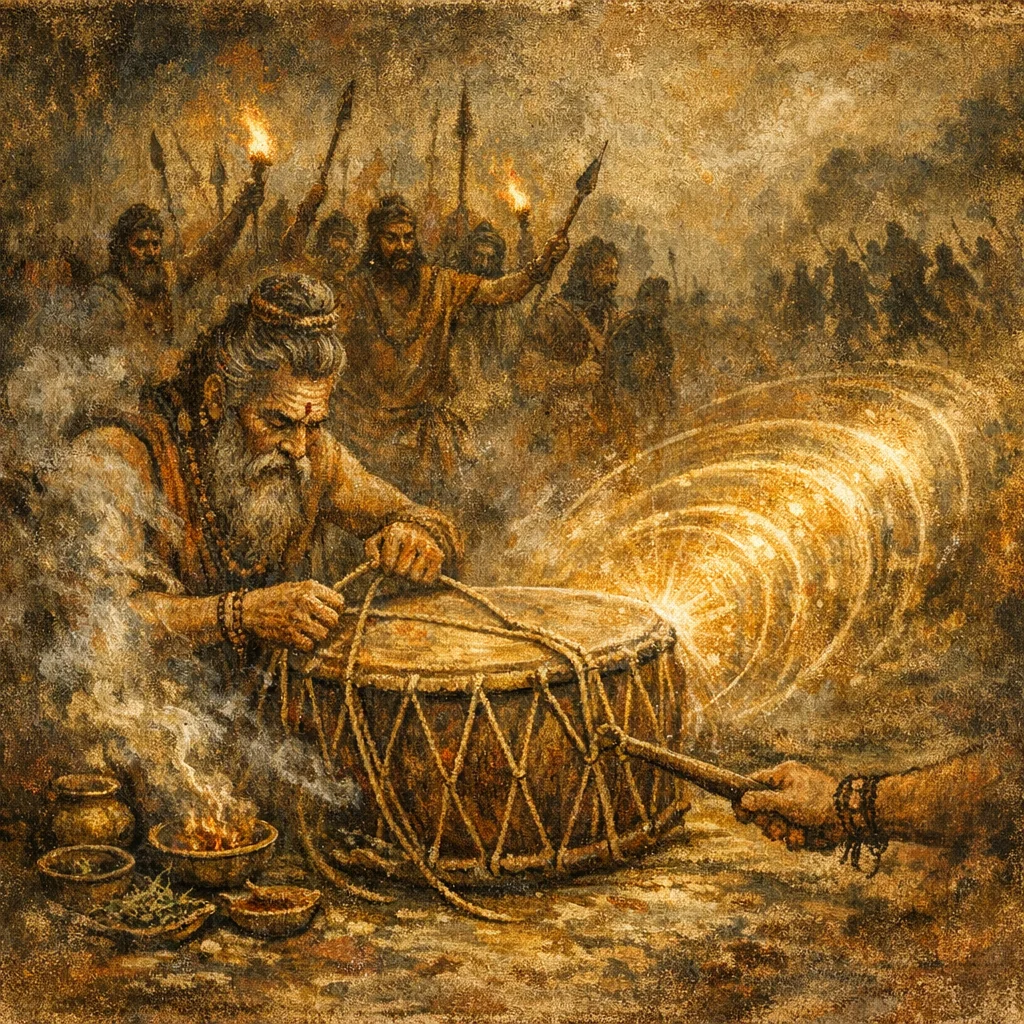
Sukta 20
Rishi: Atharvanic/Angiras-type martial seer tradition (consult Anukramaṇī for exact attribution).
Devata: Dundubhi (personified war-drum) / Indraic martial force by implication.
Chandas: Mixed; predominantly Triṣṭubh-like cadence in the long pāda sequence (AV battle hymns often loosen strict RV meters).
Mantras
Mantra 1
शत्रुसेनात्रासनम्। उच्चैर्घोषो दुन्दुभिः सत्वनायन् वानस्पत्यः संभृत उस्रियाभिः । वाचं क्षुणुवानो दमयन्त्सपत्नान्त्सिंह इव जेष्यन्नभि तंस्तनीहि
Terror of the foeman’s host: loud-voiced with the drum, advancing in might—wood-born, well-compacted, bound fast with rawhide—uttering voice, subduing rivals, like a lion fain to conquer—against them thunder forth!
Mantra 2
सिंह इवास्तानीद् द्रुवयो विबद्धोऽभिक्रन्दन्नृषभो वासितामिव । वृषा त्वं वध्रयस्ते सपत्ना ऐन्द्रस्ते शुष्मो अभिमातिषाहः
Like a lion it hath roared, firmly bound and well-fastened, crying out against (them), like a bull as one that belloweth. A bull art thou: thou smitest down thine enemies; Indra’s is thy might, victorious over hostile onsets.
Mantra 3
वृषेव यूथे सहसा विदानो गव्यन्नभि रुव संधनाजित्। शुचा विध्य हृदयं परेषां हित्वा ग्रामान् प्रच्युता यन्तु शत्रवः
Like a bull amid the herd, finding by might, seeking the cattle-prize—roar thou against them, O winner by close-binding. With burning heat pierce the heart of the others: abandoning their villages, dislodged, let the foes depart.
Mantra 4
संजयन् पृतना ऊर्ध्वमायुर्गृह्या गृह्णानो बहुधा वि चक्ष्व । दैवीं वाचं दुन्दुभ आ गुरस्व वेधाः शत्रूणामुप भरस्व वेदः
Conquering the battles, raising life on high, taking what is to be taken—look forth in manifold wise. With divine voice resound, O Drum; O Ordainer, bring thy knowing power upon the enemies.
Mantra 5
दुन्दुभेर्वाचं प्रयतां वदन्तीमाशृण्वती नाथिता घोषबुद्धा । नारी पुत्रं धावतु हस्तगह्यामित्री भीता समरे वधानाम्
Hearing the drum’s voice, sent forth and sounding, unprotected, her mind possessed by the din—let the enemy woman run, taking her son by the hand, in fear amid the battle of the slayers.
Mantra 6
पूर्वो दुन्दुभे प्र वदासि वाचं भूम्याः पृष्ठे वद रोचमानः । अमित्रसेनामभिजञ्जभानो द्युमद् वद दुन्दुभे सूनृतावत्
Foremost, O Drum, thou sendest forth thy voice; upon the earth’s back sound thou, shining. Crushing the enemy host, speak gloriously, O Drum—speak with auspicious, truth-possessing utterance.
Mantra 7
अन्तरेमे नभसी घोषो अस्तु पृथक् ते ध्वनयो यन्तु शीभम्। अभि क्रन्द स्तनयोत्पिपानः श्लोककृन्मित्रतूर्याय स्वर्धी
Between these two firmaments let there be thy din; let thy reverberations travel apart, swiftly. Cry out against them, swelling like thunder—making renown, for the ally’s war-signal, winning the light of triumph.
Mantra 8
धीभिः कृतः प्र वदाति वाचमुद्धर्षय सत्वनामायुधानि । इन्द्रमेदी सत्वनो नि ह्वयस्व मित्रैरमित्राँ अव जङ्घनीहि
With hallowed thoughts, being duly fashioned, he speaketh forth the potent Word: rouse up the weapons of the warriors. O Indra-seeking champion, call Indra down; with friends strike down, yea trample under, the unfriendly foes.
Mantra 9
संक्रन्दनः प्रवदो धृष्णुषेणः प्रवेदकृद् बहुधा ग्रामघोषी। श्रेयो वन्वानो वयुनानि विद्वान् कीर्तिं बहुभ्यो वि हर द्विराजे
Arouser of the battle-cry, a herald, of daring host; a maker of foreknowledge, in many wise, village-resounding: seeking the better, knowing well the stratagems, bear thou forth fame from among the many, O lord of double splendour.
Mantra 10
श्रेयःकेतो वसुजित् सहीयान्त्संग्रामजित् संशितो ब्रह्मणासि । अंशूनिव ग्रावाधिषवणे अद्रिर्गव्यन् दुन्दुभेऽधि नृत्य वेदः
Marked with the sign of welfare, a winner of goods, the mightier; battle-victor, whetted keen—by sacred spell thou art. Like rays the pressing-stone upon the pressing, a stone that seeketh cattle: upon the drum dance thou, O knowing one.
Mantra 11
शत्रूषाण् नीषाडभिमातिषाहो गवेषणः सहमान उद्भित्। वाग्वीव मन्त्रं प्र भरस्व वाचं सांग्रामजित्यायेषमुद् वदेह
O leader, overpowering hostile onsets, cattle-seeking, prevailing, breaking forth: like a master of speech bring forth the spell, bring forth the Word; for battle-winning—utter this aloud.
Mantra 12
अच्युतच्युत् समदो गमिष्ठो मृधो जेता पुरएतायोध्यः । इन्द्रेण गुप्तो विदथा निचिक्यद्धृद्द्योतनो द्विषतां याहि शीभम्
Shaker of the unshaken, in battle swiftest to advance; conqueror in hostilities, vanguard-going, meet for fight: guarded by Indra, discerning in the councils, heart-illuming—go thou swiftly against the hating foes.
Frequently Asked Questions
Primarily the dundubhi (war-drum) as a personified power whose sound is treated like thunder; Indra is invoked by implication and explicitly near the end as the guardian of victory.
It is a battle-oriented (abhicārika/saṅgrāmika) charm: its goal is to intimidate and scatter an enemy force, strengthen one’s own side, and drive a swift, protected advance.
By reciting while striking and tuning the war-drum at the time of forming ranks and advancing. The ritual logic is that the mantra installs coercive power into the drum’s roar, making it a weapon of morale and coordination.