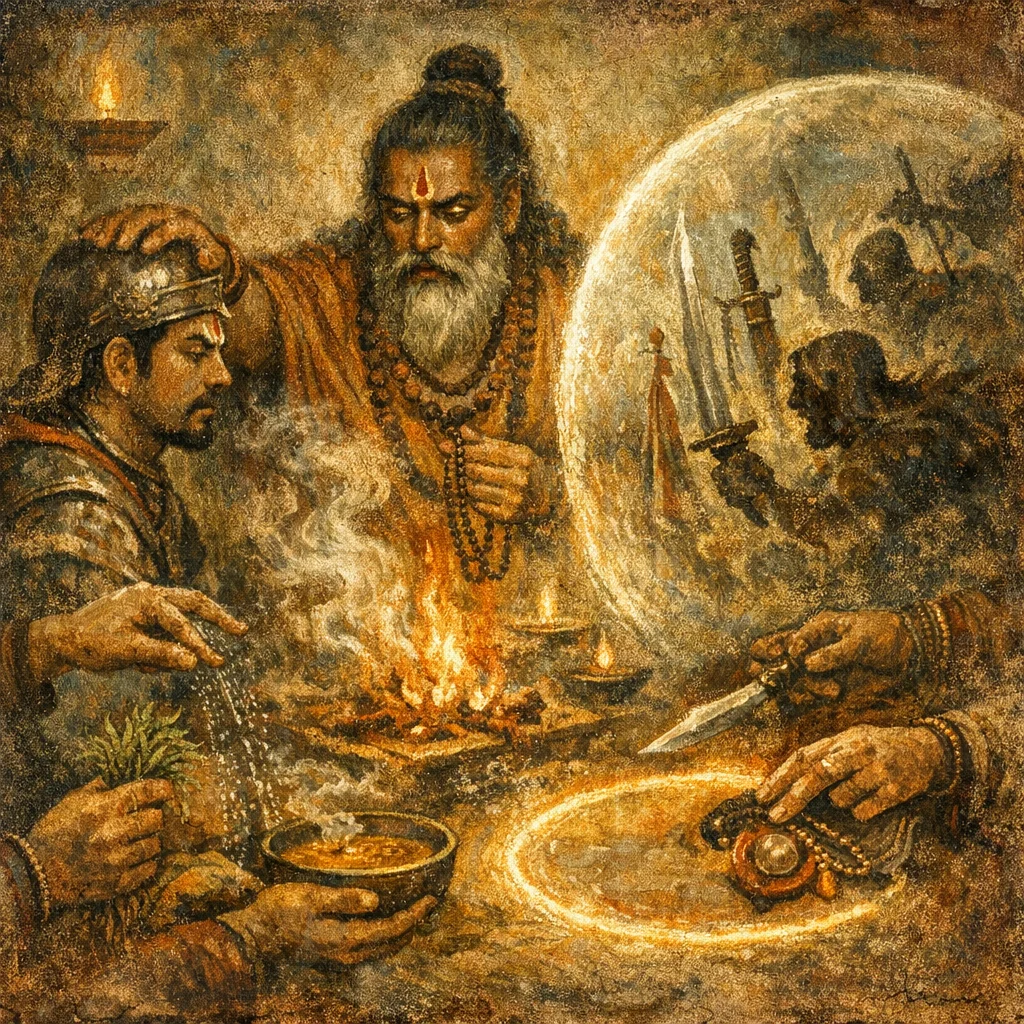
Sukta 32
Rishi: Traditionally connected with Angiras/Atharvanic seers; in RV parallels, Manyu-hymns are ascribed to seers of the Bharadvāja/Angiras sphere (assignment varies by anukramaṇī traditions).
Devata: Manyu (personified Wrath; Indra-like battle power)
Chandas: Triṣṭubh (RV-style martial cadence; Atharvanic reuse)
Mantras
Mantra 1
सेनासंयोजनम्। यस्ते मन्योऽविधद् वज्र सायक सह ओजः पुष्यति विश्वमानुषक्। साह्याम दासमार्यं त्वया युजा वयं सहस्कृतेन सहसा सहस्वता
Army-joining. He—thy Manyu—whom none hath smitten, O bolt-weaponed, with whom vigor waxeth, all among men: with thee as yoked ally may we overpower both Dāsa and Ārya, with might-made force, with might, with the mighty.
Mantra 2
मन्युरिन्द्रो मन्युरेवास देवो मन्युर्होता वरुणो जातवेदाः । मन्युर्विश ईडते मानुषीर्याः पाहि नो मन्यो तपसा सजोषाः
Manyu is Indra; Manyu indeed is that God. Manyu is Hotar, Varuṇa, Jātavedas. Manyu—whom the human clans invoke—protect us, O Manyu, with burning might, in one accord.
Mantra 3
अभीऽहि मन्यो तवसस्तवीयान् तपसा युजा वि जहि शत्रून्। अमित्रहा वृत्रहा दस्युहा च विश्वा वसून्या भरा त्वं नः
Advance hither, O Manyu, mightier than the mighty; yoked with burning ardour, smite the foes asunder. Foe-slayer, Vṛtra-slayer, Dasyu-slayer also—bring thou unto us all manner of riches.
Mantra 4
त्वं हि मन्यो अभिभूत्योजाः स्वयंभूर्भामो अभिमातिषाहः । विश्वचर्षणिः सहुरिः सहीयानस्मास्वोजः पृतनासु धेहि
For thou, O Manyu, art of overpowering might, self-born, a blazing force that conquers hostile onsets. Universal among the peoples, impetuous, ever the stronger—set thou thy vigour within us in the battles.
Mantra 5
अभागः सन्नप परेतो अस्मि तव क्रत्वा तविषस्य प्रचेतः । तं त्वा मन्यो अक्रतुर्जिहीडाहं स्वा तनूर्बलदावा न एहि
Luckless, not cast away, I am—by thy resolve, O discerning one, thou vehement. That witless state—O Manyu—do thou abandon; come unto us, O strength-bestower, into mine own person.
Mantra 6
अयं ते अस्म्युप न एह्यर्वाङ् प्रतीचीनः सहुरे विश्वदावन्। मन्यो वज्रिन्नभि न आ ववृत्स्व हनाव दस्यूंरुत बोध्यापेः
Here am I thine: come near to us, hitherward, turned toward us, O impetuous, all-bestowing. O Manyu, bolt-bearing, roll thyself upon us; smite down the Dasyus, and be thou wakeful against the foe from afar.
Mantra 7
अभि प्रेहि दक्षिणतो भवा नोऽधा वृत्राणि जङ्घनाव भूरि । जुहोमि ते धरुणं मध्वो अग्रमुभावुपांशु प्रथमा पिबाव
Advance forth; be ours upon the right: then crush down, in abundance, the obstructions. I offer unto thee the sustaining draught, the foremost of the sweet; drink down both—firstly, in a low voice (in secret).
Frequently Asked Questions
Both: Manyu is wrath as a disciplined power, treated as a deity. The hymn personifies anger as a divine force that can be invoked to protect, attack obstacles, and secure victory.
Its primary Atharvanic use is abhicārika—subduing hostile forces and enemies in a martial/protective frame. Traditional framing emphasizes defense, vigilance, and the restoration of safety and rightful strength for the patron.
This identification expands Manyu into a total power: Indra for battle, Varuṇa for sovereign restraint/order, Jātavedas (Agni) for fiery energy, and Hotṛ for ritual efficacy—so the invoked force can act on every level of protection and success.