Sukta 13
Rishi: Atharvanic tradition (ṛṣi not securely fixed for this individual mantra in common indices)
Devata: Āpas (Waters), with mythic linkage to Varuṇa and Indra
Chandas: Anuṣṭubh (probable; hymn largely in short pādas typical of AV style)
Mantras
Mantra 1
आपः। यददः संप्रयतीरहावनदता हते। तस्मादा नद्यो३ नाम स्थ ता वो नामानि सिन्धवः
O Waters: when yonder, flowing on together, ye roared aloud day after day at the smiting—therefore are ye called ‘Rivers’: those are your names, O Sindhus.
Mantra 2
यत् प्रेषिता वरुणेनाच्छीभं समवल्गत । तदाप्नोदिन्द्रो वो यतीस्तस्मादापो अनु ष्ठन
When, urged forth by Varuṇa, ye sprang together toward the clear goal, then Indra won you—ye that press onward. Therefore, O Waters, follow on and take your station.
Mantra 3
अपकामं स्यन्दमाना अवीवरत वो हि कम्। इन्द्रो वः शक्तिभिर्देवीस्तस्माद् वार्नाम वो हितम्
Streaming forth, ye opened a way from what is unwanted—ye brought, indeed, delight. Indra, O goddesses, with his powers made you so: therefore is your Varuṇic nature set for your beneficent use.
Mantra 4
एको वो देवोऽप्यतिष्ठत् स्यन्दमाना यथावशम्। उदानिषुर्महीरिति तस्मादुदकमुच्यते
One god among you took his stand, while ye flowed on at will. ‘The mighty ones brought it up,’—thus; therefore it is called udaká, the Water.
Mantra 5
आपो भद्रा घृतमिदाप आसन्नग्नीषोमौ बिभ्रत्याप इत् ताः। तीव्रो रसो मधुपृचामरंगम आ मा प्राणेन सह वर्चसा गमेत्
Auspicious are the Waters: the Waters were, indeed, ghee; bearing Agni and Soma—those Waters indeed. Let their keen essence, honey-blent and harmless, come unto me together with breath and with splendour.
Mantra 6
आदित् पश्याम्युत वा शृणोम्या मा घोषो गच्छति वाङ् मासाम्। मन्ये भेजानो अमृतस्य तर्हि हिरण्यवर्णा अतृपं यदा वः
Now, indeed, I see; yea, I hear: to me comes sound—speech comes to me—from these. I deem that then I partake of immortality, O golden-hued ones, when I, erst unsated, have you.
Mantra 7
इदं व आपो हृदयमयं वत्स ऋतावरीः । इहेत्थमेत शक्वरीर्यत्रेदं वेशयामि वः
This, O Waters, is your heart; this is the calf, O ye that bear the Ṛta. Thus, hither—come, ye mighty ones—unto the place where I cause you to be housed.
Frequently Asked Questions
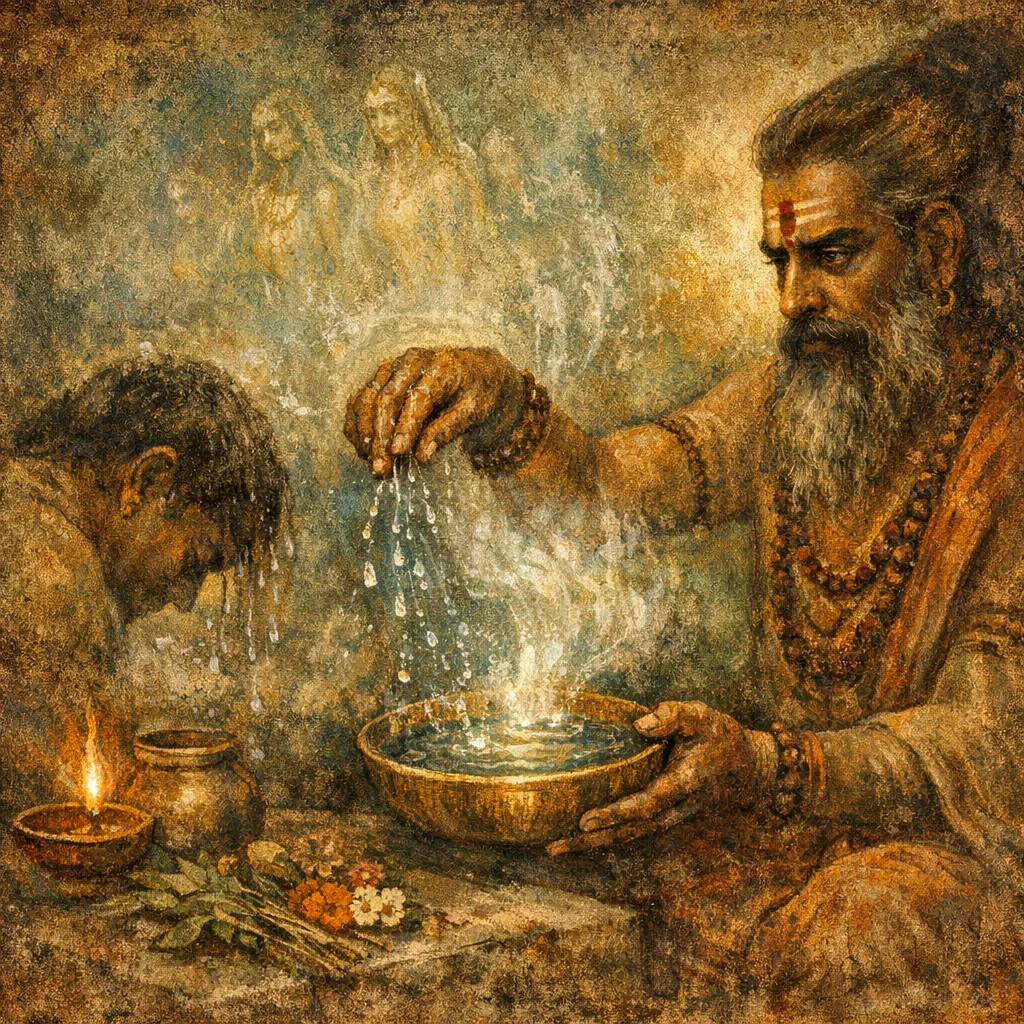
It is used to consecrate water for purification—sprinkling, bathing, or sipping—to remove defilement and invite renewed vitality (prāṇa) and radiance (varcas).
They supply the mythic authorization: Varuṇa impels the waters according to cosmic order, and Indra ‘wins’ or secures them for beings, making the waters ritually commandable and beneficent.
No. The primary medium is clean water. Optional ghee and honey can be added symbolically to match the hymn’s imagery of a nourishing, harmless essence.