Sukta 37
Rishi: As in RV parallel (Indra-stuti tradition; AV 20 largely reprises RV hymns—r̥ṣi per RV source-hymn)
Devata: Indra (Vajrahasta)
Chandas: Triṣṭubh (RV-style praise verse; AV 20 follows RV meters)
Mantras
Mantra 1
यस्तिग्मशृङ्गो वृषभो न भीमः एकः कृष्टीश्च्यवयति प्र विश्वाः । यः शश्वतो अदाशुषो गयस्य प्रयन्तासि सुष्वितराय वेदः
He who, sharp-horned, bull-like, dread, alone sets all the peoples moving forth; who, from of old, is bestower of substance unto him that worshippeth not—thou art the giver (even so), O Knower, for the well-stirred rite.
Mantra 2
त्वं ह त्यदिन्द्र कुत्समावः शुश्रूषमाणस्तन्वा समर्ये। दासं यच्छुष्णं कुयवं न्यऽस्मा अरन्धय आर्जुनेयाय शिक्षन्
Thou verily didst help that Kutsa, O Indra, giving heed, in thine own person, in the battle; when thou didst bring down into subjection for him the Dāsa Śuṣṇa and Kuyava, aiding the son of Arjuna with thy succour.
Mantra 3
त्वं धृष्णो धृषता वीतहव्यं प्रावो विश्वाभिरूतिभिः सुदासम्। प्र पौरुकुत्सिं त्रसदस्युमावः क्षेत्रसाता वृत्रहत्येषु पूरुम्
Thou, O Bold, by bold might didst guard Sudās with every form of succour, him whose offering thou hast accepted. Thou didst aid Paurukutsi, thou didst aid Trasadasyu, and Pūru in the winning of the field, in the Vṛtra-slayings.
Mantra 4
त्वं नृभिर्नृमणो देववीतौ भूरीणि वृत्रा हर्यश्व हंसि । त्वं नि दस्युं चुमुरिं धुनिं चास्वापयो दभीतये सुहन्तु
Thou, with men, O man-souled, in the god-aided strife, O Tawny-steeded, smitest many an Obstructor. Thou didst bring low the Dasyu, Cumuri and Dhunī, and didst lull them into sleep for Dabhīti, O good smiter.
Mantra 5
तव च्यौत्नानि वज्रहस्त तानि नव यत् पुरो नवतिं च सद्यः । निवेशने शततमाविवेषीरहं च वृत्रं नमुचिमुताहन्
Thine are those exploits, O Thunderbolt-handed: those nine, when straightway thou didst shatter ninety forts; and, in the homestead, didst force an entrance into the hundredth. I too smote Vṛtra, and Namuci moreover slew.
Mantra 6
सना ता त इन्द्र भोजनानि रातहव्याय दाशुषे सुदासे । वृष्णे ते हरी वृषणा युनज्मि व्यन्तु ब्रह्माणि पुरुशाक वाजम्
From of old are thine, O Indra, bounties—unto the well-offering, unto the giver, unto the good bestower. Thy two strong bay steeds, the vigorous pair, I yoke for the mighty: let prayers spread abroad, O Much-availing, for the winning of the prize.
Mantra 7
मा ते अस्यां सहसावन् परिष्टावघाय भूम हरिवः परादौ। त्रायस्व नोऽवृकेभिर्वरूथैस्तव प्रियासः सूरिषु स्याम
Let us not, O Might-possessor, in this our praise be for evil; far off, O Lord of bays, be harm! Protect us with thy wolf-less shelters; may we be thy dear ones among the chieftains.
Mantra 8
प्रियास इत् ते मघवन्नभिष्टौ नरो मदेम शरणे सखायः । नि तुर्वशं नि याद्वं शिशीह्यतिथिग्वाय शंस्यं करिष्यन्
Dear unto thee indeed, O Bounteous, in our laudation—may we, as men, rejoice in shelter, as comrades. Whet down Turvaśa, down Yādva, preparing for Atithigva a deed to be famed.
Mantra 9
सद्यश्चिन्नु ते मघवन्नभिष्टौ नरः शंसन्त्युक्थशास उक्था। ये ते हवेभिर्वि पणींरदाशन्नस्मान् वृणीष्व युज्याय तस्मै
Even straightway now, O Bounteous, in thy praise, men—hymn-reciting chanters—proclaim their hymns; they who, by their invocations, made the Paṇis yield and scatter. Choose us for comradeship, for that yoking unto the task.
Mantra 10
एते स्तोमा नरां नृतम तुभ्यमस्मद्र्यऽञ्चो ददतो मघानि । तेषामिन्द्र वृत्रहत्ये शिवो भूः सखा च शूरोऽविता च नृणाम्
These praises of men, O most manly, are for thee—right-aimed from us—who bestow (on thee) gifts. For them, O Indra, in the Vṛtra-slaying be thou gracious: a friend, a hero, and a helper of men.
Mantra 11
नू इन्द्र शूर स्तवमान ऊती ब्रह्मजूतस्तन्वा वावृधस्व । उप नो वाजान् मिमीह्युप स्तीन् यूयं पात स्वस्तिभिः सदा नः
Now, O Indra, hero—praised—wax strong in thy very person, impelled by the brahman, with (thy) aid. Apportion unto us the prizes; bring near the hymns: do ye ever guard us with prosperities.
Frequently Asked Questions
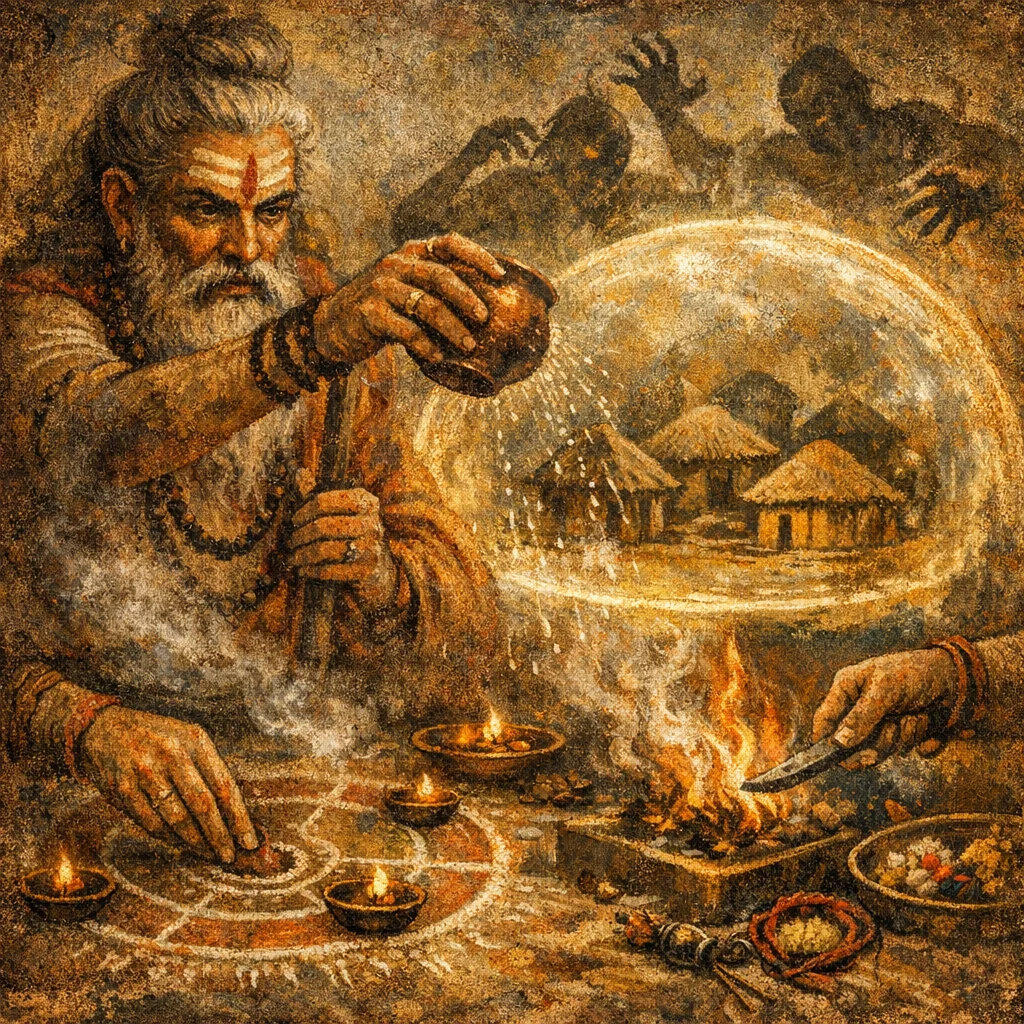
For prosperity with protection: it invokes Indra to break ‘enclosures’ of constraint, neutralize hostility, and secure the home/community with victorious strength.
The forts symbolize layered obstacles—enemy defenses, social constraints, or harmful forces. Indra’s total breakthrough is cited as a model for complete removal of present-day impediments.
No. A simple protective setting—clean space, water at the threshold, and a small offering (magha) alongside recitation—is consistent with the hymn’s stoma-and-gift reciprocity.