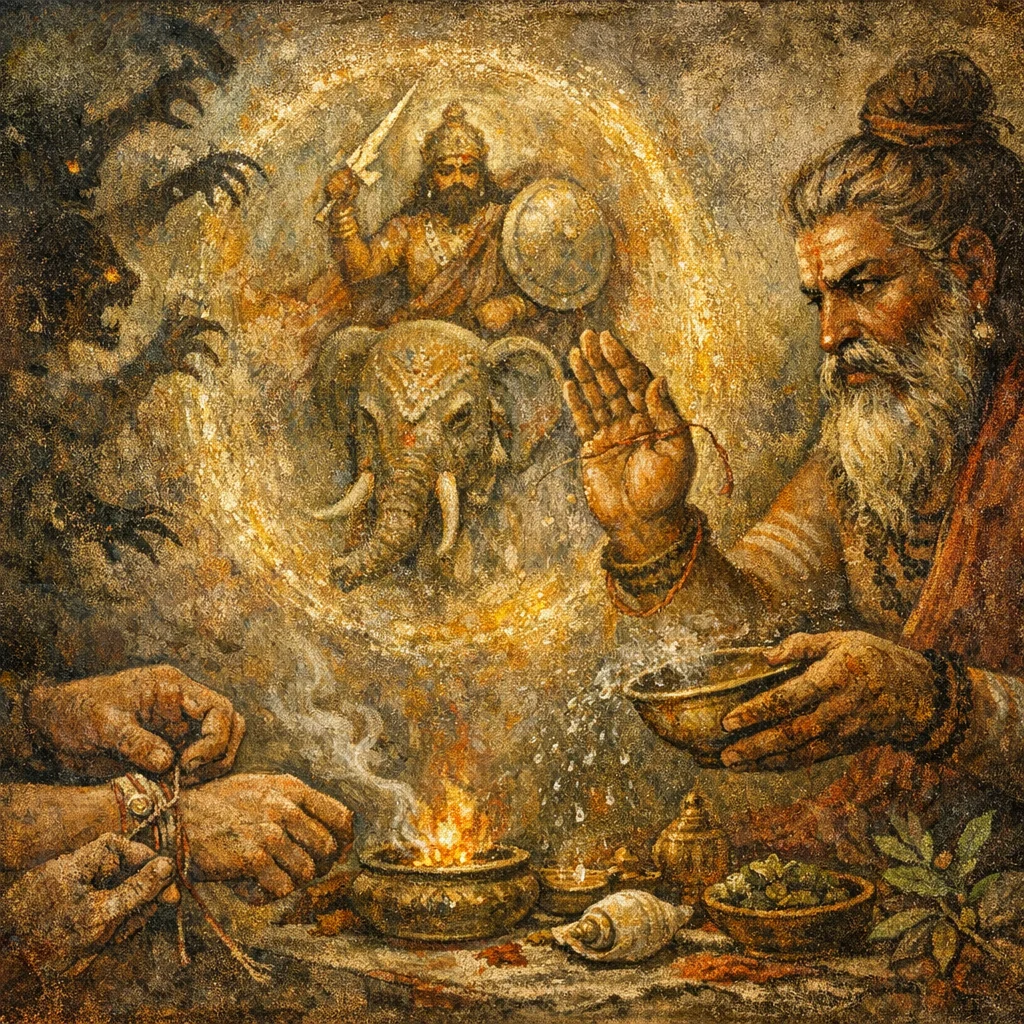
Sukta 36
Rishi: Attributed in AV 20 largely to Ṛgvedic seers for Indra hymns (RV provenance); specific r̥ṣi for this verse follows the RV hymn-source attribution.
Devata: Indra
Chandas: Triṣṭubh (RV-style; AV 20 is predominantly RV meters)
Mantras
Mantra 1
य एक इद्धव्यश्चर्षणीनामिन्द्रं तं गीर्भिरभ्यर्च आभिः । यः पत्यते वृषभो वृष्ण्यावान्त्सत्यः सत्वा पुरुमायः सहस्वान्
He who alone, yea he, is meet for offering among the tribes of men—Indra: him with these our hymns do thou address with praise. He who bears rule, the Bull, endowed with manly might; the True, the Strong, of many wondrous powers, the vehement in force.
Mantra 2
तमु नः पूर्वे पितरो नवग्वाः सप्त विप्रासो अभि वाजयन्तः । नक्षद्दाभं ततुरिं पर्वतेष्ठामद्रोघवाचं मतिभिः शविष्ठम्
Him did our fathers of old, the Navagvas, and the seven inspired seers, striving for the prize, win for our sake—him, the unbeguileable, the overcomer, mountain-seated, of speech untreacherous, the mightiest, by their thoughts and hymns.
Mantra 3
तमीमहे इन्द्रमस्य रायः पुरुवीरस्य नृवतः पुरुक्षोः । यो अस्कृधोयुरजरः स्वऽर्वान् तमा भर हरिवो मादयध्यै
Him we beseech—Indra—for his wealth, rich in heroes, rich in men, of many homes: who is not stinting in bestowal, unaging, heaven-bright. Bring him hither, O thou of bay steeds, that he may be exhilarated.
Mantra 4
तन्नो वि वोचो यदि ते पुरा चिज्जरितार आनशुः सुम्नमिन्द्र । कस्ते भागः किं वयो दुध्र खिद्वः पुरुहूत पुरूवसोऽसुरघ्नः
Declare to us that boon, if even of old the singers won thy grace, O Indra. What is thy portion? what thy vital might to bestow, O strong one, dispeller of distress—much-invoked, of ample wealth, slayer of the Asuras?
Mantra 5
तं पृच्छन्ती वज्रहस्तं रथेष्ठामिन्द्रं वेपी वक्वरी यस्य नू गीः । तुविग्राभं तुविकूर्मिं रभोदां गातुमिषे नक्षते तुम्रमच्छ
Him, the thunder-handed, chariot-seated Indra, the quivering, eloquent hymn—whose song is now—goes asking. The mighty-grasping, the mighty-surging, the giver of support: unto the fierce one it attains a path for nourishment and forward impulse.
Mantra 6
अया ह त्यं मायया वावृधानं मनोजुवा स्वतवः पर्वतेन । अच्युता चिद् वीलिता स्वोजो रुजो वि दृह्ला धृषता विरप्शिन्
By this, verily, that one—waxing great through wondrous craft, thought-swift, self-strong, as with a mountain—though the unshaken be compacted, he, of native might, the breaker, with daring, sunders the stubborn fastnesses, far-working.
Mantra 7
तं वो धिया नव्यस्या शविष्ठं प्रत्नं प्रत्नवत् परितंसयध्यै । स नो वक्षदनिमानः सुवह्मेन्द्रो विश्वान्यति दुर्गहाणि
Him, with freshened thought—the mightiest, the ancient one—praise ye about, as men of old were wont. May Indra, undiminished, good-bearer, carry us across all hard-to-pass perils.
Mantra 8
आ जनाय द्रुह्वणे पार्थिवानि दिव्यानि दीपयोऽन्तरिक्षा । तपा वृषन् विश्वतः शोचिषा तान् ब्रह्मद्विषे शोचय क्षामपश्च
For the people thou kindlest, in mid-air, the powers terrestrial and celestial; but burn, O Bull, from every side with flame—those haters of the holy spell: scorch them, the earth and the waters too.
Mantra 9
भुवो जनस्य दिव्यस्य राजा पार्थिवस्य जगतस्त्वेषसंदृक्। धिष्व वज्रं दक्षिण इन्द्र हस्ते विश्वा अजुर्य दयसे वि मायाः
King of the folk, of heaven and of earth, of all that moves, fierce to behold—set thou the bolt in thy right hand, O Indra; unaging, thou dealest out, in manifold wise, thy wondrous powers.
Mantra 10
आ संयतमिन्द्र णः स्वस्तिं शत्रुतूर्याय बृहतीममृध्राम्। यया दासान्यार्याणि वृत्रा करो वज्रिन्त्सुतुका नाहुषाणि
Bring hither unto us, O Indra, welfare—great, unbaffled—for the conquering of our foes; whereby, O Bolt-bearer, thou hast made the Dāsas and the obstructor-hosts subject to the Ārya, aiding well the sons of Nāhuṣa.
Mantra 11
स नो नियुद्भिः पुरुहूत वेधो विश्ववाराभिरा गहि प्रयज्यो । न या अदेवो वरते न देव आभिर्याहि तूयमा मद्र्यद्रिक्
With thy yoked teams, O Much-invoked, O Sage Ordainer, come thou hither with boons of every sort, O worthy of the offering. Those (aids) which neither godless foe may choose, nor any god (as rival) may appropriate—with these come thou, and quickly, hither, thou whose look is gladdening.
Frequently Asked Questions
It is used to invoke Indra for protection and victory—especially to break through stubborn obstacles or hostile opposition and to secure strong divine support for the patron.
It establishes exclusivity and authority: the sacrificer’s praise and offering are directed to the most effective divine ally, ensuring focused power rather than dispersed devotion.
No materials are required by the hymn itself; it works as a recitation. If one follows a yajña-style setting, a simple oblation (like ghee) may accompany the praise, but it is optional here.