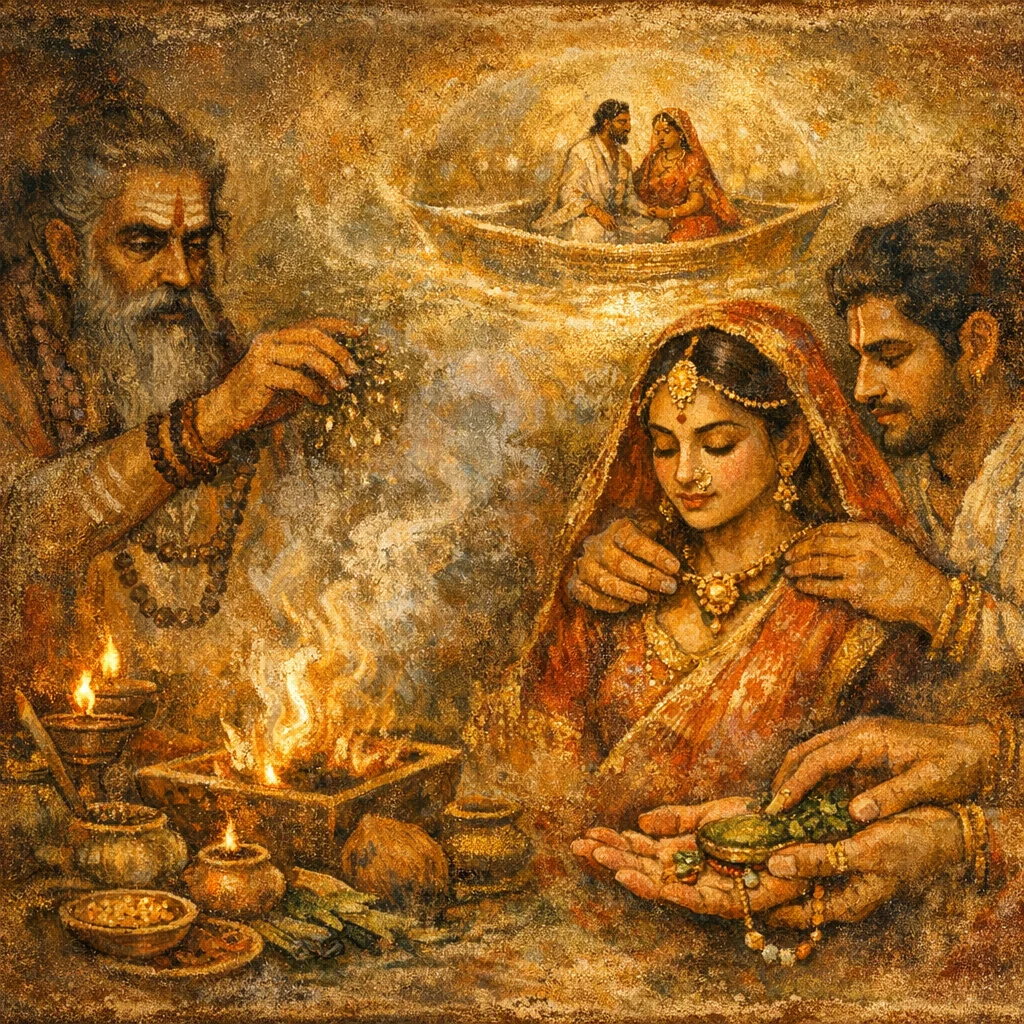
Sukta 36
Rishi: Atharvanic tradition (specific r̥ṣi attribution varies by anukramaṇī for this minor nuptial charm)
Devata: Agni (primary), Bhaga (auxiliary as fortune-distributor)
Chandas: Mixed/irregular (Atharvavedic domestic charm style; broadly triṣṭubh-jagatī tendency rather than strict anuṣṭubh)
Mantras
Mantra 1
पतिवेदनम्। आ नो अग्ने सुमतिं संभलो गमेदिमां कुमारीं सह नो भगेन । जुष्टा वरेषु समनेषु वल्गुरोषं पत्या सौभगमस्त्वस्यै
Hither to us, O Agni, let gracious favour come—bringing provision—unto this maiden here, together with Bhaga for our behoof. Approved among the suitors, in the gatherings, winsome; let there be for her, with a husband, good fortune, and (let there be) the quelling of wrath.
Mantra 2
सोमजुष्टं ब्रह्मजुष्टमर्यम्णा संभृतं भगम्। धातुर्देवस्य सत्येन कृणोमि पतिवेदनम्
A boon approved of Soma, approved of holy spell; a Bhaga-fortune gathered by Aryaman: by the truth of Dhātṛ the God I make the winning of a husband.
Mantra 3
इयमग्ने नारी पतिं विदेष्ट सोमो हि राजा सुभगां कृणोति । सुवाना पुत्रान् महिषी भवाति गत्वा पतिं सुभगा वि राजतु
This woman, O Agni, shall win a husband: for Soma, the King, doth make her fortunate. Bearing sons she becometh a chief wife; having gone unto her husband, fortunate, let her shine forth in sovereignty.
Mantra 4
यथाखरो मघवंश्चारुरेष प्रियो मृगाणां सुषदा बभूव । एवा भगस्य जुष्टेयमस्तु नारी संप्रिया पत्याविराधयन्ती
As the ass, O bounteous Lord, this comely one, became dear to the wild creatures, firmly established in their favour,—so may this woman be, by Bhaga’s grace, accepted and enjoyed: dear in full measure to her husband, giving him no offence.
Mantra 5
भगस्य नावमा रोह पूर्णामनुपदस्वतीम्। तयोपप्रतारय यो वरः प्रतिकाम्यः
Mount thou the boat of Bhaga—full-freighted, sure-footed at every step; and with that do thou ferry us clean across unto the boon which is desired and answers to our wish.
Mantra 6
आ क्रन्दय धनपते वरमामनसं कृणु । सर्वं प्रदक्षिणं कृणु यो वरः प्रतिकाम्यः
Cause it to resound, O Lord of Wealth; make the boon mind-ward and sure. Make all things rightward and auspicious—this boon that is to be desired, answering desire.
Mantra 7
इदं हिरण्यं गुल्गुल्वयमौक्षो अथो भगः । एते पतिभ्यस्त्वामदुः प्रतिकामाय वेत्तवे ॥७ आ ते नयतु सविता नयतु पतिर्यः प्रतिकाम्यः । त्वमस्यै धेह्योषधे
This gold, this guggulu, we—and the Bull, and Bhaga besides— These have bestowed thee for husbands, for the answering of desire, for the winning thereof. Let Savitar lead him hither unto thee; let the husband lead, who is answering to desire. Do thou bestow him upon her, O Herb.
Frequently Asked Questions
It is used as a domestic charm to help a maiden obtain a suitable husband, gain acceptance among suitors and families, and secure prosperity and harmony in married life.
Agni acts as the household mediator who carries the prayer into effect, while Bhaga grants the ‘portion’ of good fortune—marital allotment, enjoyment, and social approval—needed for a successful match.
Gold (hiraṇya) functions as an auspicious saubhāgya-token, and guggulu as a fragrant attractive medium; together they ‘materialize’ the prayer, especially in the closing verse where Savitar leads the desired husband and the Herb is commanded to bestow him.