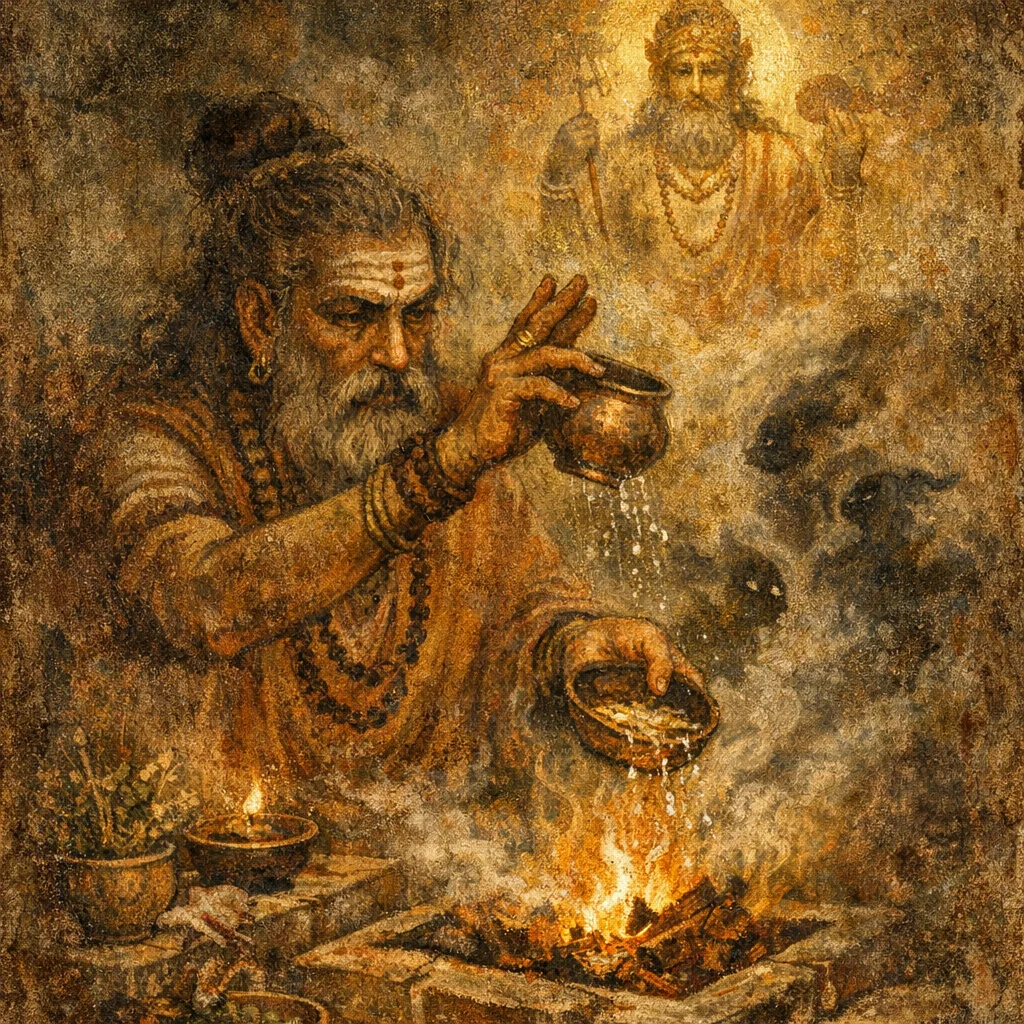
Sukta 35
Rishi: Traditionally associated with Viśvakarman hymnic material; specific Atharvavedic assignment varies by anukramaṇī tradition.
Devata: Viśvakarman (cosmic artificer; restorer of ritual integrity)
Chandas: Triṣṭubh-like cadence (mixed/irregular in Atharvan transmission; often treated as a pragmatic mantra rather than strict metrical poetry)
Mantras
Mantra 1
विश्वकर्मा। ये भक्षयन्तो न वसून्यानृधुर्यानग्नयो अन्वतप्यन्त धिष्ण्याः । या तेषामवया दुरिष्टिः स्विऽष्टिं नस्तां कृणवद् विश्वकर्मा
O Viśvakarman! Those who, devouring, prospered not in goods—those Fires, the established ones, that scorched in pursuit—what ill-rite of theirs, through mishap, there was: that, for us, may he make into a well-offering, Viśvakarman.
Mantra 2
यज्ञपतिमृषयः एनसाहुर्निर्भक्तं प्रजा अनुतप्यमानम्। मथव्याऽन्त्स्तोकानप यान् रराध सं नष्टेभिः सृजतु विश्वकर्मा
The Seers have called it sin: that the Lord of Sacrifice, cut off (from his portion), should thereafter suffer with his folk. The drops—those little portions—which he hath harmed and driven away, let Viśvakarman, the All-Former, send forth again, together with the lost.
Mantra 3
अदान्यान्त्सोमपान् मन्यमानो यज्ञस्य विद्वान्त्समये न धीरः । यदेनश्चकृवान् बद्ध एष तं विश्वकर्मन् प्र मुञ्चा स्वस्तये
Ungiving, yet deeming himself a Soma-drinker, and, though knowing the sacrifice, at the due season not steadfast—whatever sin he hath committed, this man is bound thereby: him, O Viśvakarman, do thou wholly loose, for welfare.
Mantra 4
घोरा ऋषयो नमो अस्त्वेभ्यश्चक्षुर्यदेषां मनसश्च सत्यम्। बृहस्पतये महिष द्युमन्नमो विश्वकर्मन् नमस्ते पाह्य१स्मान्
Homage be unto those dread Rishis, whose eye is keen, and whose mind is truth. Homage to Bṛhaspati, O mighty, radiant One; homage, O Viśvakarman: homage to thee—protect us.
Mantra 5
यज्ञस्य चक्षुः प्रभृतिर्मुखं च वाचा श्रोत्रेण मनसा जुहोमि । इमं यज्ञं विततं विश्वकर्मणा देवा यन्तु सुमनस्यमानाः
With speech, with hearing, with the mind I offer—the Sacrifice’s eye, its first beginning, and its mouth. Unto this Sacrifice, spread forth and duly fashioned by Viśvakarman, let the Gods come, graciously and of kindly thought.
Frequently Asked Questions
It is used when a sacrifice goes wrong—errors, omissions, or inauspicious effects—described as duriṣṭi/énas, especially when the fires seem to ‘scorch’ and results (wealth, wellbeing) do not arise.
Agni is the working fire, but Viśvakarman is invoked as the cosmic craftsman who can re-form the rite’s structure—turning a flawed performance into a completed, acceptable offering (sviṣṭi).
Tend the fire, recite the hymn with steady attention, and offer a small ghee oblation with the intention of correcting the fault and ‘calling back’ what was lost; end by inviting the gods to approach in a kindly mood.