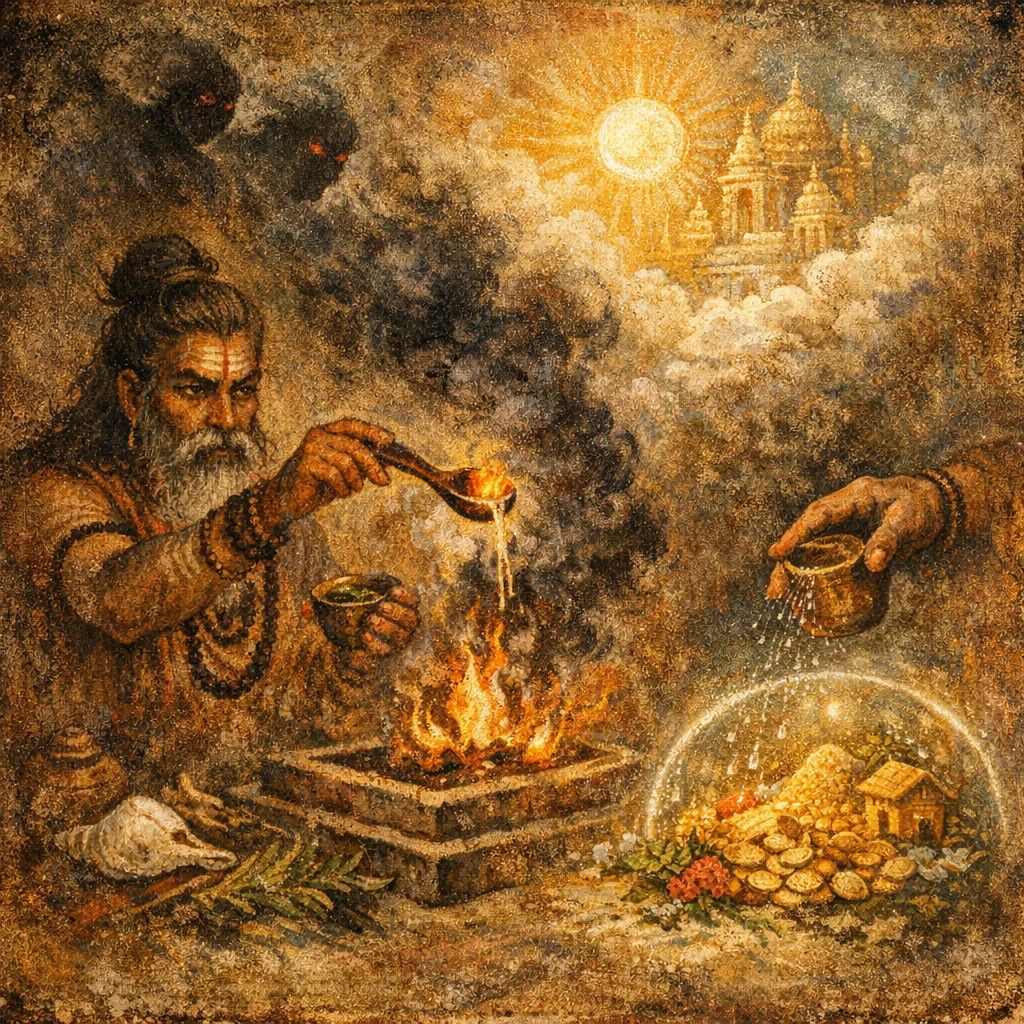
Sukta 9
Rishi: Atharvanic tradition (specific r̥ṣi attribution varies by anukramaṇī; requires recension-specific confirmation).
Devata: Vasu/Śrī as prosperity-power; secondarily Yajña as efficacious agent.
Chandas: Likely Anuṣṭubh or mixed prose-like cadence (meter requires pada-count verification from full hymn context).
Mantras
Mantra 1
२ आर्च्युष्णिक्, ३ साम्नी पङ्क्तिः, ४ परोष्णिक्। जितमस्माकमुद्भिन्नमस्माकमभ्यऽष्ठां विश्वाः पृतना अरातीः
Won is it for us; shattered for us: we have taken our stand against all battles, against all malign hostilities.
Mantra 2
तदग्निराह तदु सोम आह पूषा मा धात् सुकृतस्य लोके
That Agni hath spoken; that, verily, Soma hath spoken: may Pūṣan set me in the world of merit well-wrought.
Mantra 3
अगन्म स्वः१ स्वऽरगन्म सं सूर्यस्य ज्योतिषागन्म
We have gone to heaven; to heaven have we gone: wholly with the Sun’s light have we gone.
Mantra 4
वस्योभूयाय वसुमान् यज्ञो वसु वंसिषीय वसुमान् भूयासं वसु मयि धेहि
For greater excellence: the Sacrifice, rich in treasure—may I win treasure; may I become treasure-rich. O Wealth, in me do thou deposit thyself.
Frequently Asked Questions
It is primarily paustika (prosperity), but it frames prosperity as ‘excellence’ and stable good fortune, ratified by merit (sukṛta) and sealed in solar luminosity—so it also aims at well-being and auspicious destiny.
Agni and Soma function as authoritative witnesses of the spoken resolve, while Pūṣan is the guiding/placing deity who is asked to establish the performer securely in the ‘world of well-wrought merit,’ making the prosperity stable and protected.
It treats wealth as a power that can be invited to ‘settle’ within you—i.e., to become steady, retained prosperity—rather than a temporary gain, and it is the hymn’s clearest sealing request for lasting abundance.