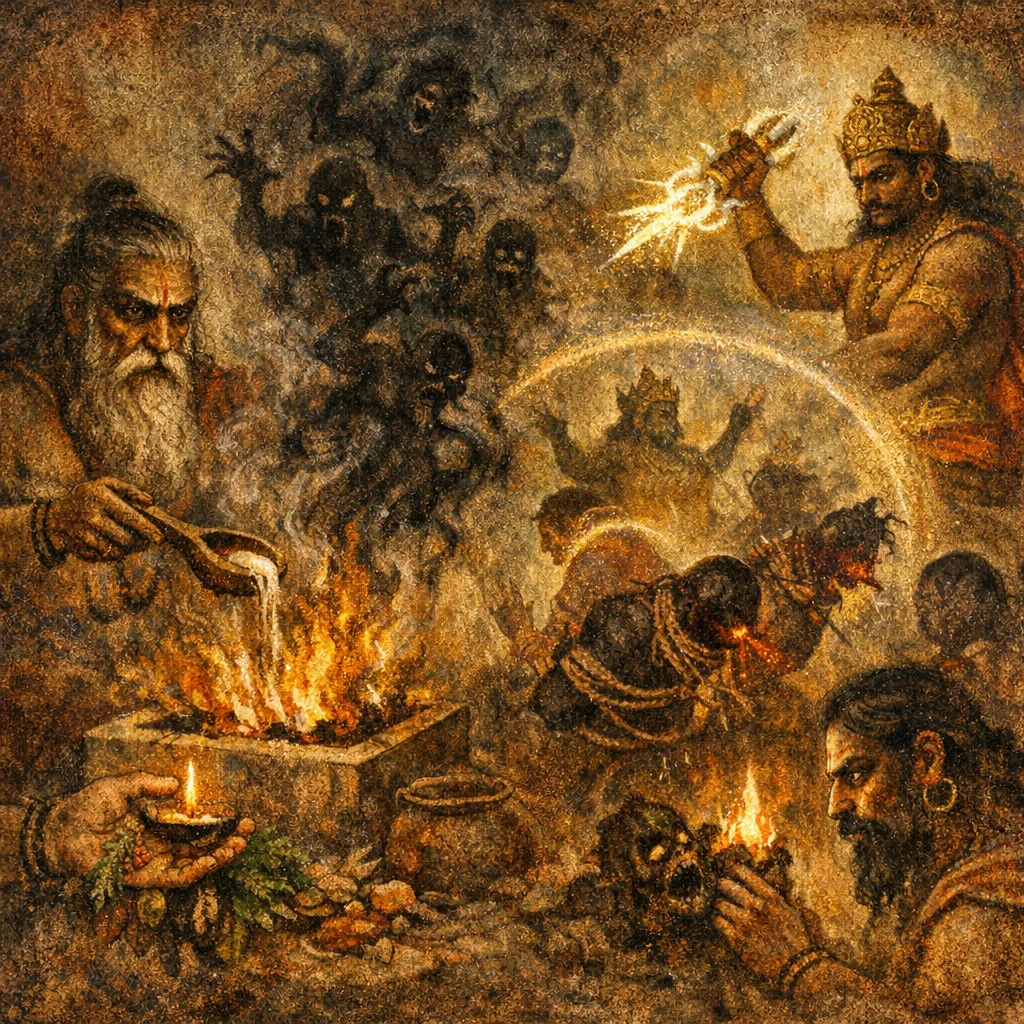
Sukta 7
Rishi: Atharvanic tradition (often treated as Angiras/Atharvan-type seer for rakṣohāna hymns; specific r̥ṣi assignment varies by anukramaṇī).
Devata: Agni (as Rakṣohā/guardian and destroyer of yātudhānas).
Chandas: Anuṣṭubh (4 pādas of 8 syllables; with Atharvanic metrical looseness).
Mantras
Mantra 1
यातुधाननाशनम्। स्तुवानमग्न आ वह यातुधानं किमीदिनम्। त्वं हि देव वन्दितो हन्ता दस्योर्बभूविथ
O Agni, bring hither the Yātudhāna, the Kimīdin, unto the man who praiseth thee. For thou, O God, when duly adored, hast become the slayer of the Dasyu.
Mantra 2
आज्यस्य परमेष्ठिन् जातवेदस्तनूवशिन्। अग्ने तौलस्य प्राशान यातुधानान् वि लापय
O thou Most-Exalted, Jātavedas, self-ruled in body—O Agni—having eaten of the sesame-oil, melt the Yātudhānas away asunder.
Mantra 3
वि लपन्तु यातुधाना अत्त्रिणो ये किमीदिनः । अथेदमग्ने नो हविरिन्द्रश्च प्रति हर्यतम्
Let the Yātudhānas wail apart—those devourers, whoso are the Kīmīdins. Then do ye, O Agni, and Indra, accept in turn this oblation of ours.
Mantra 4
अग्नि पूर्व आ रभतां प्रेन्द्रो नुदतु बाहुमान्। ब्रवीतु सर्वो यातुमानयमस्मीत्येत्य
Let Agni, first of all, lay hold upon him; let Indra, strong-armed, thrust him forth. Let every wizard speak: ‘This am I’; so comes he forth (to be known).
Mantra 5
पश्याम ते वीर्यं जातवेदः प्र णो ब्रूहि यातुधानान् नृचक्षः । त्वया सर्वे परितप्ताः पुरस्तात्त आ यन्तु प्रब्रुवाणा उपेदम्
May we behold thy puissance, O Jātavedas: declare forth to us the Yātudhānas, O thou that seest men. By thee are they all scorched round about beforehand: let them come hither, speaking out, unto this (our rite).
Mantra 6
आ रभस्व जातवेदोऽस्माकार्थाय जज्ञिषे । दूतो नो अग्ने भूत्वा यातुधानान् वि लापय
Lay hold, O Jātavedas; for our behoof thou hast been born. Becoming our messenger, O Agni, melt away—disperse—the Yātudhānas.
Mantra 7
त्वमग्ने यातुधानानुपबद्धाँ इहा वह । अथैषामिन्द्रो वज्रेणापि शीर्षाणि वृश्चतु
Thou, Agni, bring hither the Yātudhānas, bound fast; and then let Indra also, with his thunderbolt, hew off their heads.
Frequently Asked Questions
They are hostile beings in Atharvanic language—figures of sorcery, devouring affliction, and unseen attack. The hymn treats them as forces that can be exposed, named, and driven away by Agni’s power.
Agni is both visible and ritually operative: fire reveals what is hidden, purifies what is tainted, and ‘consumes’ hostility. When praised and fed with oblation, Agni is invoked as a guardian who can seize and neutralize the attacker.
By reciting it at the household fire with a simple ghee/food offering, especially at dusk or when fear of harm arises. The recitation is paired with the intent that the threat be revealed, compelled to withdraw, and barred from returning.