Adhyaya 5
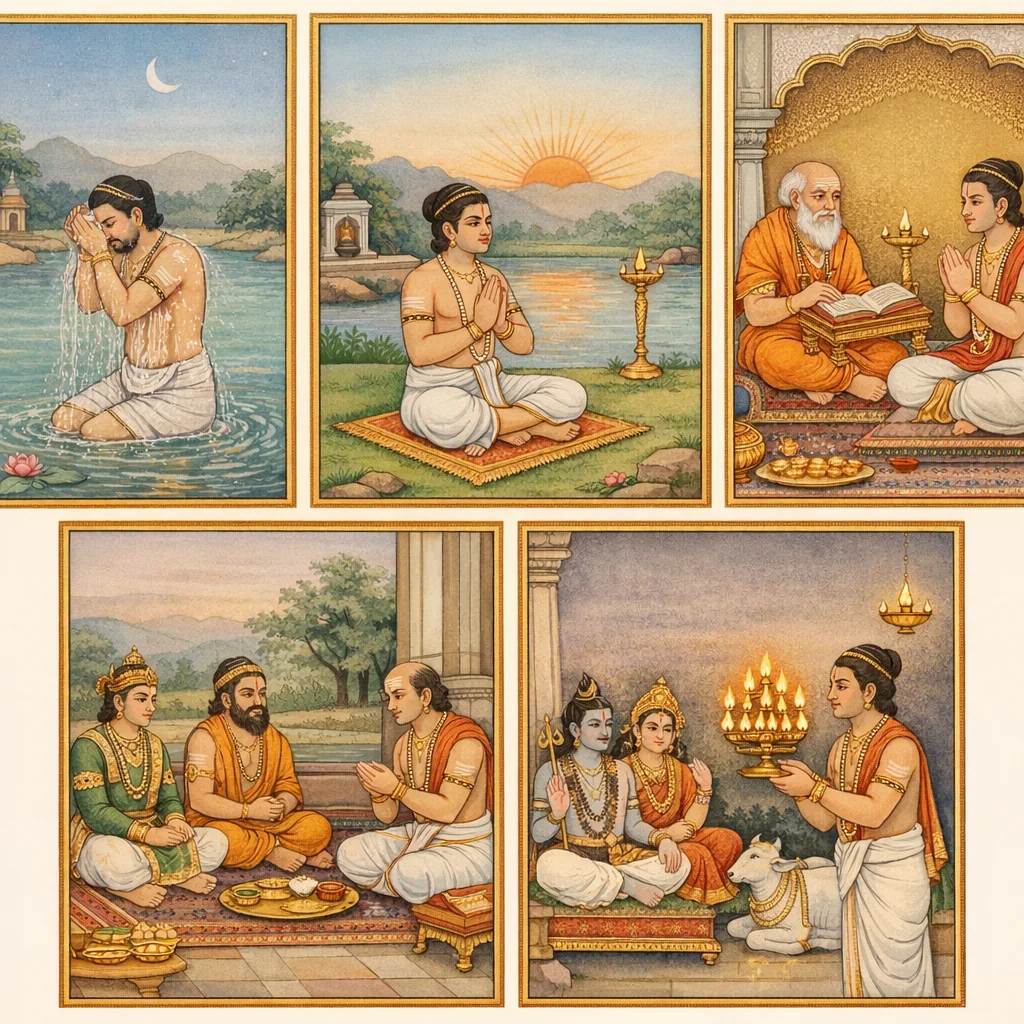
Chapter 5 proceeds through a question-and-answer chain: Vyāsa asks why the sage Viśvāmitra, seemingly beyond restraint, became angry with his disciple Kautsa and demanded an exceptionally hard guru-dakṣiṇā. Agastya explains through a hospitality episode: the hungry Durvāsas arrives at Viśvāmitra’s āśrama seeking hot, pure pāyasa; after being served, he tells Viśvāmitra to wait while he bathes. Viśvāmitra stands motionless in tapas for a thousand divine years, displaying supreme forbearance and self-control. Kautsa is portrayed as obedient, disciplined, and free from envy; when dismissed, he repeatedly requests permission to offer dakṣiṇā. Irritated by the insistence, Viśvāmitra demands fourteen krores of gold, and Kautsa approaches the royal patron Kākutstha to obtain it. The narration then turns to tīrtha teaching: Agastya praises the southern confluence of Tilodakī and Sarayū, served by siddhas and famed in the world. Bathing there yields merit like ten aśvamedhas; gifts to Veda-knowing brāhmaṇas bring auspicious destiny; food-giving and proper rites are said to end further rebirth; fasting and feeding brāhmaṇas grant the fruit of the Sautrāmaṇi; and a month of one-meal discipline destroys accumulated sin. An annual pilgrimage is noted on the new-moon of the dark fortnight in Bhādrapada; Tilodakī is described as ever-dark like sesame-water and named for enabling horses to drink. The chapter concludes that snāna, dāna, vrata, and homa become inexhaustible when done with devotion to Hari, leading—through the relinquishment of sin—toward the supreme abode.
Shlokas
Verse 1
व्यास उवाच । भगवन्ब्रूहि तत्त्वेन कथं निर्बंधतो मुनिः । विश्वामित्रो निजं शिष्यं कौत्सं क्रोधेन तादृशम्
Vyāsa said: O revered one, tell me truly—how did the sage Viśvāmitra, in anger, press his own disciple Kautsa with such insistence?
Verse 2
दुष्प्राप्यमर्थं यत्नेन बहु प्रार्थितवांस्तदा । एतत्सर्वं च कथय मयि यद्यस्ति ते कृपा
At that time he strove with great effort, earnestly seeking a wealth that is hard to obtain. Tell me all of this, if you have compassion toward me.
Verse 3
अगस्त्य उवाच । शृणु द्विज कथामेतां सावधानेंद्रियः स्वयम् । विश्वामित्रो मुनिश्रेष्ठः स दिव्यज्ञानलोचनः
Agastya said: Hear, O twice-born, this account with your senses fully attentive. Viśvāmitra—foremost among sages—possessed the eye of divine knowledge.
Verse 4
निजाश्रमे तपो दुर्गं चकार प्रयतो व्रती । एकदा तमथो द्रष्टुं दुर्वासा मुनिरागतः
In his own hermitage, the disciplined ascetic, steadfast in vow, performed formidable austerities. Once, the sage Durvāsā came to see him.
Verse 5
आगत्य च क्षुधाक्रांत उच्चैः प्रोवाच स द्विजः । भोजनं दीयतां मह्यं क्षुधापीडितचेतसे । पायसं शुचि चोष्णं च शीघ्रं क्षुधार्त्तिने द्विज
Having arrived, overcome by hunger, that twice-born one spoke aloud: “Give me food, for my mind is afflicted by hunger. Quickly offer pāyasa—pure and warm—O twice-born, to one distressed by hunger.”
Verse 6
इति श्रुत्वा वचः क्षिप्रं विश्वामित्रः प्रयत्नतः । स्थाल्यां पायसमादाय तं समर्प्य ततः स्वयम्
Hearing these words, Viśvāmitra quickly and with due care took pāyasa in a bowl and offered it to him; then he himself attended further.
Verse 7
तदादायोत्थितं दृष्ट्वा दुर्वासास्तं विलोकयन् । उवाच मधुरं वाक्यं मुनिं लक्षणतत्परः
Seeing him rise after receiving it, Durvāsā looked upon him and spoke sweet words to the sage, who was attentive to proper conduct and auspicious signs.
Verse 8
क्षणं सहस्व विप्रेन्द्र यावत्स्नात्वा व्रजाम्यहम् । तिष्ठतिष्ठ क्षणं तिष्ठ आगच्छाम्येष साप्रतम्
“O best of brahmins, bear with me for a moment, until I bathe and return. Stay—stay—wait just a moment; I am coming back right now.”
Verse 9
इत्युक्त्वा स जगामैव दुर्वासाः स्वाश्रमं तदा
Having spoken thus, Durvāsā then indeed went to his own hermitage.
Verse 10
विश्वामित्रस्तपोनिष्ठस्तदा सानुरिवाऽचलः । दिव्यं वर्षसहस्रं स तस्थौ स्थिरमतिस्तदा
Then Viśvāmitra, steadfast in austerity, stood firm like a mountain peak—remaining with unwavering resolve for a divine thousand years.
Verse 11
तस्य शुश्रूषणपरो मुनिः कौत्सो यतव्रतः । बभूव परमोदारमतिर्विगतमत्सरः
Kautsa, the sage devoted to serving him, disciplined in vows, became one of supremely generous mind and free from envy.
Verse 12
पुनरागत्य स मुनिर्दुर्वासा गतकल्मषः । भुक्त्वा च पायसं सद्यः स जगाम निजाश्रमम्
Returning again, the sage Durvāsā—purified of taint—ate the sweet rice, and immediately went back to his own hermitage.
Verse 13
तस्मिन्गते मुनिवरे विश्वामित्रस्तपोनिधिः । कौत्सं विद्यावतां श्रेष्ठं विससर्ज गृहान्प्रति
When that excellent sage had departed, Viśvāmitra—treasury of austerity—dismissed Kautsa, foremost among the learned, to return home.
Verse 14
स विसृष्टो गुरुं प्राह दक्षिणा प्रार्थ्यतामिति । विश्वामित्रस्तु तं प्राह किं दास्यसि दक्षिणाम् । दक्षिणा तव शुश्रूषा गृहं व्रज यतव्रत
Dismissed, he said to his guru, “Please ask for the dakṣiṇā, the teacher’s fee.” But Viśvāmitra replied, “What will you give as dakṣiṇā? Your dakṣiṇā is your devoted service. Go home, O disciplined one.”
Verse 15
पुनःपुनर्गुरुं प्राह शिष्यो निर्बन्धवान्यदा । तदा गुरुर्गुरुक्रुद्धः शिष्यं प्राह च निष्ठुरम्
But when the disciple repeatedly pressed his guru, the teacher—angered by the insistence—spoke harshly to the student.
Verse 16
सुवर्णस्य सुवर्णस्य चतुर्दश समाहर । कोटीर्मे दक्षिणा विप्र पश्चाद्गच्छ गृहं प्रति
“Gather fourteen crores of gold for me as dakṣiṇā, O brāhmaṇa; thereafter, go back to your home.”
Verse 17
इत्युक्तो गुरुणा कौत्सो विचार्य समुपागमत् । काकुत्स्थं दिग्विजेतारं ययाचे गुरुदक्षिणाम्
Thus instructed by his teacher, Kautsa reflected and then approached Kakutstha (Rāma), the conqueror of the quarters, and requested the teacher’s fee (guru-dakṣiṇā).
Verse 18
इत्युक्तं ते मुनिवर त्वया पृष्टं हि यत्पुनः । अतोऽन्यच्छृणु ते वच्मि तीर्थकारणमुत्तमम्
Thus, O best of sages, I have answered what you asked. Now hear further: I shall tell you the supreme cause and origin of this holy tīrtha.
Verse 19
तस्माद्दक्षिणदिग्भागे संभेदः सिद्धसेवितः । तिलोदकीसरय्वोश्च संगत्या भुवि संश्रुतः
Therefore, in the southern quarter there is a sacred confluence, revered and frequented by perfected beings (siddhas). It is famed on earth as the meeting-place of the Tilodakī and the Sarayū.
Verse 20
तत्र स्नात्वा महाभाग भवन्ति विरजा नराः । दशानामश्वमेधानां कृतानां यत्फलं भवेत् । तदाप्नोति स धर्मात्मा तत्र स्नात्वा यतव्रतः
Bathing there, O fortunate one, people become free from impurity. Whatever fruit would arise from performing ten Aśvamedha sacrifices—this very merit is attained by that righteous, self-restrained person who bathes at that spot.
Verse 21
स्वर्णादिकं च यो दद्याद्ब्राह्मणे वेदपारगे । शुभां गतिमवाप्नोति अग्निवच्चैव दीप्यते
Whoever gives gold and the like to a Brāhmaṇa well-versed in the Vedas attains an auspicious state, and shines forth like fire.
Verse 22
तिलोदकीसरय्वोश्च संगमे लोकविश्रुते । दत्त्वान्नं च विधानेन न स भूयोऽभिजायते
At the world-renowned confluence of the Tilodakī and the Sarayū, one who duly gives food in charity is not born again.
Verse 23
उपवासं च यः कृत्वा विप्रान्संतर्पयेन्नरः । सौत्रामणेश्च यज्ञस्य फलमाप्नोति मानवः
Whoever undertakes a fast and then satisfies (feeds) the Brāhmaṇas attains the fruit of the Sautrāmaṇī sacrifice.
Verse 24
एकाहारस्तु यस्तिष्ठेन्मासं तत्र यतव्रतः । यावज्जीवकृतं पापं सहसा तस्य नश्यति
But one who remains there for a month, self-restrained, taking only one meal a day—his sins accumulated over a lifetime are suddenly destroyed.
Verse 25
नभस्य कृष्णामावस्यां यात्रा सांवत्सरी भवेत् । रामेण निर्मिता पूर्वं नदी सिंधुरिवापरा
On the new-moon day (Amāvasyā) of the dark fortnight of Nabhas (Bhādrapada), this pilgrimage becomes an annual observance. In former times Rāma created this river, like another mighty Sindhu.
Verse 26
सिंधुजानां तुरंगाणां जलपानाय सुव्रत । तिलवच्छ्याममुदकं यतस्तस्यां सदा बभौ
O you of excellent vows, for the drinking-water of horses born in the Sindhu region, the water there always appeared dark—like sesame seeds.
Verse 27
तिलोदकीति विख्याता पुण्यतोया सदा नदी । संगमादन्यतो यस्यां तिलोदक्यां शुचिव्रतः । स्नातो विमुच्यते पापैः सप्तजन्मार्जितैरपि
There is a river ever famed as Tilodakī, whose waters are always holy. In that Tilodakī—apart from the confluence itself—one who keeps pure vows, upon bathing, is released even from sins accumulated across seven births.
Verse 28
तस्मात्तिलोदकीस्नानं सर्वपापहरं मुने । कर्त्तव्यं सुप्रयत्नेन प्राणिभिर्धर्मकांक्षिभिः । स्नानं दानं व्रतं होमं सर्वमक्षयतां व्रजेत्
Therefore, O sage, bathing in Tilodakī—which removes all sin—should be undertaken with great effort by beings who long for dharma. Bathing, charity, vows, and fire-offerings: everything done there attains imperishable fruit.
Verse 29
इति विविधविधानैस्तीर्थयात्रांक्रमेण प्रथितगुणविकासः प्राप्तपुण्योविधाय । हरिमुपहृतभावः पूजयन्सर्वतीर्थं व्रजति परमधाम न्यस्तपापः कथञ्चित्
Thus, by undertaking the pilgrimage to the tīrthas in proper sequence and by many prescribed observances, one’s virtues manifestly expand and merit is gained. With the heart offered to Hari, worshipping at every sacred ford, one—having set aside sin—somehow attains the supreme abode.