Adhyaya 8
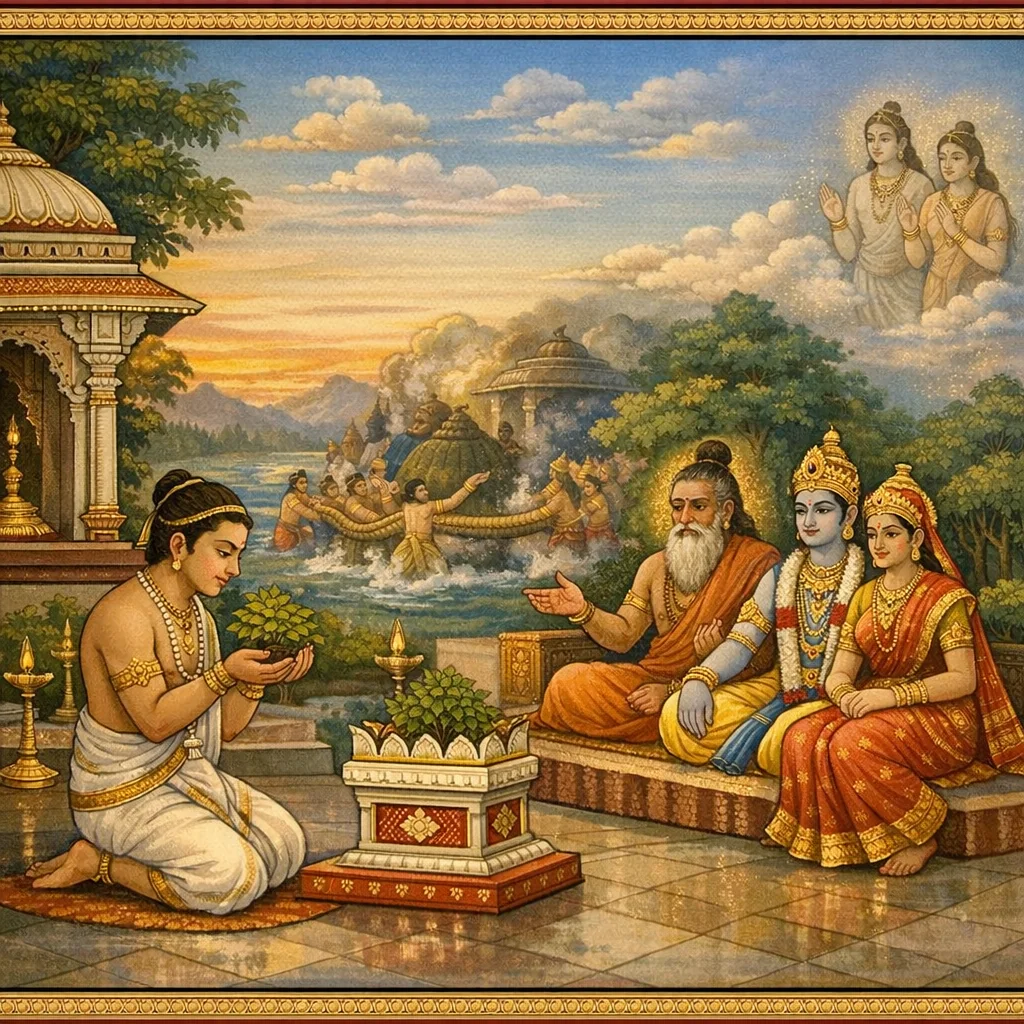
This chapter unfolds as a sacred itinerary. Agastya first describes the western tīrthas Ratikunda and Kusumāyudha-kunda, prescribing paired snāna and charitable gifts for well-being and for the attainment of beauty and auspiciousness; on Māgha śukla pañcamī, a married couple is enjoined to worship with perfumes, garments, flowers, and offerings. The narrative then turns to Mantreśvara, a rare liṅga-site linked with Rāma’s ritual act and a disciplined preparation for spiritual ascent, proclaiming that snāna and darśana there lead to non-return to saṃsāra. Moving north, it marks further stations: Śītalā (Monday worship, protection from disease and fear), Devī Bandī (release from bondage and royal fetters through remembrance and Tuesday-focused yātrā), and Devī Cuḍakī (success in doubtful undertakings through lamp-offering and caturdaśī visitation). It also lists Mahāratna tīrtha (annual Bhādrapada kṛṣṇa caturdaśī yātrā with gifts and vigil), Durbharā/Mahābhara saras (Śiva worship and Bhādrapada observances), and Mahāvidyā/Siddhapīṭha (monthly aṣṭamī/navamī yātrā, mantra-japa across traditions, homa and dāna, and Navarātri purification). A Rāma-centered legend explains the rise of Dugdhēśvara at Kṣīra-kuṇḍ and the naming of Sītā-kuṇḍ, promising purification and imperishable merit through snāna, japa, homa, and worship of Sītā–Rāma–Lakṣmaṇa. The chapter closes with Vasiṣṭha’s praise of Ayodhyā as the supreme mokṣa-kṣetra and a disciplined multi-day pilgrimage regimen of fasting, sequential snānas, deity darśanas, śrāddha, Brāhmaṇa worship, gifts, and orderly completion of the yātrā.
Shlokas
No shlokas available for this adhyaya yet.