Adhyaya 255
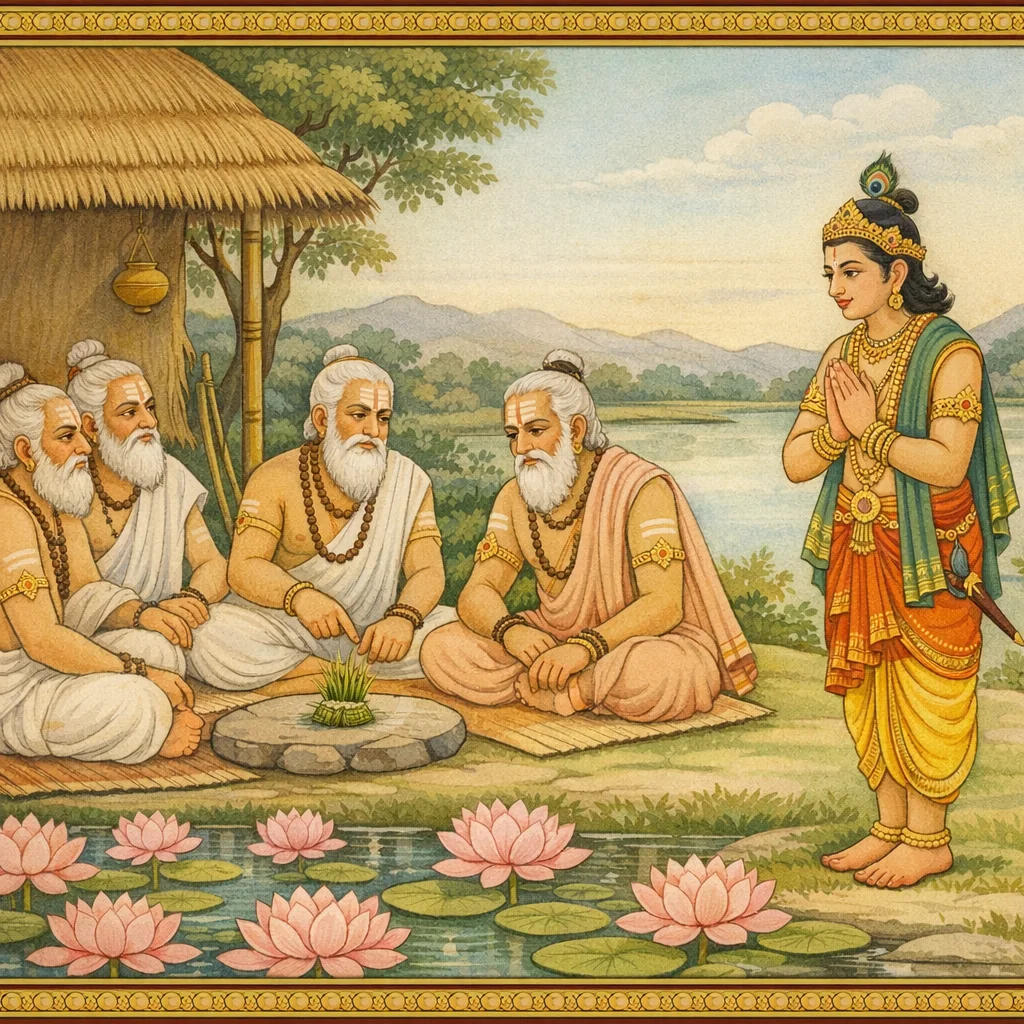
Īśvara describes a renowned tīrtha near Prabhāsa, especially its western tract sanctified by the presence of many great sages. The account names ṛṣis such as Aṅgiras, Gautama, Agastya, Viśvāmitra, Vasiṣṭha with Arundhatī, Bhṛgu, Kaśyapa, Nārada, Parvata, and others, who perform extraordinary austerities with restraint and deep concentration to attain the eternal Brahma-world. A fierce drought and famine arise. King Uparicara offers grains and valuables, claiming that accepting gifts is a blameless livelihood for brāhmaṇas; yet the sages refuse, warning of the ethical peril of royal gifts and the spiritual decline born of greed. They denounce accumulation (sañcaya) and craving (tṛṣṇā), praising contentment and the refusal of improper patronage. The king’s agents scatter “golden-embryo” treasures near udumbara trees, but the sages reject them again and depart. Reaching a great lotus-filled lake, they bathe and gather lotus-stalks (bīsa) for food. A wandering ascetic, Śunomukha, takes the bīsa to provoke a dharma inquiry; oaths and curses are exchanged defining the moral degradation of a thief. Śunomukha then reveals himself as Purandara (Indra), extolling their non-greed as the foundation of imperishable worlds. The sages request a rite for that place: whoever comes there, remains pure, fasts for three nights, bathes, offers tarpaṇa to the ancestors, and performs śrāddha gains merit equal to that of all tīrthas, avoids a lower destiny, and enjoys divine companionship.
Shlokas
Verse 1
ईश्वर उवाच । ततो गच्छेन्महादेवि तीर्थं त्रैलोक्यविश्रुतम् । तस्यैव पश्चिमे भागे ऋषीणां पुण्यकर्मणाम्
Īśvara said: “Then, O Great Goddess, one should go to a tīrtha, a ford of pilgrimage famed in the three worlds. On its western side is the abode of sages of holy deeds…”
Verse 2
तस्मिंस्त्रिनेत्रा मत्स्याश्च दृश्यंतेऽद्यापि भामिनि । अंगिरा गौतमोऽगस्त्यः सुमतिः सुसखिस्तथा
In that holy region, O beloved lady, even today fish marked with three eyes are seen. There too resided the sages Aṅgiras, Gautama, Agastya, Sumati, and Susakhi.
Verse 3
विश्वामित्रः स्थूलशिराः संवर्त्तः प्रतिमर्द्दनः । रैभ्यो बृहस्पतिश्चैव च्यवनः कश्यपो भृगुः
Viśvāmitra, Sthūlaśiras, Saṃvarta, Pratimardana, Raibhya, and also Bṛhaspati—along with Cyavana, Kaśyapa, and Bhṛgu—were present there.
Verse 4
दुर्वासा जामदग्न्यश्च मार्कंडेयोऽथ गालवः । उशनाऽथ भरद्वाजो यवक्रीतस्त्रितस्तथा
Durvāsas, Jāmadagnya, Mārkaṇḍeya, and then Gālava; likewise Uśanā, Bharadvāja, Yavakrīta, and also Trita were there.
Verse 5
नारदः पर्वतश्चैव वसिष्ठोऽरुंधती तथा
Nārada and Parvata were there, and also Vasiṣṭha—together with Arundhatī likewise.
Verse 6
काण्वोऽथ गौतमो धौम्यः शतानन्दोऽकृतव्रणः । जमदग्निस्तथा रामो बकश्चेत्येवमादयः । कृष्णद्वैपायनश्चैव पुत्रशिष्यैः समन्वितः
Then there were Kāṇva, Gautama, Dhaumya, Śatānanda, and Akṛtavraṇa; likewise Jamadagni, Rāma, and Baka—such and other sages. And Kṛṣṇa Dvaipāyana (Vyāsa) also came, accompanied by his sons and disciples.
Verse 7
एतत्क्षेत्रं समा साद्य प्रभासं मुनिसत्तमाः । तपस्तेपुर्महात्मानो विविधं परमाद्भुतम्
Having reached this sacred region—Prabhāsa—the best of sages, those great souls, performed many kinds of austerities, supremely wondrous in their power.
Verse 8
एवं ते नियतात्मानो दमयुक्तास्तपस्विनः । समाधिना जिगीषन्ते ब्रह्मलोकं सनातनम्
Thus, those ascetics—self-governed and endowed with restraint—by samādhi strive to conquer worldly bondage and reach the eternal Brahmaloka.
Verse 9
अथाभवदनावृष्टिः कदाचिन्महती प्रिये । कृच्छ्रं प्राप्तो ह्यभूत्तत्र सर्वलोकः क्षुधार्दितः
Then, at a certain time, O dear one, a great drought arose, and no rain fell. Thereupon all the people there came to grievous distress, tormented by hunger.
Verse 10
ततो निरन्ने लोकेऽस्मिन्नात्मानं ते परीप्सवः । मृतं कुमारमादाय कृच्छ्रं प्राप्तास्तदाऽपचन्
Then, when this world had become bereft of food, those people, seeking to preserve their own lives, took up a dead boy; having fallen into extreme hardship, they cooked him at that time.
Verse 11
अथोपरिचरस्तत्र क्लिश्यमानान्हि तानृषीन् । दृष्ट्वा राजा वृषादर्भिः प्रोवाचेदं वचस्तदा
Then King Uparicara, seeing those sages there indeed suffering, spoke these words at that time, bearing vṛṣa-darbha (a bull and darbha grass) as ritual tokens.
Verse 12
राजोवाच । प्रतिग्रहो ब्राह्मणानां दृष्टा वृत्तिरनिंदिता । तस्मात्प्रतिग्रहं मत्त गृह्णीध्वं मुनिपुंगवाः
The king said: “For brāhmaṇas, accepting gifts is regarded as a blameless means of livelihood. Therefore, O best of sages, please accept this gift from me.”
Verse 13
मुद्गान्माषांश्च व्रीहींश्च तथा रत्नानि कांचनम् । युष्माकं संप्रदास्यामि यच्चान्यदपि दुर्ल्लभम् । निवर्त्तध्वमतः सर्वे ह्येतस्मात्पातकात्परम्
“I shall bestow upon you green gram, black gram, and rice, as well as jewels and gold—and whatever else may be hard to obtain. Therefore, all of you turn back; for this gift is indeed a means to go beyond this sin.”
Verse 14
ऋषय ऊचुः । तज्जानंतः कथं राजन्गृह्णीमस्ते प्रतिग्रहम्
The sages said: “Knowing that truth, O King, how could we accept your gift?”
Verse 15
दशसूनासमश्चक्री दशचक्रिसमो ध्वजी । दशध्वजि समा वेश्या दशवेश्यासमो नृपः
A chariot-warrior is equal in sin to ten butchers; a standard-bearer equals ten chariot-warriors; a prostitute equals ten standard-bearers; and a king equals ten prostitutes.
Verse 16
यो राज्ञां प्रतिगृह्णाति ब्राह्मणो लोभमोहितः । तामिस्रादिषु घोरेषु नरकेषु स पच्यते
That brāhmaṇa who, deluded by greed, accepts gifts from kings is tormented as though cooked in dreadful hells such as Tāmisra.
Verse 17
तद्गच्छ कुशलं तेऽस्तु सह दानेन पार्थिव । अन्येषां दीयतामेतदित्युक्त्वा ते वनं ययुः
Then they said, “Go—may well-being be yours, along with your gift, O king. Let this be given to others.” Having spoken thus, they went to the forest.
Verse 18
अथ राज्ञः समादेशात्तत्र गत्वा च मंत्रिणः । ऊदुम्बराणि व्यकिरन्हेमगर्भाणि भूतले
Then, by the king’s command, the ministers went there and scattered upon the ground udumbara fruits filled with gold.
Verse 19
अथ तानि व्यचिन्वंश्च ऋषयो वरवर्णिनि । गुरूणीति विदित्वा तु न ग्राह्याण्यंगिराऽब्रवीत्
Then the sages began gathering them, O fair-complexioned one; but realizing that they were “heavy,” burdened with grave fault, Aṅgirā said, “They should not be accepted.”
Verse 20
अत्रिरुवाच । नास्महेनास्महे मूढ वयमज्ञानबुद्धयः । हैमानीमानि जानीमः प्रतिबुद्धाः स्म जाड्यतः
Atri said: “O fool, we are not truly ‘wise’; our understanding is born of ignorance. We took these to be gold, and now we have awakened from our dullness.”
Verse 21
वसिष्ठ उवाच । धर्मार्थं संचयो यस्य द्रव्याणां स न शस्यते । तपःसंचयनं मन्ये वसिष्ठो धनसंचयम्
Vasiṣṭha said: “He whose accumulation of wealth is (merely) ‘for dharma’ is not truly praiseworthy. I, Vasiṣṭha, deem the accumulation of austerity (tapas) superior to the accumulation of riches.”
Verse 22
त्यजध्वं संचयान्सर्वाञ्जातीनां समुपद्रवान् । न हि संचयवान्कश्चिद्दृश्यते निरुपद्रवः
Abandon all hoarding, for it becomes a source of affliction to people of every station. Indeed, one who accumulates is never seen to remain free from troubles.
Verse 23
यथायथा न गृह्णाति ब्राह्मणोऽसत्प्रतिग्रहम् । तथातथाऽनिशं चास्य ब्रह्मतेजस्तु वर्धते
In whatever measure a brāhmaṇa refuses improper gifts, in that same measure—unceasingly—his spiritual radiance, the splendor of Brahman, increases.
Verse 24
अकिंचनत्वं राज्यं च तुलया समतोलयम् । अकिंचनत्वमधिकं राज्यादपि न संशयः
I weighed poverty—having nothing (akincana)—and kingship on an even scale; and poverty proved greater than kingship—of this there is no doubt.
Verse 25
कश्यप उवाच । अनर्थो ब्राह्मणस्यैष यदर्थनिचयो महान् । अर्थैश्वर्यविमूढोऽपि श्रेयसो भ्रश्यते द्विजः
Kaśyapa said: This is a calamity for a brāhmaṇa—that he amasses great wealth. Bewildered by riches and dominion, the twice-born falls away from the higher good.
Verse 26
अर्थसंपद्विमोहाय बहुशोकाय चैव हि । तस्मादर्थमनर्थाख्यं श्रेयोऽर्थी दूरतस्त्यजेत्
Material prosperity indeed leads to delusion and to many sorrows. Therefore, one who seeks the highest good should cast far away that ‘wealth’ which is truly called misfortune.
Verse 27
यस्य धर्मार्थमप्यर्थास्तस्यापि न हि दृश्यते । प्रक्षालनाद्धि पंकस्य दूरादस्पर्शनं वरम्
Even for one who claims wealth is for dharma, safety is still not seen. Better than washing off mud is to avoid touching it from afar.
Verse 28
भरद्वाज उवाच । जीर्यंति जीर्यतः केशा दंता जीर्यंति जीर्यतः । चक्षुः श्रोत्रे च जीर्येते तृष्णैका न तु जीर्यते
Bharadvāja said: As one grows old, hair grows old; as one grows old, teeth grow old. The eyes and ears also decay—only craving alone does not decay.
Verse 29
सूची सूत्र तथा वस्त्रे समानयति सूचिका । तद्वत्संसारसूत्रस्य तृष्णा सूची विधीयते
Just as a needle draws thread and cloth together, so craving is appointed as the needle that stitches the thread of worldly existence.
Verse 30
यथा शृंगं रुरोः काये वर्द्धमाने हि वर्द्धते । अनंतपारा दुर्वारा तृष्णा दुःखप्रदा सदा । अधर्मबहुला चैव तस्मात्तां परिवर्जयेत्
As a deer’s horn grows with its body, so craving grows with one’s life. Craving has no shore, is hard to restrain, and ever brings suffering; it is rife with adharma—therefore one should abandon it.
Verse 31
गौतम उवाच । संतुष्टः को न शक्नोति फलैश्चापि हि वर्त्तितुम् । सर्वोऽपींद्रियलोभेन संकटान्यभिगाहते
Gautama said: Who, if content, cannot live even on mere fruits? Yet everyone, through the greed of the senses, plunges into distress.
Verse 32
सर्वत्र संपदस्तस्य संतुष्टं यस्य मानसम् । उपानद्गूढपादस्य ननु चर्मावृतेव भूः
For one whose mind is content, prosperity is found everywhere. Indeed, for a person whose feet are covered with sandals, it is as though the whole earth were covered with leather.
Verse 33
संतोषामृततृप्तानां यत्सुखं शांतचेतसाम् । कुतस्तद्धनलुब्धानां सुखं चाशांतचेतसाम्
The happiness enjoyed by the peaceful-minded, satisfied with the nectar of contentment—how could that same happiness belong to those greedy for wealth, whose minds are unquiet?
Verse 34
विश्वामित्र उवाच । कामं कामयमानस्य यदि कामः स सिद्ध्यति । तथैनमपरः कामो भूयो विध्यति बाणवत्
Viśvāmitra said: Even if a desire is fulfilled for one who longs for desire, another desire strikes him again and again—like an arrow.
Verse 35
न जातु कामः कामानामुपभोगेन शाम्यति । हविषा कृष्णवर्त्मेव भूय एवाभिवर्द्धते
Desire for pleasures is never quenched by indulging in pleasures; like a fire fed with oblations, it only grows ever more.
Verse 36
कामानभिलषन्लोभान्न नरः सुखमेधते । समालभ्य तरुच्छायां भवनं वाञ्छो नरः
A man does not grow into happiness when, out of greed, he keeps craving pleasures. Even after reaching the shade of a tree, he still longs for a house.
Verse 37
चतुःसागरसंयुक्तां यो भुंक्ते पृथिवीमिमाम् । एकस्तु वनवासी च स कृतार्थो न पार्थिवः
Even if a king rules this earth girdled by the four oceans, it is the solitary forest-dweller who is truly fulfilled—not the worldly sovereign.
Verse 38
जमदग्निरुवाच । प्रतिग्रहसमर्थो यस्तपो वर्द्धयते महान् । न करोति तपस्तस्य जायते च सहस्रधा
Jamadagni said: One who is entitled to accept gifts yet, being great, increases his austerity and does not accept—his tapas is born and multiplied a thousandfold.
Verse 39
प्रतिग्रहसमर्थानां निवृत्तानां प्रतिग्रहात् । य एव ददतां लोकास्त एवाप्रतिगृह्णताम्
For those who are entitled to accept gifts yet refrain from accepting, the very heavenly worlds attained by givers are also attained by those who do not receive.
Verse 40
अरुंधत्युवाच । बिसतंतुर्यथा नित्यं समंतान्नालसंस्थितः । तृष्णा चैवमनाद्यंता तथा देहाश्रिता सदा
Arundhatī said: Just as the lotus-fibre ever lies spread throughout the lotus-stalk, so too thirst (craving), without beginning or end, ever abides clinging to the body.
Verse 41
या दुस्त्यजा दुर्मतिभिर्या न जीर्यति जीर्यतः । योऽसौ प्राणांतिको रोगस्तां तृष्णां त्यजतः सुखम्
That thirst which the misguided find hard to abandon, and which does not grow old even as one ages—this life-ending disease: happiness belongs to the one who casts that craving away.
Verse 42
चंडोवाच । उग्रात्प्रतिग्रहाद्यस्माद्बिभ्यत्येते महेश्वराः । बलीयांसो दुर्बलवत्तथा चैव बिभेम्यहम्
Caṇḍa said: “Because of fierce (improper) acceptance of gifts, even these mighty devotees of Maheśvara are afraid. Though powerful, they tremble like the weak—so I too am afraid.”
Verse 43
पशुमुख उवाच । यदाचरंति विद्वांसः सदा धर्मपरायणाः । तदेव विदुषा कार्यमात्मनो हितमिच्छता
Paśumukha said: “Whatever the learned—ever devoted to dharma—practice, that alone should a wise person do, if he seeks his own true welfare.”
Verse 44
ईश्वर उवाच । इत्युक्त्वा हेमगर्भाणि त्यक्त्वा तानि फलानि च । ऋषयो जग्मुरन्यत्र सर्व एव दृढव्रताः
Īśvara said: “Having spoken thus, the sages—firm in their vows—left behind those golden fruits and went elsewhere.”
Verse 45
ततस्ते विचरंतो वै ददृशुः सुमहत्सरः । पद्मिनीभिः समाकीर्णं सर्वतो वरवर्णिनि
Then, as they wandered on, they beheld a very great lake, filled on every side with lotus-plants, O fair-complexioned lady.
Verse 46
तस्मिन्देशे तदा प्राप्तः परिव्राजः शुनोमुखः । तेनैव सहितास्तत्र स्नाताः सर्वे महर्षयः
In that very place, the wandering ascetic Śunomukha arrived; and together with him, all the great sages bathed there.
Verse 47
तत्रावतारं कृत्वा तैर्गृहीतानि बिसानि तु । निक्षिप्य सरसस्तीरे चक्रुः पुण्यां जलक्रियाम्
After descending into the water there, they gathered lotus-stalks (bisāni); placing them on the lake’s bank, they performed a sanctifying water-rite.
Verse 48
अथोत्तीर्य जलात्तस्मात्ते समेत्य परस्परम् । बिसानि तान्यपश्यंत इदं वचनमब्रुवन्
Then, having come out of that water, they gathered together; not seeing those lotus-stalks, they spoke these words.
Verse 49
ऋषय ऊचुः । केन क्षुधाभितप्तानामस्माकं पापकर्मणा । बिसानि तानि सर्वाणि हृतानि च मुनीश्वराः
The sages said: “By whom—through what sinful deed against us who are afflicted by hunger—have all those lotus-stalks been taken away, O lords among sages?”
Verse 50
ते शंकमानास्त्वन्योन्यं पर्यपृच्छन्द्विजोत्तमाः । चक्रुस्ते शपथान्सर्वे यथान्यायं च भामिनि
Suspicious of one another, those best among the twice-born questioned each other; and they all made solemn oaths, according to proper rule, O passionate lady.
Verse 51
कश्यप उवाच । सर्वभक्षः स भवतु न्यासलोपं करोतु सः । कूटसाक्षित्वमभ्येतु बिसस्तैन्यं करोति यः
Kaśyapa said: “Whoever steals those lotus-stalks—may he become an eater of everything; may he violate entrusted deposits (nyāsa); and may he fall into the sin of false witness.”
Verse 52
वसिष्ठ उवाच । अनृतौ मैथुनं यातु पर नारीं विशेषतः । अतिथिः स्यात्तथान्योन्यं बिसस्तैन्यं करोति यः
Vasiṣṭha said: “One who commits bisastainya (petty theft such as stealing lotus-stalks) comes to delight in untimely sexual indulgence—especially with another man’s wife; and he becomes a fickle guest, shifting from one household to another.”
Verse 53
भरद्वाज उवाच । नृशंसो वै स भवतु समृद्ध्या चाप्यहंकृ तः । मत्सरी पिशुनश्चैव बिसस्तैन्यं करोति यः
Bharadvāja said: “One who commits bisastainya becomes cruel; even if he gains prosperity, he turns arrogant. He becomes envious and slanderous as well.”
Verse 54
विश्वामित्र उवाच । नित्यं कामरतः सोस्तु दिवा सेवतु मैथुनम् । नीचकर्मरतश्चैव बिसस्तैन्यं करोति यः
Viśvāmitra said: “One who commits bisastainya becomes ever addicted to sensual desire; he pursues sexual pleasure even in the daytime, and he becomes devoted to base deeds.”
Verse 55
जमदग्निरुवाच । कन्यां यच्छतु वृद्धाय स भूयाद्वृषलीपतिः । अस्तु वार्द्धुषिको नित्यं बिसस्तैन्यं करोति यः
Jamadagni said: “He who commits bisastainya comes to give a maiden in marriage to an old man; he becomes the husband of a woman of base conduct, and he lives ever by usury.”
Verse 56
गौतम उवाच । स गृह्णात्वविकादानं करोतु हयविक्रयम् । प्रकरोतु गुरोर्निंदां बिसस्तैन्यं करोति यः
Gautama said: “He who commits bisastainya takes what ought not be taken, engages in the trade of horses, and even openly censures his own teacher.”
Verse 57
अत्रिरुवाच । मातरं पितरं नित्यं दुर्मतिः सोऽवमन्यताम् । शूद्रं पृच्छतु धर्मार्थं बिसस्तैन्यं करोति यः
Atri said: “He who commits bisastainya becomes ill-minded and continually dishonors his mother and father; and he seeks instruction in dharma from the unfit.”
Verse 58
अरुन्धत्युवाच । करोतु पत्युः पूर्वं सा भोजनं शयनं तथा । नारी दुष्टसमाचारा बिसस्तैन्यं करोति या
Arundhatī said: “A woman who commits bisastainya becomes corrupt in conduct: she eats and lies down before her husband, casting aside propriety.”
Verse 59
चण्डोवाच । स्वामिनः प्रतिकूलास्तु धर्मद्वेषं करोतु च । साधुद्वेषपरा चैव बिसस्तैन्यं करोति या
Caṇḍa said: “A woman who commits bisastainya becomes hostile to her master (or husband), develops hatred for dharma, and turns especially intent on despising the virtuous.”
Verse 60
पशुमुख उवाच । परस्य प्रेष्यतां यातु सदा जन्मनिजन्मनि । सर्वधर्म क्रियाहीनो बिसस्तैन्यं करोति यः
Paśumukha said: “Whoever commits bisastainya (the theft of lotus-stalks) becomes a servant of others, birth after birth, and is left bereft of all dharmic observances and sacred duties.”
Verse 61
शुनोमुख उवाच । वेदान्स पठतु न्यायाद्गृहस्थः स्यात्प्रियातिथिः । सत्यं वदतु चाजस्रं बिसस्तैन्यं करोति यः
Śunomukha said: “One who commits bisastainya (the theft of lotus-stalks), strangely, becomes a householder who recites the Vedas according to rule, is dear to guests as a gracious host, and speaks truth without ceasing.”
Verse 62
ऋषय ऊचुः । इष्टमेतद्द्विजातीनां यस्त्वया शपथः कृतः । त्वया कृतं बिसस्तैन्यं सर्वेषां नः शुनोमुख
The sages said: “This indeed is desirable for the twice-born, in keeping with the oath you have taken. Yet, O Śunomukha, it was you who stole the lotus-stalks of us all, offending every one of us.”
Verse 63
शुनोमुख उवाच । मया हृतानि सर्वेषां बिसानीमानि वै द्विजाः । धर्मं वै श्रोतुकामेन जानीध्वं मां पुरंदरम्
Śunomukha said: “Indeed, O twice-born, these lotus-stalks belonging to you all were taken by me. Know me as Purandara (Indra), who came with the longing to hear of dharma.”
Verse 64
अलोभादक्षया लोका जिता वै मुनिसत्तमाः । प्रार्थयध्वं वरं शुभ्रं सर्वमेव ह्यसंशयम्
“By freedom from greed, O best of sages, the imperishable worlds are won. Therefore ask for a pure boon; all that is fit to be granted shall be yours, without doubt.”
Verse 65
ऋषय ऊचुः । इहागत्य नरो यस्तु त्रिरात्रोपोषितः शुचिः । कृत्वा स्नानं पितॄंस्तर्प्य श्राद्धं कुर्यात्समाहितः
The sages said: “Any man who comes here, remains pure, and fasts for three nights—then, having bathed, offering libations (tarpaṇa) to the ancestors, should perform śrāddha with a collected mind.”
Verse 66
सर्वतीर्थोद्भवं तस्य पुण्यं भूयात्पुरंदर । नाधोगतिमवाप्नोति विबुधैस्सह मोदताम् । तथेत्युक्त्वा ततः शक्रस्त त्रैवान्तर्हितोऽभवत्
“O Purandara, may the merit gained by him be equal to that arising from all tīrthas. He does not fall into a lower state; let him rejoice in the company of the gods.” Having said, “So be it,” Śakra (Indra) then vanished from there.
Verse 255
इति श्रीस्कान्दे महापुराण एकाशीतिसाहस्र्यां संहितायां सप्तमे प्रभासखंडे प्रथमे प्रभासक्षेत्रमाहात्म्य ऋषितीर्थमाहात्म्य वर्णनं नाम पञ्चपञ्चाशदुत्तरद्विशततमोऽध्यायः
Thus, in the holy Skanda Mahāpurāṇa, in the Saṃhitā of eighty-one thousand verses, in the seventh—Prabhāsa Khaṇḍa—within the first part, the Prabhāsakṣetra Māhātmya: the chapter entitled “Description of the Greatness of Ṛṣitīrtha,” being Chapter 255, is concluded.