Adhyaya 166
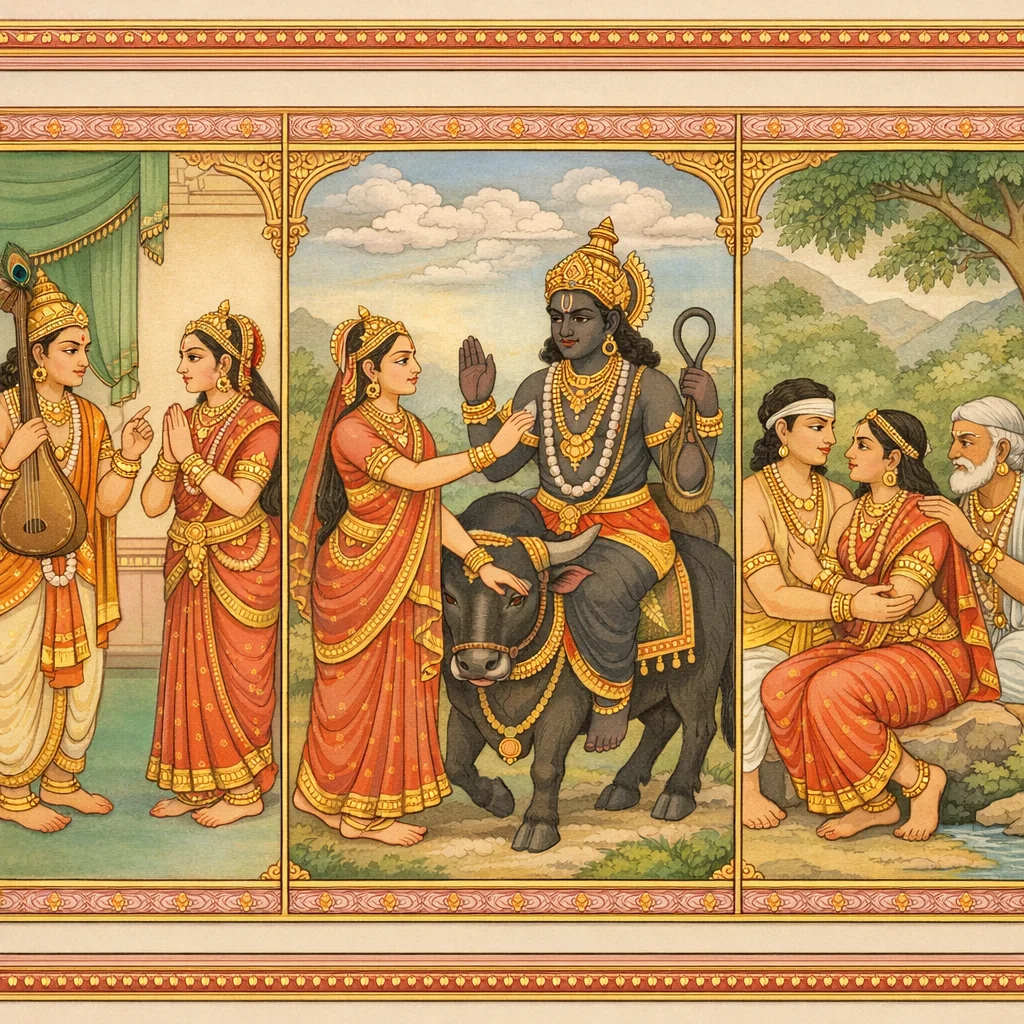
This chapter unfolds as a Devī–Īśvara dialogue: it first recounts the Sāvitrī tradition at Prabhāsa and then reshapes it into a precise ritual guide. At Devī’s request for the vow’s itihāsa and fruits, Īśvara tells how King Aśvapati, while on pilgrimage at Prabhāsa, performs the Sāvitrī-vrata at the Sāvitrī-sthala, gains divine favor, and is blessed with a daughter named Sāvitrī. The narrative then summarizes the famed Sāvitrī–Satyavān episode: despite Nārada’s warning of Satyavān’s imminent death, Sāvitrī chooses him, follows him into the forest, confronts Yama, and wins boons—restoring Dyumatsena’s sight and kingdom, securing progeny for her father and herself, and bringing back her husband’s life. The second half is prescriptive, detailing the Jyeṣṭha-month observance beginning on the 13th with three nights of fasting and niyama, along with bathing rules and special merit from Pāṇḍukūpa and mustard-infused water on the full moon. It instructs the making and gifting of a Sāvitrī image (gold/clay/wood) draped in red cloth, mantra-based worship (hailing her as vīṇā-and-book-bearing and praying for avaidhavya—protection of auspicious married status), night vigil with recitation and music, and a ritual “marriage” worship of Sāvitrī with Brahmā. It further sets out feeding sequences for couples and Brāhmaṇas, dietary restraints (avoid sour/alkaline, favor sweets), gifts and honors of dismissal, and a discreet household śrāddha element. The chapter closes by framing the udhyāpana as purifying and merit-bestowing, safeguarding women’s marital auspiciousness, and promising broad worldly welfare to pilgrims who perform—or even hear—this procedure.
Shlokas
Verse 1
देव्युवाच । प्रभासे संस्थिता या तु सावित्री ब्रह्मणः प्रिया । तस्याश्चरित्रं मे ब्रूहि देवदेव जगत्पते
The Goddess said: “Tell me the wondrous story of Sāvitrī—beloved of Brahmā—who resides at Prabhāsa, O God of gods, Lord of the universe.”
Verse 2
व्रतमाहात्म्यसंयुक्तमितिहाससमन्वितम् । पाति व्रत्यकरं स्त्रीणां महाभाग्यं महोदयम्
This account—joined with the glory of the vow and supported by sacred history—protects women who undertake the vow, granting great fortune and a lofty rise in well-being.
Verse 3
ईश्वर उवाच । कथयामि महादेवि सावित्र्याश्चरितं महत् । प्रभासक्षेत्रसंस्थायाः स्थल स्थाने महेश्वरि । यथा चीर्णं व्रतकरं सावित्र्या राजकन्यया
Īśvara said: O Mahādevī, I shall narrate the great sacred story of Sāvitrī—how, at Prabhāsa Kṣetra, in that holy spot, O Maheśvarī, the vow was duly observed by Sāvitrī, the king’s daughter.
Verse 4
आसीन्मद्रेषु धर्मात्मा सर्वभूतहिते रतः । पार्थिवोऽश्वपतिर्नाम पौरजानपद प्रियः
In the land of the Madras there lived a righteous king named Aśvapati—devoted to the welfare of all beings and beloved by townsfolk and villagers alike.
Verse 5
क्षमावाननपत्यश्च सत्यवादी जितेन्द्रियः । प्रभासक्षेत्रयात्रायामाजगाम स भूपतिः । यात्रां कुर्वन्विधानेन सावित्रीस्थलमागतः
That king—patient, childless, truth-speaking, and self-controlled—set out on pilgrimage to Prabhāsa Kṣetra; and, performing the journey according to due observance, he arrived at the holy place called Sāvitrī.
Verse 6
स सभार्यो व्रतमिदं तत्र चक्रे नृपः स्वयम् । सावित्रीति प्रसिद्धं यत्सर्वकामफलप्रदम्
There, together with his queen, the king himself observed this vow—known as the Sāvitrī Vrata—which grants the fruits of all worthy desires.
Verse 7
तस्य तुष्टाऽभवद्देवि सावित्री ब्रह्मणः प्रिया । भूर्भुवःस्वरितीत्येषा साक्षान्मूर्तिमती स्थिता
O Goddess, Sāvitrī—beloved of Brahmā—was pleased with him. She stood there in embodied form, the very power of the utterance “bhūr bhuvaḥ svaḥ” made manifest.
Verse 8
कमंडलुधरा देवी जगामादर्शनं पुनः । कालेन वहुना जाता दुहिता देवरूपिणी
The goddess, bearing a kamaṇḍalu (water-pot), again passed from sight. After a long time, a daughter was born, radiant with divine beauty.
Verse 9
सावित्र्या प्रीतया दत्ता सावित्र्याः पूजया तथा । सावित्रीत्येव नामाऽस्याश्चक्रे विप्राज्ञया नृपः
Granted by gracious Sāvitrī and obtained through the worship of Sāvitrī, that daughter was born. The king, on the counsel of the Brahmins, gave her the very name “Sāvitrī”.
Verse 10
सा विग्राहवतीव श्रीः प्रावर्धत नृपात्मजा । सावित्री सुकुमारांगी यौवनस्था बभूव ह
That princess Sāvitrī grew as though Śrī (Fortune) herself were embodied; delicate of limb, she indeed came to the full bloom of youth.
Verse 11
या सुमध्या पृथुश्रोणी प्रतिमा काञ्चनी यथा । प्राप्तेयं देवकन्या वा दृष्ट्वा तां मेनिरे जनाः
Slim-waisted and broad-hipped, she shone like a golden image; seeing her, people thought, “Has a celestial maiden come here?”
Verse 12
सा तु पद्मा विशालाक्षी प्रज्वलतीव तेजसा । चचार सा च सावित्री व्रतं यद्भृगुणोदितम्
That lotus-like, large-eyed maiden, blazing as if with inner radiance, observed the Sāvitrī-vrata as enjoined by Bhṛgu.
Verse 13
अथोपोष्य शिरःस्नाता देवतामभिगम्य च । हुत्वाग्निं विधिवद्विप्रान्वाचयेद्वरवर्णिनी
Then, having fasted and bathed—washing her head—she approached the deity; and after offering oblations into the fire according to rule, that excellent maiden had the brāhmaṇas recite the sacred texts.
Verse 14
तेभ्यः सुमनसः शेषां प्रतिगृह्य नृपात्मजा । सखीपरिवृताऽभ्येत्य देवी श्रीवत्सरूपिणी
Having received from them the remaining flowers with a glad heart, the king’s daughter—surrounded by her companions—returned, shining like a goddess and bearing the auspicious mark of Śrīvatsa.
Verse 15
साऽभिवाद्य पितुः पादौ शेषां पूर्वं निवेद्य च । कृताञ्जलिर्वरारोहा नृपतेः पार्श्वतः स्थिता
She bowed at her father’s feet, first presenting the remaining offerings; then, with hands joined in reverence, that noble maiden stood at the king’s side.
Verse 16
तां दृष्ट्वा यौवनप्राप्तां स्वां सुतां देवरूपिणीम् । उवाच राजा संमन्त्र्य पुत्र्यर्थं सह मन्त्रिभिः
Seeing his own daughter who had reached youth, radiant like a goddess, the king consulted with his ministers and then spoke concerning his daughter’s future.
Verse 17
पुत्रि प्रदानकालस्ते न हि कश्चिद्वृणोति माम् । विचारयन्न पश्यामि वरं तुल्यमिहात्मनः
“Daughter, the time for giving you in marriage has come; yet no one seeks me for an alliance. Though I reflect, I do not see here a bridegroom equal in worth.”
Verse 18
देवादीनां यथा वाच्यो न भवेयं तथा कुरु । पठ्यमानं मया पुत्रि धर्मशास्त्रेषु च श्रुतम्
“Act in such a way that I may not become one spoken of with reproach before the gods and others. This, daughter, is what I have read and also heard in the Dharma-śāstras.”
Verse 19
पितुर्गेहे तु या कन्या रजः पश्यत्यसंस्कृता । ब्रह्महत्या पितुस्तस्य सा कन्या वृषली स्मृता
“A maiden who, while still unmarried (not consecrated by the marriage rite), experiences menstruation in her father’s house—of that father it is said to be like the sin of brahmin-slaying; and that girl is remembered as ‘vṛṣalī’.”}]}
Verse 20
अतोऽर्थं प्रेषयामि त्वां कुरु पुत्रि स्वयंवरम् । वृद्धैरमात्यैः सहिता शीघ्रं गच्छावधारय
Therefore I send you forth: daughter, arrange the svayaṃvara yourself. Go quickly, accompanied by aged and trusted ministers—be resolute in this.
Verse 21
एवमस्त्विति सावित्री प्रोच्य तस्माद्विनिर्ययौ । तपोवनानि रम्याणि राजर्षीणां जगाम सा
Sāvitrī replied, “So be it,” and departed from there. She went to the delightful forest-hermitages of the royal sages.
Verse 22
मान्यानां तत्र वृद्धानां कृत्वा पादाभिवन्दनम् । ततोऽभिगम्य तीर्थानि सर्वाण्येवाश्रमाणि च
Having bowed at the feet of the venerable elders there, she then went forth to visit all the tīrthas, the sacred fords, and all the hermitages as well.
Verse 23
आजगाम पुनर्वेश्म सावित्री सह मंत्रिभिः । तत्रापश्यत देवर्षिं नारदं पुरतः शुचिम्
Sāvitrī returned again to her residence along with her attendants, and there she saw the divine sage Nārada—pure and radiant—standing before her.
Verse 24
आसीनमासने विप्रं प्रणम्य स्मितभाषिणी । कथयामास तत्कार्यं येनारण्यं गता च सा
After bowing to the brāhmaṇa seated upon his seat, she—speaking gently with a smile—recounted the matter on account of which she had gone to the forest.
Verse 25
सावित्र्युवाच । आसीच्छाल्वेषु धर्मात्मा क्षत्रियः पृथिवीपतिः । द्युमत्सेन इति ख्यातो दैवादन्धो वभूव सः
Sāvitrī said: “Among the Śālvas there was a righteous kṣatriya king, lord of the earth, renowned as Dyumatsena; by the decree of fate, he became blind.”
Verse 26
आर्यस्य बालपुत्रस्य द्युमत्सेनस्य रुक्मिणा । सामन्तेन हृतं राज्यं छिद्रेऽस्मिन्पूर्ववैरिणा
“That noble Dyumatsena, though he had a young son, had his kingdom seized by Rukmin, a feudatory and former enemy, who took advantage of this weakness.”
Verse 27
स बालवत्सया सार्धं भार्यया प्रस्थितो वनम्
“He set out for the forest together with his wife, who still had a young child.”
Verse 28
स तस्य च वने वृद्धः पुत्रः परमधार्मिकः । सत्यवागनुरूपो मे भर्तेति मनसेप्सितः
“And in that forest his son grew up—supremely righteous, truthful in speech; and he was the husband my heart desired, worthy and fitting for me.”
Verse 29
नारद उवाच । अहो बत महत्कष्टं सावित्र्या नृपते कृतम् । बालस्वभावादनया गुणवान्सत्यवाग्वृतः
Nārada said: “Alas, O king! A great hardship has been brought about by Sāvitrī; for, out of youthful nature, she has chosen a virtuous man, devoted to truth and truthful in speech.”
Verse 30
सत्यं वदत्यस्य पिता सत्यं माता प्रभाषते । सत्यं वदेति मुनिभिः सत्यवान्नाम वै कृतम्
“His father speaks truth; his mother proclaims truth. Since the sages say, ‘He speaks truth,’ he has indeed been given the name Satyavān.”
Verse 31
नित्यं चाश्वाः प्रियास्तस्य करोत्यश्वाश्च मृन्मयान् । चित्रेऽपि च लिखत्यश्वांश्चित्राश्व इति चोच्यते
“Horses are ever dear to him: he makes horses even out of clay, and he also draws horses in pictures; therefore he is also called Citrāśva, ‘he of the painted horses.’”
Verse 32
सत्यवान्रंतिदेवस्य शिष्यो दानगुणैः समः । ब्रह्मण्यः सत्यवादी च शिबिरौशीनरो यथा
Satyavān is a disciple of Rantideva, equal to him in the virtues of generosity. He is devoted to the Brahmins and a speaker of truth—like Śibi, the son of Uśīnara.
Verse 33
ययातिरिव चोदारः सोमवत्प्रियदर्शनः । रूपेणान्यतमोऽश्विभ्यां द्युमत्सेनसुतो बली
Like Yayāti he is magnanimous; like Soma he is pleasing to behold. In beauty he is comparable to the Aśvin twins; and he is the strong son of Dyumatsena.
Verse 34
एको दोषोऽस्ति नान्यश्च सोऽद्यप्रभृति सत्यवान् । संवत्सरेण क्षीणायुर्देहत्यागं करिष्यति
There is only one flaw, and no other: from this very day Satyavān’s lifespan is waning. Within a year he will abandon the body (meet death).
Verse 35
नारदस्य वचः श्रुत्वा दुहिता प्राह पार्थिवम्
Having heard Nārada’s words, the daughter spoke to the king.
Verse 36
सावित्र्युवाच । सकृज्जल्पंति राजानः सकृज्जल्पंति ब्राह्मणाः । सकृत्कन्या प्रदीयेत त्रीण्येतानि सकृत्सकृत्
Sāvitrī said: “Kings utter their pledged word only once; Brahmins too speak only once. A maiden is given in marriage only once—these three are ‘once and only once’.”
Verse 37
दीर्घायुरथवाल्पायुः सगुणो निर्गुणोऽपि वा । सकृद्वृतो मया भर्ता न द्वितीयं वृणोम्यहम्
Whether long-lived or short-lived, whether virtuous or even devoid of virtues—once I have chosen him as my husband, I do not choose a second.
Verse 38
मनसा निश्चयं कृत्वा ततो वाचाऽभिधीयते । क्रियते कर्मणा पश्चात्प्रमाणं हि मनस्ततः
First one forms a firm resolve in the mind; then it is declared by speech; afterward it is carried out by action. Therefore the mind is the true measure (the root of intent).
Verse 39
नारद उवाच । यद्येतदिष्टं भवतः शीघ्रमेव विधीयताम् । अविघ्नेन तु सावित्र्याः प्रदानं दुहितुस्तव
Nārada said: “If this is agreeable to you, let it be arranged at once. Let the giving of your daughter Sāvitrī be accomplished without obstacles.”
Verse 40
एवमुक्त्वा समुत्पत्य नारूदस्त्रिदिवं गतः । राजा च दुहितुः सर्वं वैवाहिकमथाकरोत् । शुभे मुहूर्ते पार्श्वस्थैर्ब्राह्मणैर्वेदपारगैः
Having spoken thus, Nārada rose up and went to heaven. Then the king made all the wedding arrangements for his daughter at an auspicious hour, with Brahmins nearby who were masters of the Vedas.
Verse 41
सावित्र्यपि च तं लब्ध्वा भर्तारं मनसेप्तितम् । मुमुदेऽतीव तन्वंगी स्वर्गं प्राप्येव पुण्यकृत्
And Sāvitrī too, having obtained that husband whom her heart desired, rejoiced greatly—slender-limbed—like a meritorious person who has attained heaven.
Verse 42
एवं तत्राश्रमे तेषां तदा निवसतां सताम् । कालस्तु पश्यतां किञ्चिदतिचक्राम पार्वति
Thus, while those virtuous ones were dwelling in that hermitage, time—before their very eyes—passed on a little, O Pārvatī.
Verse 43
सावित्र्यास्तु तदा नार्यास्तिष्ठन्त्याश्च दिवानिशम् । नारदेन यदुक्तं तद्वाक्यं मनसि वर्तते
But Sāvitrī, that noble woman, remained steadfast day and night, and the words spoken by Nārada stayed present within her mind.
Verse 44
ततः काले बहुतिथे व्यतिक्रान्ते कदाचन । प्राप्तः कालोऽथ मर्तव्यो यत्र सत्यव्रतो नृपः
Then, after many days had passed, at a certain time the destined hour arrived—when King Satyavrata was to die.
Verse 45
ज्येष्ठमासे सिते पक्षे द्वादश्यां रजनीमुखे । गणयंत्याश्च सावित्र्या नारदोक्तं वचो हृदि
In the month of Jyeṣṭha, in the bright fortnight, on the twelfth day at nightfall—while Sāvitrī counted the passing time—Nārada’s uttered words abode within her heart.
Verse 46
चतुर्थेऽहनि मर्तव्यमिति संचिंत्य भामिनी । व्रतं त्रिरात्रमुद्दिश्य दिवारात्रं स्थिताऽश्रमे
Pondering, “On the fourth day he must die,” the noble lady undertook a three-night vow, abiding in the hermitage through day and night.
Verse 47
ततस्त्रिरात्रं न्यवसत्स्नात्वा संतर्प्य देवताम् । श्वश्रूश्वशुरयोः पादौ ववंदे चारुहासिनी
Then she observed the three nights; having bathed and duly gratified the deity with offerings, the fair-smiling woman bowed at the feet of her mother-in-law and father-in-law.
Verse 48
अथ प्रतस्थे परशुं गृहीत्वा सत्यवान्वनम् । सावित्र्यपि च भर्तारं गच्छंतं पृष्ठतोऽन्वयात्
Then Satyavān set out for the forest, taking up an axe; and Sāvitrī too followed her husband as he went, walking behind him.
Verse 49
ततो गृहीत्वा तरसा फलपुष्पसमित्कुशान् । अथ शुष्काणि चादाय काष्ठभारमकल्पयत्
Then, swiftly gathering fruits, flowers, fuel-sticks, and kuśa grass—and taking dry wood as well—he made up a load of firewood.
Verse 50
अथ पाटयतः काष्ठं जाता शिरसि वेदना । काष्ठभारं क्षणात्त्यक्त्वा वटशाखावलंबितः
Then, as he was splitting the wood, a pain arose in his head. Casting aside the load of wood at once, he leaned upon a branch of the banyan tree.
Verse 51
सावित्रीं प्राह शिरसो वेदना मां प्रबाधते । तवोत्संगे क्षणं तावत्स्वप्तुमिच्छामि सुन्दरि
He said to Sāvitrī, “A pain in my head is troubling me. In your lap, O beautiful one, I wish to sleep for just a moment.”
Verse 52
विश्रमस्व महाबाहो सावित्री प्राह दुःखिता । पश्चादपि गमिष्यामि ह्याश्रमं श्रमनाशनम्
Sāvitrī, distressed, said: “Rest a while, O mighty-armed one. Later I shall go on to the hermitage that removes fatigue.”
Verse 53
यावदुत्संगगं कृत्वा शिरोस्य तु महीतले । तावद्ददर्श सावित्री पुरुषं कृष्णपिंगलम्
As soon as she placed his head upon her lap on the ground, Sāvitrī then beheld a man of dark-and-tawny hue.
Verse 54
किरीटिनं पीतवस्त्रं साक्षात्सूर्यमिवोदितम् । तमुवाचाथ सावित्री प्रणम्य मधुराक्षरम्
Crowned and clad in yellow garments—radiant like the risen sun—Sāvitrī addressed him, bowing down and speaking gentle words.
Verse 55
कस्त्वं देवोऽथवा दैत्यो यो मां धर्षितुमागतः । न चाहं केनचिच्छक्या स्वधर्माद्देव रोधितुम्
“Who are you—god or demon—who have come to assail me? O divine one, none can restrain me from my own dharma.”
Verse 56
विद्धि मां पुरुषश्रेष्ठ दीप्तामग्निशिखामिव
“Know me, O best of men, to be like a blazing flame of fire.”
Verse 57
यम उवाच । यमः संयमनश्चास्मि सर्वलोकभयंकरः
Yama said: “I am Yama, the Restrainer (Saṃyamana), the one who inspires fear in all worlds.”
Verse 58
क्षीणायुरेष ते भर्ता संनिधौ ते पतिव्रते । न शक्यः किंकरैर्नेतुमतोऽहं स्वयमागतः
“Your husband’s lifespan is spent, O faithful wife (pativratā). In your very presence my attendants cannot lead him away; therefore I have come myself.”
Verse 59
एवमुक्त्वा सत्यव्रतशरीरात्पाशसंयुतः । अंगुष्ठमात्रं पुरुषं निचकर्ष यमो बलात्
Having spoken thus, Yama—bearing his noose—forcefully drew out from Satyavrata’s body a person only the size of a thumb.
Verse 60
अथ प्रयातुमारेभे पंथानं पितृसेवितम् । सावित्र्यपि वरारोहा पृष्ठतोऽनुजगाम ह
Then he set out upon the path trodden by the Fathers (Pitṛ); and Sāvitrī too, the fair-hipped lady, followed behind him.
Verse 61
पतिव्रतत्वाच्चाश्रांता तामुवाच यमस्तथा । निवर्त गच्छ सावित्रि मुहूर्तं त्वमिहागता
And because of her wifely fidelity (pativratā) she was not wearied; so Yama said to her: “Turn back, Sāvitrī. You have come here only for a short while.”
Verse 62
एष मार्गो विशालाक्षि न केनाप्यनुगम्यते
“O large-eyed lady, this path cannot be followed by just anyone.”
Verse 63
सावित्र्युवाच । न श्रमो न च मे ग्लानिः कदाचिदपि जायते । भर्तारमनुगच्छन्त्या विशिष्टस्य च संनिधौ
Sāvitrī said: “Neither fatigue nor faintness ever arises in me, for I am following my husband, and I am in the presence of the Noble One.”
Verse 64
सतां सन्तो गतिर्नान्या स्त्रीणां भर्ता सदा गतिः । वेदो वर्णाश्रमाणां च शिष्याणां च गतिर्गुरुः
“For the virtuous, the good have no other refuge; for women, the husband is ever the refuge. For those in the orders of society and life (varṇa–āśrama), the Veda is the refuge; and for disciples, the guru is the refuge.”
Verse 65
सर्वेषामेव भूतानां स्थानमस्ति महीतले । भर्त्तारमेकमुत्सृज्य स्त्रीणां नान्यः समाश्रयः
All beings have their place upon the earth; but for women, apart from the husband alone, there is no other rightful shelter.
Verse 66
एवमन्यैः सुमधुरैर्वाक्यैर्धर्मार्थसंहितैः । तुतोष सूर्यतनयः सावित्रीं वाक्यमब्रवीत्
Thus, by many other very sweet words filled with dharma and sound purpose, the son of the Sun (Yama) was pleased, and he spoke to Sāvitrī.
Verse 67
यम उवाच । तुष्टोऽस्मि तव भद्रं ते वरं वरय भामिनि । सापि वव्रे च राज्यं स्वं विनयावनतानना
Yama said: “I am pleased with you; blessings upon you. Choose a boon, O noble lady.” And she too, with her face bowed in humility, chose the restoration of her own kingdom.
Verse 68
चक्षुःप्राप्तिं तथा राज्यं श्वशुरस्य महात्मनः । पितुः पुत्रशतं चैव पुत्राणां शतमात्मनः
She asked for the recovery of sight and the kingdom for her great-souled father-in-law; for her father, a hundred sons; and for herself, a hundred sons in the line of her sons.
Verse 69
जीवितं च तथा भर्तुर्धर्मसिद्धिं च शाश्वतीम् । धर्मराजो वरं दत्त्वा प्रेषयामास तां ततः
She asked also for her husband’s life and for enduring fulfillment in dharma. Having granted the boon, Dharmarāja then sent her onward.
Verse 70
अथ भर्तारमासाद्य सावित्री हृष्टमानसा । जगाम स्वाश्रमपदं सह भर्त्रा निराकुला
Then, having regained her husband, Sāvitrī—her heart rejoicing—went to her hermitage-dwelling together with her husband, free from distress.
Verse 71
ज्येष्ठस्य पूर्णिमायां च तया चीर्णं व्रतं त्विदम् । माहात्म्यतोऽस्य नृपतेश्चक्षुःप्राप्तिरभूत्पुरः
On the full-moon day of Jyeṣṭha, she duly observed this vow. By the greatness of this observance, the king soon regained his eyesight.
Verse 72
ततः स्वदेशराज्यं च प्राप निष्कण्टकं नृपः । पितास्याः पुत्रशतकं सा च लेभे सुताञ्छतम्
Thereafter the king regained his own kingdom, free from all thorns—without enemies or troubles. And her father obtained a hundred sons, while she herself gave birth to a hundred sons.
Verse 73
एवं व्रतस्य माहात्म्यं कथितं सकलं मया
Thus, I have fully related the complete greatness of this vow.
Verse 74
देव्युवाच । कीदृशं तद्व्रतं देव सावित्र्या चरितं महत् । तस्मिंस्तु ज्येष्ठमासे हि विधानं तस्य कीदृशम्
The Goddess said: “O God, what is that great vow practiced by Sāvitrī? And in the month of Jyeṣṭha, what is the proper procedure for observing it?”
Verse 76
का देवता व्रते तस्मिन्के मन्त्राः किं फलं विभो । विस्तरेण महेश त्वं ब्रूहि धर्मं सनातनम्
“Which deity is to be worshiped in that vow, which mantras are to be recited, and what is its fruit, O Lord? O Maheśa, explain in detail this eternal dharma.”
Verse 77
त्रयोदश्यां तु ज्येष्ठस्य दन्तधावनपूर्वकम् । त्रिरात्रं नियमं कुर्यादुपवासस्य भामिनि
On the thirteenth lunar day of Jyeṣṭha, beginning with the cleansing of the teeth, O fair one, one should undertake a disciplined observance for three nights, consisting of fasting (upavāsa).
Verse 78
अशक्तस्तु त्रयोदश्यां नक्तं कुर्याज्जितेन्द्रियः । अयाचितं चतुर्दश्यां ह्युपवासेन पूर्णिमाम्
But if one is unable to fast fully on the thirteenth, being self-controlled one may observe nakta (a night-meal only). On the fourteenth, one should take only unsolicited food (ayācita), and on the full-moon day observe a fast.
Verse 79
नित्यं स्नात्वा तडागे वा महानद्यां च निर्झरे । पांडुकूपे तु सुश्रोणि सर्वस्नानफलं लभेत्
Having bathed daily—whether in a pond, or in a great river, or in a mountain stream—yet, O slender-hipped one, by bathing at Pāṇḍu-kūpa one obtains the fruit of all sacred baths.
Verse 80
विशेषात्पूर्णिमायां तु स्नानं सर्षपमृज्जलैः
And especially on the full-moon day, one should bathe using water mixed with mustard seeds and cleansing earth (clay).
Verse 81
गृहीत्वा वालुकं पात्रे प्रस्थमात्रे यशस्विनि । अथवा धान्यमादाय यवशालितिलादिकम्
Taking sand in a vessel in the measure of one prastha, O illustrious lady—or else taking grains such as barley, rice, sesame, and the like—
Verse 82
ततो वंशमये पात्रे वस्त्रयुग्मेन वेष्टिते । सावित्रीप्रतिमां कृत्वा सर्वावयवशोभिताम्
Then, in a bamboo vessel wrapped with a pair of cloths, one should fashion an image of Sāvitrī, adorned with all limbs in proper beauty.
Verse 83
सौवर्णीं मृन्मयीं वापि स्वशक्त्या दारुनिर्मिताम् । रक्तवस्त्रद्वयं दद्यात्सावित्र्या ब्रह्मणः सितम्
According to one’s means, one should offer (an image) either of gold, or of clay, or fashioned from wood. One should also give a pair of red garments for Sāvitrī, and white garments for Brahmā.
Verse 85
पूर्णकोशातकैः पक्वैः कूष्माण्डकर्कटीफलैः । नालिकेरैः सखर्जूरैः कपित्थैर्दाडिमैः शुभैः
With ripe and well-filled kośātaka fruits, with ash-gourd and cucumber fruits, with coconuts and dates, and with auspicious wood-apples and pomegranates—one should arrange the offerings.
Verse 86
जंबूजंबीरनारिंगैरक्षोटैः पनसैस्तथा । जीरकैः कटुखण्डैश्च गुडेन लवणेन च
With jambū fruits, with citron and oranges, with walnuts and jackfruit; and also with cumin, pungent condiments, jaggery (guda), and salt—thus should the worship be furnished.
Verse 87
विरूढैः सप्तधान्यैश्च वंशपात्रप्रकल्पितैः । रंजयेत्पट्टसूत्रैश्च शुभैः कुंकुमकेसरैः
And with the sprouted forms of the seven grains, arranged in vessels fashioned of bamboo, one should adorn the altar with auspicious silk threads, saffron (kuṅkuma), and fragrant kesara.
Verse 88
अवतारं करोत्येवं सावित्री ब्रह्मणः प्रिया
In this very manner, Sāvitrī—the beloved of Brahmā—manifests, taking descent.
Verse 89
तामर्च्चयीत मन्त्रेण सावित्र्या ब्रह्मणा समम् । इतरेषां पुराणोक्तो मंत्रोऽयं समुदाहृतः
One should worship Her with a mantra, together with Sāvitrī and Brahmā. For others as well, this mantra—declared in the Purāṇas—is now being stated.
Verse 90
ओंकारपूर्वके देवि वीणापुस्तकधारिणि । वेदांबिके नमस्तुभ्यमवैधव्यं प्रयच्छ मे
O Goddess preceded by Oṃ, bearer of the vīṇā and the book, Mother of the Vedas—salutations to You; grant me the boon of avaidhavya, that I may not become a widow.
Verse 91
एवं संपूज्य विधिवज्जागरं तत्र कारयेत् । गीतवादित्रशब्देननरनारीकदंबकम् । नृत्यद्धसन्नयेद्रात्रिं नृत्यशास्त्रविशारदैः
Having thus worshipped according to rule, one should arrange a night-vigil (jāgara) there. With the sound of singing and instruments, a gathering of men and women should pass the night in dance and joyful celebration, led by those skilled in the science of dance.
Verse 92
सावित्र्याख्यानकं चापि वाचयीत द्विजोत्तमान् । यावत्प्रभातसमयं गीतभावरसैः सह
One should also have the excellent brāhmaṇas recite the sacred narrative of Sāvitrī until the time of dawn, together with songs rich in devotion and aesthetic relish.
Verse 93
विवाहमेवं कृत्वा तु सावित्र्या ब्रह्मणा सह । परिधाप्य सितैर्वस्त्रैर्दंपतीनां तु सप्तकम्
Having thus performed the wedding rite of Sāvitrī together with Brahmā, one should then clothe seven couples in white garments.
Verse 94
सावित्रीं ब्रह्मणा सार्धमेवं शक्त्या प्रपूजयेत् । गन्धैः सुगन्धपुष्पैश्च धूपनैवेद्यदीपकैः
In this manner, according to one’s capacity, one should duly worship Sāvitrī together with Brahmā, offering fragrances, sweet-smelling flowers, incense, food-offerings, and lamps.
Verse 95
अथ सावित्रीकल्पज्ञे सावित्र्याख्यानवाचके । दैवज्ञे ह्युञ्छवृत्तिस्थे दरिद्रे चाग्निहोत्रिणि
Then, (one should seek) a knower of the Sāvitrī-rite, a reciter of Sāvitrī’s sacred account, a learned astrologer, one who lives by gleaning, a poor man, and an Agnihotrin (maintainer of the sacred fire).
Verse 96
एवं दत्त्वा विधानेन तस्यां रात्रौ निमन्त्रयेत् । पौर्णमास्यां वटाधस्ताद्दंपतीनां चतुर्दश
Having thus given in the prescribed manner, on that night—on the full-moon day—one should invite fourteen married couples to assemble beneath the banyan tree.
Verse 97
ततः प्रभातसमये उषःकाल उपस्थिते । भक्ष्यभोज्यादिकं सर्वं सावित्रीस्थलमानयेत्
Then, at daybreak, when the dawn has arrived, one should bring all provisions—snacks, cooked foods, and the rest—to Sāvitrī’s sacred place.
Verse 98
पाकं कृत्वा तु शुचिना रक्षां कृत्वा प्रयत्नतः । ब्राह्मणान्गृहिणीयुक्तांस्तत आह्वानयेत्सुधीः
After cooking in purity and carefully performing the protective rites, the wise person should then invite Brāhmaṇas accompanied by their wives.
Verse 99
सावित्र्याः स्थलके तत्र कृत्वा पादाभिषेचनम् । सुस्नातान्ब्राह्मणांस्तत्र सभार्यानुपवेशयेत्
There, at Sāvitrī’s sacred spot, having washed their feet, one should seat the well-bathed Brāhmaṇas along with their wives.
Verse 100
सावित्र्याः पुरतो देवि दंपत्योर्भोजनं ददेत् । तेनाहं भोजितस्तत्र भवामीह न संशय
O Goddess, one should offer the meal to the couple in front of Sāvitrī. By that, I myself am fed there—of this there is no doubt.
Verse 101
द्वितीयं भोजयेद्यस्तु भोजितस्तेन केशवः । लक्ष्म्याः सहायो वरदो वरांस्तस्य प्रयच्छति
Whoever feeds a second couple, by him Keśava is fed; the bestower of boons, accompanied by Lakṣmī, grants that person the desired blessings.
Verse 102
सावित्र्या सहितो ब्रह्मा तृतीये भोजितो भवेत् । एकैकं भोजनं तत्र कोटिभोजसमं स्मृतम्
At the third feeding, Brahmā together with Sāvitrī is deemed to have been fed. Each single act of feeding there is remembered as equal to feeding a koṭi—a crore, ten million.
Verse 103
अष्टादशप्रकारेण षड्रसीकृतभोजनम् । देव्यास्तत्र महादेवि सावित्रीस्थलसन्निधौ
There, O Great Goddess, in the presence of Sāvitrī’s sacred place, one should offer to the Goddess food prepared in eighteen varieties, made complete with the six tastes.
Verse 104
विधवा न कुले तस्य न वंध्या न च दुर्भगा । न कन्याजननी चापि न च स्याद्भर्तुरप्रिया । अष्टौ दोषास्तु नारीणां न भवंति कदाचन
In her family there will never be a widow, nor a barren woman, nor one afflicted by misfortune; nor will there be a mother who bears only daughters, nor one who becomes displeasing to her husband. Indeed, the eight faults ascribed to women do not arise there at any time.
Verse 105
तस्मात्सर्वप्रयत्नेन सावित्र्यग्रे च भोजनम् । दातव्यं सर्वदा देवि कटुनीलविवर्जितम्
Therefore, O Goddess, with every effort, food should always be offered in front of Sāvitrī—free from pungent items and from ‘nīla’ (dark/blackened or prohibited substances).
Verse 106
न चाम्लं न च वै क्षारं स्त्रीणां भोज्यं कदाचन । पंचप्रकारं मधुरं हृद्यं सर्वं सुसंस्कृतम्
Neither sour food nor alkaline, salty-caustic preparations should ever be served for women. Rather, what is sweet in five kinds—pleasing to the heart and well-prepared—should be provided.
Verse 107
घृतपूर्णापूपकाश्च बहुक्षीरसमन्विताः । पूपकास्तादृशाः कार्या द्वितीयाऽशोकवर्तिका
Apūpas (cakes) filled with ghee and made with abundant milk should be prepared. Cakes of that very kind are to be made; the second offering is the aśoka-vartikā, a wick or rolled oblation named “Aśoka”.
Verse 108
तृतीया पूपिका कार्या खर्जुरेण समन्विताः । चतुर्थश्चैव संयावो गुडाज्याभ्यां समन्वितः
The third offering should be pūpikās (sweet cakes) prepared together with dates. The fourth is saṃyāva, prepared with jaggery and ghee.
Verse 109
आह्लादकारिणी पुंसां स्त्रीणां चातीव वल्लभा । धनधान्यजनोपेतं नारीनरशताकुलम् । पूपकैस्तु कुलं तस्या जायते नात्र संशयः
Such offerings delight men and are exceedingly dear to women. Her household becomes endowed with wealth, grain, and people—filled with hundreds of women and men. By the gift of these cakes, her lineage prospers; of this there is no doubt.
Verse 110
न ज्वरो न च संतापो दुःखं च न वियोगजम् । अशोकवर्तिदानेन कुलानामेकविंशतिः
There is no fever, no burning affliction, and no sorrow born of separation. By gifting the aśoka-varti, twenty-one generations of the family are benefited.
Verse 111
वधूभिश्च सुतैश्चैव दासीदासैरनन्तकैः । पूरितं च कुलं तस्याः पूरिका या प्रयच्छति
She who gives pūrikās (sweet stuffed breads/cakes) finds her family filled with daughters-in-law and sons, and with countless maidservants and servants.
Verse 112
पुत्रिण्यो वै दुहितरो वधूभिः सहिताः कुले । शिखरिणीप्रदात्रीणां युवतीनां न संशयः
Daughters indeed will be blessed with sons, and the lineage will gain daughters-in-law along with them—there is no doubt concerning the young women who offer śikhariṇī, the sweet so named.
Verse 113
मोदते च कुलं सर्वं सर्वसिद्धिप्रपूरितम् । मोदकानां प्रदानेन एवमाह पितामहः
And the entire family rejoices, filled with every attainment. Thus spoke Pitāmaha (Brahmā): such is the fruit of giving modakas, the sweet dumplings.
Verse 114
एतच्च गौरिणीनां तु भोजनं हि विशिष्यते
This indeed is regarded as the most excellent form of feeding for the Gaurī-women—auspicious married women and devotees of Gaurī.
Verse 115
सुभगा पुत्रिणी साध्वी धनऋद्धिसमन्विता । सहस्रभोजिनी देवि भवेज्जन्मनिजन्मनि
O Goddess, she becomes fortunate—blessed with children, virtuous, endowed with wealth and prosperity; and she becomes one who feeds thousands, life after life.
Verse 116
पानानि चैव मुख्यानि हृद्यानि मधुराणि च । द्राक्षापानं तु चिंचायाः पानं गुडसमन्वितम्
And the principal drinks should be pleasing and sweet—such as a drink of grapes, and a tamarind (ciñcā) drink blended with jaggery.
Verse 117
सरसेन तु तोयेन कृतखण्डेन वै शुभम् । सुवासिनीनां पेयं वै दातव्यं च द्विजन्मनाम्
With fragrant water and refined sugar—an auspicious preparation—one should offer the drink to the blessed married women, and also give it to the twice-born (dvija).
Verse 118
इतरैरितराण्येव वर्णयोग्यानि यानि च । सुरभीणि च पानानि तासु योग्यानि दापयेत्
To other groups, one should give other offerings suited to their station; likewise, one should provide fragrant drinks appropriate for those women.
Verse 119
प्रतिपूज्य विधानेन वस्त्रदानैः सकंचुकैः । कुङ्कुमेनानुलिप्तांगाः स्रग्दामभिरलंकृताः । गंधैर्धूपैश्च संपूज्य नालिकेरान्प्रदापयेत्
After honoring them according to the prescribed rite—giving garments along with bodices—anointing their limbs with kuṅkuma, adorning them with garlands and floral strings, and worshipping with perfumes and incense, one should then present coconuts.
Verse 120
नेत्राणां चाञ्जनं कृत्वा सिन्दूरं चैव मस्तके । पूगीफलानि हृद्यानि वासितानि मृदूनि च । हस्ते दत्त्वा सपात्राणि प्रणिपत्य विसर्जयेत्
Applying collyrium (añjana) to the eyes and vermilion (sindūra) upon the head, one should place in their hands pleasant betel-nuts (pūgī)—scented and soft—together with vessels; then, bowing, one should respectfully send them off.
Verse 121
स्वयं च भोजयेत्पश्चाद्बंधुभिर्बालकैः सह
Afterwards, one should oneself partake of the meal, together with relatives and children.
Verse 123
एवमेव पितॄणां च आगम्य स्वे च मन्दिरे । पिण्डप्रदानपूर्वं तु श्राद्धं कृत्वा विधानतः । पितरस्तस्य तुष्टा वै भवन्ति ब्रह्मणो दिनम्
In the same way, upon returning to one’s own home, one should duly perform the śrāddha for the ancestors, beginning with the offering of piṇḍas. His forefathers remain satisfied for a full “day of Brahmā.”
Verse 124
तीर्थादष्टगुणं पुण्यं स्वगृहे ददतः शुभे । न च पश्यन्ति वै नीचाः श्राद्धं दत्तं द्विजातिभिः
The merit of giving auspiciously in one’s own home is eightfold greater than giving at a tīrtha. And the base-minded do not behold the śrāddha offered by the twice-born.
Verse 125
एकान्ते तु गृहे गुप्ते पितॄणां श्राद्धमिष्यते । नीचं दृष्ट्वा हतं तत्तु पितॄणां नोपतिष्ठति
The śrāddha for the Pitṛs should be performed within one’s home in a secluded, private, and protected place. If it is seen by base-minded people, that śrāddha is spoiled and does not reach the ancestors.
Verse 126
तस्मात्सर्वप्रयत्नेन श्राद्धं गुप्तं च कारयेत् । पितॄणां तृप्तिदं प्रोक्तं स्वयमेव स्वयंभुवा
Therefore, with every effort one should have the śrāddha performed in privacy. For the satisfaction of the ancestors, this has been declared by Svayambhū (Brahmā) himself.
Verse 127
गौरीभोज्यादिका या तु उत्सर्गात्क्रियते क्रिया । राजसी सा समाख्याता जनानां कीर्तिदायिनी
But the rite performed as a public display—such as feasting and offerings associated with Gaurī and the like—is called ‘rājasic’; it grants fame among people.
Verse 128
इदं दानं सदा देयमात्मनो हित मिच्छता । श्राद्धे चैव विशेषेण यदीच्छेत्सात्त्विकं फलम्
This charity should always be given by one who seeks one’s own true welfare—especially at the time of śrāddha—if one desires a sāttvic (pure) result.
Verse 129
इदमुद्यापनं देवि सावित्र्यास्तु व्रतस्य च । सर्वपातकशुद्ध्यर्थं कार्यं देवि नरैः सदा । अकामतः कामतो वा पापं नश्यति तत्क्षणात्
O Goddess, this is the concluding rite (udyāpana) of Sāvitrī’s vow. For purification from all sins, it should always be performed by people, O Devi. Whether done without desire or with desire, sin is destroyed at that very moment.
Verse 130
इह लोके तु सौभाग्यं धनं धान्यं वराः स्त्रियः । भवंति विविधास्तेषां यैर्यात्रा तत्र वै कृता
In this very world they gain good fortune—wealth, grain, and excellent spouses in many forms—those by whom the pilgrimage there has been undertaken.
Verse 131
इदं यात्राविधानं तु भक्त्या यः कुरुते नरः । शृणोति वा स पापैस्तु सर्वैरेव प्रमुच्यते
The person who performs this pilgrimage-procedure with devotion—or even hears it—becomes freed from all sins.
Verse 132
ज्येष्ठस्य पूर्णिमायां तु सावित्रीस्थलके शुभे । प्रदक्षिणा यः कुरुते फलदानैर्यथाविधि
On the full-moon day of Jyeṣṭha, at the auspicious Sāvitrī-spot, whoever performs circumambulation, duly offering fruits in charity as prescribed—
Verse 133
अष्टोत्तरशतं वापि तदर्धार्धं तदर्धकम् । यः करोति नरो देवि सृष्ट्वा तत्र प्रदक्षिणाम्
O Goddess, whether one performs one hundred and eight circumambulations there—or half of that, or half again—whoever does so, completing the pradakṣiṇā at that place—
Verse 134
अगम्यागमनं यैश्च कृतं ज्ञानाच्च मानवैः । अन्यानि पातकान्येवं नश्यंते नात्र संशयः
Even those human beings who, knowingly, have committed the sin of approaching the forbidden—along with other such transgressions—have those sins destroyed in this way; of this there is no doubt.
Verse 135
यैर्गत्वा स्थलके संध्या सावित्र्याः समुपासिता । स्वपत्न्याश्चैव हस्तेन पांडुकूपजलेन च
Those who go to that spot and perform the Sandhyā worship of Sāvitrī—using with their own hands the water drawn from Pāṇḍu-kūpa, together with their wife—have truly accomplished the prescribed Sandhyā at that sacred place.
Verse 136
भृंगारकनकेनैव मृन्मयेनाथ भामिनि । आनीय तु जलं पुण्यं संध्योपास्तिं करोति यः । तेन द्वादशवर्षाणि भवेत्संध्या ह्युपासिता
O fair lady, whoever brings the sacred water—whether in a golden vessel or in an earthen pot—and performs the Sandhyā worship, by that act his Sandhyā is deemed to have been duly observed for twelve years.
Verse 137
अश्वमेधफलं स्नाने दाने दशगुणं तथा । उपवासे त्वनंतं च कथायाः श्रवणे तथा
In bathing (at this sacred place) one gains the fruit of an Aśvamedha sacrifice; in giving charity, tenfold that merit; in fasting, limitless merit; and likewise in listening to the sacred narration.
Verse 166
इति श्रीस्कान्दे महापुराण एकाशीतिसाहस्र्यां संहितायां सप्तमे प्रभास खण्डे प्रथमे प्रभासक्षेत्रमाहात्म्ये सावित्रीव्रतविधिपूजनप्रकारोद्यापनादिकथनंनाम षट्षष्ट्युत्तरशततमोऽध्यायः
Thus ends, in the revered Skanda Mahāpurāṇa—within the compilation of eighty-one thousand ślokas—in the seventh part, the Prabhāsa Khaṇḍa, in the first section, the Prabhāsakṣetra Māhātmya, the one-hundred-and-sixty-sixth chapter entitled “The narration of the procedure of the Sāvitrī-vrata, the method of worship, the concluding rites (udyāpana), and related matters.”