Adhyaya 1
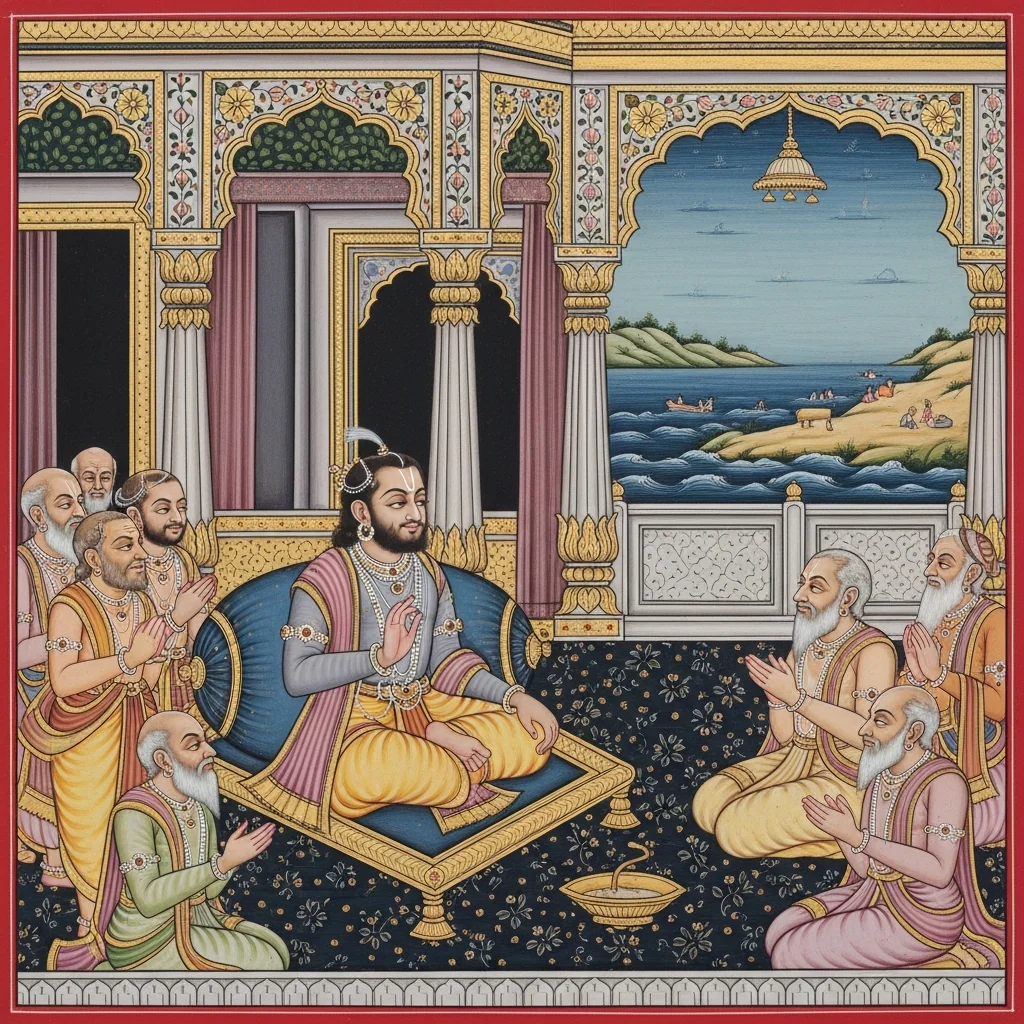
Chapter 1 opens with Śaunaka asking Sūta how, in the turbulent Kali-yuga of fractured doctrines, a seeker may draw near to Madhusūdana (Viṣṇu). Sūta replies by briefly recounting Janārdana’s descent and deeds: the early exploits in Vraja (the defeat of Pūtanā, Tṛṇāvarta, Kāliya, and others), the move to Mathurā (the slaying of Kuvalayāpīḍa and royal foes), and later political and sacrificial episodes (conflicts with Jarāsandha and the Rājasūya setting). The narrative then turns to the post-epic horizon: the Yādavas’ self-destructive strife at Prabhāsa, Kṛṣṇa’s withdrawal from the world, and Dvārakā’s inundation. Amid this decline, forest sages assemble, discern Kali-yuga’s moral erosion—dharma and social-ritual order weakening—and seek counsel from Brahmā. Brahmā admits the limits of knowing Viṣṇu’s supreme mode and directs them to Prahlāda in Sutala, an authoritative devotee who can indicate Hari’s locus and the means of access. The chapter closes as the sages reach Sutala, are welcomed by Bali with Prahlāda present, and formally request the confidential method to attain God without elaborate disciplines, preparing the next instruction.
Shlokas
Verse 1
शौनक उवाच । कथं सूत युगे ह्यस्मिन्रौद्रे वै कलिसंज्ञके । बहुपाखंडसंकीर्णे प्राप्स्यामो मधुसूदनम्
Śaunaka said: How, O Sūta, in this fierce age called Kali—confused by many heretical paths—shall we attain Madhusūdana (Lord Viṣṇu)?
Verse 2
युगत्रये व्यतिक्रान्ते धर्माचारपरे सदा । प्राप्ते कलियुगे घोरे क्व विष्णुर्भगवानिति
When the three ages have passed and the dreadful Kali-yuga has arrived, where indeed is Lord Viṣṇu to be found and approached?
Verse 3
सूत उवाच । दिवं याते महाराजे रामे दशरथात्मजे । दुष्टराजन्यभारेण पीडिते धरणीतले
Sūta said: When King Rāma, the son of Daśaratha, had departed to heaven, the surface of the earth became oppressed by the burden of wicked rulers.
Verse 4
देवानां कार्यसिद्ध्यर्थं भूभारहरणाय च । वसुदेवगृहे साक्षादाविर्भूते जनार्दने
For the fulfillment of the gods’ purpose and for the removal of the earth’s burden, Janārdana Himself manifested directly in the house of Vasudeva.
Verse 5
नंदव्रजं गते देवे पूतनाशोषणे सति । घातिते च तृणावर्ते शकटे परिवर्तिते
When the Lord went to Nanda’s Vraja—having drained Pūtanā’s life, slain Tṛṇāvarta, and overturned the cart—those wondrous deeds were accomplished.
Verse 6
दमिते कालिये नागे प्रलंबे च निषूदिते । धृते गोवर्धने शैले परित्राते च गोकुले
After subduing the serpent Kāliya, slaying Pralamba, holding aloft Mount Govardhana, and protecting Gokula, the Lord continued His divine mission.
Verse 7
सुरभ्या चाभिषिक्ते तु इन्द्रे च विमदीकृते । रासक्रीडारते देवे दारिते केशिदानवे
When Indra was anointed by Surabhī and his pride was humbled—when the Lord, delighting in the rāsa-play, also tore apart the demon Keśin—
Verse 8
अक्रूरवचनाद्देवे मथुरायां गते हरौ । हते कुवलयापीडे मल्लराजे च घातिते
At Akrūra’s urging, when Hari went to Mathurā—when Kuvalayāpīḍa was slain and the king of wrestlers was struck down—
Verse 9
पश्यतां देव दैत्यानां भोजराजे निपातिते । यदुपुर्यामभिषिक्त उग्रसेने नराधिपे
Before the very eyes of gods and demons, the Bhoja king was felled; and in the city of the Yadus, Ugrasena was consecrated as king.
Verse 10
जरासंधबले रौद्रे यवने च हते क्षितौ । राजसूये क्रतुवरे चैद्ये चैव निपातिते
When the fierce might of Jarāsandha was subdued and the Yavana was slain upon the earth; when, at the excellent Rājasūya sacrifice, Caidya too was brought down—
Verse 11
निवृत्ते भारते युद्धे भारे च क्षपिते भुवः । यात्राव्याजसमानीते प्रभासं यादवे कुले
When the Bhārata war had ceased and the burden of the earth had been lightened, the Yādava clan was brought to Prabhāsa on the pretext of a pilgrimage.
Verse 12
मद्यपानप्रसक्ते तु परस्परवधो द्यते । कलहेनातिरौद्रेण विनष्टे यादवे कुले
When they became absorbed in drinking liquor, mutual slaughter arose; through a most dreadful quarrel, the Yādava clan was destroyed.
Verse 13
गात्रं संत्यज्य चात्रैव गतेऽनंते धरातलात् । अश्वत्थमूललमाश्रित्य समासीने जनार्दने
And here itself, when Ananta had departed from the earth—when Janārdana, resting at the root of an aśvattha tree, sat down—
Verse 14
व्याधप्रहारभिन्नांगे परित्यक्ते कलेवरे । स्वधामसंस्थिते देवे पार्थे च पुनरागते
When His body was abandoned after being pierced by the hunter’s strike; when the God had returned to His own abode, and Pārtha too had come back—
Verse 15
यदुपुर्य्यां प्लावितायां सागरेण समंततः । शक्रप्रस्थं ततो गत्वा कारयित्वा हरेर्गृहम्
When Yadupurī was flooded on every side by the ocean, he went to Śakraprastha and had the sacred dwelling of Hari built.
Verse 16
द्वापरे च व्यतिक्रांते धर्माधर्मविमिश्रिते । संप्राप्ते च महारौद्रे युगे वै कलिसंज्ञिते
And when Dvāpara had passed—when dharma and adharma had become intermingled—the exceedingly dreadful age called Kali arrived.
Verse 17
क्षीयमाणे च सद्धर्मे विधर्मे प्रबले तथा । नष्टधर्मक्रियायोगे वेदवादबहिष्कृते । एकपादे स्थिते धर्मे वर्णाश्रमविवर्जिते
When true dharma wanes and anti-dharma grows strong; when the disciplined practice of righteous rites is lost and the authority of Vedic teaching is cast aside; when dharma stands only on a single foot and society is cut off from the order of varṇa and āśrama—then the world enters a grievous decline.
Verse 18
अस्मिन्युगे विलुलिते ह्यृषयो वनचारिणः । समेत्यामंत्रयन्सर्वे गर्गच्यवनभार्गवाः
In this age, thrown into confusion, the forest-dwelling sages assembled and held counsel together—Garga, Cyavana, and the Bhārgavas among them.
Verse 19
असितो देवलो धौम्यः क्रतुरुद्दालकस्तथा । एते चान्ये च बहवः परस्परमथाब्रुवन्
Asita, Devala, Dhaumya, Kratu, and likewise Uddālaka—these and many other sages then spoke among themselves.
Verse 20
पश्यध्वं मुनयः सर्वे कलिव्याप्तं दिगंतरम् । समंतात्परिधावद्भिर्दस्युभिर्बाध्यते प्रजा
Behold, O sages: every direction is pervaded by Kali. On all sides, as bandits roam about, the people are oppressed.
Verse 21
अधर्मपरमैः पुंभिः सत्यार्जवनिराकृतैः । कथं स भगवान्विष्णुः संप्राप्यो मुनिसत्तमाः
When people are devoted to adharma, having cast aside truth and straightforwardness—how can that Blessed Lord Viṣṇu be attained, O best of sages?
Verse 22
को वा भवाब्धौ पततस्तारयिष्यति संगतान् । न कलौ संभवस्तस्य त्रियुगो मधुसूदनः । तं विना पुंडरीकाक्षं कथं स्याम कलौ युगे
Who, then, will ferry us—fallen together into the ocean of becoming? In Kali, there is no manifest descent of that Madhusūdana who appears in three ages. Without that lotus-eyed Lord, how shall we endure in the age of Kali?
Verse 23
तेषां चिंतयतामेवं दुःखितानां तपस्विनाम् । उवाच वचनं तत्र ऋषिरुद्दालकस्तदा
As those ascetics thus reflected in sorrow, the sage Uddālaka then spoke there.
Verse 24
उद्दालक उवाच । यावन्न कलिदोषेण लिप्यामो मुनिसत्तमाः । अपापा ब्रह्मसदनं गच्छामः परिसंगताः
Uddālaka said: “Before we are tainted by the fault of Kali, O best of sages, let us—sinless and united—go to Brahmā’s abode.”
Verse 25
पृच्छामो लोकधातारं स्थितं विष्णुं कलौ युगे । यदि विष्णुः कलौ न स्याद्रुद्रेण ब्रह्मणाऽसह
Let us ask the Sustainer of the worlds about Viṣṇu’s abiding presence in the age of Kali. If Viṣṇu is not to be found in Kali—then, together with Rudra and Brahmā…
Verse 26
तं विना पुंडरीकाक्षं त्यक्ष्यामः स्वकलेवरम् । विना भगवता लोके कः स्थास्यति कलौ युगे
Without that lotus-eyed Lord, Puṇḍarīkākṣa, we shall abandon our very bodies. For without the Blessed Bhagavān in the world, who could possibly stand firm in the age of Kali?
Verse 27
तच्छ्रुत्वा वचनं तस्य ऋषयः संशितव्रताः । साधुसाध्विति ते चोक्त्वा प्रस्थिता ब्रह्मणोंऽतिकम्
Hearing his words, the sages—steadfast in their vows—praised them, saying, “Well spoken, well spoken,” and then set out to the presence of Brahmā.
Verse 28
कथयन्तः कथां विष्णोः स्वरूपमनुवर्णनम् । तापसाः प्रययुः सर्वे संहृष्टा ब्रह्मणोंऽतिकम्
As they went, all the ascetics joyfully spoke of Viṣṇu—recounting and describing His true nature—and proceeded to the presence of Brahmā.
Verse 29
ददृशुस्ते तदा देवमासीनं परमासने । पितामहभूतगणैर्मूर्तामूर्तैर्वृतं तथा
Then they beheld the Lord seated upon the highest throne, surrounded likewise by the hosts belonging to Pitāmaha—both embodied and unembodied.
Verse 30
दृष्ट्वा चतुर्मुखं देवं दंडवत्प्रणताः क्षितौ । प्रणम्य देवदेवं तु स्तोत्रेण तुषुवुस्तदा
On beholding the four-faced Lord, they fell full-length upon the earth in reverent prostration; and, having bowed to the God of gods, they then praised Him with a sacred hymn.
Verse 31
ऋषय ऊचुः । नमस्ते पद्मसंभूत चतुर्वक्त्राक्षयाव्यय । नमस्ते सृष्टिकर्त्रे तु पितामह नमोऽस्तु ते
The sages said: “Salutations to You, O Lotus-born, O four-faced One, imperishable and undecaying. Salutations to You, the Creator—O Pitāmaha; may homage be unto You.”
Verse 32
एवं स्तुतः सन्मुनिभिः सुप्रीतः कमलोद्भवः । पाद्यार्घ्येणाभिवन्द्यैतान्पप्रच्छ मुनिपुंगवान्
Thus praised by the noble sages, the Lotus-born was greatly pleased. After honoring them with water for the feet and the arghya offering, that foremost of sages questioned them.
Verse 33
ब्रह्मोवाच । किमागमनकृत्यं वो ब्रूत तत्त्वेन पुत्रकाः । कुशलं वो महाभागाः पुत्रशिष्याग्निबन्धुषु
Brahmā said: “Tell me truly, dear sons—what is the purpose of your coming? And are you well, O fortunate ones, with your sons, disciples, sacred fires, and kinsmen?”
Verse 34
ऋषय ऊचुः । भवत्प्रसादात्सकलं प्राप्तं नस्तपसः फलम् । यद्भवंतं प्रपश्यामः सर्वदेवगुरुं प्रभुम्
The sages said: “By Your grace, the entire fruit of our austerities has been attained—since we behold You, the Lord, the preceptor of all the gods.”
Verse 35
शृण्वेतत्कारणं शंभो एते प्राप्तास्तवांतिकम् । युगत्रये व्यतिक्रांते कृतादिद्वापरांतके
Hear the reason, O Śaṃbhu, for which we have come into your presence. When the three yugas had passed—beginning with Kṛta and ending with Dvāpara—
Verse 36
प्राप्ते कलियुगे घोरे क्व विष्णुः पृथिवीतले । यं दृष्ट्वा परमां मुक्तिं यास्यामो मुक्तबन्धनाः
Now that the dreadful Kali-yuga has arrived, where is Viṣṇu upon the earth? By beholding Him, may we attain the supreme liberation, freed from all bondage.
Verse 37
ब्रह्मोवाच । मत्स्यकूर्मादिरूपैश्च भगवाञ्ज्ञायते मया । विष्णोः पारमिकां मूर्तिं न जानामि द्विजोत्तमाः
Brahmā said: “By forms such as the Fish and the Tortoise I do recognize the Blessed Lord. Yet, O best of the twice-born, I do not know Viṣṇu’s supreme, transcendent form.”
Verse 38
ऋषय ऊचुः । यदि त्वं न विजानासि तात विष्णोरवस्थितिम् । गत्वा प्रयागं तत्रैव संत्यक्ष्यामः कलेवरम्
The sages said: “If you, revered sir, do not know Viṣṇu’s true state and abiding reality, then we shall go to Prayāga, and there itself abandon our bodies.”
Verse 39
ब्रह्मोवाच । मा विषादं व्रजध्वं हि उपदेक्ष्यामि वो हितम् । इतो व्रजध्वं पातालं यत्रास्ते दैत्यसत्तमः
Brahmā said: “Do not fall into despair; I shall instruct you for your welfare. Go from here to Pātāla, where the noblest of the Daityas dwells.”
Verse 40
तं गत्वा परिपृच्छध्वं प्रह्लादं दैत्यसत्तमम् । स ज्ञास्यति हरेः स्थानं याथातथ्येन भो द्विजाः
Go there and inquire of Prahlāda, the foremost among the Daityas. He will know—truthfully and precisely—Hari’s abode, O twice-born ones.
Verse 41
तच्छुत्वा वचनं तस्य ब्रह्मणः परमात्मनः । प्रणिपत्य च देवेशं प्रस्थितास्ते तपोधनाः
Hearing those words of Brahmā, the Supreme Self, those ascetics—rich in austerity—bowed to the Lord of the gods and set forth.
Verse 42
जग्मुः संहृष्टमनसः स्तुवन्तो दैत्यसत्तमम् । धन्यः स दैत्यराजोऽयं यो जानाति जनार्द्दनम्
With delighted hearts they went on, praising the foremost of the Daityas: “Blessed indeed is this Daitya-king, who knows Janārdana!”
Verse 43
इति संचिंतयानास्ते प्राप्ता वै सुतलं द्विजाः
Thus reflecting, those twice-born sages indeed reached Sutala.
Verse 44
गत्वा ते तस्य नगरं विविशुर्भवनोत्तमम् । दूरादेव स तान्दृष्ट्वा बलिर्वैरोचनिस्तदा । प्रत्युत्थायार्हयाञ्चक्रे प्रह्लादेन समन्वितः
Having gone to his city, they entered the finest palace. Seeing them from afar, Bali Vairocanī then rose to greet them and duly honored them, accompanied by Prahlāda.
Verse 45
मधुपर्कं च गां चैव दत्त्वा चार्घ्यं तथैव च । उवाच प्रांजलिर्भूत्वा प्रहृष्टेनांतरात्मना
After offering madhuparka, a cow, and arghya as well, he spoke with folded hands, his inmost heart rejoicing.
Verse 46
स्वागतं वो महाभागाः सुव्युष्टा रजनी मम । भवतो यत्प्रपश्यामि ब्रूत किं करवाणि च
“Welcome to you, O greatly fortunate ones; my night has been well-spent, since I behold you. Tell me—what shall I do for you?”
Verse 47
एवं हि दैत्यराजेन सत्कृतास्ते द्विजोत्तमाः । ऊचुः प्रहृष्टमनसो दानवेन्द्रसुतं तदा
Thus honored and respectfully received by the lord of the Daityas, those foremost Brāhmaṇas—gladdened at heart—then addressed the son of the Dānava king.
Verse 48
ऋषय ऊचुः । कार्यार्थिनस्तु संप्राप्ताः प्रह्लाद हरिवल्लभ । तदस्माकं महाबाहो भवांस्त्राता भवार्णवात्
The sages said: “We have come seeking a purpose to be fulfilled, O Prahlāda, beloved of Hari. Therefore, O mighty-armed one, be our savior from the ocean of saṃsāra.”
Verse 49
कथं दैत्य युगे ह्यस्मिन्रौद्रे वै कलिसंज्ञके । भविष्यामो विना विष्णुं भीतानामभयप्रदम्
“How shall we endure, O Daitya, in this fierce age called Kali, without Viṣṇu—He who grants fearlessness to the frightened?”
Verse 50
अस्मिन्युगे ह्यधर्मेण जितो धर्मः सनातनः । अनृतेन जितं सत्यं विप्राश्च वृषलैर्जिताः
In this age, eternal Dharma is overcome by adharma; truth is conquered by falsehood; and the Brāhmaṇas are subdued by the base.
Verse 51
विटैर्जिता वेदमार्गाः स्त्रीभिश्च पुरुषा जिताः । ब्राह्मणाश्चापि वध्यन्ते म्लेच्छ राजन्यरूपिभिः
The paths of the Veda are overpowered by the ignoble; men are ruled by women; and even Brāhmaṇas are slain by Mlecchas wearing the guise of kings.
Verse 52
अस्मिन्विलुलितप्राये वर्णाश्रमविवर्जिते । अविलुप्ते वेदमार्गे क्व विष्णुर्भगवानिति
When this world is almost wholly shattered, when the order of varṇa and āśrama is abandoned, and the Vedic path is obscured—where, then, is Bhagavān Viṣṇu to be found?
Verse 53
विना ज्ञानाद्विना ध्यानाद्विना चेंद्रियनिग्रहात् । प्राप्यते भगवान्यत्र तद्गुह्यं कथयस्व नः
Tell us that secret: in what place is Bhagavān attained even without philosophical knowledge, without meditation, and without the restraint of the senses?
Verse 54
दैत्यराज त्वमस्माकं सुहृन्मार्गप्रदर्शकः । कथयस्व महाभाग यत्र तिष्ठति केशवः
O king of the Daityas, you are our well-wisher and guide upon the path. O fortunate one, tell us where Keśava dwells.
Verse 55
एवं स द्विजमुख्यैश्च संपृष्टो दैत्यसत्तमः । प्रणम्य ब्राह्मणान्सर्वान्भक्त्या संहृष्टमानसः
Thus questioned by the foremost among the twice-born, that best of Daityas—his heart rejoicing—bowed with devotion to all the Brāhmaṇas.
Verse 56
स नमस्कृत्य देवेभ्यो ब्रह्मणे परमात्मने । भगवद्भक्तिर्युक्तः सन्व्याहर्त्तुमुपचक्रमे
Having offered obeisance to the gods and to Brahmā, the Supreme Self, and being endowed with devotion to Bhagavān, he then began to speak.