Adhyaya 2
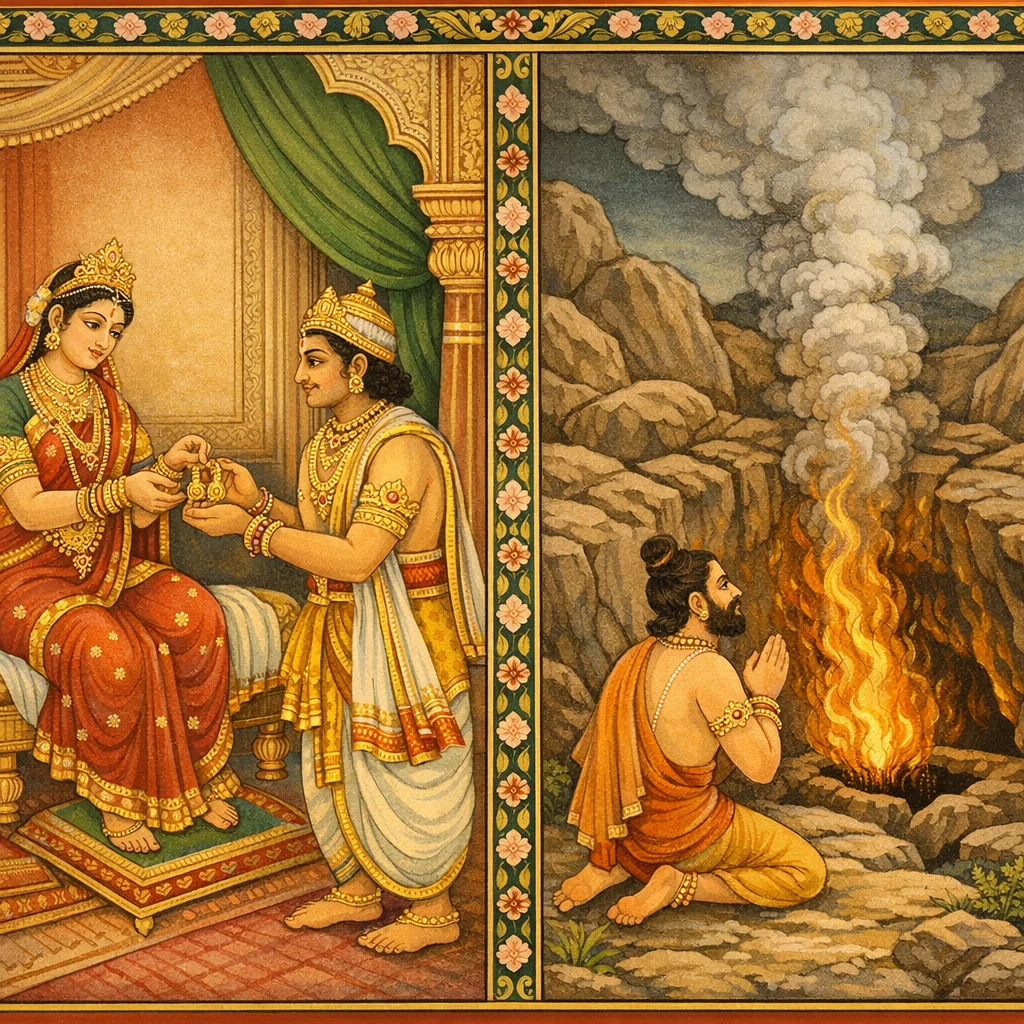
Vasiṣṭha recounts an earlier episode: the sage Gautama teaches many students, yet the devoted Uttanka remains for a long time in guru-sevā, steadfast service to his teacher. Sent on an errand, Uttanka encounters a symbolic sign of neglected household duty and is troubled about the continuity of lineage; when the matter is reported, Gautama instructs him to perform the householder rites with his wife and refuses any further fee. Still desiring a tangible guru-dakṣiṇā, Uttanka approaches Ahalyā, the guru’s wife, who commands him to obtain—within a strict deadline—the jeweled earrings (kuṇḍalas) of Madayantī from King Saudāsa. The king threatens to eat Uttanka yet permits the request; Madayantī demands a royal token as proof and then gives the earrings, warning that Takṣaka covets them. On the return journey Uttanka hears the king’s cryptic words about the consequences of pleasing or displeasing brāhmaṇas, and Saudāsa explains his former curse and its release. Takṣaka then steals the earrings; Uttanka pursues him into the subterranean realm and, aided by Indra and a divine horse bearing the Agni motif, raises smoke and fire that compel the nāgas to restore the kuṇḍalas. Uttanka delivers them to Ahalyā just in time, averting her curse; the chapter ends by saying a “vivara” (an opening) arose because of Takṣaka and Uttanka, joined to a practical injunction to fill a pit for cattle—binding moral narrative to landscape memory and duty.
Shlokas
Verse 1
वसिष्ठ उवाच । आसीत्पूर्वं मुनिर्नाम्ना गौतमश्च महातपाः । अहिल्या दयिता तस्य धर्मपत्नी यशस्विनी
Vasiṣṭha said: “Formerly there was a great ascetic sage named Gautama. His beloved and illustrious lawful wife was Ahalyā.”
Verse 2
शिष्यानध्यापयामास स मुनिः शतशस्तदा । श्रुताध्ययनसंपन्नान्विससर्ज ततो गृहान्
That sage then instructed hundreds of disciples; and when they were accomplished in sacred hearing and study, he sent them back to their homes.
Verse 3
तस्यान्योऽपि च यः शिष्यो गुरुभक्तिपरायणः । उत्तंको नाम मेधावी न्यवसत्तस्य मन्दिरे
He had yet another disciple, wholly devoted in guru-bhakti—an intelligent youth named Uttaṅka—who continued to dwell in his teacher’s house.
Verse 4
न तं विसर्जयामास जरयापि परिप्लुतम् । उत्तंकोऽपि सुशिष्यत्वान्नो वेत्ति पलितं शिरः
He did not send him away even when old age had overtaken him; and Uttaṅka, being an exemplary disciple, did not even notice the grey hairs upon his teacher’s head.
Verse 5
जातकार्यसमायुक्तो विद्यापारंगतोऽपि सः । केनचित्त्वथ कालेन काष्ठार्थं स बहिर्ययौ
Though he had become proficient in his duties and had mastered learning, after some time he went outside to gather firewood.
Verse 6
प्रभूतानि समादाय आश्रमं परमं गतः । अथासौ न्यक्षिपत्तत्र भूतले काष्ठसंचयम्
Having gathered abundant wood, he returned to the excellent hermitage; then he set down the bundle of firewood there upon the ground.
Verse 7
काष्ठलग्नां तदा श्वेतां जटामेकां ददर्श सः । स दृष्ट्वा दुःखमापन्नः कृपणं पर्यचिन्तयत्
Then he noticed a single white matted lock of hair (jaṭā) caught in the firewood. Seeing it, he fell into sorrow and, wretched at heart, reflected to himself.
Verse 8
धिग्धिङ्मे जीवितं नष्टं कुतः कार्यरतस्य च । कलत्र संग्रहं नैव मया कृतमबुद्धिना
Shame, shame—my life is ruined! What good are my labors? In my folly I never even arranged to take a wife and establish a household.
Verse 9
भविष्यति कुलच्छेदः शैथिल्यान्मम दुर्मतेः । गुरुपत्न्या च संदृष्ट उत्तंको दुःखितस्तदा
“Because of my slackness and foolishness, my lineage will be cut off.” At that time, Uttaṅka—seen by the guru’s wife—was overcome with grief.
Verse 10
तस्य दुःखं तथा क्षिप्रं गौतमाय निेवेदितम् । गौतमेन तथेत्युक्त्वा मृदुवाण्या स भाषितः
He quickly reported his sorrow to Gautama. Gautama replied, “So be it,” and then spoke to him in gentle words.
Verse 11
वत्स गच्छ गृहं त्वं च अग्निहोत्रादिकाः क्रियाः । पालयस्व विधानेन पत्न्या सह न संशयः
“Dear child, go now to your home, and duly maintain the rites beginning with the Agnihotra, together with your wife—of this there is no doubt.”
Verse 12
इत्युक्तो गुरुणा सोऽपि प्रत्युवाच गुरुं प्रति । दक्षिणां प्रार्थय स्वामिन्नहं दास्याम्यसंशयम्
Thus addressed by his teacher, he replied to the guru: “Master, please ask for the dakṣiṇā (the teacher’s fee); I will give it without doubt.”
Verse 13
गौतम उवाच । सेवा कृता त्वया वत्स महती मम सर्वदा । तेनैव परिपूर्णत्वं जातं मे नात्र संशयः
Gautama said: “Child, you have always rendered me great service. By that alone I am fully satisfied—there is no doubt of it.”
Verse 14
उत्तंक उवाच । किंचिद्ग्राह्यं त्वया स्वामिन्सन्तोषो जायते मम । त्वत्प्रसादान्मुनिश्रेष्ठ विद्यापारंगतोऽस्म्यहम्
Uttaṅka said: “Master, please accept something—then my heart will be at peace. By your grace, O best of sages, I have mastered learning.”},{
Verse 15
गौतम उवाच । न ग्राह्यं च मया पुत्र सन्तुष्टः सेवयास्म्यहम् । नेच्छाम्यहं धनं त्वत्तः सुखं गच्छ गृहं प्रति
Gautama said: “Son, I should accept nothing; I am satisfied with your service. I do not desire wealth from you—go happily to your home.”},{
Verse 16
इत्युक्तो गुरुणा सोऽपि मातरं चाभ्यभाषत । किंचिद्ग्राह्यं मया मातः सन्तोषो दीयतां मम
Thus spoken to by the guru, he then addressed the teacher’s wife: “Mother, let something be accepted from me, so that contentment may be granted to my heart.”},{
Verse 17
गुरुपत्न्युवाच । सौदासं गच्छ पुत्र त्वं ममाज्ञां कुरु सत्वरम् । मदयन्ती प्रिया तस्य धर्मपत्नी यशस्विनी
The guru’s wife said: “Son, go to Saudāsa at once and swiftly carry out my command. His beloved, the illustrious and righteous wife, is Madayantī.”}]}
Verse 18
कुण्डलेऽथानय क्षिप्रं मदयंत्याश्च पुत्रक । नो चेच्छापं प्रदास्यामि पञ्चमेऽह्नि न आगतः
“My son, quickly bring the pair of earrings from Madayantī. If you do not, and you have not returned by the fifth day, I shall lay a curse upon you.”
Verse 19
इत्युक्तो गुरुपत्न्या स प्रस्थितः सत्वरं तदा । सौदासस्यगृहं प्राप व्याघ्रास्यं तं च दृष्टवान्
Thus instructed by the guru’s wife, he set out at once. Reaching Saudāsa’s house, he beheld him with a tiger-like visage.
Verse 20
दृष्ट्वा प्राह तदा विप्रं भक्षणार्थमुपस्थितम् । भक्षयिष्यामि वै विप्र त्वामहं नात्र संशयः
Seeing the brāhmaṇa within reach as food, he said: “O brāhmaṇa, I shall indeed devour you—of this there is no doubt.”
Verse 21
उत्तंक उवाच । अवश्यं भक्षय त्वं मामेकं शृणु नराधिप । देहि मे कुण्डले तात दत्त्वाऽहं गुरवे पुनः । आगमिष्यामि भक्षस्व मा त्वं कार्यविवर्जितम्
Uttaṅka said: “You may surely devour me, O king—yet hear one thing. Grant me the earrings, revered sir; after I return them to my guru, I shall come back. Then devour me—do not be deprived of the deed you intend.”
Verse 22
सौदास उवाच । गच्छ त्वं मन्दिरे दुर्गे यत्राऽस्ते दयिता मम । तां त्वमासाद्य यत्नेन जीवितव्यभयाद्द्विज
Saudāsa said: “Go to the fortified palace where my beloved dwells. O brāhmaṇa, reach her with utmost care, for your very life may be in peril.”
Verse 23
याच्यतां मम वाक्येन सा ते दास्यति कुण्डले । त्वया च नान्यथा कार्यं यत्सत्यं द्विजसत्तम
Ask her in my name; she will give you the earrings. And you must do it in no other way—this is the truth, O best of brāhmaṇas.
Verse 24
वसिष्ठ उवाच । मदयन्त्याः समीपं तु गत्वोवाच द्विजोत्तमः । देहि मे कुण्डले देवि सौदासस्त्वां समादिशत्
Vasiṣṭha said: The foremost brāhmaṇa approached Madayantī and said, “Lady, give me the earrings; Saudāsa has instructed you (to do so).”
Verse 25
मदयंत्युवाच । सन्देहोऽद्यापि मे विप्र कुण्डले द्विजसत्तम । अभिज्ञानं त्वमानीय नृपस्य द्विज दर्शय
Madayantī said: “O brāhmaṇa, best of the twice-born, I still have doubt regarding the earrings. Bring a token of recognition and show it—(as proof) from the king.”
Verse 26
स गत्वा त्वरितं भूपमभिज्ञानमयाचत
He quickly went to the king and requested a token of recognition.
Verse 27
सौदास उवाच । यैर्विना सुगतिर्नास्ति दुर्गतिं ये नयंति वै । गत्वैवं ब्रूहि तां साध्वीं मम वाक्यं द्विजोत्तम । प्रदास्यति ततो नूनं कुण्डले रत्नमंडिते
Saudāsa said: “That without which there is no su-gati (good passage), and which indeed leads to dur-gati (a bad fate)—go and tell that virtuous lady these words of mine, O best of brāhmaṇas. Then she will surely give the jeweled earrings.”
Verse 28
वसिष्ठ उवाच । प्रत्यभिज्ञानमादाय गत्वा तस्यै न्यवेदयत्
Vasiṣṭha said: Taking the token of recognition, he went and presented it to her.
Verse 29
ततोऽसौ प्रददौ तस्मै गृह्ण मे कुण्डले द्विज । उवाच यत्नमास्थाय नीयतां द्विजसत्तम
Then she gave them to him, saying, “Brāhmaṇa, take my earrings. With due care, let them be carried away, O best of the twice-born.”
Verse 30
एते च वांछते नित्यं तक्षको द्विज कुण्डले । स तथेति समादाय विस्मयोत्फुल्ललोचनः । कौतुकात्पुनरागत्य राजानं वाक्यमब्रवीत्
“O brāhmaṇa, Takṣaka the serpent ever desires these earrings.” Saying “So be it,” he took them up; his eyes widened in amazement. Then, out of curiosity, he returned and spoke these words to the king.
Verse 31
अभिज्ञानान्मया भूप सम्प्राप्ते दीप्तकुण्डले । वाक्यार्थस्तु न विज्ञातस्ततोऽहं पुनरागतः
“O king, I have indeed obtained the shining earrings as the token of recognition; yet I have not understood the intent of the message—therefore I have returned again.”
Verse 32
कौतुकाद्वद मे राजन्स्वकार्ये च यथास्थितम् । कैर्विना सुगतिर्नास्ति दुर्गतिं के नयंति च
“Out of curiosity, O king, tell me plainly how matters stand regarding your own affair: without whom is there no good passage (sugati), and who are they that drive one into misfortune (durgati)?”
Verse 33
सौदास उवाच । आराधिता द्विजा विप्र भवंति सुगतिप्रदाः । असन्तुष्टा दुर्गतिदाः सद्यो मम यथा पुरा
Saudāsa said: “O brāhmaṇa, when the twice-born are duly honored, they become bestowers of a good destiny. When displeased, they become givers of misfortune—just as happened to me long ago, at once.”
Verse 34
एतावान्मम शापोऽयं वसिष्ठस्य महात्मनः । तेनोक्तं त्वां यदा कश्चित्प्रश्नं विख्यापयिष्यति
“This much is the curse upon me, laid by the great-souled Vasiṣṭha: it was declared that, when someone would put a certain question to you, (the condition would be fulfilled).”
Verse 35
तदा दोषविनिर्मुक्तो भविष्यसि न संशयः । त्वत्प्रसादाद्विनिर्मुक्तो ह्यहं शापाद्द्विजोत्तम । सात्त्विकं धाम चापन्नो गच्छ विप्र नमोऽस्तु ते
“Then you will be freed from fault—of this there is no doubt. By your favor, O best of the twice-born, I too have been released from the curse. Having attained a pure, sāttvika abode, depart, O brāhmaṇa; salutations to you.”
Verse 36
वसिष्ठ उवाच । उत्तंकस्तेन निर्मुक्तः सत्वरं पथमाश्रितः । गच्छंश्चातिक्षुधाविष्टो ऽपश्यद्बिल्वफलानि सः
Vasiṣṭha said: “Uttaṅka, thus released, quickly took to the road. As he went, tormented by intense hunger, he saw bilva fruits.”
Verse 37
ततः कृष्णाजिने बद्ध्वा कुण्डले न्यस्य भूतले । आरुरोह फलाकांक्षी स मुनिः क्षुधयाऽन्वितः
Then, tying the earrings in his black antelope-skin and placing them upon the ground, the sage—desiring the fruits and pressed by hunger—climbed up (the tree).
Verse 38
एतस्मिन्नेव काले तु तक्षकः पन्नगोत्तमः । गृहीत्वा कुण्डले तूर्णमगमद्दक्षिणामुखः
At that very moment, Takṣaka—the foremost among the Nāgas—snatched up the earrings and swiftly departed, turning his face southward.
Verse 39
अथोत्तंकः फलाहारी अवतीर्य धरातले । सर्वतोऽन्वेषयामास वेगेन महता वृतः
Then Uttaṅka, having taken fruits as his food, descended to the ground and searched in every direction, driven by great urgency.
Verse 40
स दृष्ट्वा सम्मुखं प्राप्तं समीपं पन्नगोत्तमः । प्रविवेश बिलं रौद्रमन्धकारेण संवृतम्
Seeing him come face to face and draw near, the foremost of serpents entered a dreadful cavern, shrouded in dense darkness.
Verse 41
उत्तंकोऽपि बिलं प्राप्तः प्रविश्य तमसावृतम् । दण्डकाष्ठं समादाय कुपितोह्यखनत्तदा
Uttaṅka too reached that cavern; entering it, veiled in darkness, he seized a wooden staff and, angered, began to dig at once.
Verse 42
तं तथा दुःखितं दृष्ट्वा सक्लेशं गुरुकार्यतः । वज्रमारोपयामास दण्डांते पाकशासनः
Seeing him thus distressed and toiling for his teacher’s task, Pākaśāsana (Indra) set the Vajra, the thunderbolt, upon the tip of his staff.
Verse 43
ततो विदारयामास स शीघ्रं धरणीतलम् । प्रविष्टश्चैव पातालं कुण्डलार्थं परिभ्रमन्
Then he swiftly tore open the surface of the earth and entered Pātāla, roaming there in search of the earrings.
Verse 44
सोऽपश्यद्वाजिनं तत्र सर्वश्वेतं गुणान्वितम् । तेनोक्तः स्पृश मे गुह्यं ततः कार्यं भविष्यति
There he saw a steed, wholly white and endowed with auspicious qualities. By it he was told, “Touch my hidden part; then your task will be accomplished.”
Verse 45
स चकार तथा शीघ्रं ततो धूमो व्यजायत । पातालं तेन सर्वत्र व्याप्तं भूधर वह्निना
He did so at once; then smoke arose. By that mountain-like fire, all of Pātāla became pervaded everywhere.
Verse 46
ततश्च व्याकुलाः सर्वे पन्नगाः समुपाद्रवन् । तक्षकं पुरतः कृत्वा संप्राप्ताः कुण्डलान्विताः । उत्तंकाय ततो दत्त्वा प्रणिपत्य ययुर्गृहम्
Then all the serpents, distressed, rushed forth. Placing Takṣaka in front, they came bearing the earrings; giving them to Uttaṅka, they bowed down and returned to their abode.
Verse 47
वसिष्ठ उवाच । अथाश्वस्तमुवाचेदमहमग्निर्द्विजोत्तम । यस्त्वयाऽराधितः पूर्वमुपाध्यायनिदेशतः
Vasiṣṭha said: Then, to the reassured brāhmaṇa, he spoke thus: “I am Agni, O best of twice-born, whom you formerly worshiped according to your teacher’s instruction.”
Verse 48
ज्ञात्वा त्वां दुःखितं प्राप्तमिह प्राप्तः कृपापरः । सर्वथा त्वं च मे पृष्ठं भगवञ्छीघ्रमारुह
Knowing that you had come here in distress, I arrived, moved by compassion. Therefore, O venerable one, quickly mount my back.
Verse 49
नयामि तत्र यत्रास्ते गुरुः सर्वगुणालयः । आरूढस्तस्य पृष्ठे स प्रतस्थे ह्याश्रमं प्रति
“I will take you to where your guru—an abode of all virtues—resides.” Having mounted upon his back, he set out toward the hermitage.
Verse 50
तत्क्षणात्समनुप्राप्तो गौतमस्य निवेशनम् । एतस्मिन्नेव काले तु अहिल्या कृतमंडना
At that very moment he arrived at the dwelling of Gautama. And just then, Ahalyā—already adorned—was present.
Verse 51
स्नाता चाभ्येत्य भर्तारं साध्वी वाक्यमुवाच ह । उत्तंकोऽद्य न संप्राप्तः शापं दास्याम्यहं ध्रुवम्
Having bathed, the virtuous lady approached her husband and spoke: “If Uttaṅka has not arrived today, I shall surely pronounce a curse.”
Verse 52
शिथिलो गुरुकृत्येषु स यदालक्षितो मया । तस्या वाक्यावसाने तु उत्तंकः पर्य्यदृश्यत
When I noticed that he had become lax in the duties owed to the guru, then—just as her words ended—Uttaṅka came into view.
Verse 53
प्रसन्नवदनो हृष्टः कुण्डलाभ्यां समन्वितः । प्रणिपत्य स तां भक्त्या कुण्डले संन्यवेदयत्
With a joyful countenance, delighted, and bearing the pair of earrings, he bowed down in devotion and presented the earrings to her.
Verse 54
सा दृष्ट्वा तत्क्षणात्साध्वी कर्णाभ्यां संन्यवेशयत् । स्वगृहाय ततस्तूर्णमुत्तंकं विससर्ज ह
Seeing them, the virtuous lady at once set them upon her ears. Then she promptly dismissed Uttaṅka to return to his own home.
Verse 55
वसिष्ठ उवाच । एवं स विवरो जातस्तक्षकोत्तंककारणात् । यथा मे चिंत्यते नित्यं धेन्वर्थं श्वभ्रपूरणे
Vasiṣṭha said: “Thus that chasm came into being because of Takṣaka and Uttaṅka. And I continually reflect upon filling that pit, for the sake of the cow.”
Verse 56
तस्मात्त्वं पूरय क्षिप्रं नान्यः शक्तोऽत्र कर्मणि । शीघ्रं कुरु नगश्रेष्ठ मम कार्यमसंशयम्
“Therefore, you must fill it quickly—no one else is capable of this task here. Act swiftly, O best of mountains; accomplish my work without doubt.”