Adhyaya 62
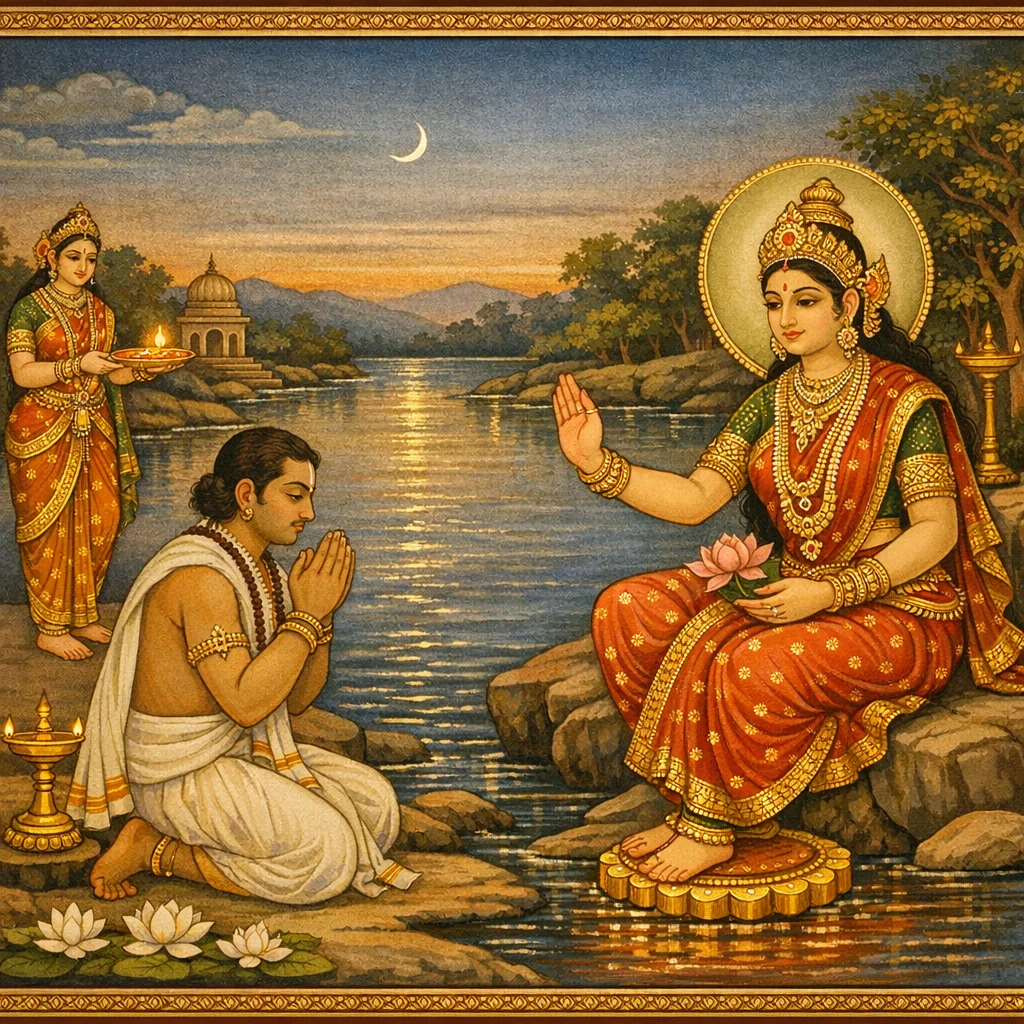
Chapter 62, within the Tīrthamāhātmya mode, gives a karmic origin-story for Śarmiṣṭhā-tīrtha and its saving power. Sūta tells of a king who, despite counsel, refuses to accept a so-called “poison maiden” (viṣakanyā). A political calamity follows: enemies attack, the king goes to battle and is slain, and the terrified citizens blame the viṣakanyā, demanding her execution and expulsion. Hearing the public reproach, she forms a renunciant resolve and reaches a sacred tract connected with Hāṭakeśvara, where memory of a former birth arises. Her backstory is then disclosed. In a previous life she was a marginalized woman who, in the fierce thirst of summer, compassionately gave scarce water to a thirsty cow—an act that became a seed of merit. Yet another karmic thread explains her “poison maiden” condition: she once damaged a golden image of Gaurī/Parvatī, touching it and breaking it up for sale, and the adverse result matured. Seeking release, she undertakes prolonged, season-by-season tapas and worship of the Goddess with regulated fasting, offerings, and austerities. When Śacī (Indrāṇī) appears to test her by offering a boon, she refuses, declaring refuge only in the supreme Goddess Pārvatī. At last Pārvatī appears with Śiva, accepts her hymn, grants a boon, transforms her into a divine form, and establishes the place as the Goddess’s own āśrama. The phalaśruti states that bathing here on Māgha-śukla-tṛtīyā yields desired results—especially for women—and that even grave wrongdoing is purified through the prescribed snāna and accompanying gifts. Reciting and hearing this chapter are also said to bestow merit and nearness to Śiva’s realm.
Shlokas
Verse 1
। सूत उवाच । एवं स निश्चयं कृत्वा पार्थिवो द्विजसत्तमाः । नात्यजत्तां तथोक्तोऽपि दैवज्ञैर्विषकन्यकाम् । दीयमानामपि प्रीत्या न च गृह्णाति भूभुजा
Sūta said: Having thus resolved, O best of the twice-born, the king did not abandon that poison-maiden, even though the astrologers urged him to do so. Though she was offered to him with affection, the ruler still would not accept her.
Verse 2
शर्मणष्ठीवनं यस्मात्तया स्वपितुराहितम् । शर्मिष्ठेति सुविख्याता ततः सा ह्यभवद्भुवि
Because she placed a spit (ṭhīvana) upon her own father’s comfort (śarma), she became renowned on earth by the name “Śarmiṣṭhā.”
Verse 3
एतस्मिन्नंतरे तस्य शत्रवः पृथिवीपतेः । सर्वतः पीडयामास राष्ट्रं क्रोधसमन्विताः
Meanwhile, the enemies of that king, filled with anger, began to harass his kingdom from every side.
Verse 4
अथा सौ पार्थिवः क्रुद्धः स्वसैन्यपरिवारितः । युद्धाय निर्ययौ स्थानान्मृत्युं कृत्वा निवर्तने
Then that king, enraged and surrounded by his own troops, marched out from his place to battle, resolved to make death the price of retreat.
Verse 5
ततः संप्राप्य ताञ्छत्रूंश्चकार स महाहवम् । चतुरंगेन सैन्येन यमराष्ट्रविवर्धनम्
Reaching those enemies, he waged a great battle with his fourfold army, one that swelled the realm of Yama, the lord of death.
Verse 6
ततश्च दशमे प्राप्ते शत्रुभिः स महीपतिः । निहतो दिवसे सर्वैर्वेष्टयित्वा समन्ततः
And when the tenth day arrived, that king was slain by the enemies, all of them surrounding him on every side.
Verse 7
ततस्तस्य नरेन्द्रस्य हतशेषाश्च ये नराः । भयार्तास्ते द्रुतं जग्मुः स्वपुरं प्रति दुःखिताः
Then the men who remained after the slaughter, belonging to that king, ran quickly—terrified and sorrowful—back toward their own city.
Verse 8
तेपि शत्रुगणाः सर्वे संप्रहृष्टा जिगीषवः । तत्पुरं वेष्टयामासुस्तत्पुत्रोच्छेदनाय वै
Those bands of enemies too, elated and eager for conquest, surrounded that city—indeed, with the aim of destroying the king’s son.
Verse 9
एतस्मिन्नंतरे पौराः सर्वे शोकपरायणाः । जगर्हुः परुषैर्वाक्यैर्दुष्टां तां विषकन्यकाम्
At that time, all the townspeople, overwhelmed with grief, condemned that wicked poison-maiden with harsh words.
Verse 10
अस्या दोषेण पापाया मृतश्च स महीपतिः । तथा राष्ट्रस्य विध्वंसे भविष्यति पुरः क्षयः
‘Through the fault of this sinful woman the king has died; and with the destruction of the kingdom, the city too will surely fall.’
Verse 13
तस्मादद्यापि पापैषा वध्यतामाशु कन्यका । निर्यास्यतां पुरादस्माद्यावन्न स्यात्पुरक्षयः
“Therefore, even today, let this sinful maiden be put to death at once. Let her be driven out from this city immediately, lest the city itself come to ruin.”
Verse 14
सूत उवाच । सापि श्रुत्वा जनोक्तांस्तानपवादान्पृथग्विधान् । वैराग्यं परमं गत्वा निंदां चक्रे तथात्मनः
Sūta said: “Hearing those various slanders spoken by the people, she entered into supreme dispassion and began to reproach herself as well.”
Verse 16
अथ दृष्टं तया क्षेत्रं हाटकेश्वरजं महत् । तपस्विभिः समाकीर्णं चित्ताह्लादकरं परम्
Then she beheld the great sacred field belonging to Hāṭakeśvara—filled with ascetics, and supremely delightful, gladdening the mind.
Verse 17
अथ तस्याः स्मृतिर्जाता पूर्वजन्मसमुद्भवा । चंडालत्वे मया पूर्वं गौरेका वितृषीकृता
Then a memory arose within her, born of a former life: “When I was once of caṇḍāla status, I relieved the thirst of a fair-colored cow.”
Verse 18
तत्प्रभावादहं जाता सुपुण्ये नृपमंदिरे । क्षेत्रस्यास्य प्रभावेन तस्मादत्रैव मे स्थितिः
“By the power of that merit I was born in the palace of a most virtuous king; and by the potency of this sacred region, therefore my abode is here itself.”
Verse 19
सूत उवाच । अन्यदेहांतरे ह्यासीच्चंडाली सा विगर्हिता । बहुप्रसूतिसंयुक्ता दरिद्रेण कदर्थिता
Sūta said: “In another body she indeed had been a despised caṇḍāla woman—burdened with many childbirths and tormented by poverty.”
Verse 20
अथ सा भ्रममाणाऽत्र क्षेत्रे प्राप्ता तृषार्दिता । मध्यंदिनगतेसूर्ये ज्येष्ठमासे सुदारुणे
Then, wandering about, she reached this sacred region, afflicted by thirst—when the sun stood at midday, in the fiercely scorching month of Jyeṣṭha.
Verse 21
अथापश्यत्स्तोकजलां सा तत्र लघुकूपिकाम् । तृषार्तां कपिलां गां वर्तमानां तदां तिके
Then she saw there a small well with only a little water, and nearby a tawny kapilā cow standing, distressed by thirst.
Verse 22
ततो दयां समाश्रित्य त्यक्त्वा स्नेहं सुतोद्भवम् । आत्मनश्च तथा प्राणान्गां वितृष्णामथाकरोत्
Then, taking refuge in compassion, casting aside the attachment born of her children, and even disregarding her own life-breath, she made the cow free from thirst.
Verse 23
जलाभावे तथा सा च समस्तैर्बालकैः सह । वैवस्वतगृहं प्राप्ता गोभक्तिधृतमानसा
When there was no water left, she—together with all her children—reached the abode of Vaivasvata (Yama), her mind sustained by devotion to the cow.
Verse 24
ततो नृपगृहे जाता तत्प्रभावाद्द्विजोत्तमाः । पूर्वकर्मविपाकेन संजाता विष कन्यका
Then, O best of Brahmins, by the influence of that deed, she was born in the king’s household. Through the ripening of her former karma, she came to be a ‘poison-maiden’ (viṣakanyā).
Verse 25
ऋषय ऊचुः । केन कर्मविपाकेन संजाता विषकन्यका । स्वकुलोच्छेदनकरी सर्वं सूत ब्रवीहि नः
The sages said: “By what ripening of karma did this poison-maiden arise—she who becomes the destroyer of her own lineage? Tell us everything, O Sūta.”
Verse 26
सूत उवाच । चंडालत्वे तया विप्रा वर्तंत्या भ्रममाणया । देवतायतने दृष्टा गौरी हेममयी शुभा
Sūta said: “While she lived in the state of a caṇḍāla woman, wandering about, O Brahmins, she saw in a deity’s shrine the auspicious Gaurī, fashioned of gold.”
Verse 27
ततस्तां विजने प्राप्य गत्वा देशांतरं मुदा । यावत्करोति खंडानि विक्रयार्थं सुनिंदिता । तावदन्वेषमाणास्तां संप्राप्ता नृपसेवकाः
Then, having found her in a lonely place, the much-condemned woman went joyfully to another region. While she was cutting the image into pieces to sell it, the king’s servants arrived.
Verse 28
अथ ते तां समालोक्य भर्त्सयित्वा मुहुर्मुहुः । संताड्य लकुटाघातैर्लोष्टघातैश्च मुष्टिभिः
Seeing her, they repeatedly reviled her, and beat her—striking with clubs, with clods of earth, and with their fists.
Verse 29
ततः सुवर्णमादाय त्यक्त्वा तां रुधिरप्लुताम् । अवध्यैषेति संचिंत्य स्वपुरं प्रति ते गताः
Then, taking the gold, they abandoned her, drenched in blood. Thinking, ‘She must not be killed,’ they went back to their own city.
Verse 30
यत्तया पार्वती स्पृष्टा ततो वै खण्डशः कृता । तेन कर्मविपाकेन संजाता विषकन्यका
Because she touched Parvati and then indeed made that image into fragments, by the ripening of that very deed she was born as a poison-maiden.
Verse 32
समुद्रप्रतिमं चारु पद्मिनीखंडमंडितम् । मत्स्यकच्छपसंकीर्णं शिशुमारविराजितम्
It was charming, like the ocean in grandeur, adorned with clusters of lotuses—teeming with fish and turtles, and splendid with aquatic creatures.
Verse 33
सेवितं बहुभिर्हंसैर्बकैश्चक्रैः समंततः । अगाधसलिलं पुण्यं सेवितं जलजंतुभिः
On every side it was visited by many swans, herons, and cakravāka birds. Its waters were unfathomably deep and holy, and aquatic beings dwelt there as well.
Verse 34
प्रासादं तत्समीपस्थं साधु दृष्टिमनोहरम् । कारयित्वातिसंभक्त्या कैलासशिखरोपमम्
Near it stood a splendid temple, delightful to behold. With great devotion she caused it to be built, resembling the peak of Kailāsa.
Verse 35
ततस्तत्र तपस्तेपे गौरीं संस्थाप्य भक्तितः । तदग्रे व्रतमास्थाय यथोक्तं शास्त्र संभवम्
Then, right there, she performed austerities, devoutly installing (an image of) Gaurī. And before that Goddess she observed a vow, exactly as the śāstras prescribe.
Verse 36
प्रातः स्नात्वा तु हेमंते गौरीं संपूज्य भक्तितः । बलिपूजोपहारैश्च विप्रदानादिभिस्तथा
In the winter season, after bathing at dawn, she worshipped Gaurī with devotion—offering bali oblations, acts of worship, and proper gifts, and also giving donations to brāhmaṇas and others.
Verse 37
ततश्च शिशिरे प्राप्ते सायं प्रातः समाहिता । एकांतरोपवासैः सा स्नानं चक्रे नृपात्मजा
And when the cold season arrived, the king’s daughter—her mind composed—bathed both at evening and at dawn, observing fasts on alternate days.
Verse 38
वसंते नृत्यगीतैश्च तोषयामास पार्वतीम् । षष्ठकालाशना साध्वी सस्यदानपरा यणा
In spring she delighted Pārvatī with dance and song. That virtuous woman ate only at the sixth period in strict restraint, and was devoted to the charitable gift of grains and produce.
Verse 39
पञ्चाग्निसाधका ग्रीष्मे फलाहारं तपस्विनी । चकार श्रद्धयोपेता वृकभूमिपतेः सुता
In summer, the ascetic woman practiced the ‘five-fire’ austerity and lived on fruits alone; endowed with faith, the daughter of the ruler of Vṛkabhūmi performed these disciplines.
Verse 40
वर्षासु च जलाहारा भूत्वा सा विष कन्यका । आकाशे शयनं चक्रे परित्यक्तकुटीरका
And in the rainy season she lived on water alone; that maiden slept beneath the open sky, having abandoned her hut.
Verse 42
एवमाराधयंत्याश्च तस्या देवीं गिरेः सुताम् । जगाम सुमहान्कालो न लेभे फलमीहितम्
Even as she worshipped the Goddess—the Mountain’s daughter—in this manner, a very long time passed, yet she did not obtain the desired fruit.
Verse 43
मुखं वलिभिराक्रान्तं पलितैरंकितं शिरः । कन्याभावेपि वर्तंत्या न च तुष्टा हरप्रिया
Her face was overtaken by wrinkles, and her head was marked with grey hair; yet though she still remained a maiden, Hara’s beloved—Pārvatī—was not pleased.
Verse 44
कस्यचित्त्वथ कालस्य तत्परीक्षार्थमेव सा । शक्राणीरूपमास्थाय ततः सन्दर्शनं गता
Then, at a certain time—solely to test her—she assumed the form of Śakrāṇī (Indrāṇī) and went to appear before her.
Verse 45
सुधावदातं सूर्याभं कैलासशिखरोपमम् । सुप्रलंबकरं मत्तं चतुर्दंतं महागजम्
A great elephant—white as nectar, radiant like the sun, like the peak of Kailāsa; with a very long trunk, in musth, and possessing four tusks.
Verse 46
समास्थाय वृता स्त्रीभिर्देवानां सर्वतो दिशम् । दधती मुकुटं मूर्ध्नि हारकेयूरभूषिता
Standing forth, surrounded by celestial women on every side, she appeared adorned with a crown upon her head, and ornamented with necklaces and armlets.
Verse 47
पांडुरेणातपत्रेण ध्रियमाणेन मूर्धनि । सेव्यमानाऽप्सरोभिश्च स्तूयमाना च किन्नरैः
A pale-white parasol was held above her head; she was attended by Apsarases and praised in song by the Kinnaras.
Verse 48
गन्धर्वैर्गीयमानासीत्ततः प्रोवाच सादरम् । वरं यच्छामि ते पुत्रि प्रार्थयस्व यथेप्सितम्
While the Gandharvas sang (her praises), she then spoke with affection: “Daughter, I shall grant you a boon—ask for whatever you desire.”
Verse 49
अनेन तपसा तुष्टा पुष्कलेन तवाधुना । अहं भार्या सुरेन्द्रस्य शचीति परिकीर्तिता । त्रैलोक्येऽपि स्वयं प्राप्ता दयां कृत्वा तवोपरि
Pleased by your abundant austerity, I—renowned as Śacī, the wife of Indra, lord of the gods—have come here of my own accord, even across the three worlds, moved by compassion for you.
Verse 50
त्वया महत्तपस्तप्तं ध्यायंत्या हरवल्लभाम् । तपसा तुष्टिमायाता भवानी न सुनिष्ठुरा
You have performed great austerity, meditating on Hara’s beloved. By such tapas, Bhavānī has been pleased—she is not harsh toward her devotees.
Verse 51
सूत उवाच । सा तस्या वचनं श्रुत्वा शक्राण्या विषकन्यका । नमस्कृत्वाऽथ तामूचे कृतांजलिपुटा स्थिता
Sūta said: Hearing those words of Śakrāṇī, the poison-maiden bowed to her, and then, standing with joined palms, spoke.
Verse 52
विषकन्योवाच । नाहं त्वत्तो वरं देवि प्रार्थयामि कथञ्चन । तथान्यासामपींद्राणि देवतानामसंशयम्
The poison-maiden said: “Goddess, I do not ask any boon from you at all—nor do I seek boons from other deities, even from Indra himself, without doubt.”
Verse 53
अप्यहं नरकं रौद्रं प्रगच्छामींद्रवल्लभे । हरकांता समादेशान्न स्वर्गेऽपि तवाज्ञया
“O beloved of Indra, even if I must go to a terrible hell, I will go; by the command of Hara’s beloved (the Goddess), I will not remain even in heaven merely by your order.”
Verse 54
अनादिमध्यपर्य्यन्ता ज्ञानैश्वर्यसम न्विता । या देवी पूज्यते देवैर्वरं तस्या वृणोम्यहम्
I choose a boon from that Goddess who is without beginning, middle, or end—endowed with knowledge and sovereign power—she whom even the gods worship.
Verse 55
यामाराधयते विष्णुर्ब्रह्मा रुद्रश्च वासवः । वांछितार्थं सदा देवीं वरं तस्या वृणो म्यहम्
I choose a boon from that Goddess whom Viṣṇu, Brahmā, Rudra, and Vāsava (Indra) worship—she who ever grants the desired aims.
Verse 56
यया व्याप्तमिदं सर्वं त्रैलोक्यं सचराचरम् । स्त्रीरूपैर्विविधैर्देव्या वरं तस्या वृणोम्यहम्
She who, in many forms as the Goddess, pervades this entire moving and unmoving threefold world—of that Devī I choose a boon.
Verse 57
श्रीदेव्युवाच । अहं भार्या सुरेन्द्रस्य प्राणेभ्योऽपि गरीयसी । ममाज्ञां पालयन्ति स्म देवदानवपन्नगाः
The Blessed Goddess said: “I am the wife of Surendra (Indra), lord of the gods, and dearer even than life itself. Gods, Dānavas, and serpents alike have long obeyed my command.”
Verse 58
किंनरा गुह्का यक्षाः किं पुनर्मर्त्यधर्मिणः । तस्मात्त्वं किं न गृह्णासि वरं मत्तः कुतापसि
Kinnaras, Guhyakas, and Yakṣas obey—how much more those who follow the ways of mortals! Therefore, O wretched ascetic, why do you not accept a boon from me?
Verse 59
तन्नूनं वज्रघातेन चूर्णयिष्यामि ते शिरः । तस्यास्तद्वचनं श्रुत्वा तापस्यथ ततो द्विजाः
“Then surely I shall pulverize your head with a blow of the Vajra (thunderbolt)!” Hearing her words, O twice-born ones, the ascetic then…
Verse 60
धैर्यमालंब्य तां प्राह भूय एव सुरेश्वरीम् । स्वामिनी त्वं हि देवानां सत्यमेतदसंशयम्
Steadying himself with courage, he spoke again to the Lady of the gods: “You are indeed the sovereign of the devas—this is truth, without doubt.”
Verse 61
यस्याः प्राप्तं त्वयैश्वर्यं परा तां तोषयाम्यहम् । स्वल्पमप्यपराधं ते न करोमि सुरेश्वरि
“That Supreme One by whom you have obtained this sovereignty—I shall worship and satisfy Her. O Lady of the gods, I commit against you not even the slightest offense.”
Verse 62
तथापि वधयोग्यां मां मन्यसे विक्षिपायुधम् । अन्यच्चापि वचो मह्यं शक्राणि शृणु सादरम्
“Yet you deem me fit to be slain, hurling your weapon. Moreover, O Śakrāṇī, listen with care to another word of mine.”
Verse 63
तच्छुत्वा कुरु यच्छ्रेयो विचिन्त्य मनसा ततः । न त्वं न ते पतिः शक्रो न चान्येपि सुरासुराः । मां निषूदयितुं शक्ताः पार्वत्यां शरणं गताम्
“Having heard this, do what is truly best, after reflecting in your mind. Neither you, nor your husband Śakra, nor any other gods or asuras are able to destroy me—for I have taken refuge in Pārvatī.”
Verse 64
तस्माद्द्रुतं दिवं गच्छ मा त्वं कोपं वृथा कुरु । सन्मार्गे वर्तमानायां मम सर्वसुरेश्वरि
Therefore go swiftly to heaven; do not indulge anger in vain. O sovereign Lady of all the gods, I abide upon the true path.
Verse 65
सूत उवाच । एवं सा तां शचीमुक्त्वा दुःखिता विषकन्यका । चिन्तयामास तदिदं मरणे कृतनिश्चया
Sūta said: “Having thus spoken to Śacī, the poison-maiden, afflicted with sorrow, pondered upon it—and resolved upon death.”
Verse 66
न प्रसीदति मे देवी यस्मात्पर्वतनंदिनी । तस्मान्मां यदि शक्राणी नैषा व्यापादयिष्यति
Because the Goddess—Pārvatī, the joy of the Mountain—has not yet shown me her grace, therefore even if Śakrāṇī (Indrāṇī) were to oppose me, she would not be able to destroy me.
Verse 67
तन्नूनं ज्वलनं दीप्तं सेवयिष्यामि सत्वरम् । अथापश्यत्क्षणेनैव तं चैरावणवारणम्
“Surely, I shall at once approach that blazing, radiant fire.” Then, in that very moment, she beheld that elephant—Airāvata.
Verse 68
दुग्धकुंदेन्दुसंकाशं संजातं सहसा वृषम् । तस्योपरि स्थितां देवीं शंभुना सह पार्वतीम्
“Suddenly there appeared a bull, shining like milk, jasmine, and the moon. Upon it stood the Goddess Pārvatī together with Śambhu (Śiva).”
Verse 69
चतुर्भुजां प्रसन्नास्यां दिव्यरूपसमन्विताम् । शुक्लमाल्यांबरधरां चन्द्रार्धकृतमस्तकाम्
She was four-armed, her countenance serene and gracious, endowed with a divine form—clad in white garlands and white garments, and bearing the crescent moon upon her head.
Verse 70
ततः सम्यक्समालोक्य ज्ञात्वा तां पर्वतात्मजाम् । विषकन्या स्तुतिं चक्रे प्रणिपत्य मुहुर्मुहुः
Then, having gazed upon her with due attention and recognized her as the Mountain’s Daughter, the poison-maiden offered praise—bowing down again and again.
Verse 71
नमस्ते देवदेवेशि नमस्ते सर्ववासिनि । सर्वकामप्रदे सत्ये जरामरणवर्जिते
Salutations to you, O Sovereign of the gods; salutations to you, O Indweller of all. O Bestower of every rightful desire, O Truth itself—free from old age and death!
Verse 72
शक्रादयोऽपि देवास्ते परमार्थेन नो विदुः । स्वरूपवर्णनं कर्तुं किं पुनर्देवि मानुषी
Even the gods, beginning with Śakra (Indra), do not truly know your ultimate reality. How then could a mere human, O Goddess, describe your essential form?
Verse 73
यस्याः सर्वं महीव्योमजलाग्निपवनात्मकम् । ब्रह्मांडमंगसंभूतं सदेवासुरमानुषम्
From her very body the entire cosmos is born—made of earth, sky, water, fire, and wind—this brahmāṇḍa, together with gods, asuras, and humans.
Verse 74
न तस्या जन्मनि ब्रह्मा न नाशाय महेश्वरः । पालनाय न गोविंदस्तां त्वां स्तोष्याम्यहं कथम्
For her there is no Brahmā to bring about birth, no Maheśvara to cause destruction, and no Govinda to maintain. How then can I possibly praise you—who are that very Reality?
Verse 75
तथाष्टगुणमैश्वर्यं यस्याः स्वाभाविकं परम् । निरस्तातिशयं लोके स्पृहणीयतमं सदा
Moreover, hers is the supreme sovereignty endowed with eightfold excellences—natural and innate—unsurpassed in the world, ever the most worthy of aspiration.
Verse 76
यस्या रूपाण्यनेकानि सम्यग्ध्यानपरायणाः । ध्यायंति मुनयो भक्त्या प्राप्नुवंति च वांछितम्
She whose forms are many—sages devoted to true meditation contemplate her with devotion and thereby attain the very boon they desire.
Verse 77
हृदि संकल्प्य यद्रूपं ध्यानेनार्चंति योगिनः । सम्यग्भावात्मकैः पुष्पैर्मोक्षाय कृत निश्चयाः
The yogins, visualizing within the heart whatever form (of the Goddess) they choose, worship her through meditation—offering the flowers of right inner feeling—having firmly resolved upon liberation.
Verse 78
तां देवीं मानुषी भूत्वा कथं स्तौमि महेश्वरीम्
Having become a mere human woman, how can I possibly praise that Goddess—Maheśvarī?
Verse 79
देव्युवाच । परितुष्टास्मि ते पुत्रि वरं प्रार्थय सुव्रते । असंदिग्धं प्रदास्यामि यत्ते हृदि सदा स्थितम्
The Goddess said: “I am well pleased with you, my daughter—O you of noble vow. Ask for a boon; without doubt I shall grant what has ever abided in your heart.”
Verse 80
विषकन्योवाच । भर्तुरर्थे मया देवि कृतोऽयं तपौद्यमः । तत्किं तेन करिष्यामि सांप्रतं जरयावृता
Viṣakanyā said: “O Goddess, for my husband’s sake I undertook this endeavor of austerity. What shall I do with it now, when I am covered over by old age?”
Verse 81
तस्मादत्राऽश्रमे साकं त्वया स्थेयं सदैव तु । हिताय सर्वनारीणां वचनान्मम पार्वति
“Therefore, dwell here in this āśrama together with me, forever, for the welfare of all women. This is my word, O Pārvatī.”
Verse 82
श्रीदेव्युवाच । अद्यप्रभृत्यहं भद्रे श्रेष्ठेऽस्मिन्नाश्रमे शुभे । स्वमाश्रमं करिष्यामि यत्ते हृदि समाश्रितम्
Śrī Devī said: “From today onward, O auspicious one, in this excellent and holy āśrama I shall make my own abode—just as it has been cherished within your heart.”
Verse 83
माघशुक्लतृतीयायां या ऽत्र स्नानं करिष्यति । नारी सा मत्प्रसादेन लप्स्यते वांछितं फलम्
On the third lunar day of the bright fortnight of Māgha, whatever woman bathes here shall, by my grace, obtain the fruit she desires.
Verse 84
अपि कृत्वा महापापं नारी वा पुरुषोऽथवा । यत्र स्नात्वा प्रसादान्मे विपाप्मा संभविष्यति
Even if one has committed a great sin—whether woman or man—by bathing at this place, through my grace one becomes free from sin.
Verse 85
अत्र ये फलदानं च प्रकरिष्यंति मानवाः । सफलाः सकलास्तेषामाशाः स्युर्नात्र संशयः
Here, those people who perform offerings of fruit as charity will have all their hopes fulfilled—of this there is no doubt.
Verse 86
अपि हत्वा स्त्रियं मर्त्यो योऽत्र स्नानं करिष्यति । माघशुक्लतृतीयायां विपाप्मा स भविष्यति
Even if a mortal has slain a woman, one who bathes here on the third lunar day of the bright fortnight of Māgha becomes freed from sin.
Verse 87
या तत्र कन्यका भद्रे स्नानं भक्त्या करि ष्यति । तस्मिन्दिने पतिश्रेष्ठं लप्स्यते नात्र संशयः
O auspicious lady, whatever maiden bathes there with devotion—on that very day she obtains an excellent husband; of this there is no doubt.
Verse 88
सूत उवाच । एवमुक्त्वा ततो गौरी तां च पस्पर्श पाणिना । ततश्च तत्क्षणाज्जाता दिव्यरूपवपुर्द्धरा
Sūta said: Having spoken thus, Gaurī then touched her with her hand; and at that very instant she became possessed of a divine form and body.
Verse 89
वृद्धत्वेन परित्यक्ता दिव्यमाल्यानुलेपना । पीनोन्नतकुचाभोगा प्रमत्तगजगामिनी
She, once cast aside for old age, now wore divine garlands and sacred unguents—full-breasted and high-bosomed, moving with the graceful gait of a proud elephant.
Verse 90
ततस्तां सा समादाय विधाय निजकिंकरीम् । कैलासं पर्वतश्रेष्ठं जगाम हरसंयुता
Then she took her with her, appointed her as her own attendant, and—accompanied by Hara (Śiva)—went to Kailāsa, the foremost of mountains.
Verse 91
ततःप्रभृति तत्तीर्थं शर्मिष्ठातीर्थमुच्यते । प्रख्यातं त्रिषु लोकेषु सर्वपातकनाशनम्
From that time onward, that sacred ford is called Śarmiṣṭhātīrtha—renowned in the three worlds as a destroyer of all sins.
Verse 92
तस्मात्सर्वप्रयत्नेन तत्र स्नानं समाचरेत् । माघशुक्लतृतीयायां यथावद्द्विजसत्तमाः
Therefore, O best of the twice-born, one should with every effort duly perform bathing there on the third lunar day of the bright fortnight of Māgha.
Verse 93
एतत्पवित्रमायुष्यं सर्व पातकनाशनम् । स्त्रीतीर्थसंभवं नॄणां माहात्म्यं यन्मयोदितम्
This account, spoken by me—the purifying, life-promoting greatness that destroys all sins, arising from the ‘women’s tīrtha’—has been declared for the benefit of men.
Verse 94
यश्चैतत्प्रातरुत्थाय सदा पठति मानवः । स सर्वांल्लभते कामान्मनसा वांछितान्सदा
Whoever rises in the morning and continually recites this attains all desires, ever obtaining what the mind longs for.
Verse 95
तथा पर्वणि संप्राप्ते यश्चैतत्पठते नरः । शृणोति चाशु भक्त्या यः स याति शिवमंदिरम्
Likewise, when a sacred festival day arrives, the man who recites this—or who swiftly listens with devotion—goes to the abode of Śiva.