Adhyaya 5
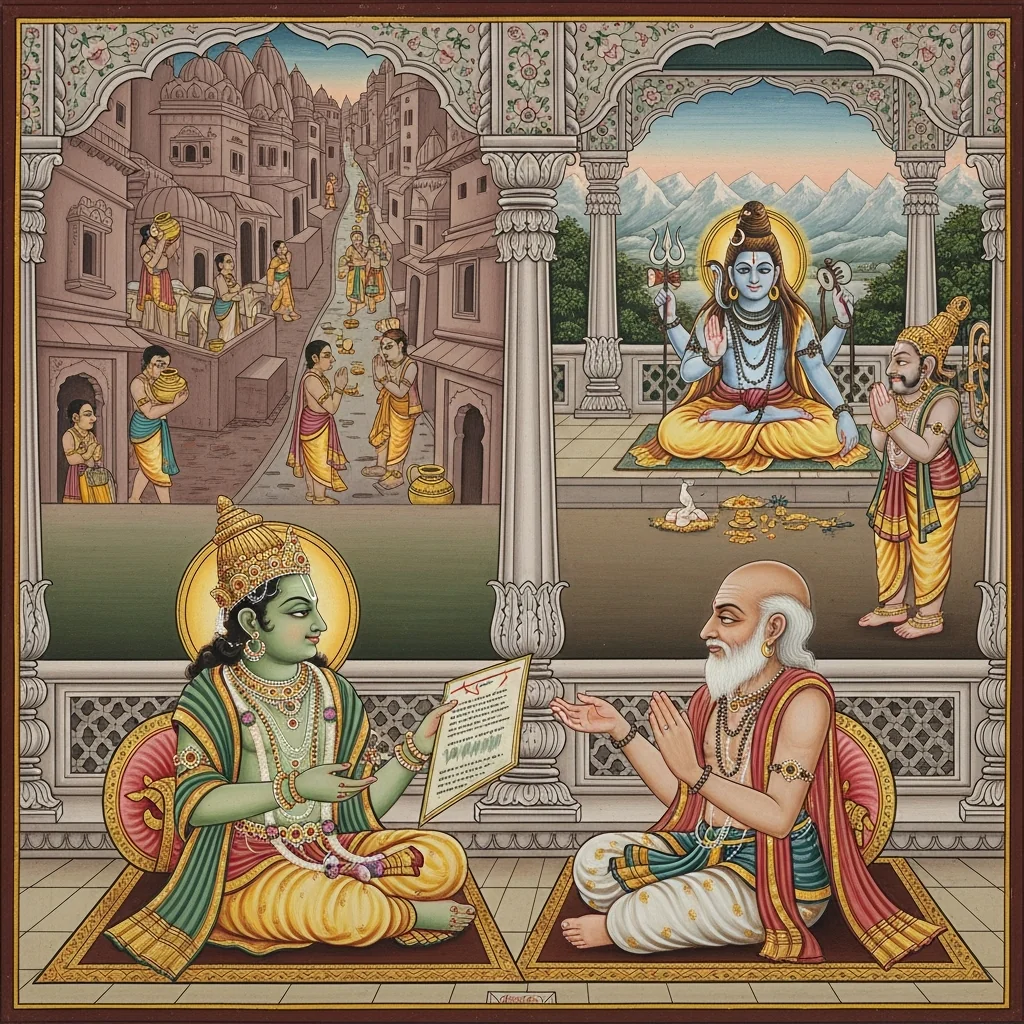
This chapter functions as a shrine-catalogue set within a theological dialogue. Skanda lists many liṅgas established in Kāśī by various gaṇas, giving their relative locations—north of Viśveśa, south of Kedāra, near Kubera, at an inner-house northern doorway—and attaching phalaśruti-style rewards to darśana (beholding) and arcana (worship). Shrines are named with their distinctive boons: Piṅgalākheśa; Vīrabhadreśvara granting “vīra-siddhi” and protection in battle; Kirāteśa bestowing fearlessness; Caturmukheśvara giving celestial honor; Nikuṃbheśvara near Kubera bringing success in work and exaltation; Pañcākṣeśa granting jati-smṛti (memory of former births); Lāṅgalīśvara removing disease and increasing prosperity; Virādheśvara mitigating offenses; Sumukheśa freeing from sin and granting auspicious vision; and Āṣāḍhīśvara cleansing sin with calendrical notes for pilgrimage. The latter half turns to Śiva’s reflective discourse: Kāśī is the final refuge for those burdened by saṃsāra, a “city-body” measured by the pañcakrośī, where even hearing or uttering “Vārāṇasī/Kāśī/Rudrāvāsa” counters the threat of Yama. The narrative culminates with Mahādeva commissioning Gaṇeśa, with attendants, to go to Kāśī to secure uninterrupted success and obstacle-free conditions, reaffirming Kāśī as an enduring ritual and theological center.
Shlokas
Verse 1
स्कंद उवाच । अन्येपि ये गणास्तत्र काश्यां लिंगानि चक्रिरे । तांश्च ते कथयिष्यामि कुंभयोने निशामय
Skanda said: “Other gaṇas too, there in Kāśī, established liṅgas. I shall also tell you about them—O Kumbhayoni, listen.”
Verse 2
गणेन पिंगलाख्येन पिंगलाख्येशसंज्ञितम् । लिंगं प्रतिष्ठितं शंभोः कपर्दीशादुदग्दिशि
By a gaṇa named Piṅgala, a liṅga of Śambhu was established, renowned as Piṅgalākhyeśa, to the north of Kapardīśa.
Verse 3
तस्य दर्शनमात्रेण पापानां जायते क्षयः । वीरभद्रो महाप्रीतो देवदेवस्य शूलिनः
By its mere sight, the destruction of sins arises. Vīrabhadra is greatly pleased with the Trident-bearing Lord, the God of gods.
Verse 4
वीरभद्रेश्वरं लिंगं ध्यायेदद्यापि निश्चलः । तस्य दर्शनमात्रेण वीरसिद्धिः प्रजायते
Even today, one should meditate steadily upon the Vīrabhadreśvara-liṅga; by its mere sight, heroic accomplishment is born.
Verse 5
अविमुक्तेश्वरात्पश्चाद्वीरभद्रेश्वरं नरः । समर्च्य न रणे भंगं कदाचिदपि चाप्नुयात्
After worshipping Avimukteśvara, a man should duly worship Vīrabhadreśvara; he will never, at any time, meet defeat in battle.
Verse 6
वीरभद्रः स्वयं साक्षाद्वीरमूर्तिधरो मुने । संहरेद्विप्रसंघातमविमुक्तनिवासिनाम
O sage, Vīrabhadra himself—manifest in a heroic form—would destroy the attacking host against the brāhmaṇas who dwell in Avimukta.
Verse 7
भद्रया भद्रकाल्या च भार्यया शुभया युतम् । वीरभद्रं नरोभ्यर्च्य काशीवासफलं लभेत्
Worshipping Vīrabhadra, accompanied by his auspicious consorts Bhadrā and Bhadrakālī, a man attains the fruit of dwelling in Kāśī.
Verse 8
किरातेन किरातेशं लिंगं काश्यां प्रतिष्ठितम् । केदाराद्दक्षिणे भागे भक्तानामभयप्रदम्
In Kāśī, the Kirāta established the liṅga called Kirāteśa. It stands to the south of Kedāra, granting fearlessness to devotees.
Verse 9
चतुर्मुखो गणः श्रीमान्वृद्धकालेश सन्निधौ । चतुर्मुखेश्वरं लिंगं ध्यायेदद्यापि निश्चलः
The illustrious gaṇa named Caturmukha, in the presence of Vṛddhakāleśa, even now meditates unwaveringly upon the liṅga called Caturmukheśvara.
Verse 10
भक्ताश्चतुर्मुखेशस्य चतुराननवद्दिवि । पूज्यंते सुरसंघातैः सर्वभोगसमन्विताः
In heaven, the devotees of Caturmukheśa are honored like the Four-Faced One, worshipped by hosts of gods, and endowed with every enjoyment.
Verse 11
निकुंभेश्वरमालोक्य निकुंभगणपूजितम् । पूजयित्वा व्रजन्ग्रामं कार्यसिद्धिमवाप्नुयात् । कुबेरेश समीपेतु शिवलोके महीयते
Having beheld Nikuṃbheśvara—worshipped by the gaṇas of Nikuṃbha—and having offered worship, when one returns to one’s village, one attains success in one’s undertakings. And near Kubereśa, one is honored in Śiva’s world.
Verse 12
पंचाक्षेशं महालिंगं महादेवस्य दक्षिणे । समभ्यर्च्य नरः काश्यां जातिस्मृतिमवाप्नुयात्
In Kāśī, having duly worshipped the great liṅga Pañcākṣeśa, situated to the south of Mahādeva, a person attains remembrance of former births.
Verse 13
भारभूतेश्वरं लिंगं भारभूतगणार्चितम् । अंतर्गृहोत्तरद्वारि ध्यात्वा शिवपुरे वसेत्
Meditating on the liṅga Bhārabhūteśvara—worshipped by the gaṇas of Bhārabhūta—at the northern doorway of the inner shrine, one comes to dwell in Śiva’s city (Śivapura).
Verse 14
भारभूतेश्वरं लिंगं यैः काश्यां न विलोकितम् । भारभूताः पृथिव्यास्तेऽवकेशिन इव द्रुमाः
Those who have not beheld the liṅga Bhārabhūteśvara in Kāśī are a burden upon the earth—like trees that are hollow and without worth.
Verse 15
गणेन त्र्यक्षसंज्ञेन लिंगं त्र्यक्षेश्वरं परम् । त्रिलोचनपुरोभागे शील्येताद्यापि कुंभज
By a gaṇa known as Tryakṣa, the supreme liṅga called Tryakṣeśvara was established. It is still worshipfully frequented in the forecourt of Trilocana—O Kumbhaja (Agastya).
Verse 16
तस्य लिंगस्य ये भक्तास्ते तु देहावसानतः । त्र्यक्षा एव प्रजायंते नात्र कार्या विचारणा
Those who are devotees of that liṅga, upon the end of the body, are indeed born as Tryakṣas; of this there is no need for doubt.
Verse 17
क्षेमको नाम गणपः काश्यां मूर्तिधरः स्वयम् । विश्वेश्वरं सर्वगतं ध्यायेदद्यापि निश्चलः
A gaṇa named Kṣemaka, himself embodied in Kāśī, even now meditates unwaveringly upon Viśveśvara, the all-pervading Lord.
Verse 18
क्षेमकं पूजयेद्यस्तु वाराणस्यां महागणम् । विघ्नास्तस्य प्रलीयंते क्षेमं स्याच्च पदेपदे
Whoever worships Kṣemaka, the great Gaṇa, in Vārāṇasī—his obstacles dissolve, and well-being attends him at every step.
Verse 19
देशांतरं गतो यस्तु तस्यागमनकाम्यया । क्षेमकं पूजनीयोत्र क्षेमेणाशु स आव्रजेत्
If one has gone to another country and longs to return, then here one should worship Kṣemaka; by that auspicious protection, he returns swiftly and safely.
Verse 20
लांगलीश्वरमालोक्य लिंगं लांगलिनार्चितम् । विश्वेशादुत्तरेभागे न नरो रोगभाग्भवेत्
Having beheld the Liṅga called Lāṃgalīśvara—worshipped by Lāṃgalin—situated to the north of Viśveśa, a man does not become a share-holder in disease.
Verse 21
लांगलीशं सकृत्पूज्य पंचलांगलदानजम् । फलं प्राप्नोत्यविकलं सर्वसंपत्करं परम्
By worshipping Lāṃgalīśa even once, one obtains the unimpaired fruit that arises from gifting five ploughs—supreme, and productive of every prosperity.
Verse 22
विराधेश्वरमाराध्य विराधगणपूजितम् । सर्वापराधयुक्तोपि नापराध्यति कुत्रचित्
By propitiating Virādheśvara—worshipped by the Gaṇa named Virādha—even one burdened with all offenses does not fall into offense anywhere.
Verse 23
दिनेदिनेपराधो यः क्रियते काशिवासिभिः । स याति संक्षयं क्षिप्रं विराधेश समर्चनात्
The daily offenses committed by the residents of Kāśī swiftly come to destruction through the proper worship of Virādheśa.
Verse 24
नैरृते दंढपाणस्तु विराधेशं प्रयत्नतः । नत्वा सर्वापराधेभ्यो मुच्यते नात्र संशयः
In the south-west, Daṇḍapāṇi—having bowed with effortful devotion to Virādheśa—one is freed from all offenses; of this there is no doubt.
Verse 25
सुमुखेशं महालिंगं सुमुखाख्यगणार्चितम् । पश्चिमाभिमुखं लिंगं दृष्ट्वा पापैः प्रमुच्यते
Having seen the great Liṅga called Sumukheśa—worshipped by the Gaṇa named Sumukha—this west-facing Liṅga frees one from sins.
Verse 26
स्नात्वा पिलिपिला तीर्थे सुमुखेशं विलोक्य च । सदैव सुमुखं पश्येद्धर्मराजं न दुर्मुखम्
After bathing at the Pilipilā Tīrtha and beholding Sumukheśa, one always sees Dharmarāja as gracious-faced—never as harsh-faced.
Verse 27
आषाढिनार्चितं लिंगमाषाढीश्वरसंज्ञकम् । दृष्ट्वाषाढयां नरो भक्त्या सर्वैः पापैः प्रमुच्यते
In the month of Āṣāḍha, whoever beholds with devotion the Liṅga known as Āṣāḍhīśvara—worshipped by Āṣāḍhin—is released from all sins.
Verse 28
उदीच्यां भारभूतेशादाषाढीशं समर्चयन् । आषाढ्यां पंचदश्यां वै न पापैः परितप्यते
In the northern quarter, beginning from Bhārabhūteśa, one who worships Āṣāḍhīśa on the fifteenth lunar day of Āṣāḍha is not afflicted by sins.
Verse 29
शुचिशुक्लचतुर्दश्यां पंचदश्यामथापि वा । कृत्वा सांवत्सरीं यात्रामनेना जायते नरः
On the fourteenth—or else the fifteenth—day of the bright fortnight of Śuci, a man who performs this annual pilgrimage attains through it the promised spiritual fruition.
Verse 30
स्कंद उवाच । मुने गणेषु चैतेषु वाराणस्यां स्थितेष्विति । स्वनाम्ना स्थाप्य लिंगानि विश्वेशपरितुष्टये
Skanda said: O sage, when these attendant hosts of Śiva thus came to dwell in Vārāṇasī, they established liṅgas bearing their own names, for the complete satisfaction of Viśveśa.
Verse 31
विश्वेशश्चिंतयां चक्रे पुनः काशीप्रवृत्तये । कं वा हितं प्रहित्याद्य निर्वृतिं परमां भजे
Viśveśa reflected again, intent on renewing the course of Kāśī’s sacred order: “Whom shall I benefit and send forth now, that I may partake of the supreme peace?”
Verse 32
योगिन्यस्तिग्मगुर्वेधाः शंकुकर्णमुखागणाः । व्यावृत्त्यनागताः काश्याः सिंधुगा इव सिंधवः
The Yoginīs and the gaṇas—Tigmagurvedhā and those led by Śaṅkukarṇa—turned back and did not return to Kāśī, like rivers that flow into the ocean.
Verse 33
धुवं काश्यां प्रविष्टा ये ते प्रविष्टा ममोदरे । तेषां विनिर्गमो नास्ति दीप्तेग्नौ हविषामिव
Surely, those who have entered Kāśī have entered into my very belly; for them there is no going out—like oblations cast into a blazing fire.
Verse 34
येषां हि संस्थितिः काश्यां लिंगार्चनरतात्मनाम् । त एव मम लिंगानि जंगमानि न संशयः
Indeed, those whose dwelling is in Kāśī—whose hearts delight in worship of the liṅga—those very ones are my moving liṅgas; of this there is no doubt.
Verse 35
स्थावरा जंगमाः काश्यामचेतनसचेतनाः । सर्वे ममैव लिंगानि तेभ्यो द्रुह्यंति दुर्धियः
In Kāśī, the immobile and the mobile—insentient and sentient—are all my liṅgas indeed. Those of wicked understanding commit offense against them.
Verse 36
वाचि वाराणसी येषां श्रुतौ वैश्वेश्वरी कथा । त एव काशी लिंगानि वराण्यर्च्यान्यहं यथा
Those on whose lips is “Vārāṇasī”, and in whose hearing is the sacred account of Viśveśvara—those very ones are Kāśī’s blessed liṅgas, worthy of worship, just as I am.
Verse 37
वाराणसीति काशीति रुद्रावास इति स्फुटम् । मुखाद्विनिर्गतं येषां तेषां न प्रभवेद्यमः
For those from whose mouth clearly issues the utterance “Vārāṇasī,” “Kāśī,” “Rudra’s abode,” Yama does not prevail over them.
Verse 38
आनंदकाननं प्राप्य ये निरानंदभूमिकाम् । अन्यां हृदापि वांछंति निरानंदाः सदात्र ते
Even after reaching Ānandakānana (Kāśī, the Forest of Bliss), those who still long in their hearts for some other joyless ground remain, indeed, perpetually devoid of bliss here.
Verse 39
अद्यैव वास्तुमरणं बहुकालांतरेपि वा । कलिकाल भिया पुंसां काशी त्याज्या न कर्हिचित्
Whether death comes today itself or after a long time, out of fear of the Kali age a person should never abandon Kāśī.
Verse 40
अवश्यंभाविनो भावा भविष्यंति पदेपदे । सलक्ष्मीनिलयां काशीं ते त्यजंति कुतो धियः
Inevitable events arise at every step; how could the wise ever abandon Kāśī, the abode where auspicious Lakṣmī dwells?
Verse 41
वरं विघ्नसहस्राणि सोढव्यानि पदेपदे । काश्यां नान्यत्र निर्विघ्नं वांछेद्राज्यमपि क्वचित्
Better to endure thousands of obstacles at every step in Kāśī than, elsewhere, to desire a trouble-free kingdom.
Verse 42
कियन्निमेषसंभोग्याः संति लक्ष्म्याः पदेपदे । परं निरंतरसुखाऽमुत्राप्यत्रापि का शिका
How much prosperity is there that is enjoyed only for a blink, at every step? Yet Kāśikā bestows unbroken happiness—both here and in the hereafter.
Verse 43
विश्वनाथो ह्यहं नाथः काशिकामुक्तिकाशिका । सुधातरंगा स्वर्गंगा त्रय्येषा किन्न यच्छति
I am Viśvanātha, the Lord; Kāśikā is the bestower of liberation. This heavenly Gaṅgā, whose waves are like nectar—what indeed does this triad not grant?
Verse 44
पंचक्रोश्यापरिमिता तनुरेषा पुरी मम । अविच्छिन्नप्रमाणर्धिर्भक्तनिर्वाणकारणम्
This city of Mine—measured as the Pañcakrośī—is My very body; its sacred extent is unbroken, and it is a cause of liberation for devotees.
Verse 45
संसारभारखिन्नानां यातायातकृतां सदा । एकैव मे पुरी काशी ध्रुवं विश्रामभृमिका
For those worn down by the burden of saṃsāra and forever engaged in coming and going, Kāśī alone—My city—is truly the assured ground of rest.
Verse 46
मंडपः कल्पवल्लीनां मनोरथफलैरलम् । फलितः काशिकाख्योयं संसाराध्वजुषां सदा
This Kāśikā, ever for those who tread the road of saṃsāra, is like a pavilion of wish-fulfilling creepers, abundantly laden with the fruits of heartfelt desires.
Verse 47
चक्रवर्तेरियं छत्रं विचित्रं सर्वतापहृत् । काशीनिर्वाणराजस्य ममशूलोच्च दंडवत्
This wondrous parasol of the cakravartin removes every affliction; for Kāśī, the King of Nirvāṇa, it stands like a staff raised on high, like My trident.
Verse 48
निर्वाणलक्ष्मीं ये पुण्याः परिवांछंति लीलया । निरंतरसुखप्राप्त्यै काशी त्याज्या न तै नृभिः
Those blessed souls who, as if playfully, yearn for the Lakṣmī of Nirvāṇa—seeking uninterrupted happiness—should never abandon Kāśī.
Verse 49
ममानंदवने ये वै निरं तर वनौकसः । मोक्षलक्ष्मीफलान्यत्र सुस्वादूनि लभंति ते
Those who dwell continually in My Ānandavana obtain there the delicious fruits of the grace of Mokṣa, the Lakṣmī of liberation.
Verse 50
निर्ममं चापि निर्मोहं या मामपि विमोहयेत् । कैर्न संस्मरणीया सा काशी विश्वविमोहिनी
She who can enchant even one who is without possessiveness and delusion—even me—how could that Kāśī, the Enchantress of the whole world, not be remembered by anyone?
Verse 51
नामापि मधुरं यस्याः परानंदप्रकाशकम् । काश्याः काशीति काशीति सा कैः पुण्यैर्न जप्यते
Even the very name of Kāśī is sweet and reveals supreme bliss. By what merit would anyone not chant her name—“Kāśī, Kāśī”?
Verse 52
काशीनामसुधापानं ये कुर्वंति निरंतरम् । तेषां वर्त्म भवत्येव सुधाम वसुधामयम्
For those who continually “drink” the amṛta-nectar of Kāśī’s holy Name, their very path becomes as though made of nectar, and the earth itself turns into a realm of sweetness.
Verse 53
ममतारहितस्यापि मम सर्वात्मनो ध्रुवम् । त एव मामका लोके ये काशीनाम जापकाः
Though I am free from possessiveness and am the Self of all, it is certain: in this world, those who repeat Kāśī’s Name are truly “mine”—my very own.
Verse 54
रहस्यमिति विज्ञाय वाराणस्या गणेश्वरैः । सब्रह्मयोगिनी ब्रध्रैः स्थितं तत्रैव नान्यथा
Knowing it to be a sacred secret, the lords of the gaṇas of Vārāṇasī—together with Brahmā and the elder yoginīs—remain established there alone, and nowhere else.
Verse 55
अन्यथा ताश्च योगिन्यः सरविः सपितामहः । ते गणा मां परित्यज्य कथं तिष्ठेयुरन्यतः
Otherwise, how could those yoginīs—and even the Sun and Pitāmaha Brahmā—those gaṇas, abandon me and remain anywhere else?
Verse 56
अतीव भद्रं संजातं काश्यां तिष्ठत्सु तेषु हि । एकोपि भेद प्रभवेद्राज्ये राज्यांतरं विना
Indeed, great auspiciousness has arisen when they remain in Kāśī; for even a single division can create “another kingdom” within a kingdom.
Verse 57
लब्धप्रवेशास्तावंतस्ते सर्वे मत्स्वरूपिणः । यतिष्यंति यतोवश्यं मदागमनहेतवे
Having gained entry there, all of them—however many—are of my very form; and they will strive in every possible way to bring about my coming.
Verse 58
अन्यानपि प्रेषयामि मत्पार्श्वपरिवर्तिनः । ये ते तत्र स्थिताः श्रेष्ठा अपिगंतास्म्यहं ततः
“I shall send others too—those who move about in my immediate retinue. And those excellent ones who are stationed there—after that, I myself shall also come there.”
Verse 59
विचार्येति महादेवः समाहूय गजाननम् । प्राहिणोत्कथयित्वेति गच्छ काशीमितः सुत
Having thus deliberated, Mahādeva summoned Gajānana and dispatched him, saying, “Go from here to Kāśī, my son, and convey this message.”
Verse 60
तत्रस्थितोपि संसिद्धयै यतस्व सहितो गणैः । निर्विघ्नं कुरु चास्माकं नृपे विघ्नं समाचर
“Even while staying there, strive for the successful accomplishment of the purpose, together with your gaṇas. Make our work free of obstacles—and, for that king, bring about obstacles.”
Verse 61
आधाय शासनं मूर्ध्नि गणाधीशोथ धूर्जटेः । प्रतस्थे त्वरितः काशीं स्थितिज्ञः स्थितिहेतवे
Placing Dhūrjaṭi’s command upon his head, the Lord of the Gaṇas then set out swiftly for Kāśī—knowing what is proper order, to secure and uphold that order.