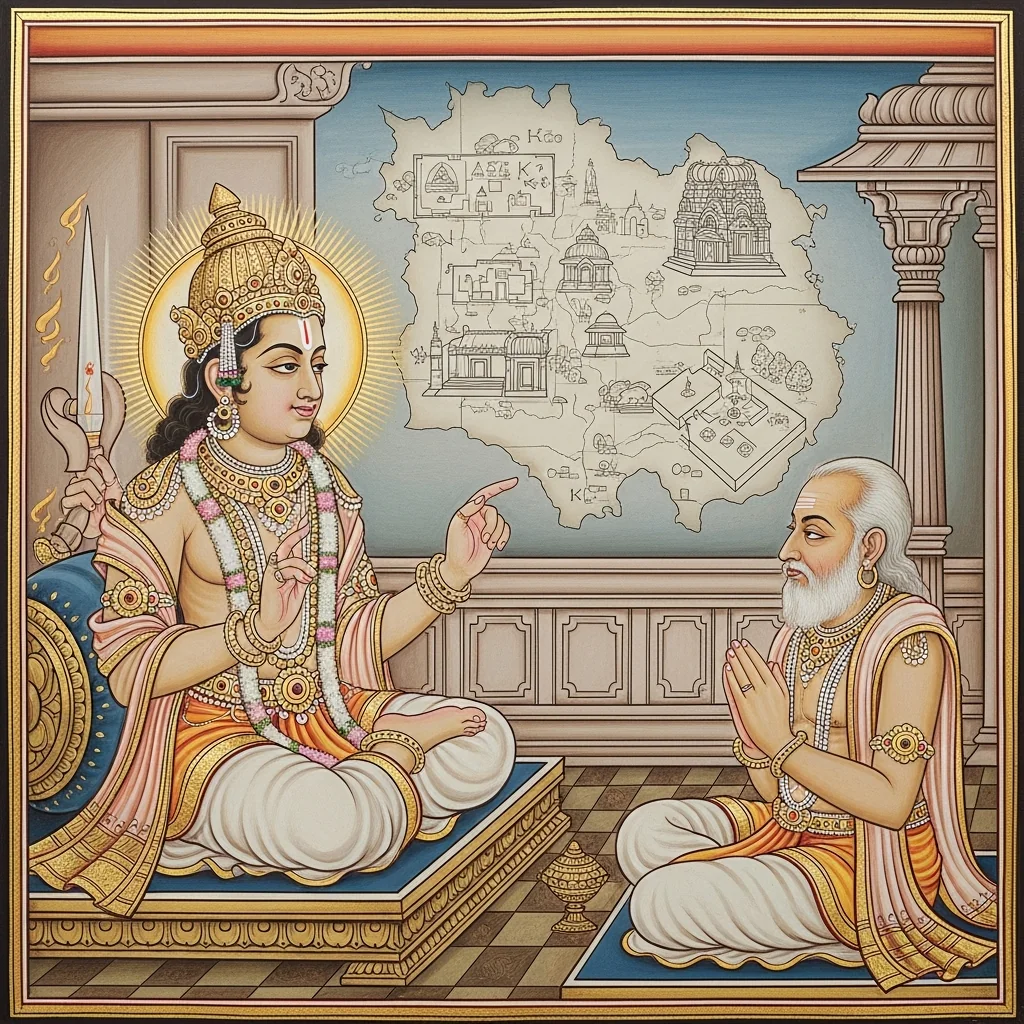
Adhyaya 19
Skanda instructs Agastya on the many liṅgas in Kāśī that disciplined seekers worship and serve for the sake of liberation. The chapter proceeds as a sacred catalogue: Nandin reports to Śiva the splendor of Kāśī’s shrines and how numerous liṅgas and tīrtha-potencies have been relocated to, or manifested within, the city. Site after site is named with directions and nearby markers (Vināyaka shrines, kuṇḍas, particular quarters), and each is paired with a phala statement—destruction of sin, attainment of siddhi, victory, fearlessness in the Kali age, avoidance of harmful rebirth, or reaching Śiva’s realm. A key doctrinal theme is sacred condensation: rites performed at Kāśī’s localized equivalents are said to yield multiplied merit compared with distant kṣetras such as Kurukṣetra, Naimiṣa, Prabhāsa, and Ujjayinī. The narrative especially exalts Avimukta and the Mahādeva-liṅga as foundational to Kāśī’s identity as a field of liberation, while also describing protective deities and the city’s enduring sanctity across cosmic cycles.
Shlokas
Verse 1
स्कंद उवाच । शृण्वगस्त्य तपोराशे काश्यां लिंगानि यानि वै । सेवितानि नृणां मुक्त्यै भवेयुर्भावितात्मनाम्
Skanda said: Listen, O Agastya, treasury of austerity—of the Śiva-liṅgas in Kāśī which, when worshipped, become causes of liberation for men of purified and disciplined minds.
Verse 2
कृत्तिप्रावरणं यत्र कृतं देवेन लीलया । रुद्रावास इति ख्यातं तत्स्थानं सर्वसिद्धिदम्
That place where the God, in divine play, fashioned a garment of skin is famed as “Rudrāvāsa”; that holy spot bestows every attainment.
Verse 3
स्थिते तत्रोमया सार्धं स्वेच्छया कृत्तिवाससि । आगत्य नंदी विज्ञप्तिं चक्रे प्रणतिपूर्वकम्
While He dwelt there with Umā, by His own will, at Kṛttivāsa, Nandī came and, after bowing down, made a reverent petition.
Verse 4
देवदेवेश विश्वेश प्रासादाः सुमनोहराः । सर्वरत्नमया रम्याः साष्टाषष्टिरभूदिह
O God of gods, Lord of the universe—here there came to be sixty-eight exceedingly charming palaces, delightful and fashioned of every kind of jewel.
Verse 5
भूर्भुवःस्वस्तले यानि शुभान्यायतनानि हि । मुक्तिदान्यपि तानीह मयानीतानि सर्वतः
Whatever auspicious sanctuaries exist in the realms of earth, mid-space, and heaven—even those that grant liberation—all of them have been brought here by me from every direction.
Verse 6
यतो यच्च समानीतं यत्र यच्च कृतास्पदम् । कथयिष्याम्यहं नाथ क्षणं तदवधार्यताम्
From where each was brought, and where each has been established as its seat—I shall tell it, O Lord; please attend for a moment and consider it.
Verse 7
स्थाणुर्नाम महालिंगं देवदेवस्य मोक्षदम् । कुरुक्षेत्रादिहोद्भूतं कलाशेषोस्ति तत्र वै
There is a great Liṅga named Sthāṇu, bestowing liberation (mokṣa) by the grace of the Lord of gods. It has arisen here from Kurukṣetra; and there, indeed, a remaining portion (kalā-śeṣa) abides.
Verse 8
तदग्रे सन्निहत्याख्या महापुष्करिणी शुभा । लोलार्क पश्चिमे भागे कुरुक्षेत्रस्थली तु सा
Before it lies the auspicious great sacred tank called Sannihatyā. To the west of Lolārka is that holy ground known as the Kurukṣetra-site (within Kāśī).
Verse 9
तत्र स्नातं हुतं जप्तं तप्तं दत्तं शुभार्थिभिः । कुरुक्षेत्राद्भवेत्सत्यं कोटिकोटिगुणाधिकम्
Bathing there, offering oblations, reciting mantras, performing tapas (austerities), and giving gifts—done by seekers of auspiciousness—truly yields merit surpassing that of Kurukṣetra by tens of millions upon tens of millions of times.
Verse 10
नैमिषाद्देवदेवोत्र ब्रह्मावर्तेन संयुतः । तत्रांशमात्रं संस्थाप्य काश्यामाविरभूद्विभो
From Naimiṣa the God of gods came here, in association with Brahmāvarta. Establishing there only a portion of himself, the mighty Lord manifested in Kāśī.
Verse 11
ढुंढिराजोत्तरेभागे सिद्धिदं साधकस्य वै । लिंगं वै देवदेवाख्यं तदग्रे कूप उत्तमः
To the north of Ḍhuṃḍhirāja is the Liṅga called Devadeva, which grants siddhi to the sādhaka; and before it stands an excellent well.
Verse 12
ब्रह्मावर्त इति ख्यातः पुनरावृत्तिहृन्नृणाम् । तत्कूपाद्भिः कृतस्नानो देवदेवं समर्च्य च
It is renowned as Brahmāvarta, the place that removes for human beings the return to rebirth. Having bathed with the water of that well, and having duly worshipped Devadeva…
Verse 13
तत्पुण्यं नैमिषारण्यात्कोटिकोटिगुणं स्मृतम् । गोकर्णायतनादत्र स्वयमाविरभून्महत्
The merit of that is remembered as tens of millions upon tens of millions of times greater than that of Naimiṣāraṇya. Here, from the shrine of Gokarṇa, the Great One manifested of his own accord.
Verse 14
लिंगं महाबलं नाम सांबादित्यसमीपतः । दर्शनात्स्पर्शनाद्यस्य क्षणादेनो महाबलम्
Near Sāmbāditya is the liṅga named Mahābala. By merely seeing it or touching it, mighty sin is destroyed in an instant.
Verse 15
वाताहतस्तूलराशिरिव विद्राति दूरतः । कपालमोचनपुरो दृष्ट्वा लिंगं महाबलम्
Just as a heap of cotton, struck by the wind, is scattered far away, so (sin) flees to a distance when one beholds the Mahābala liṅga at Kapālamocana, the sacred place of skull-release.
Verse 16
महाबलमवाप्नोति निवार्णनगरं व्रजेत् । ऋणमोचनतः प्राच्यां प्रभासात्क्षेत्रसत्तमात्
Through Mahābala one attains great strength, and one should proceed to the city called Nivārṇa. (This merit is said to excel) the eastern Ṛṇamocana and even Prabhāsa, the best of sacred fields.
Verse 17
शशिभूषणसंज्ञं तु लिंगमत्र प्रतिष्ठितम् । तल्लिंगसेवनान्मर्त्यः शाशिभूषणतां व्रजेत्
Here the liṅga known as Śaśibhūṣaṇa is स्थापित. By devoted service to that liṅga, a mortal attains the state of Śaśibhūṣaṇa, sharing in that divine dignity.
Verse 18
प्रभासक्षेत्रयात्रायाः पुण्यं प्राप्नोति कोटिकृत् । उज्जयिन्या महाकालः स्वयमत्रागतो विभुः
By undertaking pilgrimage here, one gains sacred merit a crore-fold, as though from countless journeys to Prabhāsa. The all-pervading Lord Mahākāla Himself has come here from Ujjayinī.
Verse 19
यन्नामस्मरणादेव न भयं कलिकालतः । प्रणवाख्यान्महालिंगात्प्राच्यां कल्मषनाशनम्
By the mere remembrance of His Name, there is no fear even in the age of Kali. In the eastern quarter stands the great liṅga called Praṇava, the destroyer of sin.
Verse 20
महाकालाभिधं लिंगं दर्शनान्मोक्षदं परम् । अयोगंधेश्वरं लिंगं पुष्करात्तीर्थसत्तमात्
The liṅga known as Mahākāla grants supreme liberation by its very darśana, the sacred sight. And the liṅga called Ayogaṃdheśvara has come from Puṣkara, the best of tīrthas.
Verse 21
आविरासीदिह महत्पुष्करेण सहैव तु । मत्स्योदर्युत्तरेभागे दृष्ट्वा ऽयोगंधमीश्वरम्
It manifested here together with the great Puṣkara. In the northern part of Matsyodarī, having beheld Lord Ayogaṃdha, one is blessed thereby.
Verse 22
स्नात्वाऽयोगंधकुंडे तु भवात्तारयते पितॄन् । महानादेश्वरं लिंगमट्टहासादिहागतम्
By bathing in the Ayogaṃdha-kuṇḍa, one delivers the ancestors from worldly bondage. The Liṅga Mahānādeśvara has come here from Aṭṭahāsa.
Verse 23
त्रिलोचनादुदीच्यां तु तद्दृष्टमुक्तये मतम् । महोत्कटेश्वरं लिंगं मरुत्कोटादिहागतम् । कामेश्वरोत्तरे भागे दृष्टं विमलसिद्धिदम्
To the north of Trilocana, its darśana is held to grant liberation. The Liṅga Mahotkaṭeśvara has come here from Marutkoṭa. In the northern part of Kāmeśvara, its sight bestows stainless spiritual attainment.
Verse 24
विश्वस्थानादिहायातं लिंगं वै विमलेश्वरम् । स्वर्लीनात्पश्चिमे भागे दृष्टं विमलसिद्धिदम्
The Liṅga Vimalēśvara has come here from Viśvasthāna. In the western part near Svarlīna, its darśana grants stainless spiritual accomplishment.
Verse 25
महाव्रतं महालिंगं महेंद्रादिह संस्थितम् । स्कंदेश्वर समीपे तु महाव्रतफलप्रदम्
Here is established the great Liṅga called Mahāvrata, brought from Mahendra. Near Skandeśvara, it bestows the fruits of the great vow.
Verse 26
वृंदारकर्षिवृंदानां स्तुवतां प्रथमे युगे । उत्पन्नं यन्महालिंगं भूमिं भित्त्वा सुदुर्भिदाम्
In the first age, when hosts of sages and celestial beings were praising, that great Liṅga arose, splitting the earth—hard to pierce—open.
Verse 27
महादेवेति तैरुक्तं यन्मनोरथपूरणात । वाराणस्यां महादेवस्तदारभ्याभवच्च यत्
Because it fulfilled their cherished desires, they called it “Mahādeva.” From that time onward, in Vārāṇasī, it became established as Mahādeva.
Verse 28
मुक्तिक्षेत्रं कृतं येन महालिंगेन काशिका । अविमुक्ते महादेवं यो द्रक्ष्यत्यत्रमानवः
By that great Liṅga through which Kāśikā (Vārāṇasī) has been made the “Field of Liberation”—the human being who beholds Mahādeva here in Avimukta…
Verse 29
शंभुलोके गमस्तस्य यत्रतत्र मृतस्य हि । अविमुक्ते प्रयत्नेन तत्संसेव्यं मुमुक्षुभिः
For one who dies—wherever that death may occur—his course is to Śambhu’s world. Therefore, those who seek liberation should, with earnest effort, resort to and serve Avimukta.
Verse 30
कल्पांतरेपि न त्यक्तं कदाप्यानंदकाननम् । येन लिंगस्वरूपेण महादेवेन सर्वथा
Even at the end of a kalpa, Ānandakānana is never abandoned, because Mahādeva, in every way, abides there in the very form of the Liṅga.
Verse 31
तत्प्रसादोयमतुलः सर्वरत्नमयः शुभः । हिरण्यगर्भतीर्थाच्च प्रतीच्यां क्षेत्ररक्षकम्
This incomparable grace of his is auspicious and made of all jewels; and from Hiraṇyagarbha-tīrtha, on the western side, (stands) the protector of the sacred territory.
Verse 32
वाराणस्यामधिष्ठात्री देवता साभिलाषदा । महादेवेति संज्ञा वै सर्वलिंगस्वरूपिणी
The presiding deity of Vārāṇasī, bestower of desired aims, is indeed known as “Mahādevā”; she embodies the forms of all Liṅgas.
Verse 33
वाराणस्यां महादेवो दृष्टो यैर्लिंगरूपधृक् । तेन त्रैलोक्यलिंगानि दृष्टानीह न संशयः
Whoever has seen Mahādeva in Vārāṇasī—He who bears the form of the Liṅga—has thereby seen the Liṅgas of the three worlds; of this there is no doubt.
Verse 34
वाराणस्यां महादेवं समभ्यर्च्य सकृन्नरः । आभूतसंप्लवं यावच्छिवलोके वसेन्मुदा
A person who worships Mahādeva in Vārāṇasī even once will dwell joyfully in Śiva’s world until the dissolution of beings.
Verse 35
पवित्रपर्वणि सदा श्रावणे मासि यत्नतः । लिंगे पवित्रमारोप्य महादेवे न गर्भभाक्
On the sacred Pavitraparvan, especially in the month of Śrāvaṇa, one should carefully place the ‘pavitra’ thread or garland upon the Liṅga; by offering it to Mahādeva, one does not enter the womb again (is freed from rebirth).
Verse 36
पितामहेश्वरं लिंगं गयातीर्थादिहागतम् । फल्ग्रुप्रभृतिभिस्तीर्थैः सार्धकोट्यष्टसंमितैः
The Liṅga called Pitāmaheśvara has come here from Gayā-tīrtha, accompanied by sacred fords such as the Phalgu and others—numbering eight and a half crores.
Verse 37
धर्मेण यत्र वै तप्तं युगानामयुतं शतम् । साक्षीकृत्य महालिंगं श्रीमद्धर्मेश्वराभिधम्
There, Dharma indeed performed tapas for a hundred thousand yugas, taking as witness the Great Liṅga renowned as the glorious Dharmeśvara.
Verse 38
पितामहेश्वरं लिंगं तत्राभ्यर्च्य नरो मुदा । त्रिःसप्तकुलसंयुक्तो मुच्यते नात्र संशयः
Having joyfully worshipped there the Liṅga known as Pitāmaheśvara, a man—together with thrice-seven (twenty-one) generations—attains liberation; of this there is no doubt.
Verse 39
प्रयागात्तीर्थराजाच्च शूलटंको महेश्वरः । तीर्थराजेन सहितः स्थित आगत्य वै स्वयम्
From Prayāga, from the King of Tīrthas, Maheśvara as Śūlaṭaṅka came of His own accord and took His station here, accompanied by that Lord of Tīrthas.
Verse 40
निर्वाणमंडपाद्रम्यादवाच्यामतिनिर्मलः । प्रासादो मेरुणा यस्य स्पर्धते कांचनोज्वलः
Because of the charming Nirvāṇa-maṇḍapa, there stands a temple-palace of indescribable purity, radiant with gold, whose splendor competes with Mount Meru.
Verse 41
देवेनैव वरो दत्तो यत्र पूर्वं युगांतरे । पूज्यो महेश्वरः काश्यां प्रथमं कलुषापहः
In that place, in a former age, the God Himself granted a boon: that Maheśvara should be worshipped first in Kāśī—He who removes impurity and sin.
Verse 42
यः प्रयाग इह स्नातो नमस्यति महेश्वरम् । समभ्यर्च्य विधानेन महासंभारविस्तरैः
Whoever, having bathed at Prayāga, comes here and bows to Maheśvara, and worships Him according to proper rule with abundant offerings and requisites—
Verse 43
प्रयागस्नानजात्पुण्याच्छूलटंक विलोकनात् । स प्राप्नुयान्न संदेहः पुण्यं कोटिगुणोत्तरम्
From the merit born of bathing at Prayāga, and from beholding Śūlaṭaṅka, one surely obtains—without doubt—merit increased by ten millionfold.
Verse 44
शंकुकर्णान्महाक्षेत्रान्महातेज इतीरितम् । लिंगमाविरभूदत्र महातेजोविवृद्धिदम्
From the great sacred region of Śaṅkukarṇa, there manifested here a liṅga proclaimed as Mahāteja—bestowing an increase of great spiritual radiance.
Verse 45
महातेजोनिधिस्तस्य प्रासादोतीवनिर्मलः । ज्वालाजटिलिताकाशो माणिक्यैरेव निर्मितः
Its temple is a treasury of Mahāteja—exceedingly pure—built as though of rubies alone, with the sky above appearing tangled with flames of its radiance.
Verse 46
तल्लिंगदर्शनात्स्पर्शात्स्तवनाच्च समर्चनात् । प्राप्यते तत्परं धाम यत्र गत्वा न शोचते
By seeing that liṅga, by touching it, by praising it, and by worshipping it well, one attains that supreme abode—having reached which, one does not grieve.
Verse 47
विनायकेश्वरात्पूर्वं महातेजः समर्चनात् । तेजोमयेन यानेन याति माहेश्वरं पदम्
One who duly worships Mahāteja first—before approaching Vināyakeśvara—proceeds to the Māheśvara state, borne upon a vehicle fashioned of radiance itself.
Verse 48
रुद्रकोटिसमाख्यातात्तीर्थात्परमपावनात् । महायोगीश्वरं लिंगमाविश्चक्रे स्वयं परम्
From the supremely purifying sacred ford known as “Rudra-koṭi,” the Supreme Lord Himself manifested the liṅga called Mahāyogīśvara.
Verse 49
पार्वतीश्वर लिंगस्य समीपे सर्वसिद्धिकृत् । तल्लिंगदर्शनात्पुंसां कोटिलिंग फलं भवेत्
Near the liṅga of Pārvatīśvara, bestower of all attainments, merely beholding that liṅga grants people the merit equal to worshipping a crore of liṅgas.
Verse 50
तत्प्रासादस्य परितो रुद्राणां कोटिसंमिताः । प्रासादारम्यसंस्थाना निर्मिता रुद्रमूर्तिभिः
All around that shrine were established delightful temple-enclosures, numbering a crore, fashioned by the very forms of Rudra.
Verse 51
काश्यां रुद्रस्थली सा तु पठ्यते वेदवादिभिः । रुद्रस्थल्यां मृता ये वै कृमिकीटपतंगकाः
In Kāśī, that place is renowned among the expounders of the Vedas as “Rudrasthalī.” Indeed, even worms, insects, and moths that die in Rudrasthalī…
Verse 52
पशुपक्षिमृगा मर्त्या म्लेच्छा वाप्यथ दीक्षिताः । तेषां तु रुद्रीभूतानां पुनरावृत्तिरत्र न
Be they cattle, birds, wild beasts, human beings, foreigners, or even the initiated—once here they become “Rudra-formed,” united with Rudra, there is no return for them to rebirth.
Verse 53
जन्मांतरसहस्रेषु यत्पापं समुपार्जितम् । रुद्रस्थलीं प्रविष्टस्य तत्सर्वं व्रजति क्षयम्
Whatever sin has been amassed through thousands of lifetimes—upon entering Rudrasthalī, all of it is brought to destruction.
Verse 54
अकामो वा सकामो वा तिर्यग्योनिगतोपि वा । रुद्रस्थल्यां त्यजन्प्राणान्परं निर्वाणमाप्नुयात्
Whether desireless or desire-driven—even if born from an animal womb—one who relinquishes the life-breath in Rudrasthalī attains the supreme nirvāṇa.
Verse 55
स्वयमेकांबरात्क्षेत्रात्कृत्तिवासा इहागतः । कृत्तिवाससि लिंगेत्र स्वयमेव व्यवस्थितः
Kṛttivāsā Himself came here from the sacred kṣetra of Ekāmbara, and in this liṅga of Kṛttivāsa He is established by His own will.
Verse 56
अस्मिन्स्थाने स्वभक्तानां सांबः सर्षिगणो विभुः । स्वयं चोपदिशेद्ब्रह्म श्रुतौ श्रुतिभिरीडितम्
In this place, the all-powerful Lord Śiva—Sāmbā, together with the hosts of ṛṣis—personally instructs His devotees in Brahman, that truth praised in the Śruti and by the Śrutis.
Verse 57
क्षेत्रेत्र सिद्धिदे प्राप्तश्चंडीशो मरुजांगलात् । प्रचंडपापसंघातं खंडयेच्छतधेक्षणात्
In this most sacred kṣetra, Caṇḍīśa arrived from Marujāṅgala; at the mere sight of him, fierce masses of sin are shattered to pieces.
Verse 58
पाशपाणिगणाध्यक्ष समीपे यः प्रपश्यति । चंडीश्वरं महालिंगं स याति परमां गतिम्
Whoever beholds the great Liṅga called Caṇḍīśvara, set near the gaṇa-chief who bears the pāśa (noose) in his hand, attains the supreme state.
Verse 59
कालंजरान्नीलकंठस्तिष्ठेदत्र स्वयं विभुः । गणेशाद्दंतकूटाख्यात्समीपे भवनाशनः
Here the all-powerful Lord Nīlakaṇṭha Himself abides, having come from Kālañjara; and Bhavanāśana is situated nearby, close to Gaṇeśa known as Dantakūṭa.
Verse 60
नीलकंठेश्वरं लिंगं काश्यां यैः परिपूजितम् । नीलकंठास्त एव स्युस्तएव शशिभूषणाः
Those who duly worship the Liṅga of Nīlakaṇṭheśvara in Kāśī become like Nīlakaṇṭha Himself; indeed, they become like the Lord adorned with the moon.
Verse 61
काश्मीरादिह संप्राप्तं लिंगं विजयसंज्ञितम् । सदा विजयदं पुंसां प्राच्यां शालकटंकटात्
A Liṅga that came here from Kāśmīra, known as “Vijaya,” bestows victory upon people at all times; it is located to the east, from Śālakaṭaṅkaṭa.
Verse 62
रणे राजकुले द्यूते विवादे सर्वदैव हि । विजयो जायते पुंसां विजयेश समर्चनात्
In battle, in royal courts, in games of chance, and in disputes—indeed at all times—victory arises for people through the proper worship of Vijayeśa.
Verse 63
ऊर्ध्वरेतास्त्रिदंडायाः संप्राप्तोत्र स्वयं विभुः । कूश्मांडकं गणाध्यक्षं पुरस्कृत्य व्यवस्थितः
Here the Lord Himself has arrived from Tridaṇḍā as Ūrdhvaretā, and He is established after placing before Him Kūśmāṇḍaka, the chief of the gaṇas.
Verse 64
ऊर्ध्वां गतिमवाप्नोति वीक्षणादूर्ध्वरेतसः । ऊर्ध्वरेतसि ये भक्ता न हि तेषामधोगतिः
By merely beholding Ūrdhvaretā, one attains the upward path. Those who are devotees of Ūrdhvaretā never fall into a downward destiny.
Verse 65
मंडलेश्वरतः क्षेत्राल्लिंगं श्रीकंठसंज्ञितम् । विनायकान्मंडसंज्ञादुत्तरस्यां व्यवस्थितम्
From the sacred precinct of Maṇḍaleśvara is the Liṅga known as Śrīkaṇṭha; it is established to the north, near the Vināyaka called Maṇḍa.
Verse 66
श्रीकंठस्य च ये भक्ताः श्रीकंठा एव ते नराः । नेह श्रिया वियुज्यंते न परत्र कदाचन
Those who are devotees of Śrīkaṇṭha are themselves ‘Śrīkaṇṭhas’ (blessed like Him). They are never separated from prosperity—neither here nor ever in the world beyond.
Verse 67
छागलांडान्महातीर्थात्कपर्दीश्ववरसंज्ञितः । पिशाचमोचने तीर्थे स्वयमाविरभूद्विभुः
From the great tīrtha called Chāgalāṇḍa, the all-powerful Lord manifested of His own accord at the Piśācamocana tīrtha, bearing the name Kapardīśvara.
Verse 68
कपर्दीशं समभ्यर्च्य न नरो निरयं व्रजेत् । न पिशाचत्वमाप्नोति कृत्वात्राप्यघमुत्तमम्
Having duly worshipped Kapardīśa (Śiva) here, no man goes to hell. Even if he has committed very grave sin, he does not fall into the state of a piśāca.
Verse 69
आम्रातकेश्वरात्क्षेत्राल्लिंगं सूक्ष्मेश संज्ञितम् । स्वयमभ्यागतं चात्र क्षेत्रे वै श्रेयसांपदे
From the sacred area of Āmrātakeśvara, the Liṅga known as Sūkṣmeśa came here of its own accord, in this holy field that is truly the abode of auspicious welfare.
Verse 70
विकट द्विजसंज्ञस्य गणेशस्य समीपतः । दृष्ट्वा सूक्ष्मेश्वरं लिंगं गतिं सूक्ष्मामवाप्नुयात्
Near Gaṇeśa—known as Vikaṭa (and also called Dvija)—one who beholds the Liṅga of Sūkṣmeśvara attains a subtle, exalted passage, a refined spiritual destiny.
Verse 71
संप्राप्तमिह देवेशं जयंतं मधुकेश्वरात् । लंबोदराद्गणपतेः पुरस्तात्तदवस्थितम्
Here the Lord of gods, Jayaṃta (Jayaṃteśvara), arrived from Madhukeśvara; and it stands in front of Gaṇapati Laṃbodara.
Verse 72
जयंतेश्वरमालोक्य स्नात्वा गंगाजले शुभे । प्राप्नुयाद्वांछितां सिद्धिं सर्वत्र विजयी भवेत्
After beholding Jayaṃteśvara and bathing in the auspicious waters of the Gaṅgā, one attains the desired siddhi and becomes victorious everywhere.
Verse 73
प्रादुश्चकार देवेशः श्रीशैलात्त्रिपुरांतकः । श्रीशैलशिखरं दृष्ट्वा यत्फलं समुदीरितम्
Tripurāntaka, the Lord of the gods, manifested from Śrīśaila. The fruit proclaimed for merely beholding the peak of Śrīśaila—
Verse 74
त्रिपुरांतकमालोक्य तत्फलं हेलयाप्यते । विश्वेरात्पश्चिमे भागे त्रिपुरांतकमीश्वरम्
By beholding Tripurāntaka, that very fruit is obtained even with ease. To the west of Viśveśvara stands the Lord Tripurāntaka.
Verse 75
स्कंद उवाच । श्रुत्वेति नंदिनो वाक्यं देवदेवेश्वरो हरः । श्रद्धा प्रसाद्य शैलादिमिदं प्रोवाच कुंभज
Skanda said: Hearing Nandin’s words, Hara—the Lord of the lords of the gods—graciously accepted them with faith and spoke this to Kumbhaja (Agastya) concerning Śailādi and the rest.
Verse 76
वक्रतुंड गणाध्यक्ष समीपे सोपतिष्ठते । तद्दर्शनादर्चनाच्च करस्थाः सर्वसिद्धयः
Vakratuṇḍa, the lord of the Gaṇas, abides nearby. By his darśana and by worship, all siddhis come to rest in one’s very hand, readily attained.
Verse 77
जालेश्वरात्त्रिशूली च स्वयमीशः समागतः । कूटदंताद्गणपतेः पुरस्तात्सर्वसिद्धिदः
From Jāleśvara the Lord Himself, bearer of the Trident, came here. Before Gaṇapati Kūṭadanta He abides, bestower of all siddhis and attainments.
Verse 78
रामेश्वरान्महाक्षेत्राज्जटीदेवः समागतः । एकदंतोत्तरे भागे सोर्चितः सर्वकामदः
From the great sacred kṣetra of Rāmeśvara, the deity Jaṭīdeva came here. Worshipped in the northern part of Ekadanta, he grants the fulfilment of all worthy desires.
Verse 79
संपूज्य परया भक्त्या न नरो गर्भमाविशेत् । सौम्यस्थानादिहायातो भगवान्कुक्कुटेश्वरः
Having worshipped with supreme devotion, a man does not enter the womb again (is not reborn). From Saumyasthāna, the Blessed Lord Kukkuṭeśvara came here.
Verse 80
हरेश्वरो हरिश्चंद्रात्क्षेत्रादत्र समागतः । हरिश्चंद्रेश्वरपुरः पूजितो जयदः सदा
Hareśvara came here from the sacred kṣetra of Hariścandra. Worshipped before Hariścandreśvara, he is ever the giver of victory.
Verse 81
इह शर्वः समायातः स्थानान्मध्यमकेश्वरात् । चतुर्वेदेश्वरं लिंगं पुरोधाय व्यवस्थितम्
Here Śarva (Śiva) came from the place called Madhyamakeśvara, and established the liṅga known as Caturvedeśvara, setting it in the foremost position.
Verse 82
शर्वं लिंगं समभ्यर्च्य काश्यां परमसिद्धिकृत् । न जातु जंतुपदवीं प्राप्नुयात्क्वापि मानवः
By worshipping the Śarva-liṅga in Kāśī, one attains the highest spiritual accomplishment; a human being would never again fall anywhere into the path of embodied creaturely existence.
Verse 83
स्थलेश्वरान्महालिंगं प्रादुर्भूतं परंत्विह । यत्र यज्ञेश्वरं लिंगं सर्वलिंगफलप्रदम्
From Sthaleśvara, the supreme Mahāliṅga manifested here. There is the liṅga called Yajñeśvara, which bestows the fruits of worship of all liṅgas.
Verse 84
महालिंगं समभ्यर्च्य महाश्रद्धासमन्वितः । महतीं श्रियमाप्नोति लोकेत्र च परत्र च
Worshipping the Mahāliṅga with great faith, one attains abundant prosperity—both in this world and in the world beyond.
Verse 85
इह लिंगं सहस्राक्षं सुवर्णाख्यात्समागतम् । यस्य संदर्शनात्पुंसां ज्ञानचक्षुः प्रजायते
Here is the liṅga called Sahasrākṣa, which came from the place named Suvarṇākhya. By merely beholding it, a person’s “eye of knowledge” arises.
Verse 86
शैलेश्वरादवाच्यां तु सहस्राक्षेश्वरं विभुम् । दृष्ट्वा जन्मसहस्राणां शतानां पातकं त्यजेत्
From Śaileśvara, in the region called Avācyā, came the mighty Sahasrākṣeśvara. By seeing him, one casts off the sin accumulated over hundreds of thousands of births.
Verse 87
हर्षिताद्धर्षितं चात्र प्रादुरासीत्तमोहरम् । लिंगंहर्षप्रदं पुंसां दर्शनात्स्पर्शनादपि
From Harṣita, Harṣita manifested here, dispelling the darkness of ignorance. This liṅga bestows joy upon people, even by mere sight, and even by touch.
Verse 88
मंत्रेश्वर समीपे तु प्रासादो हर्षितेशितुः । तद्विलोकनतः पुंसां नित्यं हर्ष परंपरा
Near Mantreśvara stands the temple-palace of Harṣiteśitu. By merely beholding it, people gain an unbroken succession of joy, ever renewed.
Verse 89
इह स्वयं समायातो रुद्रो रुद्रमहालयात् । यस्य दर्शनतो यांति रुद्रलोके नराः स्फुटम्
Here, Rudra himself has come from Rudra’s great abode. By the mere sight of him (in this form and place), people clearly attain the world of Rudra.
Verse 90
यैस्तु रुद्रेश्वरं लिंगं काश्यामत्र समर्चितम् । ते रुद्ररूपिणो मर्त्या विज्ञेया नात्र संशयः
Those who worship the Rudreśvara liṅga here in Kāśī are to be known as mortals bearing Rudra’s very form—of this there is no doubt.
Verse 91
त्रिपुरेश समीपे तु दृष्ट्वा रुद्रेश्वरं विभुम् । रुद्रास्त इव विज्ञेया जीवंतोपि मृता अपि
Near Tripureśa, having seen the mighty Rudreśvara, people should be regarded as Rudras themselves—whether living or even after death.
Verse 92
आगादिह महादेवो वृषेशो वृषभध्वजात् । बाणेश्वरस्य लिंगस्य समीपे वृषदः सदा
Here Mahādeva—Vṛṣeśa—has come from the Lord whose banner is the bull. Near the liṅga of Bāṇeśvara he abides forever, granting the bull’s boon: steadfast strength and support.
Verse 93
इहागतं तु केदारादीशानेश्वर संज्ञितम् । तद्द्रष्टव्यं प्रतीच्यां च लिंगं प्रह्लादकेशवात्
That liṅga, known as Īśāneśvara, has come here from Kedāra. It should be beheld to the west, near the shrine of Prahlāda‑Keśava.
Verse 94
ईशानेशं समभ्यर्च्य स्नात्वोत्तरवहांभसि । वसेदीशाननगरे ईशानसदृशप्रभः
Having duly worshipped Īśāneśa and bathed in the waters of the Uttaravahā, one should dwell in Īśāna‑nagara, shining with a splendor like Īśāna himself.
Verse 95
भैरवाद्भैरवी मूर्तिरत्रायाता मनोहरा । संहारभैरवो नाम द्रष्टव्यः स प्रयत्नतः
From Bhairava, the enchanting Bhairavī form has manifested here. He is called Saṃhārabhairava, and he should be sought out and beheld with earnest effort.
Verse 96
पूजनात्सर्वसिद्ध्यै स प्राच्यां खर्वविनायकात् । संहारभैरवः काश्यां संहरेदघसंततिम्
By worshipping him, all siddhis are secured. In the eastern quarter, near Kharva‑Vināyaka, Saṃhārabhairava in Kāśī destroys the unbroken chain of sin.
Verse 97
उग्रः कनखलात्तीर्थादाविरासेह सिद्धिदः । तद्विलोकनतो नृणामुग्रं पापं प्रणश्यति
Ugra, the bestower of success, manifested here from the Kanakhala tīrtha. By merely beholding him, people’s dreadful sins are destroyed.
Verse 98
उग्रं लिंगं सदा सेव्यं प्राच्यामर्कविनायकात् । अत्युग्रा अपि नश्येयुरुपसर्गास्तदर्चनात्
To the east of Arkavināyaka, the fierce Liṅga should always be worshipped. By offering worship to it, even exceedingly terrible afflictions and calamities are destroyed.
Verse 99
वस्त्रापथान्महाक्षेत्राद्भवो नाम स्वयं विभुः । भीमचंडी समीपे तु प्रादुरासीदिह प्रभो
From Vastrāpatha in this great sacred field, the Lord—self-manifest and all-powerful—appeared here bearing the name Bhava, near Bhīmacāṇḍī.
Verse 100
भवेश्वरं समभ्यर्च्य भवेनाविर्भवेन्नरः । प्रभुर्भवति सर्वेषां राज्ञामाज्ञाकृतामिह
Having duly worshipped Bhaveśvara, a man attains the stature of Bhava—becoming illustrious and manifest in power. Here he becomes a lord among all kings, one whose commands are carried out.
Verse 110
नैपालाच्च महाक्षेत्रादायात्पशुपतिस्त्विह । यत्र पाशुपतो योग उपदिष्टः पिनाकिना
From the great sacred region of Nepal, Paśupati came here—this is the place where the Pāśupata Yoga was taught by the wielder of the Pināka (Śiva).
Verse 120
नकुलीशात्पुरोभागे दृष्टा भीमेश्वरं प्रभुम् । महाभीमानि पापानि प्रणश्यंति हि तत्क्षणात्
In the presence of Nakulīśa, upon beholding the Lord Bhīmeśvara, even the most dreadful sins are destroyed in that very instant.
Verse 130
हेमकूटाद्विरूपाक्षं लिंगमत्राविरास ह । महेश्वरादवाच्यां च दृष्टं संसारतारकम्
From Hemakūṭa, the Virūpākṣa Liṅga manifested here; and to the south of Maheśvara it is beheld as the savior who ferries beings across the ocean of worldly existence.
Verse 140
मत्स्योदर्यां हि ये स्नाता यत्रकुत्रापि मानवाः । कृतपिंडप्रदानास्ते न मातुरुदरेशयाः
Indeed, those people—wherever they may be—who have bathed at Matsyodarī and offered the piṇḍa oblations do not again lie within a mother’s womb.
Verse 150
शेषवासुकिमुख्यैश्च तत्प्रासादो महानिह । मणिमाणिक्यरत्नौघैर्निरमायि प्रयत्नतः
Here, that great temple-palace was built with effort by Śeṣa, Vāsuki, and other chief Nāgas, fashioned from torrents of gems, rubies, and heaps of precious stones.
Verse 160
नैर्कत्यां दिशि तल्लिंगं निरृतेश्वरसंज्ञकम् । पौलस्त्यराघवात्पश्चात्पूजितं सर्वदुष्टहृत्
In the south-western direction stands that Liṅga known as Nirṛteśvara. Later it was worshipped by Rāghava, descendant of Pulastya; it removes all wickedness and evil influences.
Verse 170
एतान्यायतनानीश आनिनाय महांति च । शेषयित्वांशमात्रं च तस्मिन्क्षेत्रे निजे निजे
The Lord brought these great sanctuaries here; yet He left a portion of each within its own original holy kṣetra, so that each remains established in its proper place.
Verse 180
शिलादतनयोप्यैशीं मूर्द्धन्याज्ञां विधाय च । आहूय सर्वतो दुर्गाः प्रतिदुर्गं न्यवेशयत्
Even the son of Śilāda, having issued this supreme command as an ordinance for all, summoned protective goddesses from every direction and stationed them—one by one—at each stronghold to safeguard the sacred domain.
Verse 182
श्रुत्वाष्टषष्टिमेतां वै महायतन संश्रयाम् । न जातु प्रविशेन्मर्त्यो जनन्या जाठरीं दरीम्
Having heard this sixty-eighth account connected with the Great Sanctuary, a mortal should never enter the womb-cave—the cavern within the Mother’s belly.