Adhyaya 17
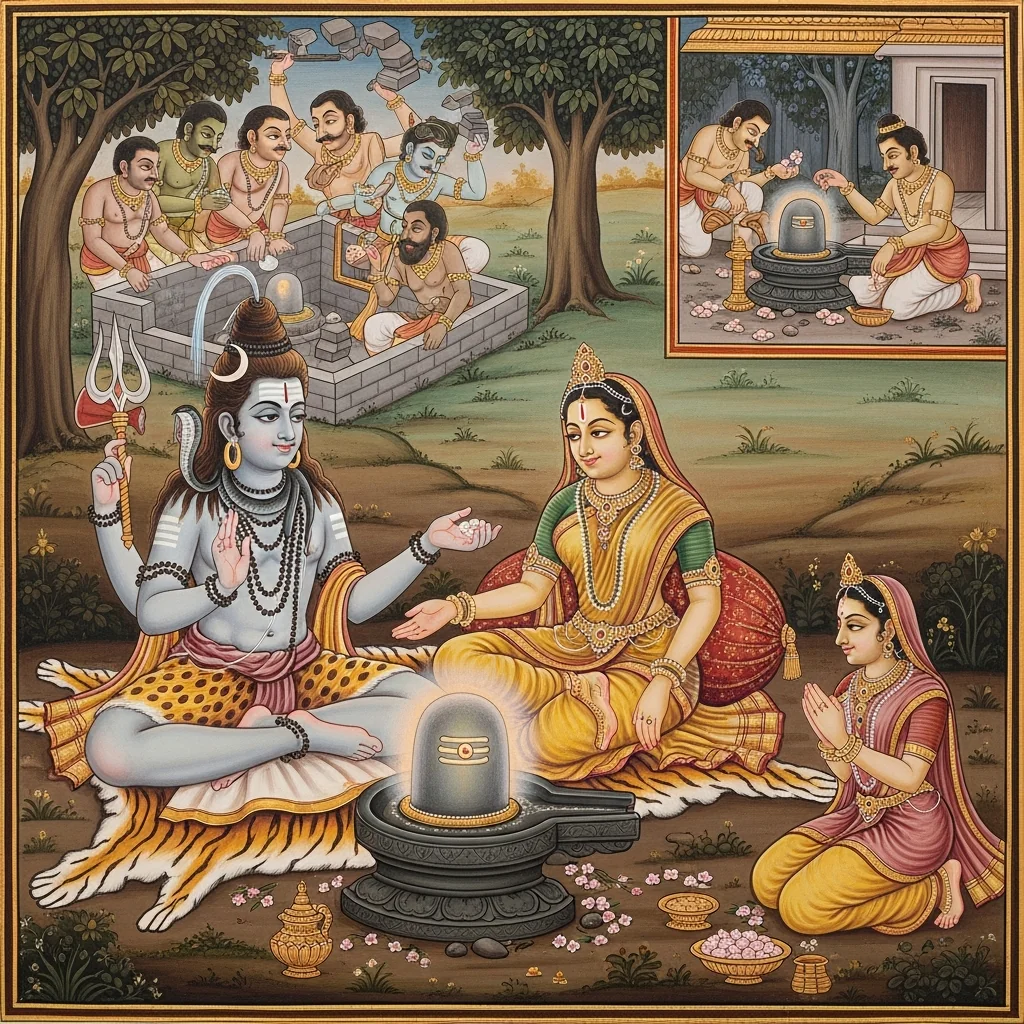
The chapter begins with Agastya asking Skanda to explain the origin and greatness of the Ratneśvara Mahāliṅga in Kāśī. Skanda narrates a self-manifestation: a heap of precious gems gathered by Himavān as an offering directed to Pārvatī becomes the basis of a radiant, jewel-formed liṅga, whose mere darśana is praised as granting “jñāna-ratna,” knowledge like a precious gem. Śiva and Pārvatī arrive; Pārvatī questions the liṅga’s deep-rooted appearance and blazing splendor. Śiva interprets its form, names it Ratneśvara, and declares it his own manifestation with special efficacy in Vārāṇasī. Gaṇas such as Somanandin swiftly build a golden prāsāda, and the text stresses that shrine-building and liṅga-installation yield great merit even with minimal effort, highlighting Kāśī’s intensified sacred potency. An illustrative itihāsa follows: the dancer Kalāvatī performs on Śivarātri and, through devotional artistry, is reborn as the Gandharva princess Ratnāvalī. Keeping a vow of daily Ratneśvara-darśana, she receives a boon that her future husband will match the name indicated by the deity. Another episode presents relief from distress through Ratneśvara’s consecrated water/foot-water (caraṇodaka), upheld as a remedy in crises for faithful devotees. The chapter concludes by assuring that hearing this account lessens separation-grief and related afflictions, offering protection and consolation.
Shlokas
Verse 1
अगस्त्य उवाच । रत्नेश्वरसमुत्पतिं कथयस्व षडानन । रत्नभूतं महालिंगं यत्काश्यां परिवर्ण्यते
Agastya said: O Ṣaḍānana, tell me the origin of Ratneśvara—the great liṅga made of jewels that is celebrated in Kāśī.
Verse 2
कोस्य लिंगस्य महिमा केनैतच्च प्रतिष्ठितम् । एतं विस्तरतो ब्रूहि गौरीहृदयनंदन
What is the glory of this liṅga, and by whom was it established? Explain this in detail, O beloved son of Gaurī.
Verse 3
स्कंद उवाच । रत्नेश्वरस्य माहात्म्यं कथयिष्यामि ते मुने । यथा च रत्नलिंगस्य प्रादुर्भावोऽभवद्भुवि
Skanda said: O sage, I shall narrate to you the greatness of Ratneśvara, and how the jewel-liṅga manifested upon the earth.
Verse 4
श्रुतं नामापि लिंगस्य यस्य जन्मत्रयार्जितम् । वृजिनं नाशयेत्तस्य प्रादुर्भावं ब्रुवे मुने
Even the mere hearing of this liṅga’s name destroys the sin accumulated over three births; therefore, O sage, I shall speak of its manifestation.
Verse 5
शैलराजेन रत्नानि यानि पुंजीकृतान्यहो । उत्तरे कालराजस्य तानि तस्य गिरेर्वृषात्
Ah! The jewels that the king of mountains had heaped together lay to the north of Kālarāja, upon that mountain’s lofty slope.
Verse 6
सर्वरत्नमयं लिंगं जातं तत्सुकृतात्मनः । शक्रचापसमच्छायं सर्वरत्नद्युतिप्रभम्
From the merit of that righteous-souled one, a Liṅga wholly made of all jewels manifested—shimmering like Indra’s rainbow and blazing with the radiance of every precious gem.
Verse 7
तल्लिंगदर्शनादेव ज्ञानरत्नमवाप्यते । शैलेश्वरं समालोक्य शिवौ तत्र समागतौ
By the mere darśana of that Liṅga, one attains the “jewel of spiritual knowledge.” Beholding Śaileśvara, Śiva and (Pārvatī) arrived there together.
Verse 8
यत्र रत्नमयं लिंगमाविर्भूतं स्वयं मुने । तस्य स्फुरत्प्रभाजालैस्ततमंबरमंडलम्
O sage, where that jewel-formed Liṅga manifested of itself, the whole vault of the sky became spread over with its flashing nets of radiance.
Verse 9
तत्र दृष्ट्वा शुभं लिंगं सर्वरत्नसमुद्भवम् । भवान्यदृष्टपूर्वा हि परिपप्रच्छ शंकरम्
There, seeing that auspicious Liṅga—born of all jewels—Bhavānī, for it was something she had never seen before, questioned Śaṅkara closely.
Verse 10
देवदेव जगन्नाथ सर्वभक्ताभयप्रद । कुतस्त्यमेतल्लिंगं द्विसप्तपातालमूलवत्
O God of gods, Lord of the world, bestower of fearlessness upon all devotees—whence has this Liṅga arisen, as though rooted down to the fourteen nether realms?
Verse 11
ज्वालाजटिलिताकाशं प्रभाभासित दिङ्मुखम् । किमाख्यं किं स्वरूपं च किं प्रभावं भवांतक
Its flames seem to tangle the very sky, and its radiance illumines the faces of all directions. What is it called, what is its true form, and what is its power, O Ender of worldly becoming?
Verse 12
यस्य संवीक्षणादेव मनोमेतीव हृष्टवत् । इहैव रमते नाथ कथयैतत्प्रसादतः
By merely gazing upon it, the mind becomes as though intoxicated with joy and delights right here. O Lord, out of grace, tell me of this.
Verse 13
देवदेव उवाच । शृण्वपर्णे समाख्यामि यत्त्वया पृच्छि पार्वति । स्वरूपमेतल्लिंगस्य सर्वतेजोनिधेः परम्
The Lord of gods said: “Listen, O Aparṇā; I shall explain what you have asked, O Pārvatī—the supreme nature of this Liṅga, the highest treasure-house of all splendor.”
Verse 14
तव पित्रा हिमवता गिरिराजेन भामिनि । त्वामुद्दिश्य महारत्नसंभारोत्राप्यनायि हि
O radiant one, by your father Himavat, the king of mountains, a great store of precious jewels was brought here as well—intended for you.
Verse 15
अत्र तानि च रत्नानि राशीकृत्य हिमाद्रिणा । सुकृतोपार्जितान्येव ययौ स्वसदनं पुनः
Gathering those jewels here into a heap, Himādri (Himavat) then returned again to his own abode—those gems having been obtained only through accumulated merit.
Verse 16
तवार्थं वाममार्थं वा श्रद्धया यत्समर्प्यते । काश्यां तस्य परीपाको भवेदीदृग्विधोऽनघे
O sinless one, whatever is offered with faith—whether for your sake or even for a contrary purpose—when it is offered in Kāśī, its fruition becomes exalted in this very manner.
Verse 17
लिंगं रत्नेश्वराख्यं वै मत्स्वरूपं हि केवलम् । अस्य प्रभावो हि महान्वाराणस्यामुमे ध्रुवम्
This liṅga, known as Ratneśvara, is indeed none other than My very form alone. Its power is truly immense in Vārāṇasī, O Umā—this is certain.
Verse 18
सर्वेषामिह लिंगानां रत्नभूतमिदं परम् । अतो रत्नेश्वरं नाम परं निर्वाणरत्नदम्
Among all liṅgas here, this one is supreme—truly jewel-like. Therefore it bears the name Ratneśvara, the highest giver of the jewel of liberation.
Verse 19
अनेनैव सुवर्णेन पित्रा राशीकृतेन च । प्रासादमस्य लिंगस्य विधापय महेश्वरि
With this very gold, amassed in heaps by your father, O Maheśvarī, have a temple-palace for this liṅga constructed.
Verse 20
लिंगप्रासादकरणात्खंडस्फुटित संस्कृतेः । लिंगस्थापनजं पुण्यं हेलयैवेह लभ्यते
By building a shrine for the liṅga and restoring what is broken or damaged, one gains here—even with little effort—the merit (puṇya) that arises from establishing the liṅga.
Verse 21
तथेति भगवत्योक्त्वा गणाः प्रासादनिर्मितौ । सोमनंदि प्रभृतयो ऽसंख्या व्यापारिता मुने
Saying, “So be it,” the Bhagavatī spoke, and the gaṇas set about constructing the temple. Led by Somanandin and others, countless (gaṇas) were engaged in the work, O sage.
Verse 22
गणैश्च कांचनमयो नानाकौतुकचित्रितः । निर्ममे याममात्रेण प्रासादो मेरुशृंगवत्
And the gaṇas fashioned a golden temple, adorned with many wondrous designs; in merely a yāma it was completed, like a peak of Mount Meru.
Verse 23
देवी प्रदृष्टवदना दृष्ट्वा प्रासादनिर्मितिम् । गणेभ्यो व्यतरद्भूरि समानं पारितोषिकम्
The Goddess, her face bright with delight, seeing the temple completed, bestowed abundant and equal rewards upon the gaṇas.
Verse 24
पुनश्च देवी पप्रच्छ प्रणिपातपुरःसरम् । महिमानं महादेवं लिंगस्यास्य महामुने
Then again the Goddess asked—after first bowing down—Mahādeva about the greatness of this liṅga, O great sage.
Verse 25
देवदेव उवाच । लिंगं त्वनादिसंसिद्धमेतद्देवि शुभप्रदम् । आविर्भूतमिदानीं च त्वत्पितुः पुण्यगौरवात्
Devadeva said: This Liṅga, O Goddess, is beginningless and eternally accomplished, and it bestows auspiciousness. Yet it has now become manifest due to the splendid weight of your father’s merit.
Verse 26
गुह्यानां परमं गुह्यं क्षेत्रेऽस्मिश्चिंतितप्रदम् । कलौ कलुषबुद्धीनां गोपनीयं प्रयत्नतः
This is the most secret among secrets in this sacred field (Kāśī), a bestower of one’s cherished desires. Therefore, in the Kali age—among those whose minds are tainted—it should be carefully guarded.
Verse 27
यथा रत्नं गृहे गुप्तं न कैश्चिज्ज्ञायते परैः । अविमुक्ते तथा लिंगं रत्नभूतं गृहे मम
Just as a jewel hidden within a house is not known to others, so too in Avimukta there is a Liṅga—jewel-like—hidden within My own abode.
Verse 28
यानि ब्रह्मांडमध्येत्र संति लिंगानि पार्वति । तैरर्चितानि सर्वाणि रत्नेशो यैः समर्चितः
O Pārvatī, whoever worships Ratneśa here thereby worships all the Liṅgas that exist within the expanse of the universe.
Verse 29
प्रमादेनापि यैर्गौरि लिंगं रत्नेशमर्चितम् । ते भवंत्येव नियतं सप्तद्वीपेश्वरा नृपाः
O Gaurī, even those who worship the Ratneśa Liṅga inadvertently become, without fail, kings—lords over the seven continents.
Verse 30
त्रैलोक्ये यानि वस्तूनि रत्नभूतानि तानि तु । रत्नेश्वरं समभ्यर्च्य सकृत्प्राप्नोति मानवः
Whatever jewel-like treasures exist in the three worlds—by worshipping Ratneśvara even once, a person attains them.
Verse 31
पूजयिष्यंति ये लिंगं रत्नेशं कामवर्जिताः । ते सर्वे मद्गणा भूत्वा प्रांते द्रक्ष्यंति मामिह
Those who worship the Ratneśa Liṅga free from desire—all of them become My attendants, and at life’s end they behold Me here in this sacred realm.
Verse 32
रुद्राणां कोटिजप्येन यत्फलं परिकीर्तितम् । तत्फलं लभ्यते देवि रत्नेशस्य समर्चनात्
O Devī, the fruit proclaimed from chanting the Rudra-mantra ten million times—that very fruit is obtained by duly worshipping Ratneśa.
Verse 33
लिंगे चानादिसंसिद्धे यद्वृत्तं तद्ब्रवीमि ते । इतिहासं महाश्चर्यं सर्वपापनिकृंतनम्
Now I shall tell you what occurred regarding that beginningless, self-established Liṅga—an astonishing sacred account that cuts away all sins.
Verse 34
पुरेह नर्तकी काचिदासीन्नाट्यार्थकोविदा । सैकदा फाल्गुने मासि शिवरात्र्यां कलावती
In this city there once lived a dancer, skilled in the arts of performance. Once, in the month of Phālguna, on the night of Śivarātri, she—named Kalāvatī—was present there.
Verse 35
ननर्त जागरं प्राप्य जगौ गीतं च पेशलम् । स्वयं च वादयामास नानावाद्यानि वाद्यवित्
Keeping vigil through the night, she danced; she also sang exquisite songs, and—skilled in instruments—played various musical instruments herself.
Verse 36
तेन तौर्यत्रिकेणापि प्रीणयित्वाथ सा नटी । रत्नेश्वरं महालिंगं देशमिष्टं जगाम ह
Having delighted the Lord even by that triad of performance—song, instrumental music, and dance—the actress then went to her cherished place, to the great Liṅga named Ratneśvara.
Verse 37
कालधर्मवशंयाता तत्र सा वरनर्तकी । सुता गंधर्वराजस्य वसुभूतेर्बभूव ह
There, having come under the sway of Time’s law (and passing on), that excellent dancer was born as the daughter of Vasubhūti, the king of the Gandharvas.
Verse 38
संगीतस्य सवाद्यस्य तस्य लास्यस्यपुण्यतः । तत्रेशाग्रे कृतस्येह जागरे शिवरात्रिजे
By the merit of that music performed with instruments, and of that graceful dance, done there before the Lord during the vigil of Śivarātri—
Verse 39
रम्या रत्नावली नाम रूपलावण्यशालिनी । कलाकलापकुशला मधुरालापवादिनी
She was charming, named Ratnāvalī—endowed with beauty and grace; skilled in a multitude of arts, and one whose speech was sweet and melodious.
Verse 40
पितुरानंदकृन्नित्यं वसुभूतेर्घटोद्भव । सर्वगांधर्वकुशला गुणरत्नमहाखनिः
Born of Vasubhūti, she ever brought joy to her father; accomplished in every Gandharva art, she was a great mine of jewel-like virtues.
Verse 41
मुने सखीत्रयं तस्याश्चारु चातुर्यभाजनम् । शशिलेखानंगलेखा चित्रलेखेति नामतः
O sage, she had three companions—lovely and fit vessels of cleverness—named Śaśilekhā, Anaṅgalekhā, and Citralekhā.
Verse 42
तिसृभिस्ताभिरेकत्र वाग्देवीपरिशीलिता । ताभ्यः सर्वाः कलाः प्रादात्परिप्रीता सरस्वती
Together with those three, the Goddess of Speech was diligently cultivated; pleased, Sarasvatī bestowed upon them all the arts.
Verse 43
प्राप्य रत्नावली गौरि सा जन्मांतरवासनाम् । रत्नेश्वरस्य लिंगस्य जग्राह नियमं शुभम्
Having become Ratnāvalī, O Gaurī, she regained the latent impression from a former birth, and adopted a blessed religious observance centered on the Liṅga of Ratneśvara.
Verse 44
रत्नभूतस्य लिंगस्य काश्यां रत्नेश्वरस्य वै । नित्यं संदर्शनं प्राप्य वक्ष्याम्यपि वचो मुखे
Having obtained daily darśana of that jewel-like Liṅga—Ratneśvara in Kāśī indeed—I shall also speak the words directly, face to face.
Verse 45
इत्थं नियमवत्यासीत्सा गंधर्वसुतोत्तमा । ताभिः सखीभिः सहिता नित्यं लिंगं च पश्यति
Thus the foremost of the Gandharva maidens became steadfast in her sacred observance; accompanied by her friends, she beheld the holy Liṅga each day.
Verse 46
एकदाराध्य रत्नेशं ममैतल्लिंगमुत्तमम् । समानर्च च सा बाला रम्यया गीतमालया
“Having worshipped Ratneśa but once—this supreme Liṅga of Mine—the young maiden again performed equal adoration, offering a lovely garland woven of song.”
Verse 47
सख्यः प्रदक्षिणीकर्तुं लिंगं तिस्रोऽप्युमे गताः । तस्या गीतेन तुष्टोहं लिंगस्थो वरदोभवम्
“O Umā, her three friends too went to circumambulate the Liṅga. Delighted by that maiden’s song, I—abiding within the Liṅga—became a bestower of boons.”
Verse 48
यस्त्वया रंस्यते रात्रावद्य गंधर्वकन्यके । तवनामसमानाख्यः स ते भर्ता भविष्यति
“O Gandharva maiden, the one with whom you will sport tonight—he whose name is the same as yours—he shall become your husband.”
Verse 49
इति लिंगांबुधेर्जातां परिपीय वचःसुधाम् । बभूवानंदसंदोह मंथरातीव ह्रीमती
Thus, drinking in that nectar-like speech born from the ocean of the Liṅga, the modest maiden was flooded with bliss and, overcome by shy joy, seemed to move with gentle slowness.
Verse 50
गताथ व्योममार्गेण सखीभिः स्वपितुर्गृहम् । कथयंती निजोदंतं तमालीनां पुरो मुदा
Then, traveling by the path of the sky with her sakhīs, she went to her father’s house, joyfully recounting her own experience before the Tamālī maidens.
Verse 51
ताभिर्दिष्ट्येति दिष्ट्येति सखीभिः परिनंदिता । अद्य ते वांछितं भावि रत्नेशस्य समर्चनात्
Praised by her sakhīs with cries of “Fortune! Fortune!”, she was told: “Today your desired wish will be fulfilled, by virtue of your proper worship of Ratneśa.”
Verse 52
यद्यायाति स ते रात्रावद्य कौमारहारकः । चोरो बाहुलतापाशैः पाशितव्योतियत्नतः
If that thief who steals maidens comes to you tonight, he must be bound—most carefully—by the nooses of your creeper-like arms.
Verse 53
गोचरीक्रियतेस्माभिर्यथा स सुकृतैकभूः । प्रातरेव तव प्रेयान्रत्नेशादिष्ट इष्टकृत्
We shall arrange matters so that he comes within your reach—he who is the very embodiment of merit. Indeed, by morning your beloved, appointed by Ratneśa, will have accomplished what is desired.
Verse 54
यातास्वस्मासु हृष्टासु भवती शयगौरवात् । अहो रत्नेश्वरं लिंगं प्रत्यक्षीकृतवत्यसि
When we had gone away in delight, you remained behind due to the heaviness of sleep. Ah! You have caused the Ratneśvara liṅga to become directly manifest to you.
Verse 55
अहोभाग्योदयो नृणामहो पुण्यसमुच्छ्रयः । एकस्यैव भवेत्सिद्धिर्यदेकत्रापि तिष्ठताम्
Ah, what an awakening of fortune for humankind—what a lofty accumulation of merit! For even one person may attain fulfillment, if they remain steadfast in a single sacred place.
Verse 56
सत्यं वदंति नासत्यं दैवप्राधान्यवादिनः । दैवमेव फलेदेकं नोद्यमो नापरं बलम्
Those who proclaim the supremacy of destiny speak truth, not falsehood: “Destiny alone ripens into fruit; human effort is not the true force, nor is any other power.”
Verse 57
भवत्या अपि चास्माकमेक एव हि चोद्यमः । परं दैवं फलत्येकं यथा तव न नः पुरः
For you and for us, the effort is indeed one and the same; yet destiny alone bears the fruit—thus, in this matter, it has favored you, not us.
Verse 58
लोकानां व्यवहारोयमालिप्रोक्तप्रसंगतः । परं मनोरथावाप्तिस्तव या सैव नः स्फुटम्
This is merely the way of the world, arising from the course of talk among companions; but the fulfillment of your wish—yes, that alone is plain to us.
Verse 59
इति संव्याहरंतीनामनंतोध्वाऽतितुच्छवत् । क्षणात्तासां व्यतिक्रांतः प्राप्ताश्च स्वंस्वमालयम्
As they spoke thus, the long night passed as though it were trifling; in a moment it was gone, and each reached her own home.
Verse 60
अथ प्रातः समुत्थाय पुनरेकत्र संगताः । सा च मौनवती ताभिः परिभुक्तेव लक्षिता
Then, rising at dawn, they gathered again in one place; and she—now silent—was noticed by them as though inwardly overwhelmed by what had occurred.
Verse 61
तूष्णीं प्राप्याथ काशीं सा स्नात्वा मंदाकिनीजले । सखीभिः सहितापश्यल्लिंगं रत्नेश्वरं मम
Reaching Kāśī in silence, she bathed in the waters of the Mandākinī; then, together with her friends, she beheld the liṅga of my Ratneśvara.
Verse 62
निर्वर्त्य नियमं साथ लज्जामुकुलितेक्षणा । निर्बंधेन वयस्याभिः परिपृष्टा जगाद ह
Having completed her observance, she—her eyes lowered in budding shame—was persistently questioned by her friends, and then she spoke.
Verse 63
रत्नावल्युवाच । अथ रत्नेश यात्रायाः प्रयातासु स्वमंदिरम् । भवतीषु स्मरंत्येव तद्रत्नेशवचोऽमृतम्
Ratnāvalī said: “Then, when you had departed to your own homes after the pilgrimage to Ratneśvara, I kept remembering—again and again—the nectar-like words of that Ratneśvara.”
Verse 64
सविशेषांगसंस्काराऽविशं संवेशमंदिरम् । निद्रादरिद्रनयना तद्विलोकनलालसा
After adorning myself with special bodily preparations, I entered my bedchamber—my eyes poor in sleep, yet eager to behold him again.
Verse 65
बलात्स्वप्नदशां प्राप्ता भाविनोर्थस्य गौरवात् । आत्मविस्मरणे हेतू ततो मे द्वौ बभूवतुः
Overwhelmed by the weight of what was to come, I fell into a dream-like state; and thus, for me, two causes arose that led to self-forgetfulness.
Verse 66
तंद्री तदंगसंस्पर्शौ मम बोधापहारकौ । तंद्र्या परवशा चासं ततस्तत्स्पर्शनेन च
Drowsiness—and the touch of his limbs—stole away my awareness. Overpowered by that drowsiness, and then again by that touch, I was left without self-control.
Verse 67
न जाने त्वथ किं वृत्तं काहं क्वाहं स चाथ कः । तं निर्जिगमिषुं सख्यो यावद्धर्तुं प्रसारितः
Then I did not know what had happened—who I was, where I was, or even who he was. As he was about to depart, I stretched out my hand, O friends, to hold him back—if only for a moment.
Verse 68
दोः कंकणेन रिपुणा क्वणितं तावदुत्कटम् । महता सिंजितेनाहं तेनाल्पपरिबोधिता
The bracelet on his arm—like an enemy—rang out with a sharp sound. By that loud jingling, I was only slightly brought back to awareness.
Verse 69
सुखसंतानपीयूष ह्रदे परिनिमज्य वै । क्षणेन तद्वियोगाग्निकीलासु पतिता बलात्
Having truly plunged into a lake of nectar—an unbroken stream of happiness—within a moment I was hurled down by force onto the stakes of the fire of separation from him.
Verse 70
किंकुलीयः स नो वेद्मि किंदेशीयः किमाख्यकः । दुनोति नितरां सख्यस्तद्विश्लेषानलो महान्
I do not know what lineage he is of, from what land he comes, or even what he is called. Yet, O friends, the great fire of separation from him torments me intensely.
Verse 71
अनल्पोत्कलितं चेतः पुनस्तत्संगमाशया । प्राणानां मे यियासूनामेकमेव महौषधम्
My heart surged again and again with the hope of meeting him once more. For my life-breaths that were ready to depart, that hope alone became the great medicine.
Verse 72
वयस्या निशिभुक्तस्य तस्यैव पुनरीक्षणम् । भवतीनामधीनं च तत्पुनर्दर्शनं मम
O friends—seeing him again, that very one with whom I spent the night, depends upon you. My chance of beholding him once more lies in your hands.
Verse 73
काऽलीकमालयो वक्ति स्निग्धमुग्धेसखीजने । तद्दर्शनेन स्थास्यंति प्राणा यास्यंति चान्यथा
“Surely it is not false,” Mālaya said to the affectionate, innocent circle of friends. “If I see him, my life-breaths will remain; otherwise, they will depart.”
Verse 74
दशम्यवस्था सन्नह्येद्बाधितुं माधुना भृशम् । इति तस्या गिरः श्रुत्वा दूनाया नितरां च ताः
“Let the tenth-day condition be prepared, to counter the affliction strongly with honey.” Hearing these words of hers, those friends, already deeply pained, were distressed all the more.
Verse 75
प्रवेपमानहृदयाः प्रोचुर्वीक्ष्य परस्परम्
With trembling hearts, they spoke, looking at one another.
Verse 76
सख्य ऊचुः । यस्य ग्रामो न नो नाम नान्वयो नापि बुध्यते । स कथं प्राप्यते भद्रे क उपायो विधीयताम्
The friends said: “Dear one, we know neither his village nor his name, nor even his lineage. How, then, can he be reached? Please tell us what means should be adopted.”
Verse 77
इति रत्नावली श्रुत्वा ससंदेहां च तद्गिरम् । वयस्यास्तदवाप्तौ मे यूयं कुंठि मुमूर्छ ह
Hearing those words, Ratnāvalī—still uncertain—spoke to her companions: “In obtaining him for me, you have become hesitant,” and she fell into a swoon.
Verse 78
इत्यर्धोक्तेन सा बाला यूयं कुंठितशक्तयः । यद्वक्तव्यं त्विति तया यूयं कुंठीति भाषितम्
With those half-spoken words, the young girl implied, “Your resolve has weakened.” What she meant to say was expressed by her as: “You are hesitant.”
Verse 79
ततस्तास्त्वरिताः सख्यः परितापोपहारकान् । बहुशः शीतलोपायान्व्यधुर्मोहप्रशांतये
Then her friends hurriedly applied many cooling measures that relieve burning distress, seeking to calm her delusion and agitation.
Verse 80
व्यपैति न यदा मूर्छा तत्तच्छीतोपचारतः । तस्यास्तदैकयानीतं रत्नेशस्नपनोदकम्
When her swoon did not pass away even with those cooling treatments, they at once brought for her the bathing-water used in the sacred ablution of Ratneśa.
Verse 81
तदुक्षणात्क्षणादेव तन्मूर्छा विरराम ह । सुप्तोत्थितेव सावादीन्मुहुः शिवशिवेति च
The moment it was sprinkled, her fainting ceased at once. Like one awakened from sleep, she began to speak, repeatedly uttering, “Śiva! Śiva!”
Verse 82
स्कदं उवाच । श्रद्धावतां स्वभक्तानामुपसर्गे महत्यपि । नोपायांतरमस्त्येव विनेश चरणोदकम्
Skanda said: “Even when a great calamity befalls faithful devotees, there is truly no other remedy—apart from the water of the Lord’s feet.”
Verse 83
ये व्याधयोपि दुःसाध्या बहिरंतः शरीरगाः । श्रद्धयेशोदकस्पर्शात्ते नश्यंत्येव नान्यथा
Even those diseases that are difficult to cure—whether dwelling outside or within the body—are destroyed by the faithful touch of the Lord’s water; not otherwise.
Verse 84
सेवितं येन सततं भगवच्चरणोदकम् । तं बाह्याभ्यंतरशुचिं नोपसर्पति दुर्गतिः
One who constantly partakes of and honors the Blessed Lord’s foot-water becomes pure outwardly and inwardly; misfortune does not approach such a person.
Verse 85
आधिभौतिकतापं च तापं वाप्याधिदैविकम् । आध्यात्मिकं तथा तापं हरेच्छ्रीचरणोदकम्
The water of Śrī’s sacred feet removes the torment born of beings and elements (ādhibhautika), the torment arising from divine forces (ādhidaivika), and likewise the inner torment of the self (ādhyātmika).
Verse 86
व्यपेतसंज्वरा चाथ गंधर्वतनया मुने । उचितज्ञेति होवाच ताः सखीः स्रिग्धधो रधीः
Then, when the Gandharva’s daughter had become free from her fever, she—gentle and affectionate in heart—addressed the sage and her companions, saying: “You who know what is fitting…”
Verse 87
रत्नावल्युवाच । शशिलेखेनंगलेखे चित्रलेखे मदीहितं । यूयं कुंठितसामर्थ्याः कुतो वस्ताः कलाः क्व वा
Ratnāvalī said: “O Śaśilekhā, O Naṅgalekhā, O Citralekhā—do what I desire. Where have your arts gone, and why has your power become dulled?”
Verse 88
मत्प्रियप्राप्तये सम्यगुपायोऽस्ति मयेक्षितः । रत्नेश्वरानुग्रहतोऽनुतिष्ठत हि तं हिताः
“For obtaining my beloved, I have discerned a proper means. By the grace of Ratneśvara, carry it out, dear friends.”
Verse 89
शशिलेखेभिलषितप्राप्त्यै लेखांस्त्वमालिख । संलिखानंगलेखे त्वं यूनः सर्वावनीचरान्
“O Śaśilekhā, draw the portraits so that what is longed for may be attained. And you, O Naṅgalekhā, sketch the young men—indeed, all who move upon the earth.”
Verse 90
चित्रगे चित्रलेखे त्वं पातालतलशायिनः । किंचिदाविर्भवच्चारु तारुण्यालंकृतींल्लिख
“O skillful one—O Citralekhā—draw also those who dwell in the nether realms of Pātāla; let their charming youth appear, adorned with the marks of youth’s full bloom.”
Verse 91
अथाकण्येति ताः सख्यस्तच्चातुर्यं प्रवर्ण्य च । लिलिखुः क्रमशः सख्यो यूनो यौवन शेवधीन्
Then, saying “So be it,” those friends praised that clever skill and, one after another, drew the young men—true treasures of youth.
Verse 92
निर्यत्कौमारलक्ष्मीकान्पुंवत्त्व श्रीसमावृतान् । प्रातःसंध्येव गंधर्वी नृपाद्यांस्तानवैक्षत
She beheld them—kings and others—endowed with the splendor of manhood and wrapped in the radiance of fresh youth; the Gandharva maiden gazed on them like the morning twilight spreading light.
Verse 93
सर्वान्सुरनिकायान्सा व्यलोकत शुभेक्षणा । न चांचल्यं जहावक्ष्णोस्तेषु स्वर्लोकवासिषु
That maiden of auspicious eyes looked upon all the hosts of the Devas; yet toward those dwellers of Svarga her gaze did not waver in the least.
Verse 94
ततो मध्यमलोकस्थान्मुनिराजकुमारकान् । विलोक्यापि न सा प्रीतिं क्वाप्याप प्रेमनिर्भरा
Then she looked upon those in the middle world—sages, kings, and princes—yet, though filled with longing, she found delight in none of them whatsoever.
Verse 95
अथ रत्नावली बाला कर्णाभ्यर्णविलोचना । दृशौ व्यापारयामास बलिसद्मयुवस्वपि
Then the young Ratnāvalī, her eyes keen and watchful, turned her gaze even toward the youths in Bali’s abode.
Verse 96
दितिजान्दनुजान्वीक्ष्य सा गंधर्वी कुमारकान् । रतिं बबंध न क्वापि तापिता मान्मथैः शरैः
Seeing the youthful sons of the Daityas and Dānavas, that Gandharvī maiden was set aflame by Kāma’s arrows; her mind fastened upon desire, and nowhere did she find repose.
Verse 97
सुधाकर करस्पृष्टाप्यतिदूनांगयष्टिका । पश्यंती नागयूनः सा किंचिदुच्छ्वसिताऽभवत्
Though her slender limbs were greatly enfeebled—like a moonbeam touched by the Moon’s own hand—when she beheld the youthful Nāgas, she breathed a faint sigh.
Verse 98
भोगिनस्तान्विलोक्यापि चित्रंचित्रगतानथ । मनात्संभुक्तभोगेव क्षणमासीत्कुमारिका
Even after looking upon those serpent-lords—wonder upon wonder—her mind, as though it had already tasted delight, grew still for a moment, and the maiden remained motionless.
Verse 99
यूनः प्रत्येकमद्राक्षीदशेषाञ्छेष वंशजान् । तक्षकान्वयगांस्तद्वदथ वासुकिगोत्रजान्
One by one she beheld all the youthful Nāgas born in the line of Śeṣa—those of Takṣaka’s lineage as well, and likewise those descended from the clan of Vāsuki.
Verse 100
पुलीकानंत कर्कोट भद्रसंतानगानपि । दृष्ट्वा नागकुमारांस्ताञ्छंखचूडमथैक्षत
Having also beheld the Nāga princes of the Pulīka, Ananta, Karkoṭa, and Bhadrasaṃtāna lines, she then fixed her gaze upon Śaṅkhacūḍa.
Verse 110
एतस्यावगतं सर्वं देशनामान्वयादिकम् । मा विषीदालिसुलभस्त्वेष रत्नेश्वरार्पितः
All of this—his land, his name, his lineage, and the rest—has been understood. Do not grieve; by devotion he is easily attained, and he is offered unto Ratneśvara.
Verse 120
कोसौ मत्स्वामिनो नाम रत्नेशस्य महेशितुः । लिंगराजस्य गृह्णाति कर्मबंधनभेदिनः
Who indeed is he that bears the name of my Lord—Ratneśvara, the great ruler—Liṅgarāja, the breaker of the bonds of karma?
Verse 130
हृदि रत्नेश्वरं लिंगं यस्य सम्यग्विजृंभते । अलातदंडवत्तस्मिन्कालदंडोपि जायते
In whose heart the liṅga of Ratneśvara fully unfolds, within him even the rod of Time arises like a blazing firebrand, no longer able to bind him as before.
Verse 140
अकारण सखा कोसौ प्रांतरे समुपस्थितः । निजप्राणान्पणीकृत्य येन त्राता स्म बालिकाः
Who is that causeless friend who appeared in that lonely place—he who, staking his own life, rescued the maidens?
Verse 150
आरभ्य बाल्यमप्येषा लिंगं रत्नेश्वराभिधम् । यांति पित्राप्यनुज्ञाता काश्यामर्चयितुं सदा
From her very childhood, with her father’s permission, she would always go to Kāśī to worship the liṅga known as Ratneśvara.
Verse 160
निशम्येति स पुण्यात्मा नागराजकुमारकः । आश्वास्य ता भयत्रस्ताः प्रोवाचेदं च पुण्यधीः
Hearing this, that virtuous prince of the Nāga-king consoled those women who were trembling with fear, and the righteous-minded one spoke these words.
Verse 170
एषा मंदाकिनी नाम दीर्घिका पुण्यतोयभूः । यस्यां कृतोदका मर्त्या मर्त्यलोके विशंति न
This is the sacred pool named Mandākinī, whose waters are born of merit. Mortals who perform the water-rite here do not return to the mortal world again.
Verse 180
वृद्धकालेश्वरस्यैष प्रासादो रत्ननिर्मितः । प्रतिदर्शं वसेद्यत्र रात्रौ चंद्रः सतारकः
This is the jewel-built temple of Vṛddhakāleśvara. Here, night after night, the moon—adorned with stars—seems to dwell, as though residing upon it at every full display.
Verse 190
अथ सा कथयामास दनुजापहृतेः कथाम् । रत्नेश्वरं वरावाप्तिं स्वप्नावस्थां विहाय च
Then she related the account of the abduction by the Dānava, and she spoke of Ratneśvara—how the boon was obtained—setting aside the notion that it was merely a dream-state.
Verse 200
यावद्बहिः समागच्छेद्रम्याद्रत्नेशमंडपात । तावद्गंधर्वराजाय ताभिः स वसुभूतये
As soon as he came out from the lovely pavilion of Ratneśa, at that very moment those women—acting for prosperity—presented the matter to the king of the Gandharvas.
Verse 210
विनिवेदितवृत्तांतो रत्नेशानुग्रहस्य च । उवास ताभिः ससुखं पितृभ्यामभिनंदितः
After the full account of Ratneśa’s grace had been reported, he lived happily with them, honored and warmly welcomed by his parents.
Verse 220
मूर्तः षडाननस्तत्र तव पुत्रः सुमध्यमे । एतत्त्रयं नरो दृष्ट्वा न गर्भं प्रविशेदुमे
There, embodied, stands Ṣaḍānana—your son, O slender-waisted one. Whoever beholds this triad, O Umā, does not enter the womb again.
Verse 225
इतिहासमिमं श्रुत्वा नारी वा पुरुषोपिवा । न जात्विष्टवियोगाग्नि तापेन परितप्यते
Having heard this sacred account—whether one is a woman or a man—one is never again scorched by the burning fire of separation from the beloved.