Adhyaya 13
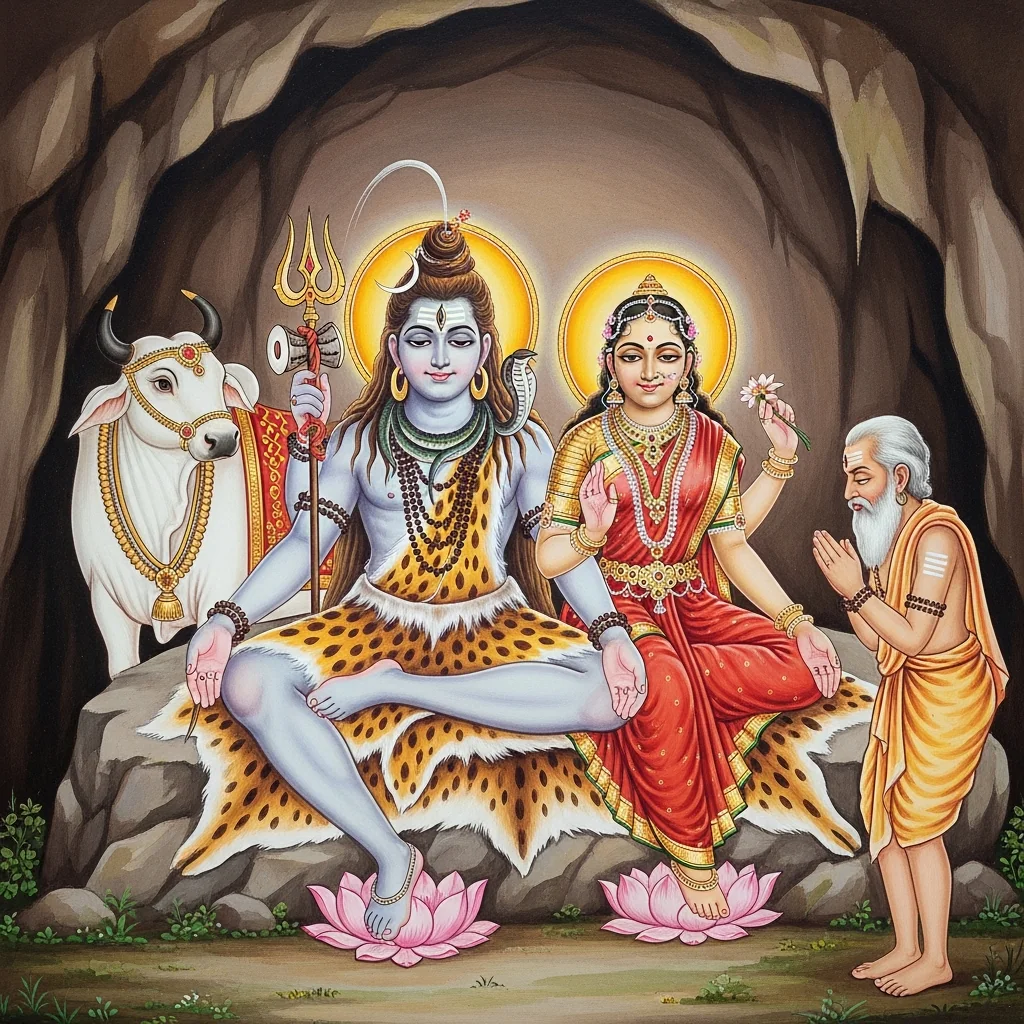
Agastya asks Skanda about the splendor of Kāśī and Śiva’s deeds in Tārakāra (Kāśī). Skanda recounts the yogin‑sage Jaigīṣavya, who undertakes an extreme niyama: he will neither eat nor drink until he again beholds Śiva’s lotus‑feet with “viṣama‑īkṣaṇa” (the unique, tri‑eyed gaze). He declares that food taken without such darśana is spiritually defective. Śiva alone knows this vow and sends Nandin to a lovely cave to bring the devotee; by a divine “līlā‑kamala” touch Nandin revives and strengthens the ascetic and presents him before Śiva and Gaurī. Jaigīṣavya then offers an extensive Śiva‑stotra, listing sacred epithets and affirming exclusive refuge (śaraṇāgati) in Mahādeva. Pleased, Śiva grants boons: unbroken closeness, abiding presence at the liṅga established by Jaigīṣavya, and yogic instruction that makes him a foremost teacher of yoga; the hymn is proclaimed to remove great sins and to increase merit and devotion. The chapter also maps Kāśī’s ritual geography: the manifestation of Jyeṣṭheśvara (self‑manifest liṅga) and Jyeṣṭhā Gaurī near Jyeṣṭha‑vāpī; rules for a major yātrā (Jyeṣṭha śukla caturdaśī, Monday, Anurādhā); a Jyeṣṭha‑month festival with night vigil; śrāddha benefits at Jyeṣṭha‑sthāna; and the later naming of Nivāseśa, Śiva’s self‑established residence‑liṅga. The phalaśruti concludes that attentive hearing frees one from sin and protects from afflictions.
Shlokas
Verse 1
अगस्त्य उवाच । दृष्ट्वा काशीं दृगानंदां तारकारे पुरारिणा । किमकारि समाचक्ष्व प्राप्तां बहुमनोरथैः
Agastya said: Having beheld Kāśī—delight to the eyes—by the Slayer of the Three Cities (Śiva) at Tārakāra, tell me: what was done upon reaching her after many cherished aspirations?
Verse 2
स्कंद उवाच । पतिव्रतापते ऽगस्त्य शृणु वक्ष्याम्यशेषतः । मृगांकलक्ष्मणोत्कंठं काशी नेत्रातिथीकृता
Skanda said: O Agastya, lord of the steadfast and faithful, listen—I shall tell it completely. Kāśī, becoming a guest to the eyes, awakened yearning even in Him who bears the moon as His mark (Śiva).
Verse 3
अथ सर्वज्ञनाथेन भक्तवत्सलचेतसा । जैगीषव्यो मुनिश्रेष्ठो गुहां तस्थो निरीक्षितः
Then the best of sages, Jaigīṣavya—dwelling in a cave—was noticed by the all-knowing Lord whose heart is tender toward devotees.
Verse 4
यमनेहसमारभ्य मदंराद्रिं विनिर्ययौ । अद्रींद्र सुतया सार्धं रुद्रेणोक्षेंद्रगामिना
Beginning from Yamaneha, he set forth toward Mount Madaṃra, together with the daughter of the Lord of Mountains, and with Rudra who rides the bull, the king of beasts.
Verse 5
तं वासरं पुरस्कृत्य जग्राह नियमं दृढम् । जैगीषव्यो महामेधाः कुंभयोने महाकृती
Honoring that very day, the great-souled Jaigīṣavya—of vast intellect and mighty resolve—undertook a firm vow, O Agastya, born of the pot.
Verse 6
विषमेक्षण पादाब्जं समीक्षिष्ये यदा पुनः । तदांबुविप्रुषमपि भक्षयिष्यामि चेत्यहो
“When once again I behold the lotus-feet of the Unequal-eyed One (Śiva), then—only then—shall I partake even of a single drop of water!” Thus he declared.
Verse 7
कुतश्चिद्धारणायोगादथवा शंभ्वनुग्रहात । अनश्नन्नपिबन्योगी जैगीषव्यः स्थितो मुने
Whether by some power of yogic concentration or by Śambhu’s grace, the yogin Jaigīṣavya remained steadfast, O sage—without eating and without drinking.
Verse 8
तं शंभुरेव जानाति नान्यो जानाति कश्चन । अतएव ततः प्राप्तः प्रथमं प्रमथाधिपः
Only Śambhu truly knew him; no one else knew him at all. Therefore, from there, the chief of the Pramathas came first to him.
Verse 9
ज्येष्ठशुक्लचतुर्दश्यां सोमवारानुराधयोः । तत्पर्वणि महायात्रा कर्तव्या तत्र मानवैः
On the fourteenth day of the bright fortnight of Jyeṣṭha—when it is Monday and the nakṣatra is Anurādhā—on that sacred festival occasion, people should undertake the great pilgrimage there.
Verse 10
ज्येष्ठस्थानं ततः काश्यां तदाभूदपि पुण्यदम् । तत्र लिंगं समभवत्स्वयं ज्येष्ठेश्वराभिधम्
Then, in Kāśī, there arose the sacred place called Jyeṣṭhasthāna, bestowing great merit. There a liṅga manifested of its own accord, renowned as Jyeṣṭheśvara.
Verse 11
तल्लिंगदर्शनात्पुंसां पापं जन्मशतार्जितम् । तमोर्कोदयमाप्येव तत्क्षणादेव नश्यति
By the mere sight of that liṅga, the sins amassed by people over a hundred births are destroyed at once—just as darkness vanishes the moment the sun rises.
Verse 12
ज्येष्ठवाप्यां नरः स्नात्वा तर्पयित्वा पितामहान् । ज्येष्ठेश्वरं समालोक्य न भूयो जायते भुवि
After bathing in the Jyeṣṭha tank and offering tarpaṇa to the ancestors, a person who beholds Jyeṣṭheśvara is not born again upon the earth.
Verse 13
आविरासीत्स्वयं तत्र ज्येष्ठेश्वर समीपतः । सर्वसिद्धिप्रदा गौरी ज्येष्ठाश्रेष्ठा समंततः
There, near Jyeṣṭheśvara, Gaurī herself manifested—she who grants every siddhi, Jyeṣṭhā-Gaurī, the most excellent on all sides.
Verse 14
ज्येष्ठे मासि सिताष्टम्यां तत्र कार्यो महोत्सवः । रात्रौ जागरणं कार्यं सर्वसंपत्समृद्धये
In the month of Jyeṣṭha, on the bright eighth lunar day, a great festival should be held there. Through the night one should keep sacred vigil, for the increase of every prosperity.
Verse 15
ज्येष्ठां गौरीं नमस्कृत्य ज्येष्ठवापी परिप्लुता । सौभाग्यभाजनं भूयाद्योषा सौभाग्यभागपि
Having bowed in reverence to Jyeṣṭhā-Gaurī and bathed in the waters of Jyeṣṭhavāpī, a woman becomes a vessel of good fortune—truly a sharer in auspicious prosperity.
Verse 16
निवासं कृतवाञ्शंभुस्तस्मिन्स्थाने यतः स्वयम् । निवासेश इति ख्यातं लिंगं तत्र परं ततः
Because Śambhu himself made his dwelling in that place, the supreme liṅga there became renowned by the name Nivāseśa.
Verse 17
निवासेश्वरलिंगस्य सेवनात्सर्वसंपदः । निवसंति गृहे नित्यं नित्यं प्रतिपदं पुनः
By serving the liṅga of Nivāseśvara, all prosperities come to dwell in one’s home continually—again and again, day after day.
Verse 18
कृत्वा श्राद्धं विधानेन ज्येष्ठस्थाने नरोत्तमः । ज्येष्ठां तृप्तिं ददात्येव पितृभ्यो मधुसर्पिषा
The best of men, having performed śrāddha according to rule at Jyeṣṭhasthāna, truly grants the ancestors “supreme satisfaction”—as though offering them honey and ghee.
Verse 19
ज्येष्ठतीर्थे नरः काश्यां दत्त्वा दानानि शक्तितः । ज्येष्ठान्स्वर्गानवाप्नोति नरो मोक्षं च गच्छति
At the Jyeṣṭha tīrtha in Kāśī, one who gives charity according to one’s strength attains the highest heavens—and also proceeds toward liberation (mokṣa).
Verse 20
ज्येष्ठेश्वरो र्च्यः प्रथमं काश्यां श्रेयोर्थिभिर्नरैः । ज्येष्ठागौरी ततोभ्यर्च्या सर्वज्येष्ठमभीप्सुभिः
In Kāśī, those who seek the highest good should first worship Jyeṣṭheśvara; thereafter they should worship Jyeṣṭhāgaurī—by which those who long for supreme excellence become foremost among the foremost.
Verse 21
अथ नंदिनमाहूय धूर्जटिः स कृपानिधिः । शृण्वतां सर्वदेवानामिदं वचनमब्रवीत्
Then Dhūrjaṭi—Śiva, the very treasure-house of compassion—summoned Nandī and, as all the gods listened, spoke these words.
Verse 22
ईश्वर उवाच । शैलादे प्रविशाशु त्वं गुहास्त्यत्र मनोहरा । तदंतरेस्ति मे भक्तो जैगीषव्यस्तपोधनः
Īśvara said: “Enter quickly into Śailāda; there is a delightful cave there. Within it dwells my devotee Jaigīṣavya, a treasure of ascetic power (tapas).”
Verse 23
महानियमवान्नंदिस्त्वगस्थिस्नायु शेषितः । तमिहानय मद्भक्तं मद्दर्शन दृढव्रतम्
“Nandī, he is a man of great restraints, reduced to little more than skin, bone, and sinew. Bring here that devotee of mine, firm in his vow to attain my darśana.”
Verse 24
यदाप्रभृत्यगां काश्या मंदरं सर्वसुंदरम् । महानियमवानेष तदारभ्योज्झिताशनः
From the time he came to Kāśī—Mandara, most beautiful, the loveliest of all—this man has observed great restraints, and from that very time he has renounced food.
Verse 25
गृहाण लीलाकमलमिदं पीयूषपोषणम् । अनेन तस्य गात्राणि स्पृश सद्यः सुबृंहिणा
Take this playful lotus, nourishing like nectar. With it, touch his limbs, and at once make him strong and well-filled out.
Verse 26
ततो नंदी समादाय तल्लीलाकमलं विभोः । प्रणम्य देवदेवेशमाविशद्गह्वरां गुहाम्
Then Nandī took that divine ‘līlā-lotus’ of the Lord and, bowing to the God of gods, entered the deep, cavernous cave.
Verse 27
नंदी दृष्ट्वाथ तं तत्र धारणादृढमानसम् । तपोग्नि परिशुष्कांगं कमलेन समस्पृशत्
Seeing him there—his mind made firm by deep concentration—Nandī touched with the lotus that lordly yogin whose body had been dried by the fire of austerity.
Verse 28
तपांते वृष्टिसंयोगाच्छालूर इव कोटरे । उल्ललास स योगींद्रः स्पर्शमात्रात्तदब्जजात्
At the end of his austerities, by the mere touch of that lotus, the lord of yogins sprang up—like a chālūra plant in a hollow when joined with rainfall.
Verse 29
अथ नंदी समादाय सत्वरं मुनिपुंगवम् । देवदेवस्य पादाग्रे नमस्कृत्य न्यपातयत्
Then Nandī swiftly took that bull among sages and, bowing down, set him at the feet of the God of gods.
Verse 30
जैगीषव्योथ संभ्रांतः पुरतो वीक्ष्य शंकरम् । वामांगसन्निविष्टाद्रितनयं प्रणनाम ह
Then Jaigīṣavya, filled with reverent awe, beheld Śaṅkara before him, with the Daughter of the Mountain seated upon His left, and bowed down in worship.
Verse 31
प्रणम्य दंडवद्भूमौ परिलुठ्य समंततः । तुष्टाव परया भक्त्या स मुनिश्चंद्रशेखरम्
Having prostrated like a staff upon the ground and rolling about in every direction, that sage praised Caṅdraśekhara with supreme devotion.
Verse 32
जैगीषव्य उवाच । नमः शिवाय शांताय सर्वज्ञाय शुभात्मने । जगदानंदकंदाय परमानंदहेतवे
Jaigīṣavya said: Salutations to Śiva—the Peaceful One, the All-knowing, the Auspicious-Souled—who is the very root of the world’s joy and the cause of supreme bliss.
Verse 33
अरूपाय सरूपाय नानारूपधराय च । विरूपाक्षाय विधये विधिविष्णुस्तुताय च
Salutations to Him who is formless and yet possessed of form; who bears innumerable forms; to the Three-eyed Lord, the Ordainer—praised by Brahmā and Viṣṇu as well.
Verse 34
स्थावराय नमस्तुभ्यं जंगमाय नमोस्तुते । सर्वात्मने नमस्तुभ्यं नमस्ते परमात्मने
Salutations to You as the Immobile, and salutations to You as the Moving; salutations to You, the Soul of all, and salutations to You, the Supreme Self.
Verse 35
नमस्त्रैलोक्यकाम्याय कामांगदहनाय च । नमो शेषविशेषाय नमः शेषांगदाय ते
Salutations to You, desired throughout the three worlds, and to You, the Burner of Kāma’s body. Salutations to You, beyond all remainder and distinction, and salutations to You who bestow the “remainder”—the final, saving grace.
Verse 36
श्रीकंठाय नमस्तुभ्यं विषकंठाय ते नमः । वैकुंठवंद्यपादाय नमोऽकुंठितशक्तये
Salutations to You, O Auspicious-Throated One; salutations to You, O Poison-Throated One. Salutations to Him whose feet are revered even in Vaikuṇṭha, and salutations to You whose power is unobstructed.
Verse 37
नमः शक्त्यर्धदेहाय विदेहाय सुदेहिने । सकृत्प्रणाममात्रेण देहिदेहनिवारिणे
Salutations to Him whose half-body is Śakti; to the Bodiless One, and to Him who yet assumes a beautiful body. Salutations to the Lord who, by a single act of prostration alone, removes embodied existence for embodied beings.
Verse 38
कालाय कालकालाय कालकूट विषादिने । व्यालयज्ञोपवीताय व्यालभूषणधारिणे
Salutations to Time itself, and to the Destroyer of Time; to Him who consumed the Kālakūṭa poison; to Him whose sacred thread is a serpent, and who wears serpents as ornaments.
Verse 39
नमस्ते खंडपरशो नमः खंडें दुधारिणे । खंडिताशेष दुःखाय खड्गखेटकधारिणे
Salutations to You, O wielder of the cleaving axe; salutations to You who bear the cleaver. Salutations to Him who cuts away all sorrow, and to Him who holds sword and shield.
Verse 40
गीर्वाणगीतनाथाय गंगाकल्लोलमालिने । गौरीशाय गिरीशाय गिरिशाय गुहारणे
Salutations to Him who is the Lord praised in the songs of the gods, garlanded by the billowing waves of the Gaṅgā; to the Lord of Gaurī, the Lord of the mountains—Śiva—who dwells in the sacred cavern-shrine of Kāśī.
Verse 41
चंद्रार्धशुद्धभूषाय चंद्रसूर्याग्निचक्षुषे । नमस्ते चर्मवसन नमो दिग्वसनायते
Salutations to Him whose pure ornament is the crescent moon, whose eyes are the Moon, the Sun, and Fire. Salutations to You who wear a hide as garment; salutations to You who are clothed by the directions—the sky itself.
Verse 42
जगदीशाय जीर्णाय जराजन्महराय ते । जीवायते नमस्तुभ्यं जंजपूकादिहारिणे
Salutations to You, Lord of the world—ancient beyond time—who removes old age and repeated birth. Salutations to You, the very Life of all, who drives away afflictions such as fever and the like.
Verse 43
नमो डमरुहस्ताय धनुर्हस्ताय ते नमः । त्रिनेत्राय नमस्तुभ्यं जगन्नेत्राय ते नमः
Salutations to You who hold the ḍamaru; salutations to You who hold the bow. Salutations to the Three-Eyed One; salutations to You, the very Eye of the universe.
Verse 44
त्रिशूलव्यग्रहस्ताय नमस्त्रिपथगाधर । त्रिविष्टपाधिनाथाय त्रिवेदीपठिताय च
Salutations to You whose hand fiercely wields the trident; salutations to You who bear the One who moves in the three paths, the sacred Gaṅgā. Salutations to the Lord who presides over the heavenly worlds; and to You who are hymned by the Three Vedas.
Verse 45
त्रयीमयाय तुष्टाय भक्ततुष्टिप्रदाय च । दीक्षिताय नमस्तुभ्यं देवदेवाय ते नमः
Salutations to You who embody the Three Vedas, ever content; and who bestow contentment upon devotees. Salutations to You, the consecrated Lord; salutations to You, the God of gods.
Verse 46
दारिताशेषपापाय नमस्ते दीर्घदर्शिने । दूराय दुरवाप्याय दोषनिर्दलनाय च
Salutations to You who have torn apart all sins; salutations to You, the far-seeing One. Salutations to You who are beyond reach and hard to attain, and yet the One who crushes all faults and impurities.
Verse 47
दोषाकर कलाधार त्यक्तदोषागमाय च । नमो धूर्जटये तुभ्यं धत्तूरकुसुमप्रिय
Salutations to You—though to the deluded appearing as a “mine of defects,” You are the support of all divine arts and powers; salutations to You who are untouched by any taint. Salutations to You, O Dhūrjaṭi, who are fond of the dhattūra blossoms.
Verse 48
नमो धीराय धर्माय धर्मपालाय ते नमः । नीलग्रीव नमस्तुभ्यं नमस्ते नीललोहित
Salutations to the steadfast One, to Dharma itself, to the Protector of Dharma. Salutations to You, O Blue-throated Lord; salutations to You, O Nīlalohita.
Verse 49
नाममात्रस्मृतिकृतां त्रैलोक्यैश्वर्यपूरक । नमः प्रमथनाथाय पिनाकोद्यतपाणये
O Fulfiller of the sovereignty of the three worlds for those who gain merit by mere remembrance of Your Name—salutations to the Lord of the Pramathas, salutations to Him whose hand is raised with the bow Pināka.
Verse 50
पशुपाशविमोक्षाय पशूनां पतये नमः । नामोच्चारणमात्रेण महापातकहारिणे
Salutations to the Lord who frees bound beings from the bonds of worldly existence—to Paśupati, the Master of all creatures. By the mere utterance of His Name, He removes even the gravest sins.
Verse 51
परात्पराय पाराय परापरपराय च । नमोऽपारचरित्राय सुपवित्रकथाय च
Salutations to the One beyond the beyond, the Supreme Refuge and the farthest Shore; salutations to Him whose deeds are boundless, and whose sacred story is supremely purifying.
Verse 52
वामदेवाय वामार्धधारिणे वृषगामिने । नमो भर्गाय भीमाय नतभीतिहराय च
Salutations to Vāmadeva; to Him who bears the left half and who rides the Bull. Salutations to Bharga, to the Terrible One, and to Him who removes the fear of those who bow in surrender.
Verse 53
भवाय भवनाशाय भूतानांपतये नमः । महादेव नमस्तुभ्यं महेश महसांपते
Salutations to Bhava, and to the Destroyer of saṃsāric becoming; salutations to the Lord of all beings. O Mahādeva—obeisance to You, O Maheśa, Lord of all splendor and power.
Verse 54
नमो मृडानीपतये नमो मृत्युंजयाय ते । यज्ञारये नमस्तुभ्यं यक्षराजप्रियाय च
Salutations to the Lord of Mṛḍānī (Pārvatī); salutations to You, the Conqueror of Death. O Foe of sacrifice, who shatters ritual pride, obeisance to You—beloved also of the King of the Yakṣas.
Verse 55
यायजूकाय यज्ञाय यज्ञानां फलदायिने । रुद्राय रुद्रपतये कद्रुद्राय रमाय च
Salutations to the Priest of priests, to the Sacrifice itself, and to the Giver of the fruits of all sacrifices. Salutations to Rudra, to the Lord of the Rudras, to the fiercely Rudra—yet also the source of delight and repose.
Verse 56
शूलिने शाश्वतेशाय श्मशानावनिचारिणे । शिवाप्रियाय शर्वाय सर्वज्ञाय नमोस्तु ते
Salutations to the Trident-bearer, the Eternal Lord who roams the cremation-grounds. Salutations to the Beloved of Śivā (Pārvatī), to Śarva, to the All-knowing One—obeisance be to You.
Verse 57
हराय क्षांतिरूपाय क्षेत्रज्ञाय क्षमाकर । क्षमाय क्षितिहर्त्रे च क्षीरगौराय ते नमः
Salutations to Hara, whose very form is forbearance; to the Knower of the field, the inner Self; O Maker of patience, obeisance to You. Salutations to the Power of endurance, to the Remover of the earth’s burdens, and to You whose radiance is milk-white.
Verse 58
अंधकारे नमस्तुभ्यमाद्यंतरहिताय च । इडाधाराय ईशाय उपेद्रेंद्रस्तुताय च
O Lord who dispels darkness, salutations to You; salutations to Him who is without beginning or end. Salutations to the Support of Iḍā, to the Sovereign Lord, and to Him who is praised by Upendra (Viṣṇu) and Indra.
Verse 59
उमाकांताय उग्राय नमस्ते ऊर्ध्वरेतसे । एकरूपाय चैकाय महदैश्वर्यरूपिणे
Salutations to Umākānta, the Beloved of Umā; salutations to the Fierce One, the Lord of uplifted energy and perfect continence. Salutations to the One-form, the One without a second, whose very nature is supreme sovereignty and vast lordly power.
Verse 60
अनंतकारिणे तुभ्यमंबिकापतये नमः । त्वमोंकारो वषट्कारो भूर्भुवःस्वस्त्वमेव हि
Salutations to You, the infinite Doer, the Lord of Ambikā. You alone are the sacred Oṁ, You are the vaṣaṭ-call of the rites, and You are indeed Bhūr, Bhuvaḥ, and Svaḥ—the three worlds.
Verse 61
दृश्यादृश्य यदत्रास्ति तत्सर्वं त्वमु माधव । स्तुतिं कर्तुं न जानामि स्तुतिकर्ता त्वमेव हि
Whatever exists here—seen and unseen—O Mādhava, all of it is You. I do not know how to praise; for You alone are truly the maker of praise.
Verse 62
वाच्यस्त्वं वाचकस्त्वं हि वाक्च त्वं प्रणतोस्मि ते । नान्यं वेद्मि महादेव नान्यं स्तौमि महेश्वर
You are what is spoken, You are the speaker, and You are speech itself—I bow to You. I know none other, O Mahādeva; I praise none other, O Maheśvara.
Verse 63
नान्यं नमामि गौरीश नान्याख्यामाददे शिव । मूकोन्यनामग्रहणे बधिरोन्यकथाश्रुतौ
I bow to none other, O Lord of Gaurī; I take up no other name, O Śiva. May I be mute in uttering other names, and deaf to the hearing of other tales.
Verse 64
पंगुरन्याभिगमनेऽस्म्यंधोऽन्यपरिवीक्षणे । एक एव भवानीश एककर्ता त्वमेव हि
May I be lame in going toward anything else, and blind in looking upon anything else. You alone are the One, O Lord; You alone are the single Doer.
Verse 65
पाता हर्ता त्वमेवैको नानात्वं मूढकल्पना । अतस्त्वमेव शरणं भूयोभूयः पुनःपुनः
You alone are the one Protector and the one Withdrawer; multiplicity is a deluded imagination. Therefore You alone are my refuge—again and again, time after time.
Verse 66
संसारसागरे मग्नं मामुद्धर महेश्वर । इति स्तुत्वा महेशानं जैगीषव्यो महामुनिः
“I am sunk in the ocean of saṃsāra—lift me out, O Maheśvara!” Having thus praised Maheśāna, the great sage Jaigīṣavya proceeded further.
Verse 67
वाचंयमो भवत्स्थाणोः पुरतः स्थाणुसन्निभः । इति स्तुतिं समाकर्ण्य मुनेश्चंद्रविभूषणः । उवाच च प्रसन्नात्मा वरं ब्रूहीति तं मुनिम्
Restrained in speech, he stood before Your immovable form as though immovable himself. Hearing this hymn of the sage, the Moon-adorned Lord, pleased at heart, said to that muni: “Speak—choose a boon.”
Verse 68
जैगीषव्य उवाच । यदि प्रसन्नो देवेश ततस्तव पदांबुजात् । मा भवानि भवानीश दूरं दूरपदप्रद
Jaigīṣavya said: If You are pleased, O Lord of gods, then from Your lotus-feet—O Bhavānīśa, granter of the highest state—may I never be far, never far.
Verse 69
अपरश्च वरो नाथ देयोयमविचारतः । यन्मया स्थापितं लिंगं तत्र सान्निध्यमस्तु ते
And grant yet another boon, O Lord, without hesitation: wherever I have established the liṅga, may Your abiding presence be there.
Verse 70
ईश्वर उवाच । जैगीषव्य महाभाग यदुक्तं भवतानघ । तदस्तु सर्वं तेभीष्टं वरमन्यं ददामि च
Īśvara said: “O illustrious Jaigīṣavya, O noble and sinless one—let all that you have asked be fulfilled according to your desire. And I grant you yet another boon as well.”
Verse 71
योगशास्त्रं मया दत्तं तव निर्वाणसाधकम् । सर्वेषां योगिनां मध्ये योगाचार्योऽस्तु वै भवान्
“I have bestowed upon you the teaching of Yoga—an instrument for your nirvāṇa. Among all yogins, indeed, may you be a preceptor of Yoga.”
Verse 72
रहस्यं योगविद्याया यथावत्त्वं तपोधन । संवेत्स्यसे प्रसादान्मे येन निर्वाणमाप्स्यसि
“O treasure of austerity, by My grace you will understand the secret of the yogic science in its true reality—through which you will attain nirvāṇa.”
Verse 73
यथा नदी यथा भृंगी सोमनंदी यथा तथा । त्वं भविष्यसि भक्तो मे जरामरणवर्जितः
“Just as Nadī, just as Bhṛṅgī, and just as Somanandī—so too shall you be: My devotee, free from old age and death.”
Verse 74
संति व्रतानि भूयांसि नियमाः संत्यनेकधा । तपांसि नाना संत्यत्र संति दानान्यनेकशः
There are many vows and disciplines of many kinds. Here too are diverse austerities, and many forms of charitable giving.
Verse 75
श्रेयसां साधनान्यत्र पापघ्नान्यपि सर्वथा । परं हि परमश्चैष नियमो यस्त्वया कृतः
Here are means to the highest good, and practices that destroy sin in every way. Yet this discipline you have undertaken is supreme—indeed, the highest.
Verse 76
परो हि नियमश्चैष मां विलोक्य यदश्यते । मामनालोक्य यद्भुक्तं तद्भुक्तं केवलत्वघम्
This observance is truly supreme: one should eat only after beholding me. Whatever is eaten without beholding me is eaten in sheer sin of self-centeredness.
Verse 77
असमर्च्य च यो भुङ्क्ते पत्रपुष्पफलैरपि । रेतोभक्षी भवेन्मूढः स जन्मान्येकविंशतिम्
Even if one eats only leaves, flowers, and fruits—yet eats without worship—such a deluded person becomes an “eater of semen” for twenty-one births.
Verse 78
महतो नियमस्यास्य भवतानुष्ठितस्य वै । नार्हंति षोडशी मात्रामप्यन्ये नियमा यमाः
Of this great observance performed by you, other restraints and disciplines—yamas and niyamas—do not equal even a sixteenth part.
Verse 79
अतो मच्चरणाभ्याशे त्वं निवत्स्यसि सर्वथा । अतो नैःश्रेयसीं लक्ष्मीं तत्रैव प्राप्स्यसि ध्रुवम्
Therefore you shall dwell always near my feet; and there itself you will surely attain the blessed fortune of the highest good—final beatitude.
Verse 80
जैगीषव्येश्वरं नाम लिंगं काश्यां सुदुर्लभम् । त्रीणि वर्षाणि संसेव्य लभेद्योगं न संशयः
In Kāśī there is a most rare Liṅga named Jaigīṣavyeśvara. By devotedly resorting to it for three years, one surely attains Yoga—there is no doubt.
Verse 81
जैगीषव्यगुहां प्राप्य योगाभ्यसनतत्परः । षण्मासेन लभेत्सिद्धिं वाञ्छितां मदनुग्रहात्
Reaching the cave of Jaigīṣavya, and being intent on the practice of Yoga, one gains the desired siddhi within six months—through my grace.
Verse 82
तव लिंगमिदं भक्तैः पूजनीयं प्रयत्नतः । विलोक्या च गुहा रम्या परासिद्धिमभीप्सुभिः
This Liṅga of yours should be worshipped with earnest effort by devotees; and the charming cave too should be visited by those who seek the supreme siddhi.
Verse 83
अत्र ज्येष्ठेश्वरक्षेत्रे त्वल्लिंगं सर्वसिद्धिदम् । नाशयेदघसंघानि दृष्टं स्पृष्टं समर्चितम्
Here, in the sacred precinct of Jyeṣṭheśvara, your Liṅga bestows all siddhis. When it is seen, touched, and duly worshipped, it destroys masses of sins.
Verse 84
अस्मिञ्ज्येष्ठेश्वरक्षेत्रे संभोज्य शिवयोगिनः । कोटिभोज्यफलं सम्यगेकैकपरिसंख्यया
In this sacred precinct of Jyeṣṭheśvara, by feeding Śiva’s yogins one truly gains the merit of feeding crores—reckoned for each yogin, one by one.
Verse 85
जैगीषव्येश्वरं लिंगं गोपनीयं प्रयत्नतः । कलौ कलुषबुद्धीनां पुरतश्च विशेषतः
The Jaigīṣavyeśvara Liṅga should be carefully kept concealed—especially in the Kali age, from those whose minds are impure.
Verse 86
करिष्याम्यत्र सांनिध्यमस्मिंल्लिंगे तपोधन । योगसिद्धिप्रदानाय साधकेभ्यः सदैव हि
O treasure of austerity, I shall maintain my presence here in this Liṅga—indeed forever—in order to grant yogic accomplishment to practitioners.
Verse 87
ददे शृणु महाभाग जैगीषव्यापरं वरम् । त्वयेदं यत्कृतं स्तोत्रं योगसिद्धिकरं परम्
Listen, O greatly fortunate one: I grant a further boon concerning Jaigīṣavya. This hymn that you have composed is supreme and brings about yogic accomplishment.
Verse 88
महापापौघशमनं महापुण्यप्रवर्धनम् । महाभीतिप्रशमनं महाभक्तिविवर्धनम्
It pacifies torrents of great sins; it increases great merit; it calms overwhelming fear; and it enlarges great devotion.
Verse 89
एतत्स्तोत्रजपात्पुंसामसाध्यं नैव किंचन । तस्मात्सर्वप्रयत्नेन जपनीयं सुसाधकैः ४
Through the repetition of this hymn, nothing whatsoever remains impossible for people. Therefore, earnest sādhakas should recite it with every effort.
Verse 90
इति दत्त्वा वरं तस्मै स्मरारिः स्मेरलोचनः । ददर्श ब्राह्मणां स्तत्र समेतान्क्षेत्रवासिनः
Thus, having granted him the boon, Smarāri (Śiva), with smiling eyes, beheld there the assembled brāhmaṇas—residents of the sacred kṣetra of Kāśī.
Verse 91
स्कंद उवाच । निशम्याख्यानमतुलमेतत्प्राज्ञः प्रयत्नतः । निष्पापो जायते मर्त्यो नोपसर्गैः प्रबाध्यते
Skanda said: “A discerning person who attentively hears this incomparable sacred account becomes free from sin, and no afflictions or ominous obstacles can overpower that mortal.”