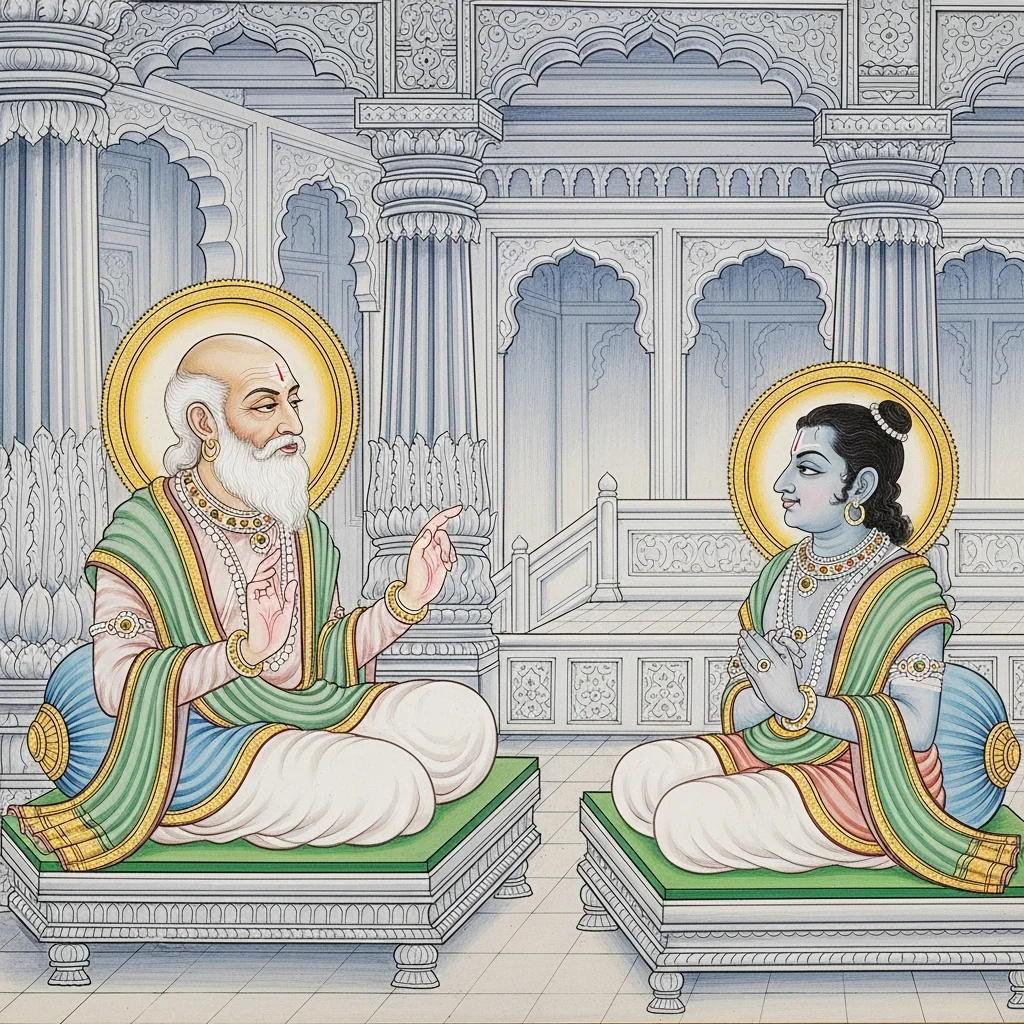
Adhyaya 1
Chapter 1 sets the Purāṇic recital frame at Naimiṣa-kṣetra: Śaunaka and other sages welcome Sūta (Lomaharṣaṇa) and request a purifying account that can dissolve long-accumulated sin. Sūta begins with formal invocations and declares his intent to proclaim, by divine grace, the supreme fruit of the tīrthas. A second narrative layer is then introduced: Dharma (Yama/Dharmarāja) visits Brahmā’s assembly and beholds a cosmically inclusive sabhā filled with gods, sages, the Vedas, and personified principles. There Vyāsa relates the “Dharmāraṇya-kathā,” praised as pious, expansive, and fruitful for dharma-artha-kāma-mokṣa. Returning to Saṃyaminī, Dharma receives Nārada, who is astonished to see Yama gentle and joyful. Yama explains that hearing the Dharmāraṇya-kathā brought this transformation and that it possesses powerful purificatory efficacy, rhetorically said to free even from severe sins. The chapter closes by noting Nārada’s onward journey to the human realm (Yudhiṣṭhira’s court) and by outlining the coming discourse on origins, protection, chronology, prior events, future outcomes, and the status of tīrthas—serving as a structured prologue to the section’s sacred-geographical and ethical teaching.
Shlokas
Verse 1
श्रीगणेशाय नमः । तर्तुं संहृतिवारिधिं त्रिजगतां नौर्नाम यस्य प्रभोर्येनेदं सकलं विभाति सततं जातं स्थितं संसृतम् । यश्चैतन्यघनप्रमाण विधुरो वेदांतवेद्यो विभुस्तं वन्दे सहजप्रकाशममलं श्रीरामचन्द्रं परम् । दाराः पुत्रा धनं वा परिजनसहितो बंधुवर्गः प्रियो वा माता भ्राता पिता वा श्वशुरकुलजना भृत्यऐश्वर्य्यवित्ते । विद्या रूपं विमलभवनं यौवनं यौवतं वा सर्वे व्यर्थं मरणसमये धर्म एकः सहायः । नैमिषे निमिषक्षेत्रे ऋषयः शौनकादयः । सत्रं स्वर्गाय लोकाय सहस्रसममासत
Salutations to Śrī Gaṇeśa. I bow to the Supreme Śrī Rāmacandra—the “boat” by which the three worlds cross the ocean of dissolution; by whose lordly power this entire universe ever shines in its birth, continuance, and the flow of saṃsāra; the all-pervading Reality known through Vedānta, pure, self-luminous, and stainless. Wives, sons, wealth, relatives and companions, dear friends, mother, brother, father, the wife’s kin, servants, lordship and riches; learning, beauty, a spotless home, youth and pleasures—at the time of death all are futile; Dharma alone is the single helper. In Naimiṣa, the sacred Nimiṣa-kṣetra, the sages headed by Śaunaka sat for a thousand years, performing a sattra sacrificial session for the welfare of the world and for attaining heaven.
Verse 2
एकदा सूतमायांतं दृष्ट्वा तं शौनकादयः । परं हर्षं समाविष्टाः पपुर्नेत्रैः सुचेतसा । चित्राः श्रोतुं कथास्तत्र परिवव्रुस्तपस्विनः
Once, seeing the Sūta approaching, the sages led by Śaunaka were filled with great joy and ‘drank him in’ with their eyes, attentive and composed. Eager to hear wondrous narratives, those ascetics gathered around him there.
Verse 3
अथ तेषूपविष्टेषु तपस्विषु महात्मसु । निर्दिष्टमासनं भेजे विनयाल्लोमहर्षणिः
Then, when those great-souled ascetics had taken their seats, Lomaharṣaṇa, out of humility, accepted the seat that was indicated to him.
Verse 4
सुखासीनं च तं दृष्ट्वा विघ्नांतमुपलक्ष्य च । अथापृच्छंस्त ऋषयः काश्चित्प्रास्ताविकीः कथाः
Seeing him seated at ease and perceiving that the obstacles had subsided, the sages then asked him certain introductory questions to commence the discourse.
Verse 5
पुराणमखिलं तात पुरा तेऽधीतवान्पिता । कच्चित्त्वयापि तत्सर्वमधीतं लोमहर्षणे
“Dear one, in former times your father studied the entire Purāṇa. O Lomaharṣaṇa, have you too learned all of it?”
Verse 6
कथयस्व कथां सूत पुण्यां पापनिषूदिनीम् । श्रुत्वा यां याति विलयं पापं जन्मशतोद्भवम्
“Tell the sacred story, O Sūta—meritorious and destroyer of sin. By hearing it, the sins accumulated over a hundred births are brought to dissolution.”
Verse 7
सूत उवाच । श्रीभारत्यंघ्रियुगलं गणनाथपदद्वयम् । सर्वेषां चैव देवानां नमस्कृत्य वदाम्यहम्
Sūta said: “Having bowed to the revered feet of Bhāratī (Sarasvatī), to the two feet of Gaṇanātha (Gaṇeśa), and to all the gods, I shall now speak.”
Verse 8
शक्तींश्चैव वसूंश्चैव ग्रहान्यज्ञादिदेवताः । नमस्कृत्य शुभान्विप्रान्कविमुख्यांश्च सर्वशः
“Having also saluted the Śaktis, the Vasus, the Grahas (celestial powers), and the deities presiding over sacrifice and other rites—and having bowed in every way to auspicious brāhmaṇas and foremost sages and poets—I proceed.”
Verse 9
अभीष्टदेवताश्चैव प्रणम्य गुरुसत्तमम् । नमस्कृत्य शुभान्देवान्रामादींश्च विशेषतः
Having bowed to his chosen deities and prostrated before the best of gurus, he offered reverent salutations to the auspicious gods—especially to Rāma and the others.
Verse 10
यान्स्मृत्वा विविधैः पापैर्मुच्यते नात्र संशयः । तेषां प्रसादाद्वक्ष्येऽहं तीर्थानां फलमुत्तमम् । सर्वेषां च नियंतारं धर्मात्मानं प्रणम्य च
Remembering whom, one is freed from many kinds of sins—of this there is no doubt. By their grace, I shall proclaim the supreme fruits of the sacred tīrthas; and, having bowed to the righteous Lord who is the controller of all…
Verse 11
धर्म्मारण्यपतिस्त्रिविष्टपपतिर्नित्यं भवानीपतिः पापाद्वः स्थिरभोगयोगसुलभो देवः स धर्मेश्वरः । सर्वेषां हृदयानि जीवकलया व्याप्य स्थितः सर्वदा ध्यात्वा यं न पुनर्विशंति मनुजाः संसारकारागृहम्
He is the Lord of Dharmāraṇya, the ruler of heaven, ever the Consort of Bhavānī—Dharmeśvara, the God easily attained by you through steady enjoyment and spiritual discipline, and the remover of sin. Ever abiding, he pervades the hearts of all through the spark of life; meditating on him, human beings do not enter again the prison-house of saṃsāra.
Verse 12
सूत उवाच । एकदा तु स धर्म्मो वै जगाम ब्रह्मसंसदि । तां सभां स समालोक्य ज्ञाननिष्ठोऽभवत्तदा
Sūta said: Once, Dharma indeed went to Brahmā’s assembly. Gazing upon that court, he then became firmly established in spiritual knowledge.
Verse 13
देवैर्मुनिवरैः क्रांतां सभामालोक्य विस्मितः । देवैर्यक्षैस्तथा नागैः पन्नगैश्च तथाऽसुरैः
Beholding the assembly thronged with gods and foremost sages, he was amazed—filled with gods, with Yakṣas, with Nāgas and other serpentine beings, and with Asuras as well.
Verse 14
ऋषिभिः सिद्धगंधर्वैः समाक्रांतोचितासना । ससुखा सा सभा ब्रह्मन्न शीता न च घर्म्मदा
Filled with Ṛṣis, Siddhas, and Gandharvas, with every fitting seat occupied, that assembly, O Brahman, was steeped in ease—neither cold nor heat troubled it.
Verse 15
ततः पुण्यां कथां दिव्यां श्रावयामास धर्मवित् । कथांते मुनिशार्दूलं वचनं चेदमब्रवीत्
Then the knower of Dharma caused a holy, divine tale to be heard. When the narration ended, he spoke these words to the tiger among sages.
Verse 16
स्तंभैश्च विधृता सा तु शाश्वती न च सक्षया । दिव्यैर्नानाविधैर्भावैर्भासद्भिरमितप्रभा
Supported by pillars, that hall was eternal and not subject to decay; with many kinds of divine splendors shining forth, it bore immeasurable radiance.
Verse 17
अति चन्द्रं च सूर्य्यं च शिखिनं च स्वयंप्रभा । दीप्यते नाकपृष्ठस्था भर्त्सयंतीव भास्करम्
Self-luminous, it outshone the moon, the sun, and fire; blazing from the heights of heaven, it seemed as though it even chastened the sun itself.
Verse 18
तस्यां स भगवाञ्छास्ति विविधान्देवमानुषान् । स्वयमेकोऽनिशं ब्रह्मा सर्वलोकपितामहः
There the Blessed Brahmā—alone, unceasingly—ruled and instructed the many kinds of gods and human beings, he who is the Pitāmaha, grandsire of all the worlds.
Verse 19
न क्षुधं न पिपासां च न ग्लानिं प्राप्नुवन्त्युत । नानारूपैरिव कृता मणिभिः सा सभा वरैः
There they felt neither hunger nor thirst, nor even weariness. That excellent hall appeared as though fashioned from splendid jewels of many different forms.
Verse 20
भृगुरत्रिर्वसिष्ठश्च गौतमोऽथ तथांगिराः । पुलस्त्यश्च क्रतुश्चैव प्रह्लादः कर्द्दमस्तथा
Bhṛgu, Atri, and Vasiṣṭha were there; Gautama and likewise Aṅgiras; Pulastya and Kratu as well, and also Prahlāda and Kardama.
Verse 21
अथर्वांगिरसश्चैव वालखिल्या मरीचिपाः । मनोंऽतरिक्षं विद्याश्व वायुस्तेजो जलं मही
Atharvan and the Aṅgirases were there, and also the Vālakhilyas and the Marīcipas. Mind, the mid-space, knowledge, the horse, wind, fire, water, and earth too were present as personified powers.
Verse 22
शब्दस्पर्शौ तथा रूपं रसो गंधस्तथैव च । प्रकृतिश्च विकारश्च सदसत्कारणं तथा
Sound and touch were there, as well as form, taste, and smell; Prakṛti and transformation, and likewise the causes associated with being and non-being—all these principles were present.
Verse 23
अगस्त्यश्च महातेजा मार्कंडेयश्च वीर्यवान् । जमदग्निर्भरद्वाजः संवर्तश्च्यवनस्तथा
Agastya of great splendor was there, and Mārkaṇḍeya of mighty spiritual power; Jamadagni, Bharadvāja, Saṃvarta, and also Cyavana.
Verse 24
दुर्वासाश्च महाभाग ऋष्यश्रृंगश्च धार्मिकः । सनत्कुमारो भगवान्योगाचार्य्यो महातपाः
There was Durvāsas, most illustrious, and Ṛṣyaśṛṅga, righteous and devoted to Dharma. Bhagavān Sanatkumāra too was present—the great ascetic, master of yoga.
Verse 26
चंद्रमाः सह् नक्षत्रैरादित्यश्च गभस्तिमान् । वायवस्तंतवश्चैव संकल्पः प्राण एव च
The Moon with the constellations was there, and the radiant Sun. The winds and the threads of cosmic order were there as well—along with saṅkalpa, intention, and indeed prāṇa, the life-breath.
Verse 27
मूर्तिमंतो महात्मानो महाव्रतपरायणाः । एते चान्ये च बहवो ब्रह्माणं समुपासिरे
Embodied great souls, devoted to mighty vows—these, and many others besides—reverently worshipped Brahmā.
Verse 28
अर्थो धर्मश्च कामश्च हर्षो द्वेषस्तमो दमः । आयांति तस्यां सहिता गंधर्वाप्सरसां गणाः
There were Artha (wealth), Dharma, and Kāma (desire); joy and hatred, darkness and restraint. And to that place arrived together the hosts of Gandharvas and Apsarases.
Verse 29
असितो देवलश्चैव जैगीषव्यश्च तत्त्ववित् । आयुर्वेदस्तथाष्टांगो गान्धर्वश्चैव तत्र हि
Asita and Devala were there, and Jaigīṣavya, knower of truth. There too were Āyurveda with its eightfold system, and Gandharva-knowledge—the art of sacred music.
Verse 30
महितो विश्वकर्मा च वसवश्चैव सर्वशः । तथा पितृगणाः सर्वे सर्वाणि च हवींष्यथ
There, in that sacred realm, Viśvakarmā is honoured, and the Vasus as well in every way; likewise all the hosts of the Pitṛs are revered, and all sacrificial oblations are present there too.
Verse 31
ऋग्वेदः सामवेदश्च यजुर्वेदस्तथैव च । अथर्ववेदश्च तथा सर्वशास्त्राणि चैव ह
There are the Ṛgveda, the Sāmaveda, and the Yajurveda, and likewise the Atharvaveda; indeed, all the śāstras are present there as well.
Verse 32
इतिहासोपवेदाश्च वेदांगानि च सर्वशः । मेधा धृतिः स्मृतिश्चैव प्रज्ञा बुद्धिर्यशः समाः
There too are the Itihāsas and the Upavedas, and all the Vedāṅgas in every form; and there abide intelligence, steadfastness, memory, discernment, true understanding, and renown grounded in equanimity.
Verse 33
कालचक्रं च तद्दिव्यं नित्यमक्षयमव्ययम् । यावन्त्यो देवपत्न्यश्च सर्वा एव मनोजवाः
And there is that divine Wheel of Time—everlasting, imperishable, undecaying; and all the wives of the gods, swift as thought, are there as well.
Verse 36
पुरंदरश्च देवेंद्रो वरुणो धनदस्तथा । महादेवः सहोमोऽत्र सदा गच्छति सर्वदः
Here Indra, the city-smasher, Varuṇa, and Kubera, lord of wealth, come continually; and Mahādeva too, together with Soma, ever moves here, bestowing all boons.
Verse 37
गच्छंति सर्वदा देवा नारायणस्तथर्षयः । ऋषयो वालखिल्याश्च योनिजायोनिजास्तथा
There the gods ever come; Nārāyaṇa comes, and so do the Ṛṣis—both the Vālakhilya sages and those born from wombs and those not womb-born.
Verse 38
यत्किंचित्रिषु लोकेषु दृश्यते स्थाणु जंगमम् । तस्यां सहोपविष्टायां तत्र ज्ञात्वा स धर्मवित्
Whatever is seen in the three worlds—movable or immovable—is gathered there; and knowing it there, seated in that sacred place, one becomes a knower of dharma.
Verse 39
नागाः सुपर्णाः पशवः पितामहमुपासते । स्थावरा जंगमाश्चापि महाभूतास्तथा परे
Nāgas, Suparṇas, and beasts worship the Grandfather (Brahmā); and so too do the immovables and movables, and even the great elements and other beings.
Verse 40
तत्र धर्मो महातेजाः कथां पापप्रणाशिनीम् । वाच्यमानां तु शुश्राव व्यासेनामिततेजसा
There Dharma, radiant with great splendour, heard a sin-destroying sacred account as it was being spoken by Vyāsa of immeasurable brilliance.
Verse 41
धर्मारण्यकथां दिव्यां तथैव सुमनोहराम् । धर्मार्थकाममोक्षाणां फलदात्रीं तथैव च
That divine narrative of Dharmāraṇya—truly delightful to the mind—bestows the fruits of dharma, artha, kāma, and mokṣa as well.
Verse 42
पुत्रपौत्रप्रपौत्रादि फलदात्रीं तथैव च । धारणाच्छ्रवणाच्चापि पठनाच्चावलोकनात्
It bestows the fruits of sons, grandsons, and great-grandsons as well; and even by merely keeping it in one’s custody, by hearing it, by reciting it, or by simply beholding it, merit (puṇya) arises.
Verse 43
तां निशम्य सुविस्तीर्णां कथां ब्रह्मांडसंभवाम् प्र । मोदोत्फुल्लनयनो ब्रह्माणमनुमत्य च
Having heard that expansive account, born of the cosmic mystery of the Brahmāṇḍa, Dharma—his eyes blossoming with joy—sought Brahmā’s consent.
Verse 44
कृतकार्योपि धर्मात्मा गंतुकामस्तदाभवत् । नमस्कृत्य तदा धर्मो ब्रह्माणं स पितामहम्
Though his purpose was accomplished, the righteous Dharma then desired to depart; and at that time Dharma bowed in reverence to Brahmā, the Grandfather (Pitāmaha).
Verse 45
अनुज्ञातस्तदा तेन गतोऽसौ यमशासनम् । पितामहप्रसादाच्च श्रुत्वा पुण्यप्रदायिनीम्
Granted leave by him, he went to Yama’s seat of authority; and by the Grandfather’s grace, having heard the merit-bestowing account, he proceeded onward.
Verse 46
धर्मारण्यकथां दिव्यां पवित्रां पापनाशिनीम् । स गतोऽनुचरैः सार्द्धं ततः संयमिनीं प्रति
Having received the divine Dharmāraṇya narrative—pure and destroyer of sin—he went, accompanied by attendants, toward Saṃyaminī, Yama’s city.
Verse 47
अमात्यानुचरैः सार्धं प्रविष्टः स्वपुरं यमः । तत्रांतरे महातेजा नारदो मुनिपुंगवः
Yama entered his own city together with his ministers and attendants. Meanwhile, the greatly radiant Nārada—foremost among sages—arrived there.
Verse 48
दुर्निरीक्ष्यः कृपायुक्तः समदर्शी तपोनिधिः । तपसा दग्धदेहोपि विष्णुभक्तिपरायणः
Hard to behold in splendor, yet filled with compassion; equal‑visioned, a treasure of austerity—though his body was scorched by tapas, he remained wholly devoted to bhakti toward Viṣṇu.
Verse 49
सर्वगः सर्वविच्चैव नारदः सर्वदा शुचिः । वेदाध्ययनशीलश्च त्वागत स्तत्र संसदि
Nārada—who moves everywhere, who knows all, ever pure, and devoted to Vedic study—had come there into the assembly.
Verse 50
तं दृष्ट्वा सहसा धर्मो भार्यया सेवकैः सह । संमुखो हर्षसंयुक्तो गच्छन्नेव स सत्वरः
Seeing him, Dharma at once—together with his wife and attendants—went forward to meet him, filled with joy, hastening as he walked.
Verse 51
अद्य मे सफलं जन्म अद्य मे सफलं कुलम् । अद्य मे सफलो धर्मस्त्वय्यायाते तपोधने
Today my birth is fulfilled; today my lineage is fulfilled; today my very dharma is fulfilled—since you have come, O treasure of austerity.
Verse 52
अर्घ्यपाद्यादिविधिना पूजां कृत्वा विधानतः । दंडवत्तं प्रणम्याथ विधिना चोपवेशितः
Having duly performed worship according to rule—offering arghya, pādya, and the other customary services—he bowed in full prostration; and then, in the proper manner, he was respectfully seated.
Verse 53
आसने स्वे महादिव्ये रत्नकांचनभूषिते । चित्रार्पिता सभा सर्वा दीपा निर्वातगा इव
Upon his own exceedingly divine seat, adorned with jewels and gold, the entire assembly appeared radiant and still—like lamps standing in a windless place.
Verse 54
विधाय कुशलप्रश्नं स्वागतेनाभिनंद्य तम् । प्रहर्षमतुलं लेभे धर्मारण्यकथां स्मरन्
After asking after his welfare and welcoming him with due greetings, he attained immeasurable joy, remembering the sacred account of Dharmāraṇya.
Verse 55
नारदं पूजयित्वा तु प्रहृष्टेनांतरात्मना । हर्षितं तु यमं दृष्ट्वा नारदो विस्मिताननः
Having worshipped Nārada with an inwardly delighted heart, Yama appeared joyful; seeing Yama thus gladdened, Nārada’s face showed astonishment.
Verse 56
चिंतयामास मनसा किमिदं हर्षितो हरिः । अतिहर्षं च तं दृष्ट्वा यमराजस्वरूपिणम् । आश्चर्यमनसं चैव नारदः पृष्टवांस्तदा
Nārada pondered in his mind, “How is it that Hari is joyful?” And seeing that one—who bore the form of Yamarāja—filled with extraordinary delight, Nārada, his mind struck with wonder, questioned him then.
Verse 57
नारद उवाच । किं दृष्टं भवताश्चर्य्यं किं वा लब्धं महत्पदम् । दुष्टस्त्वं दुष्टकर्मा च दुष्टात्मा क्रोधरूपधृक्
Nārada said: “What marvel have you beheld, or what exalted state have you attained? You are known as fierce—fierce in deeds, fierce in nature, bearing the very form of wrath.”
Verse 58
पापिनां यमनं चैवमेतद्रूपं महत्तरम् । सौम्यरूपं कथं जातमेतन्मे संशयः प्रभो
“For sinners, your subduing form is indeed exceedingly formidable. How, then, has this gentle appearance arisen? This is my doubt, O Lord.”
Verse 59
अद्य त्वं हर्षसंयुक्तो दृश्यसे केन हेतुना । कथयस्व महाकाय हर्षस्यैव हि कारणम्
“Today you appear filled with joy—due to what cause? Tell me, O mighty one, the very reason for this happiness.”
Verse 60
धर्मराज उवाच । श्रूयतां ब्रह्मपुत्रैतत्कथयामि न संशयः । पुराहं ब्रह्मसदनं गतवानभिवंदितुम्
Dharmarāja said: “Listen, O son of Brahmā; I shall tell this—without doubt. Formerly, I went to Brahmā’s abode to pay my reverence.”
Verse 61
तत्रासीनः सभामध्ये सर्वलोकैकपूजिते नानाकथाः श्रुतास्तत्र धर्म्मवर्गसमन्विताः
Seated there in the midst of the assembly, revered by all the worlds, he heard many discourses—each endowed with the divisions of dharma and its sacred teachings.
Verse 62
कथाः पुण्या धर्मयुता रम्या व्यासमुखाच्छ्रुताः । धर्मकामार्थसंयुक्ताः सर्वाघौघविनाशिनीः
These narratives are holy, filled with dharma and delightful—heard from the very mouth of Vyāsa. Joined with dharma, kāma, and artha, they destroy the entire flood of sins.
Verse 63
याः श्रुत्वा सर्वपापेभ्यो मुच्यंते ब्रह्महत्यया । तारयंति पितृगणाञ्छतमेकोत्तरं मुने
By hearing them, one is freed from all sins—even from the sin of brahmin-slaying. And, O sage, one delivers the hosts of ancestors—one hundred and one.
Verse 64
नारद उवाच । कीदृशी तत्कथा मे तां प्रशंस भवता श्रुताम् । कथां यम महाबाहो श्रोतुकामोस्म्यहं च ताम्
Nārada said: “What is that narrative like—the one you praise as having heard? O Yama, mighty-armed, I too desire to hear that very story.”
Verse 65
यम उवाच । एकदा ब्रह्मलोकेऽहं नमस्कर्तुं पितामहम् । गतवानस्मि तं देशं कार्याकार्यविचारणे
Yama said: “Once, in Brahmaloka, I went to that realm to bow to the Grandsire (Brahmā), for deliberation on what should and should not be done.”
Verse 66
मया तत्राद्भुतं दृष्टं श्रुतं च मुनिसत्तम । धर्म्मारण्यकथां दिव्यां कृष्णद्वैपायनेरिताम्
There I witnessed wonders—and I also heard, O best of sages, the divine narrative of Dharmāraṇya, proclaimed by Kṛṣṇa Dvaipāyana (Vyāsa).
Verse 67
श्रुत्वा कथां महापुण्यां ब्रह्मन्ब्रह्मांडगां शुभाम् । गुणपूर्णां सत्ययुक्तां तेन हर्षेण हर्षितः
Having heard that supremely meritorious and auspicious narrative—pervading the whole cosmos, O Brahmin—full of virtues and joined with truth, I was gladdened with profound joy.
Verse 68
अन्यच्चैव मुनिश्रेष्ठ तवागमनकारणम् । शुभाय च सुखायैव क्षेमाय च जयाय हि
And furthermore, O best of sages, there is also the reason for your coming: it is indeed for auspiciousness, for happiness, for welfare, and for victory.
Verse 69
आद्यास्मि कृतकृत्योऽहमद्याहं सुकृती मुने । धर्मोनामाद्य जातोऽहं तव पद्युग्मदर्शनात्
Today I am truly fulfilled; today I am fortunate, O sage. Today I have become ‘Dharma’ in name and in truth, by the vision of your pair of feet.
Verse 70
पूज्योऽहं च कृतार्थोहं धन्योहं चाद्य नारद । युष्मत्पादप्रसादाच्च पूज्योऽहं भुवनत्रये
And today, O Nārada, I am worthy of worship; I am fulfilled; I am blessed. By the grace of your feet, I am worthy of worship in the three worlds.
Verse 71
सूत उवाच । एवंविधैर्वचोभिश्च तोषितो मुनिसत्तमः । पप्रच्छ परया भक्त्या धर्मारण्यकथां शुभाम्
Sūta said: Thus gratified by words of this kind, the best of sages inquired with supreme devotion about the auspicious narrative of Dharmāraṇya.
Verse 72
नारद उवाच । श्रुता व्यासमुखाद्धर्म्म धर्मारण्यकथा शुभा । तत्सर्वं हि कथय मे विस्तीर्णं च यथातथम्
Nārada said: “From the mouth of Vyāsa I have heard the auspicious account of Dharmāraṇya. Tell me all of it in full detail, exactly as it happened.”
Verse 73
यम उवाच व्यग्रोऽहं सततं ब्रह्मन्प्राणिनां सुखदुःखिनाम् । तत्तत्कर्मानुसारेण गतिं दातुं सुखेतराम्
Yama said: “O Brahmin, I am constantly occupied with beings who experience pleasure and pain—granting them their respective destinations in accordance with each one’s deeds, whether happy or otherwise.”
Verse 74
तथापि साधुसंगो हि धर्मायैव प्रजायते । इह लोके परत्रापि क्षेमाय च सुखाय च
“Even so, association with the virtuous is born solely for the sake of dharma—bringing welfare and happiness both in this world and in the next.”
Verse 76
सूत उवाच । यमेन कथितं सर्वं यच्छ्रुतं ब्रह्मसंसदि । आदिमध्यावसानं च सर्वं नैवात्र संशयः
Sūta said: “All that Yama related—what was heard in Brahmā’s assembly—complete from beginning through middle to conclusion, is being conveyed here without any doubt.”
Verse 77
कलिद्वापरयोर्मध्ये धर्मपुत्रं युधिष्ठिरम् । गतोऽसौ नारदो मर्त्ये राज्यं धर्मसुतस्य वै
Between the Dvāpara and Kali ages, that Nārada went to the mortal world—to Yudhiṣṭhira, the son of Dharma, to his kingdom indeed.
Verse 78
आगतः श्रीहरेरंशो नारदः प्रत्यदृश्यत । ज्वलिताग्निप्रतीकाशो बालार्कसदृशेक्षणः
There appeared Nārada—an emanation of Śrī Hari—radiant like blazing fire, his eyes like the newly risen sun.
Verse 79
ब्रह्मणः सन्निधौ यञ्च श्रुतं व्यासमुखेरितम् । तत्सर्वं कथयिष्यामि मानुषाणां हिताय वै
“Whatever was heard in Brahmā’s presence, spoken from the mouth of Vyāsa—I shall narrate all of it, indeed, for the welfare of humankind.”
Verse 80
वीणां गृहीत्वा महतीं कक्षासक्तां सखीमिव । कृष्णाजिनोत्तरासंगो हेमयज्ञोपवीतवान्
Holding a great vīṇā, slung at his side like a companion, he wore a black antelope-skin as an upper garment and bore a golden sacred thread.
Verse 81
दण्डी कमंडलुकरः साक्षाद्वह्निरिवापरः । भेत्ता जगति गुह्यानां विग्रहाणां गुहोपमः
Staff in hand and water-pot in hand, he was like a second manifest fire. In the world he pierced secrets, cave-like in discerning hidden forms and intentions.
Verse 82
महर्षिगणसंसिद्धो विद्वान्गांधर्ववेदवित् । वैरकेलिकलो विप्रो ब्राह्मः कलिरिवापरः
Perfected among the hosts of great seers, learned and skilled in the Gāndharva Veda, that Brahmin—playful in his wanderings—moved about like a second Kali, swift and unstoppable.
Verse 83
देवगंधर्वलोकानामादिवक्ता सुनिग्रहः । गाता चतुर्णां वेदानामुद्गाता हरिसद्गुणान्
He is the foremost spokesman among the worlds of the Devas and Gandharvas—self-restrained and well-disciplined; the singer of the four Vedas, and the Udgātṛ who proclaims the true virtues of Hari.
Verse 84
स नारदोऽथ विप्रर्षिर्ब्रह्मलोकचरोऽव्ययः । आगतोऽथ पुरीं हर्षाद्धर्मराजेन पालिताम्
That Nārada—sage among Brahmins, who moves in the world of Brahmā and is undecaying—then came with joy to the city protected by Dharmarāja.
Verse 86
लोकाननुचरन्सर्वानागतः स महर्षिराट् । नारदः सुमहातेजा ऋषिभिः सहितस्तदा
Having wandered through all the worlds, that royal sage arrived—Nārada of immense splendor—then accompanied by other ṛṣis.
Verse 87
तमागतमृषिं दृष्ट्वा नारदं सर्वधर्मवित् । सिंहासनात्समुत्थाय प्रययौ सन्मुखस्तदा
Seeing the arriving sage Nārada, the knower of all dharma rose from his throne and then went forward to face him in welcome.
Verse 88
अभ्यवादयतं प्रीत्या विनयाव नतस्तदा । तदर्हमासनं तस्मै संप्रदाय यथाविधि
He greeted him with affection and, bowing in humility, then offered him a seat befitting him—duly, according to proper custom.
Verse 89
अथ तत्रोपविष्टेषु राजन्येषु महात्मसु । महत्सु चोपविष्टेषु गंधर्वेषु च तत्र वै
Then, when the noble kṣatriyas of great spirit were seated there—and when the eminent ones and the Gandharvas too had taken their seats in that assembly—
Verse 90
तुतोष च यथावञ्च पूजां प्राप्य च धर्मवित् । कुशली त्वं महाभाग तपसः कुशलं तव
And the knower of dharma was satisfied, having received due worship. (He said:) “Are you well, O fortunate one? Is your austerity proceeding well?”
Verse 91
न कश्चिद्बाधते दुष्टो दैत्यो हि स्वर्गभूपतिम् । मुने कल्याणरूपस्त्वं नमस्कृतः सुरासुरैः । सर्व्वगः सर्ववेत्ता च ब्रह्मपुत्र कृपानिधे
“No wicked Daitya now troubles the lord of heaven. O sage, you are auspicious in form, revered by gods and asuras alike—moving everywhere, knowing everything; O son of Brahmā, ocean of compassion.”
Verse 92
नारद उवाच । सर्वतः कुशलं मेद्य प्रसादाद्ब्रह्मणः सदा । कुशली त्वं महाभाग धर्मपुत्र युधिष्ठिर
Nārada said: “Everywhere it is well with me, O noble one, always by the grace of Brahmā. Are you well, O greatly fortunate Dharmaputra Yudhiṣṭhira?”
Verse 93
भ्रातृभिः सह राजेंद्र धर्मेषु रमते मनः । दारैः पुत्रैश्च भृत्यैश्च कुशलैर्गजवाजिभिः
“O lord of kings, does your mind delight in dharma together with your brothers—along with your wives, sons, and attendants, and with your elephants and horses all in good condition?”
Verse 94
औरसानिव पुत्रांश्च प्रजा धर्मेण धर्मज । पालयसि किमाश्चर्यं त्वया धन्या हि सा प्रजा
O Dharmarāja, you protect your subjects through dharma, as though they were your own sons. What wonder is there in this? Blessed indeed are the people who are governed by you.
Verse 96
युधिष्ठिर उवाच । कुशलं मम राष्ट्रं च भवतामंघ्रिस्पर्शनात् । दर्शनेन महाभाग जातोऽहं गतकिल्बिषः
Yudhiṣṭhira said: By the touch of your holy feet, my kingdom is well and auspicious. And by your very sight, O greatly blessed one, I have been cleansed—my sins have fallen away.
Verse 97
धन्योऽहं कृतकृत्योऽहं सभाग्योऽहं धरातले । अद्याहं सुकृती जातो ह्मपुत्रे गृहागते
I am blessed; I am fulfilled; I am fortunate upon this earth. Today I have truly become rich in merit, since you—my revered sons—have come to my home as guests.
Verse 98
कुत आगमनं ब्रह्मन्नद्य ते मुनिसत्तम । अनुग्रहार्थं साधूनां किं वा कार्येण केन च
From where have you come today, O venerable Brāhmaṇa, O best of sages? Is it to bestow grace upon the righteous, or has some particular purpose brought you here?
Verse 99
पालनात्पोषणान्नॄणां धर्मो भवति वै ध्रुवम् । तत्तद्धर्मस्य भोक्ता त्वमित्येवं मनुरब्रवीत्
Indeed, dharma becomes firmly established through the protection and support of people. Therefore, you are the one who partakes in that very dharma and is accountable for it—so Manu declared.
Verse 100
धर्मारण्याश्रितां दिव्यां सर्वसंतापहारिणीम् । यां श्रुत्वा सर्वपापेभ्यो मुच्यते ब्रह्महत्यया
This divine account, rooted in Dharmāraṇya, removes every affliction. By hearing it, one is freed from all sins—even from the grave sin of brahma-hatyā, the killing of a brāhmaṇa.
Verse 101
हत्यायुतप्रशमनीं तापत्रयविनाशिनीम् । यां वै श्रुत्वातिभक्त्या च कठिनो मृदुतां भजेत्
It pacifies countless acts of killing and destroys the threefold afflictions. Truly, by hearing it with deep devotion, even the hard-hearted become gentle.
Verse 110
सूत उवाच । एवमुक्त्वा विधेः पुत्रस्तत्रैवांतरधीयत । तस्मिन्गते स नृपतिः क्रीडते सचिवैः सह
Sūta said: Having spoken thus, the son of the Creator (Vidhātṛ) vanished right there. After he had gone, the king amused himself in the company of his ministers.
Verse 120
रक्षितं पालितं केन कस्मिन्कालेऽथ निर्मितम् । किंकिं त्वत्राभवत्पूर्वं शंशैतत्पृच्छतो मम
By whom was it protected and maintained, and in what time was it established? What all happened here in former days—tell me this, for I ask.
Verse 121
भूतं भव्यं भविष्यञ्च तस्मिन्स्थाने च यद्भवेत् । तत्सर्वं कथयस्वाद्य तीर्थानां च यथा स्थितिः
Tell me today everything—what has been, what is, and what will be, and whatever occurs in that place; and also explain how the sacred tīrthas there are situated.