Adhyaya 6
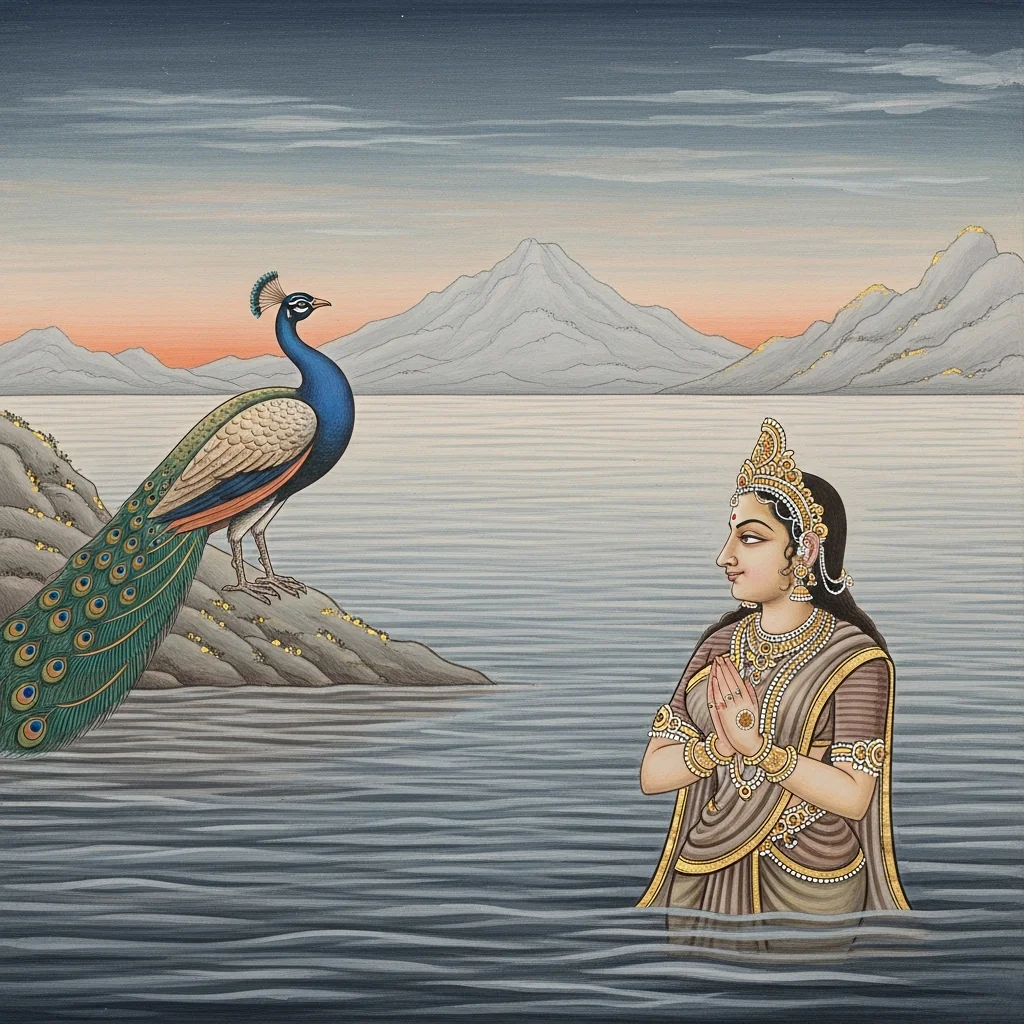
Markaṇḍeya recounts a yuga-ending dissolution in which Mahādeva assumes cosmic forms—first fiery, then cloud-like—and submerges the world into a single ocean. In the dark, primordial waters a radiant peacock-form appears, recognized as Śiva’s operative agency, through which re-creation begins to unfold. There Narmadā is encountered as an enduring, auspicious river-being who, by divine grace, does not perish in the dissolution. At Śiva’s command the world is reconstituted: from the peacock’s wings arise divine and anti-divine hosts, and the earth’s order is restored with the manifestation of Mount Trikūṭa and the ensuing flow of rivers. The chapter then systematizes Narmadā’s theological identity through a catalog of names and etymologies—Mahatī, Śoṇā, Kṛpā, Mandākinī, Mahārṇavā, Revā, Vipāpā, Vipāśā, Vimalā, Raṅjanā—each tied to a function such as purification, compassion, salvific passage across saṃsāra, and auspicious visibility. It concludes with a phala teaching: knowing these names and their origins frees one from wrongdoing and grants access to Rudra’s realm.
Shlokas
Verse 1
मार्कण्डेय उवाच । पुनर्युगान्ते सम्प्राप्ते तृतीये नृपसत्तम । दादशार्कवपुर्भूत्वा भगवान्नीललोहितः
Mārkaṇḍeya said: When the third yugānta came again, O best of kings, the Blessed Lord Nīlalohita assumed a form blazing like twelve suns.
Verse 2
सप्तद्वीपसमुद्रान्तां सशैलवनकाननाम् । निर्दग्धां तु महीं कृत्स्नां कालो भूत्वा महेश्वरः
Becoming Time itself, Maheśvara burned the entire earth—bounded by the oceans and the seven continents—together with its mountains, forests, and groves, until all was reduced to ash.
Verse 3
ततो महाघनो भूत्वा प्लावयामास वारिणा । कृष्णं कृष्णवपुस्त्वेनां विद्युच्चन्द्रायुधाङ्किताम्
Then, becoming a vast cloud, he flooded everything with water—dark and black-bodied, marked with lightning and moon-like emblems as his radiant weapons.
Verse 4
प्लावयित्वा जगत्सर्वं तस्मिन्नेकार्णवीकृते । सुष्वाप विमले तोये जगत्संक्षिप्य मायया
Having inundated the entire universe, and when all had become a single ocean, he slept upon the stainless waters—drawing the worlds back into himself by his māyā.
Verse 5
ततोऽहं भ्रममास्तु तमोभूते महार्णवे । दिव्यं वर्षसहस्रं तु वायुभूते महेश्वरे
Then I wandered within that dreadful great ocean, which had become darkness; and for a thousand divine years Maheśvara remained as wind alone.
Verse 6
। अध्याय
(Chapter marker: “Adhyāya”.)
Verse 7
तस्मिन्महार्णवे घोरे नष्टे स्थावरजङ्गमे । मयूरं स्वर्णपत्राढ्यमपश्यंसहसा जले । विचित्रचन्द्रकोपेतं नीलकंठं सुलोचनम्
In that terrifying great ocean, when all immobile and mobile beings had perished, I suddenly saw in the waters a peacock adorned with golden feathers—blue-throated, fair-eyed, and bearing a wondrous moon-like crest.
Verse 8
ततो मयूरः स महार्णवान्ते विक्षोभयित्वा हि महास्वेण । चचार देवस्त्रिशिखी शिखण्डी त्रैलोक्यगोप्ता स महानुभावः
Then that peacock, at the edge of the great ocean, stirred the waters with a mighty cry; and that divine, three-crested, plumed one—guardian of the three worlds—moved about, a being of immense majesty.
Verse 9
शिवश्च रौद्रेण मयूररूपिणा विक्षोभ्यमाणे सलिलेऽपि तस्मिन् । सह भ्रमन्तीं च महार्णवान्ते सरिन्महौघां सुमहान्ददर्श
And Śiva—fierce in the form of a peacock—while those waters were being churned, saw at the ocean’s edge a tremendously great flood-current of a river, swirling along.
Verse 10
स तां महादेवमयूररूपो दृष्ट्वा भ्रमन्तीं सहसोर्मिजालैः । का त्वं शुभे शाश्वतदेहभूता क्षयं न यातासि महाक्षयान्ते
Seeing her, tossed about by countless nets of waves, Mahādeva in peacock-form asked: “Who are you, auspicious one, possessed of an enduring body, that you do not perish at the time of the great destruction?”
Verse 11
देवासुरगणे नष्टे सरित्सरमहार्णवे । का त्वं भ्रमसि पद्माक्षि क्व गतासि च न क्षयम्
When the hosts of gods and demons had perished in that river-and-lake-like great ocean, he said: “Who are you, lotus-eyed one? Why do you wander here, and how have you not met destruction?”
Verse 12
नर्मदोवाच । तव प्रसादाद्देवेश मृत्युर्मम न विद्यते । सृज देव पुनर्विश्वं शर्वरी क्षयमागता
Narmadā said: “By your grace, O Lord of the gods, death does not exist for me. Therefore, O God, create the universe anew—the night has now come to its end.”
Verse 13
एवमुक्तो महादेवो व्यधुनोत्पक्षपञ्जरम् । तावत्पञ्जरमध्यान्ते तस्य पक्षाद्विनिःसृताः
Thus addressed, Mahādeva shook the cage of wings. At that very moment, from within the cage, they burst forth from his wings.
Verse 14
तावन्तो देवदैत्येन्द्राः पक्षाभ्यां तस्य जज्ञिरे । तेषां मध्ये पुनः सा तु नर्मदा भ्रमते सरित्
So many lords among gods and daityas were born from his two wings. And again, in their midst, that river Narmadā moves about (flows).
Verse 15
ततश्चान्यो महाशैलो दृश्यते भरतर्षभ । त्रिभिः कूटैः सुविस्तीर्णैः शृङ्गवानिव गोवृषः
Then another great mountain is seen, O bull among the Bharatas—broadly spread with three peaks, like a mighty bull adorned with horns.
Verse 16
त्रिकूटस्तु इति ख्यातः सर्वरत्नैर्विभूषितः । ततस्तस्मात्त्रिकूटाच्च प्लावयन्ती महीं ययौ
It is renowned as ‘Trikūṭa’, adorned with every kind of jewel. From that Trikūṭa, she went forth, flooding the earth.
Verse 17
त्रिकूटी तेन विख्याता पितॄणां त्रायणी परा । द्वितीयाच्च ततो गङ्गा विस्तीर्णा धरणीतले
Therefore it is famed as ‘Trikūṭī’, the supreme deliverer of the ancestors. And from the second peak then, the Gaṅgā spread out upon the earth’s surface.
Verse 18
तृतीयं च ततः शृङ्गं सप्तधा खण्डशो गतम् । जम्बूद्वीपे तु संजाताः सप्त ते कुलपर्वताः
And then the third peak split into seven parts. In Jambūdvīpa, from it arose those seven clan-mountains (kulaparvatas).
Verse 19
चन्द्रनक्षत्रसहिता ग्रहग्रामनदीनदाः । अण्डजं स्वेदजं जातमुद्भिज्जं च जरायुजम्
Along with the moon and constellations, the hosts of planets, and the rivers and streams, there came into being beings born from eggs, from sweat, from sprouts (plants), and from wombs (viviparous).
Verse 20
एवं जगदिदं सर्वं मयूरादभवत्पुरा । समस्तं नरशार्दूल महादेवसमुद्भवम्
Thus, in former times, this entire world came forth from the Peacock. All of it, O tiger among men, arose from Mahādeva.
Verse 21
ततो नदीः समुद्रांश्च संविभज्य पृथक्पृथक् । नर्मदामाह देवेशो गच्छ त्वं दक्षिणां दिशम्
Then, having apportioned the rivers and oceans each into their separate domains, the Lord of the gods said to Narmadā: “Go you toward the southern direction.”
Verse 22
एवं सा दक्षिणा गंगा महापातकनाशिनी । उत्तरे जाह्नवी देशे पुण्या त्वं दक्षिणे शुभा
Thus you are the Southern Gaṅgā, the destroyer of great sins. In the northern region the Jāhnavī (Gaṅgā) is holy; in the southern quarter you are auspicious and sacred.
Verse 23
यथा गंगा महापुण्या मम मस्तकसंभवा । तद्विशिष्टा महाभागे त्वं चैवेति न संशयः
Just as Gaṅgā is supremely holy, born from my own head, so too—O greatly blessed one—you are of that very excellence; of this there is no doubt.
Verse 24
त्वया सह भविष्यामि एकेनांशेन सुव्रते । महापातकयुक्तानामौषधं त्वं भविष्यसि
O you of excellent vows, I shall abide with you by a portion of myself. For those afflicted by great sins, you shall become the remedy.
Verse 25
एवमुक्ता तु देवेन महापातकनाशिनी । दक्षिणं दिग्विभागं तु सा जगामाशु विक्रमा
Thus addressed by the God, she—the destroyer of great sins—swiftly set forth toward the southern quarter, endowed with mighty power.
Verse 26
ऋक्षशैलेन्द्रमासाद्य चन्द्रमौलेरनुग्रहात् । वार्यौघैः प्रस्थिता यस्मान्महादेवप्रणोदिता
Having reached the lordly Ṛkṣa mountain, by the grace of the moon-crested Lord (Śiva), she set forth in surging streams of water—impelled by Mahādeva.
Verse 27
महता चापि वेगेन यस्मादेषा समुच्छ्रिता । महती तेन सा प्रोक्ता महादेवान्महीपते
Because she rose forth with a mighty, tremendous rush, she is therefore called ‘Mahatī’. Thus did Mahādeva declare it, O king.
Verse 28
तपतस्तस्य देवस्य शूलाग्राद्बिन्दवोऽपतन् । तेनैषा शोणसंज्ञा तु दश सप्त च ताः स्मृताः
As that God performed austerity, drops fell from the tip of his trident. Therefore she bears the name ‘Śoṇā’; and those drops are remembered as seventeen in number.
Verse 29
सर्वेषां नर्मदा पुण्या रुद्रदेहाद्विनिःसृता । सर्वाभ्यश्च सरिद्भ्यश्च वरदानान्महात्मनः
Among all rivers, Narmadā is holy—having issued forth from Rudra’s very body. By the boon-granting power of that great-souled Lord, she stands above all other streams.
Verse 30
शंकरानुप्रहाद्देवी महापातकनाशिनी । यस्मान्महार्णवे घोरे दृश्यते महती च सा
By Śaṅkara’s grace, the Goddess—destroyer of great sins—appears vast and mighty even amid the dreadful great ocean; therefore she is truly beheld as “Mahatī”.
Verse 31
सुव्यक्ताङ्गी महाकाया महती तेन सा स्मृता । तस्माद्विक्षोभ्यमाणा हि दिग्गजैरम्बुदोपमैः
Her limbs are clearly manifest and her body is immense; therefore she is remembered as “Mahatī”. Hence she is indeed stirred and churned by the elephants of the quarters, resembling great clouds.
Verse 32
कलुषत्वं नयत्येव रसेन सुरसा तथा । कृपां करोति सा यस्माल्लोकानामभयप्रदा
By her divine essence she surely removes impurity, and thus she is “Surasā” (fragrant and godly in taste). Because she bestows compassion upon the worlds and grants fearlessness, she is remembered as “Kṛpā” (Mercy).
Verse 33
संसारार्णवमग्नानां तेन चैषा कृपा स्मृता । पुरा कृतयुगे पुण्ये दिव्यमन्दारभूषिता
Because she shows mercy to those sunk in the ocean of worldly existence, she is therefore remembered as “Kṛpā”. In ancient, holy Kṛta-yuga she shone adorned with celestial mandāra blossoms.
Verse 34
कल्पवृक्षसमाकीर्णा रोहीतकसमाकुला । वहत्येषा च मन्देन तेन मन्दाकिनी स्मृता
Abounding in wish-fulfilling trees and thick with rohītaka trees, she flows gently; therefore she is remembered as “Mandākinī” (the softly-flowing, heavenlike river).
Verse 35
भित्त्वा महार्णवं क्षिप्रं यस्माल्लोकमिहागता । पूज्या सुरैश्च सिद्धैश्च तस्मादेषा महार्णवा
Because she swiftly cleft the great ocean and came into this world, and because she is worshipped by the gods and the siddhas, she is therefore called “Mahārṇavā”—She of the Great Ocean.
Verse 36
विचित्रोत्पलसंघातैरृक्षद्विपसमाकुला
She was thronged with clusters of many-hued lotuses, and along her banks she was crowded with bears and elephants.
Verse 37
भित्त्वा शैलं च विपुलं प्रयात्येवं महार्णवम् । भ्रामयन्ती दिशः सर्वा रवेण महता पुरा
Having cleft a vast mountain, she thus advanced toward the great ocean; and in former times, with her mighty roar, she made all the directions resound and whirl.
Verse 38
प्लावयन्ती विराजन्ती तेन रेवा इति स्मृता । भार्यापुत्रसुदुःखाढ्यान्नराञ्छापैः समावृतान्
Because she bears beings across and shines forth, she is remembered as “Revā”. She aids men encompassed by curses and weighed down by intense sorrows concerning wife and children.
Verse 39
विपापान्कुरुते यस्माद्विपापा तेन सा स्मृता । विण्मूत्रनिचयां घोरां पांशुशोणितकर्दमाम्
Because she makes people free from sin, she is therefore remembered as “Vipāpā”—the destroyer of sin. She removes dreadful accumulations of filth—heaps of excrement and urine—along with mud of dust and blood.
Verse 40
पाशैर्नित्यं तु सम्बाधां यस्मान्मोचयते भृशम् । विपाशेति च सा प्रोक्ता संसारार्णवतारिणी
Because she powerfully releases beings from the constant constriction of bonds, she is called “Vipāśā,” the Liberator from fetters, who carries beings across the ocean of saṃsāra.
Verse 41
नर्मदा विमलाम्भा च विमलेन्दुशुभानना । तमोभूते महाघोरे यस्मादेषा महाप्रभा
She is “Narmadā,” “Vimalāmbhā” of pure waters, and “Vimalendu-śubhānanā,” whose lovely face is like the stainless moon. And because, in dreadful darkness, she shines with great radiance, she is “Mahāprabhā,” of mighty splendor.
Verse 42
विमला तेन सा प्रोक्ता विद्वद्भिर्नृपसत्तम । करैरिन्दुकरप्रख्यैः सूर्यरश्मिसमप्रभा
Therefore the learned declare, O best of kings, that she is called “Vimalā”: her rays are like moonbeams, and her radiance is like the shining rays of the sun.
Verse 43
क्षरन्ती मोदते विश्वं करभा तेन चोच्यते । यस्माद्रञ्जयते लोकान्दर्शनादेव भारत
As she flows forth, the whole world delights; therefore she is also called “Karabhā”. For merely by being seen she gladdens and enchants the people, O Bhārata.
Verse 44
रञ्जनाद्रञ्जना प्रोक्ता धात्वर्थे राजसत्तम । तृणवीरुधगुल्माद्यास्तिर्यञ्चः पक्षिणस्तथा । तानुद्भूतान्नयेत्स्वर्गं तेनोक्ता वायुवाहिनी
From “rañjana,” meaning delighting and coloring, she is called “Rañjanā,” according to the root-sense, O best of kings. Grasses, creepers, shrubs, and other beings—animals and birds as well—when they arise within her sphere, she bears them onward to heaven; therefore she is called “Vāyuvāhinī,” ‘she who is carried by the wind / who carries by the wind.’
Verse 45
एवं यो वेत्ति नामानि निर्गमं च विशेषतः । स याति पापविर्मुक्तो रुद्रलोकं न संशयः
Thus, whoever truly knows these names—and especially their derivations—goes, freed from sin, to Rudra’s world; of this there is no doubt.