Vyāsa-pūjana-prakāra (Procedure for Worship of Vyāsa / the Ācārya)
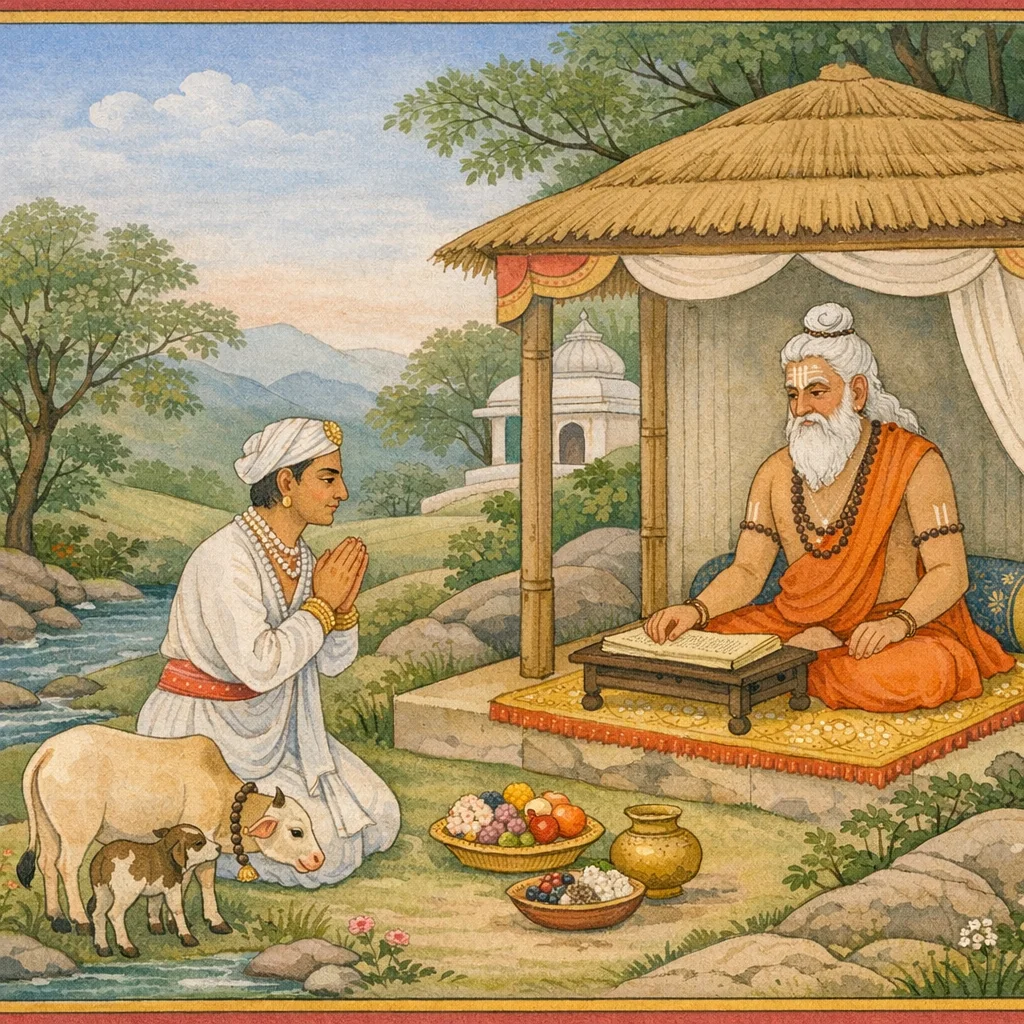
This Adhyāya is a concise instructional dialogue: Śaunaka asks Sūta how one should properly honor the ācārya—especially Vyāsa as guru—after completing the hearing of a sacred text. Sūta prescribes the ritual order: worship the teacher with devotion after the kathā; at the end of the recitation give dāna with a calm, pleased mind; bow to and honor the speaker/reciter with suitable offerings such as ornaments and garments; after completing Śiva-pūjā donate a cow with calf and prepare a golden seat; place a beautifully written manuscript (grantham) and present it to the ācārya, declaring this gift to be liberating from worldly bondage; and, according to one’s means, offer further gifts—land/village, elephant, horse, and the like—to the noble reciter. The chapter insists that Purāṇic hearing becomes truly fruitful only when accompanied by proper vidhi, sanctifying the transmission through guru-pūjā and dāna, and it concludes with the title ‘Vyāsa-pūjana-prakāra’.
Shlokas
Verse 1
शौनक उवाच । आचार्य्यपूजनं ब्रूहि सूत व्यासगुरोऽधुना । ग्रन्थस्य श्रवणान्ते हि किं कर्तव्यं तदप्यहो
Śaunaka said: “O Sūta, now tell us of the proper worship of the ācārya—the teacher in the lineage of Vyāsa. And when the hearing of this sacred text is concluded, what should be done thereafter? Please explain that as well.”
Verse 2
सूत उवाच । पूजयेद्विधिवद्भक्त्याचार्य्यं श्रुत्वा कथां पराम् । ग्रन्थान्ते विधिवद्दद्यादाचार्य्याय प्रसन्नधीः
Sūta said: Having heard this supreme sacred narrative, one should, with devotion, honor the teacher according to proper rite. And at the conclusion of the text, with a serene and pleased mind, one should duly offer a gift to the teacher.
Verse 3
ततो वक्तारमानम्य संपूज्य च यथाविधि । भूषणैर्हस्तकर्णानां वस्त्रैस्सौम्यादिभिस्सुधीः
Then the wise one bowed to the speaker and worshipped him in the proper manner, adorning his hands and ears with ornaments and offering him fine garments and other pleasing items.
Verse 4
शिवपूजासमाप्तौ तु दद्याद्धेनुं सवत्सिकाम् । कृत्वासनं सुवर्णस्य पलमानस्य साम्बरम्
At the conclusion of Śiva-worship, one should give in charity a cow together with her calf. One should also prepare a seat made of gold, weighing a pala, along with its covering, and offer it as a sacred gift.
Verse 5
तत्रास्थाप्य शुभं ग्रंथं लिखितं ललिताक्षरैः । आचार्याय सुधीर्दद्यान्मुक्तः स्याद्भवबन्धनैः
Having placed there an auspicious scripture, beautifully written in elegant letters, the wise devotee should present it to the ācārya, the spiritual preceptor; by that act he is freed from the bonds of saṃsāra.
Verse 6
ग्रामो गजो हयश्चापि यथाशक्त्यपराणि च । मुने सर्वाणि देयानि वाचकाय महात्मने
O sage, according to one’s capacity, a village, an elephant, a horse, and other gifts as well—indeed all such offerings should be given to the noble reciter of the Purāṇa, the great-souled one.
Verse 7
विधानसहितं सम्यक्छतं हि सफलं स्मृतम् । पुराणं शौनकमुने सत्यमेवोदितं मया
That which is duly performed together with the prescribed injunctions is indeed remembered as fruitful. O sage Śaunaka, this Purāṇa has been spoken by me in truth alone.
Verse 8
तस्माद्विधानदुक्तं तु शृणुयाद्भक्तितो मुने । पुराणं निगमार्थाढ्यं पुण्यदं हृदयं श्रुतेः
Therefore, O sage, one should listen with devotion to this Purāṇa as prescribed. It is rich with the meaning of the Vedas, bestows merit, and is the very heart of revealed scripture.
Verse 43
इति श्रीशिवमहापुराणे पञ्चम्यामुमासंहितातायां व्यासपूजनप्रकारो नाम त्रिचत्वारिंशोऽध्यायः
Thus ends the forty-third chapter, called “The Procedure for the Worship of Vyāsa,” in the fifth book of the Śrī Śiva Mahāpurāṇa, in the Umā-saṃhitā.
Frequently Asked Questions
Rather than a mythic episode, the chapter presents a theological-ritual argument: hearing (śravaṇa) of Purāṇic discourse is not fully efficacious unless concluded with prescribed vidhi—especially honoring the ācārya/Vyāsa principle and the vācaka through worship and donations.
The cow-with-calf (dhenu savatsikā) signifies sustaining dharma and continuity of spiritual nourishment; the written grantha offered to the teacher sacralizes textual transmission and lineage; and dāna functions as ‘ritual sealing’ that converts listening into embodied commitment, purifying karmic residue and orienting the act toward mokṣa.
No distinct iconographic form of Śiva or Umā is foregrounded; Śiva appears as the ritual context (Śiva-pūjā completion), while the chapter’s focus is the guru/Vyāsa principle as the living conduit through which Śaiva scripture becomes spiritually operative.