Sukta 69
Sukta 5.69
Atri (Ātreya)
Mitra-Varuṇa
Triṣṭubh (likely; long verse with multiple pādas—verify)
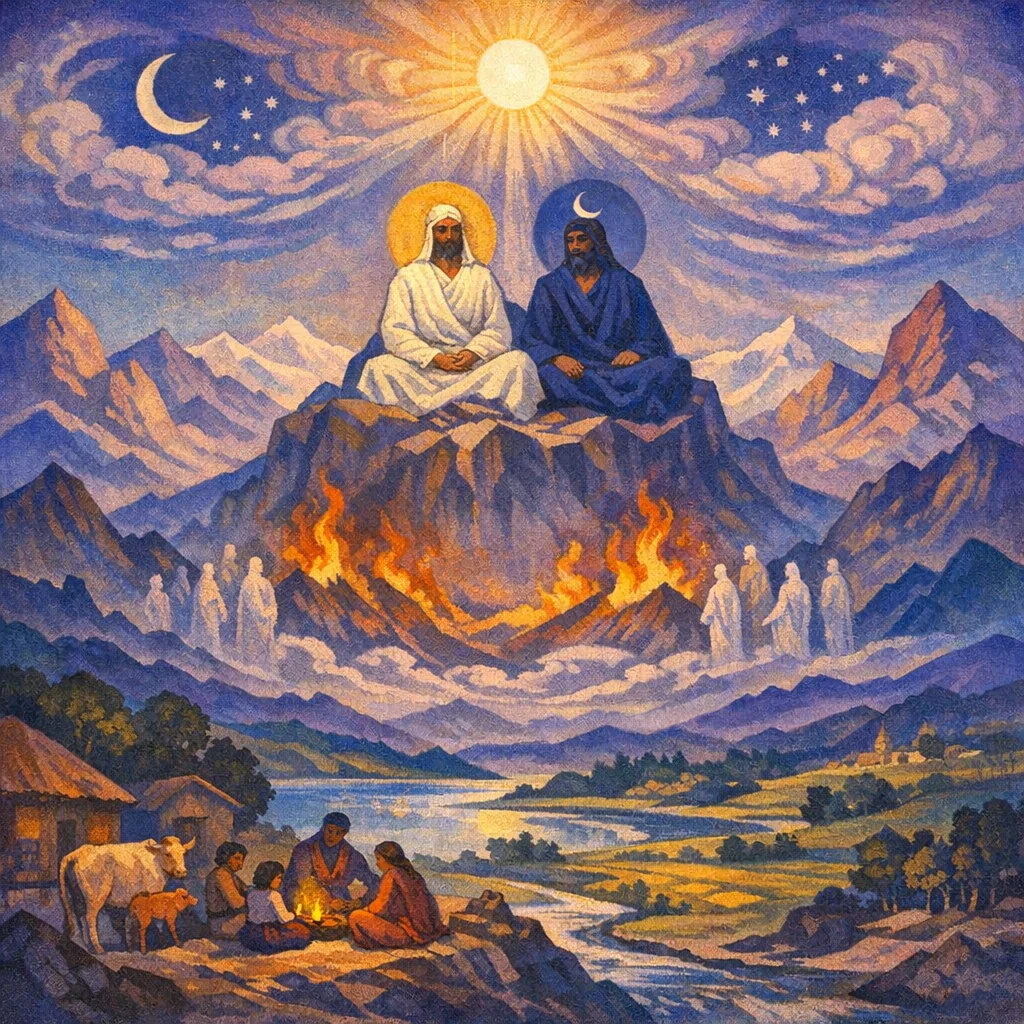
This short Atri hymn praises Mitra and Varuṇa as the Ādityas who uphold the three luminous realms and enforce unwavering cosmic ordinances (vratāni). It asks them to protect the divine Law, remove crooked or misguided counsel from rulership and the community, and grant well-being, prosperity (rāyí), and peace for family and posterity.
Mantras
Mantra 1
त्री रोचना वरुण त्रीँरुत द्यून्त्रीणि मित्र धारयथो रजांसि । वावृधानावमतिं क्षत्रियस्यानु व्रतं रक्षमाणावजुर्यम् ॥
You uphold the three luminous realms, O Varuṇa; and the three days; and the three spaces, O Mitra. Increasing, you guard the unperishing Law, and you drive out the unright thought of the ruler within us, so that sovereignty may follow the divine ordinance.
Mantra 2
इरावतीर्वरुण धेनवो वां मधुमद्वां सिन्धवो मित्र दुह्रे । त्रयस्तस्थुर्वृषभासस्तिसृणां धिषणानां रेतोधा वि द्युमन्तः ॥
O Varuṇa, the nourishing cows of your power, rich in plenty, yield; O Mitra, the honeyed rivers of your being flow forth. Three mighty bulls stand as seed-bearers of the three inspirations, shining out in luminous force.
Mantra 3
प्रातर्देवीमदितिं जोहवीमि मध्यंदिन उदिता सूर्यस्य । राये मित्रावरुणा सर्वतातेळे तोकाय तनयाय शं योः ॥
At dawn I call the Goddess Aditi; at mid-day, when the Sun has risen. For the soul’s plenitude (rāyí), I adore Mitra and Varuṇa, the all-embracing powers, for the well-being and glad peace of our inner child and the growing offspring of the being.
Mantra 4
या धर्तारा रजसो रोचनस्योतादित्या दिव्या पार्थिवस्य । न वां देवा अमृता आ मिनन्ति व्रतानि मित्रावरुणा ध्रुवाणि ॥
You who uphold the luminous realm and the wide spaces, O divine Ādityas, of heaven and of earth—no immortal gods can shake your firm ordinances, O Mitra and Varuṇa.
Frequently Asked Questions
They are paired Āditya deities who protect cosmic and moral order (ṛta). Mitra emphasizes harmony and right relations, while Varuṇa emphasizes truth, conscience, and binding law.
It refers to the stable laws that keep the world and society in order—truthfulness, right conduct, and the dependable rhythms of nature. The sukta says these ordinances are so strong that even other gods do not overturn them.
It reflects a daily rhythm of worship: calling on Aditi and the Ādityas at key times of light. Symbolically, it also suggests renewing one’s commitment to truth and right action as the day begins and as it reaches fullness.