Sukta 132
Sukta 1.132
Indra (primary), with supportive epithets invoking dawn-awakening and straight course
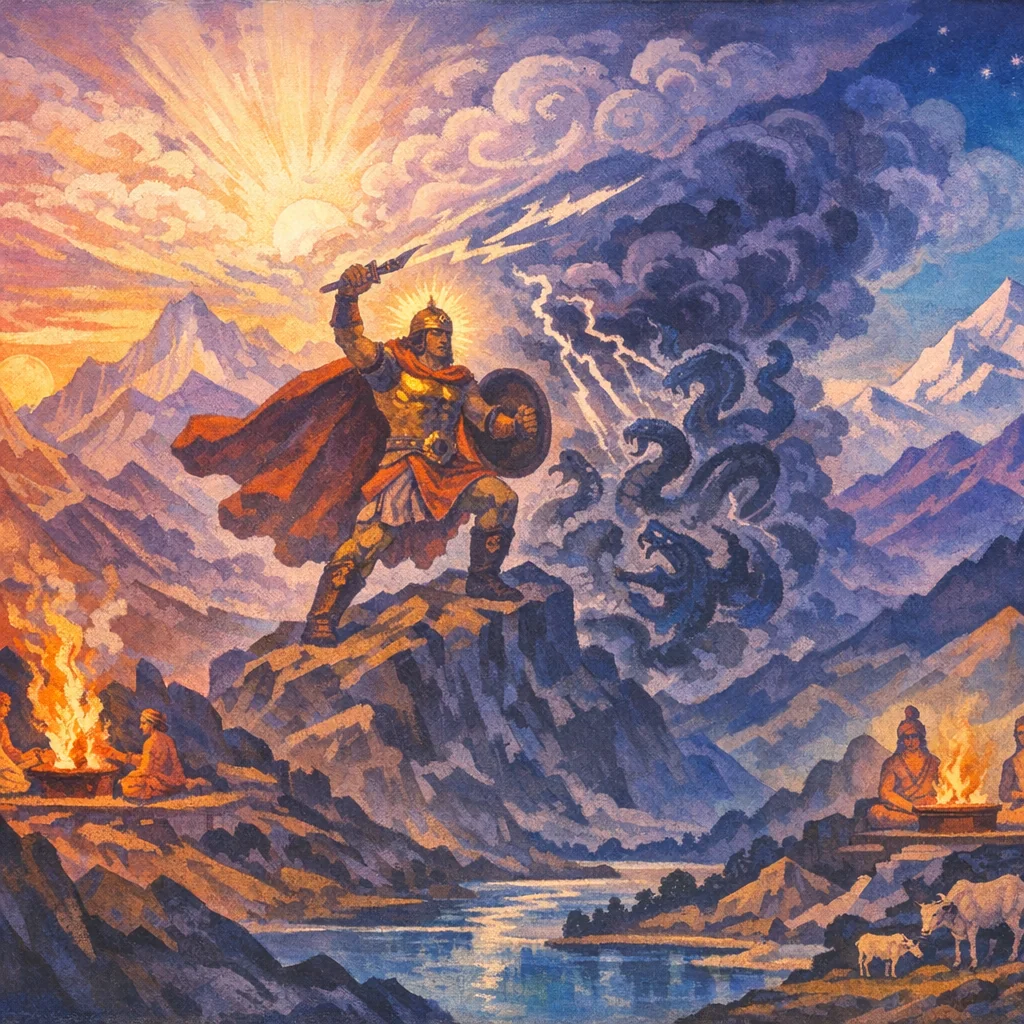
This short Indra-hymn invokes the dawn-awakened, straight-moving power of Indra for victory in the luminous world and success in battle and contest. It recalls Indra’s archetypal deeds—opening the Vala-like enclosure for the Aṅgirasas and striking down stacked “heads” of obstruction—so that his gifts may come directly and auspiciously to the worshipper. The hymn also emphasizes right sacrifice (Soma-pressing) and asks Indra to subdue the lawless who oppose the rite.
Mantras
Mantra 2
स्वर्जेषे भर आप्रस्य वक्मन्युषर्बुधः स्वस्मिन्नञ्जसि क्राणस्य स्वस्मिन्नञ्जसि । अहन्निन्द्रो यथा विदे शीर्ष्णाशीर्ष्णोपवाच्यः । अस्मत्रा ते सध्र्यक्सन्तु रातयो भद्रा भद्रस्य रातयः ॥
For the winning of the luminous world, in the onset of the battle, at the utterance of the invoker—O Dawn-awakened Power—on your own straight path, on your own straight path of advancing force: as Indra struck down, for our knowing, the head upon head that must be named and exposed; so here may your gifts come straight to us—auspicious gifts of the auspicious.
Mantra 3
तत्तु प्रयः प्रत्नथा ते शुशुक्वनं यस्मिन्यज्ञे वारमकृण्वत क्षयमृतस्य वारसि क्षयम् । वि तद्वोचेरध द्वितान्तः पश्यन्ति रश्मिभिः । स घा विदे अन्विन्द्रो गवेषणो बन्धुक्षिद्भ्यो गवेषणः ॥
That forward impulse of yours, ancient in its way, resounding—by which in the sacrifice they made for themselves a wide opening, a dwelling of ṛta, a home. Declare it forth; then indeed they see within by the rays. Thus Indra, the seeker of the luminous herds, follows for the knower—seeker of the rays even for those bound in kinship and settlement.
Mantra 4
नू इत्था ते पूर्वथा च प्रवाच्यं यदङ्गिरोभ्योऽवृणोरप व्रजमिन्द्र शिक्षन्नप व्रजम् । ऐभ्यः समान्या दिशास्मभ्यं जेषि योत्सि च । सुन्वद्भ्यो रन्धया कं चिदव्रतं हृणायन्तं चिदव्रतम् ॥
Now indeed this also, as in the former way, is to be proclaimed: how for the Angirases you opened the pen—O Indra, teaching, you opened the enclosure. From that common direction win for us and fight. And for the pressers of Soma, subdue any lawless one—even one who rages in lawlessness.
Mantra 5
सं यज्जनान्क्रतुभिः शूर ईक्षयद्धने हिते तरुषन्त श्रवस्यवः प्र यक्षन्त श्रवस्यवः । तस्मा आयुः प्रजावदिद्बाधे अर्चन्त्योजसा । इन्द्र ओक्यं दिधिषन्त धीतयो देवाँ अच्छा न धीतयः ॥
When the Hero surveys and marshals the peoples by powers of will for the good won in battle, the seekers of glory press forward and sacrifice. To him they chant with force for life that is rich in offspring (new becomings), in the moment of driving back the resistance. The inspired thoughts set Indra in the home within, drawing the gods toward us—so do the inspired thoughts.
Frequently Asked Questions
For victory and success, for gifts to come directly and auspiciously, and for Indra to remove obstacles and defeat lawless opponents who resist the rite.
It recalls a famous Indra-deed: he opened the closed pen/enclosure (vraja), releasing hidden wealth/light. The hymn uses this as proof that Indra can also ‘open’ blocked conditions for the worshipper.
It suggests direct, unhindered movement of Indra’s power and gifts—both outwardly (victory and protection) and inwardly (clear will that cuts through confusion and obstruction).