Sarga 111
अयोध्याकाण्डे एकादशोत्तरशततमः सर्गः (Sarga 111: Counsel on Gurus, Parental Debt, and Bharata’s Protest)
अयोध्याकाण्ड
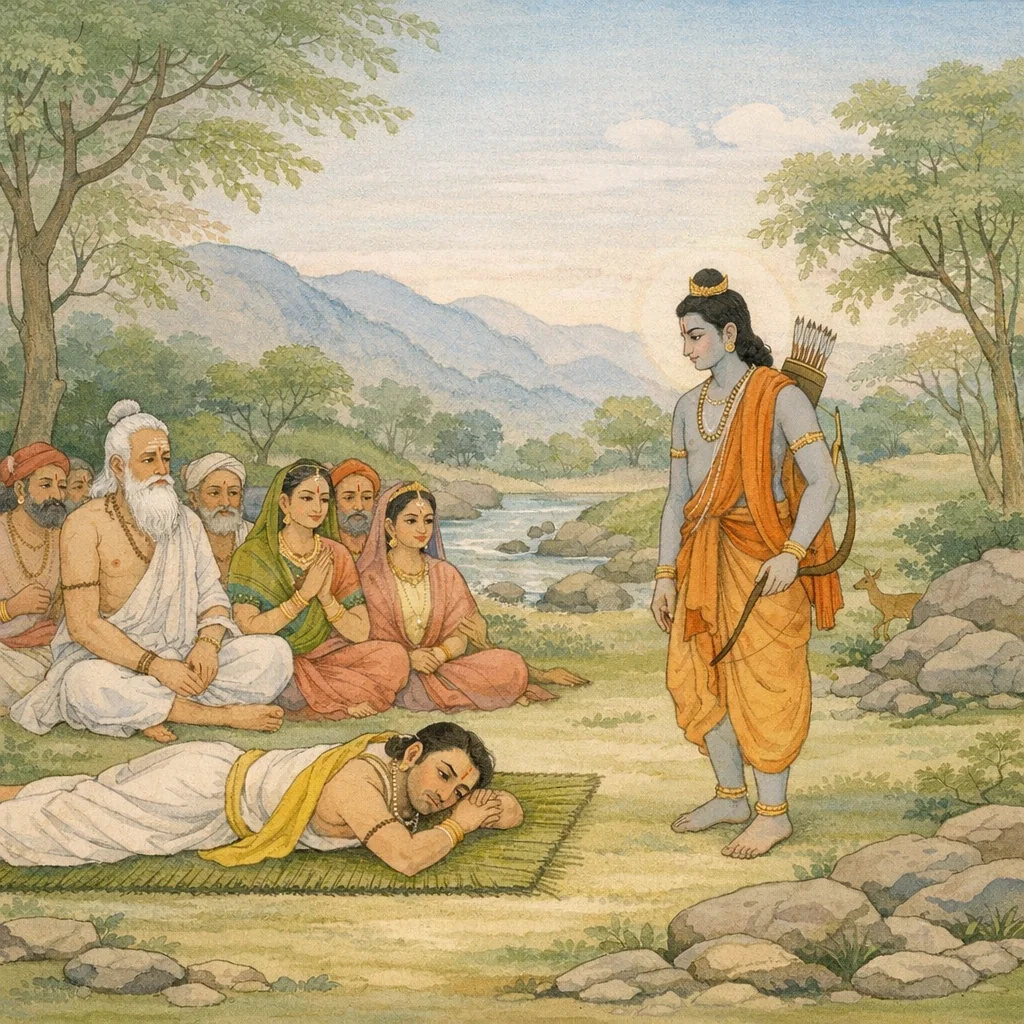
This sarga presents a structured ethical debate on authority and the repayment of obligations. Vasiṣṭha, as rājapurohita and guru, reminds Rāma of the three “gurus” of a person—ācārya, father, and mother—and maintains that obedience to elders and to the assembly safeguards the path of the virtuous. Rāma replies that the debt to one’s parents for nurture and affection can never be fully repaid, and that his promise to Daśaratha must not become untrue. The focus then turns to Bharata: overwhelmed with grief, he has kuśa grass spread and attempts pratyupaveśana (lying down in protest) before Rāma’s hut, seeking Rāma’s return. Rāma rejects such protest as improper for an anointed ruler, urges Bharata to rise and return to Ayodhyā, and speaks with the gathered townspeople and villagers, who admit they cannot turn Rāma from his father’s command. Bharata formally addresses the assembly, denies any complicity in the demand for kingship, and offers to undertake the fourteen-year forest residence himself. Astonished by Bharata’s sincerity, Rāma reiterates the binding force of Daśaratha’s prior commitments and deems substitution in exile ethically blameworthy, reaffirming the decision as aligned with dharma and truth.
Shlokas
Verse 1
वसिष्ठस्तु तदा राममुक्त्वा राजपुरोहितः।अब्रवीद्धर्मसंयुक्तं पुनरेवापरं वचः।।।।
Then Vasiṣṭha, the royal priest, having addressed Rāma, spoke once more—words joined to dharma.
Verse 2
पुरुषस्येह जातस्य भवन्ति गुरवस्त्रयः।आचार्यश्चैव काकुत्स्थ पिता माता च राघव।।।।
For every person born into this world, there are three gurus: the teacher, the father, and the mother—O Kakutstha, O Rāghava.
Verse 3
पिता ह्येवं जनयति पुरुषं पुरुषर्षभ।प्रज्ञां ददाति चाचार्यस्तस्मात्स गुरुरुच्यते।।।।
A father begets a person in this way, O best of men; but it is the teacher who bestows wisdom—therefore he is called the guru.
Verse 4
सोऽहं ते पितुराचार्यस्तव चैव परन्तप।मम त्वं वचनं कुर्वन्नातिवर्तेस्सतां गतिम्।।।।
I am the preceptor of your father and also yours, O destroyer of foes; by carrying out my word, you will not transgress the path of the virtuous.
Verse 5
इमा हि ते परिषद श्श्रेणयश्च द्विजास्तथा।एषु तात चरन्धर्मं नातिवर्ते: सतां गतिम्।।।।
These are your own—this assembly, the guilds, and the twice-born as well. My child, by practicing your dharma toward them, you will not stray from the path of the virtuous.
Verse 6
वृद्धाया धर्मशीलाया मातुर्नार्हस्यवर्तितुम्।अस्या हि वचनं कुर्वन्नातिवर्तेस्सतां गतिम्।।।।
She is your aged mother, steadfast in righteousness; it is not fitting for you to withhold your service from her. By doing her bidding, you will not depart from the path of the virtuous.
Verse 7
भरतस्य वचः कुर्वन्याचमानस्य राघव।आत्मानं नातिवर्तेस्त्वं सत्यधर्मपराक्रम।।।।
O Rāghava, if you comply with the words of Bharata who is pleading, you will not go against your own inner self—O you whose strength is rooted in truth and righteousness.
Verse 8
एवं मधुरमुक्तस्सन् गुरुणा राघवस्स्वयम्।प्रत्युवाच समासीनं वसिष्ठं पुरुषर्षभः।।।।
Thus addressed in gentle words by his teacher, Rāghava himself—the best of men—replied to Vasiṣṭha who sat nearby.
Verse 9
यन्मातापितरौ वृत्तं तनये कुरुत: सदा।न सुप्रतिकरं तत् तु मात्रा पित्रा च यत्कृतम्।।।।यथाशक्ति प्रदानेन स्वापनोच्छादनेन च।नित्यं च प्रियवादेन तथा संवर्धनेन च।।।।
Whatever care parents always show toward a child—support given according to their means, lulling him to sleep and clothing him, speaking lovingly day after day, and raising him—what mother and father do thus can scarcely ever be repaid.
Verse 10
यन्मातापितरौ वृत्तं तनये कुरुतस्सदा।न सुप्रतिकरं तत्तु मात्रा पित्रा च यत्कृतम्।।2.111.9।।यथाशक्तिप्रदानेन स्वापनोच्छादनेन च।नित्यं च प्रियवादेन तथा संवर्धनेन च।।2.111.10।।
Whatever care and conduct a mother and father continually show toward their child—the gifts they give according to their means, the putting to sleep and clothing, the constant gentle speech, and the very act of rearing—none of that can be easily repaid to mother and father.
Verse 11
स हि राजा जनयिता पिता दशरथो मम।आज्ञातं यन्मया तस्य न तन्मिथ्या भविष्यति।।।।
For King Daśaratha is my father who begot me; whatever I have pledged to him shall never become false.
Verse 12
एवमुक्तस्तु रामेण भरतः प्रत्यनन्तरम्।उवाच परमोदारस्सूतं परमदुर्मनाः।।।।
Thus addressed by Rāma, Bharata—noble and exceedingly generous, yet overwhelmed with grief—spoke at once to the charioteer standing nearby.
Verse 13
इह मे स्थण्डिले शीघ्रं कुशानास्तर सारथे।आर्यं प्रत्युपवेक्ष्यामि यावन्मे न प्रसीदति।।।।
O charioteer, quickly spread kuśa grass for me here on the bare ground. Until my noble elder brother shows me favor, I will lie here in protest, waiting for him.
Verse 14
अनाहारो निरालोको धनहीनो यथा द्विजः।शेष्ये पुरस्ताच्छालाया यावन्न प्रतियास्यति।।।।
Fasting, shunning the light, and like a poor brahmin without wealth, I will lie down before the hut until he agrees to return.
Verse 15
स तु राममवेक्षन्तं सुमन्त्रं पेक्ष्य दुर्मनाः।कुशोत्तरमुपस्थाप्य भूमावेवाऽस्तरत्स्वयम्।।।।
Troubled at heart, Bharata saw Sumantra watching Rāma for instructions; then Bharata himself brought a spread of kuśa grass and laid it out upon the ground.
Verse 16
तमुवाच महातेजा रामो राजर्षिसत्तमः।किं मां भरत कुर्वाणं तात प्रत्युपवेक्ष्यसि।।।।
Rama, mighty in splendor, the best among royal sages, said to him: “Dear Bharata, what wrong have I done that you would lie down in protest before me and block my way?”
Verse 17
ब्राह्मणो ह्येकपार्श्वेन नरान्रोद्धुमिहार्हति।न तु मूर्धाभिषिक्तानां विधिः प्रत्युपवेशने।।।।
In this world, only a brahmin, lying on one side, is regarded as having the authority to restrain others in such a manner; but for one anointed to kingship, there is no scriptural rule permitting protest by lying down.
Verse 18
उत्तिष्ठ नरशार्दूल हित्वैतद्दारुणं व्रतम्।पुरवर्यामितः क्षिप्रमयोध्यां याहि राघव।।।।
Rise, tiger among men; abandon this harsh vow. From here, go quickly to Ayodhya, the foremost of cities, O scion of Raghu.
Verse 19
आसीनस्त्वेव भरतः पौरजानपदं जनम्।उवाच सर्वतः प्रेक्ष्य किमार्यं नानुशासथ।।।।
Still seated, Bharata looked all around at the townsmen and villagers and said, “Why do you not counsel my noble elder brother (Rama)?”
Verse 20
ते तदोचुर्महात्मानं पौरजानपदा जनाः।काकुत्स्थमभिजानीमः सम्यग् वदति राघवः।।।।
Then the townsmen and villagers said to the great-souled Bharata: “We know Kakutstha (Rama) well; what Rāghava has spoken is right.”
Verse 21
एषोऽपि हि महाभागः पितुर्वचसि तिष्ठति।अत एव न शक्ताः स्मो व्यावर्तयितुमञ्जसा।।।।
For this illustrious one stands firm in his father’s command; therefore we are not able to turn him back quickly or easily.
Verse 22
तेषामाज्ञाय वचनं रामो वचनमब्रवीत्।एवं निबोध वचनं सुहृदां धर्मचक्षुषाम्।।।।
Understanding what they had said, Rama replied: “Hear, then, the counsel of our well-wishing friends, whose vision is guided by dharma.”
Verse 23
एतच्चैवोभयं श्रुत्वा सम्यक्सम्पश्य राघव।उत्तिष्ठ त्वं महाबाहो मां च स्पृश तथोदकम्।।।।
“Having heard both sides, reflect on it rightly, O Rāghava. Rise, O mighty-armed one; touch me, and then touch water (perform ācamana).”
Verse 24
अथोत्थाय जलंस्पृष्ट्वा भरतो वाक्यमब्रवीत्।श्रुण्वन्तु मे परिषदो मन्त्रिण श्श्रेणयस्तथा।।।।
Then Bharata rose, touched water in ritual purification, and spoke: “Let the assembly hear me—counsellors, and the guild-leaders as well.”
Verse 25
न याचे पितरं राज्यं नानुशासामि मातरम्।आर्यं परमधर्मज्ञं नानुजानामि राघवम्।।।।
I did not ask my father for the kingdom, nor did I urge my mother to seek it. Nor did I consent to the banishment of Rāghava—noble and supremely learned in dharma.
Verse 26
यदित्ववश्यं वस्तव्यं कर्तव्यं च पितुर्वचः।अहमेव निवत्स्यामि चतुर्दश समा वने।।।।
If dwelling in the forest is truly unavoidable, and our father’s word must be fulfilled, then I myself will live in the forest for fourteen years.
Verse 27
धर्मात्मा तस्य तथ्येन भ्रातुर्वाक्येन विस्मितः।उवाच राम स्सम्प्रेक्ष्य पौरजानपदं जनम्।।।।
Rama, steadfast in dharma, was astonished by the truthfulness of his brother’s words; looking upon the citizens and countryfolk, he addressed them.
Verse 28
विक्रीतमाहितं क्रीतं यत्पित्रा जीवता मम।न तल्लोपयितुं शक्यं मया वा भरतेन वा।।।।
What my father, while still alive, has sold, pledged, or purchased—neither I nor Bharata can undo or annul that.
Verse 29
उपधिर्न मया कार्यो वनवासे जुगुप्सितः।युक्तमुक्तं च कैकेय्या पित्रा मे सुकृतं कृतम्।।।।
As for forest-dwelling, it would be disgraceful for me to set up a substitute in my place—this must not be done. Kaikeyī spoke what was fitting, and my father performed a righteous act.
Verse 30
जानामि भरतं क्षान्तं गुरुसत्कारकारिणम्।सर्वमेवात्र कल्याणं सत्यसन्धे महात्मनि।।।।
I know Bharata—patient, and one who honors elders and teachers. For this great soul, steadfast in truth, all here will surely end in good.
Verse 31
अनेन धर्मशीलेन वनात्प्रत्यागतः पुनः।भ्रात्रा सह भविष्यामि पृथिव्याः पतिरुत्तमः।।।।
When I return again from the forest, together with this brother of righteous conduct, I shall become the foremost lord of this earth.
Verse 32
वृतो हि राजा कैकेय्या मया तद्वचनं कृतम्।अनृतान्मोचयानेन पितरं तं महीपतिम्।।।।
For the king was pressed by Kaikeyī, and I have carried out that word; therefore, by this act, release that father of ours—the lord of the earth—from the stain of untruth.
Frequently Asked Questions
Bharata attempts pratyupaveśana—lying down in protest to compel Rāma’s return—while Rāma maintains that an anointed ruler should not use such coercive protest and that Daśaratha’s command must remain binding.
Dharma is framed as fidelity to legitimate obligations: gratitude to parents is beyond repayment, guru and community counsel matter, yet truth-keeping and the father’s pledged word remain non-negotiable anchors for righteous action.
Ayodhyā is named as the civic center to which Bharata is urged to return; culturally, the sarga highlights kuśa grass as a ritual/protest implement, ācamanam (sipping water) as a formal act before public speech, and the authority of the parishad (assembly) of counsellors, guilds, and twice-born.