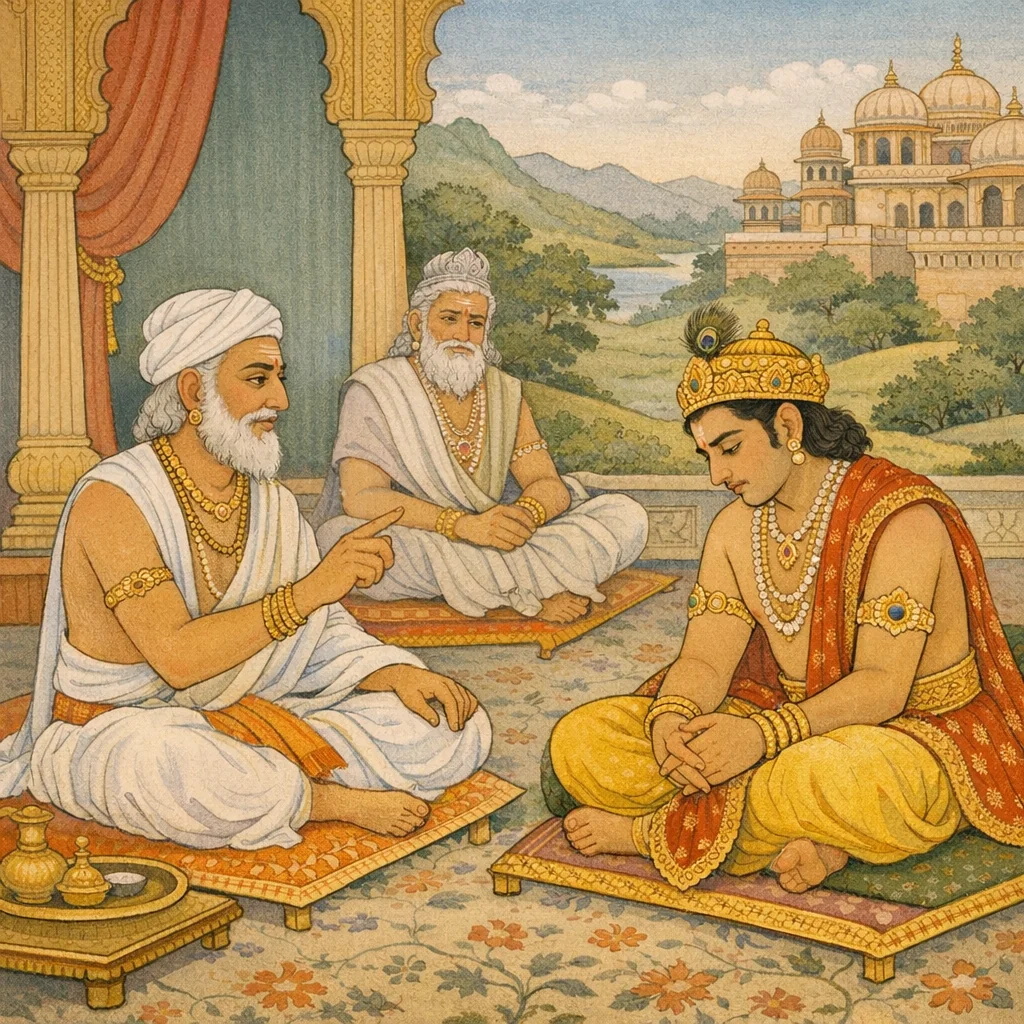
Adhyaya 29
Virāṭa-parva Adhyāya 29 — Suśarmā’s Counsel and the Coordinated Goharaṇa Plan
Upa-parva: Goharaṇa (Cattle-Raid) Episode within Virāṭa-parva
Vaiśaṃpāyana reports that Suśarmā, king of the Trigartas, addresses Duryodhana with urgency, recounting prior humiliations inflicted by Matsya forces and especially by Kīcaka, described as formerly powerful and now slain. Suśarmā interprets Kīcaka’s death as a strategic inflection point: Virāṭa will be dispirited and without a key enforcer. He proposes an immediate expedition into Matsya territory to seize valuables—gems, goods, villages, and especially large herds of cattle—either through coercion or by forcing submission after defeating the army. Karṇa approves the counsel as timely and advantageous, urging swift mobilization and consultation with senior figures (Bhīṣma, Droṇa, Kṛpa). He minimizes concern about the Pandavas, suggesting they are either diminished or absent. Duryodhana then orders Duḥśāsana to organize the host; the Kauravas plan to proceed together while Suśarmā advances earlier with Trigarta forces to a designated direction. The forces are split to optimize capture; the raid unfolds over successive days, culminating in mass seizure of Matsya cattle enclosures in the seventh and eighth lunar days referenced in the text.
Chapter Arc: वैशम्पायन जनमेजय से कहते हैं—सभा में कृपाचार्य उठते हैं और भीष्म के पूर्व कथन को ‘धर्म-अर्थ से युक्त, तात्विक और सकारण’ बताकर उसी के अनुरूप अपनी नीति-भाषा सुनाने लगते हैं। → कृप दुर्योधन को चेताते हैं कि अज्ञातवास पूर्ण होते ही पाण्डव महोत्साह और अमित पराक्रम के साथ प्रकट होंगे; इसलिए केवल आवेश नहीं, अपनी वास्तविक शक्ति, मित्र-शत्रु की स्थिति, और सेनाओं के उत्तम-मध्यम-अधम भेद का सूक्ष्म आकलन आवश्यक है। → कृप का निर्णायक उपदेश—राजनीति के चार उपाय (साम, दान, भेद, दण्ड) तथा ‘न्याय से आक्रमण’ और ‘बल से दुर्बल को झुकाना’—इन सबको यथास्थान जोड़कर ही पाण्डवों के प्रसंग में निर्णय करो; अन्यथा बलवान शत्रु के सामने भीषण परिणाम होंगे। → वे दुर्योधन को स्वधर्म के अनुसार ‘सम्पूर्ण विनिश्चय’ करके यथाकाल कर्म करने की सलाह देते हैं, जिससे दीर्घकालिक सुख/स्थिरता प्राप्त हो—अर्थात् उतावलेपन के स्थान पर नीति-युक्त, समयोचित राज्य-व्यवहार। → कृप आदि महात्माओं की बात सुनकर दुर्योधन कुछ क्षण विचार करता है और फिर मंत्रियों से बोलने को उद्यत होता है—अब उसका प्रत्युत्तर और अगला कदम क्या होगा?
Shlokas
Verse 1
वैशम्पायनजी कहते हैं--राजन्! इसके पश्चात् महर्षि शरद्वानके पुत्र कृपाचार्यने उस समय यह बात कही--'राजन्! वयोवृद्ध भीष्मजीने पाण्डवोंके विषयमें जो कुछ कहा है, वह युक्तियुक्त तो है ही, अवसरके अनुकूल भी है
Vaiśampāyana said: “O King! After this, Kṛpācārya, the son of the sage Śaradvat, spoke these words at that time: ‘O King! What the aged Bhīṣma has said concerning the Pāṇḍavas is not only reasonable, but also fitting to the occasion.’”
Verse 2
धर्मार्थसहितं श्लक्ष्णं तत्त्वतश्न सहेतुकम् । तत्रानुरूपं भीष्मेण ममाप्यत्र गिरं शूणु
Vaiśampāyana said: “Hear from me as well the words spoken here by Bhīṣma—refined in expression, grounded in truth, supported by sound reasoning, and aligned with the aims of dharma and artha, fitting to the occasion.”
Verse 3
“उसमें धर्म और अर्थ दोनों ही संनिहित हैं। वह सुन्दर, तात्विक और सकारण है। इस विषयमें मेरा भी जो कथन है, वह भीष्मजीके ही अनुरूप है, उसे सुनो ।। तेषां चैव गतिस्तीर्थ्वासश्रैषां प्रचिन्त्यताम् | नीतिर्विधीयतां चापि साम्प्रतं या हिता भवेत्,“तुमलोग गुप्तचरोंसे पाण्डवोंकी गति और स्थितिका पता लगवाओ और उसी नीतिका आश्रय लो, जो इस समय हितकारिणी हो
Vaiśampāyana said: “Let their movements and whereabouts be carefully ascertained—by resorting to secret agents—and then, in the present situation, let that policy be adopted and put into effect which will truly be beneficial.”
Verse 4
नावज्ञेयो रिपुस्तात प्राकृतोडपि बुभूषता । कि पुन: पाण्डवास्तात सर्वास्त्रकुशला रणे,“तात! जिसे सम्राट् बननेकी इच्छा हो, उसे साधारण शत्रुकी भी अवहेलना नहीं करनी चाहिये। फिर जो युद्धमें सम्पूर्ण अस्त्र-शस्त्रोंक संचालनमें कुशल हैं, उन पाण्डवोंकी तो बात ही क्या है?
“My son, one who aspires to sovereignty should not disdain even an ordinary foe. How much more, then, the Pāṇḍavas—skilled in the use of every weapon in battle!”
Verse 5
तस्मात् सत्रं प्रविष्टेषु पाण्डवेषु महात्मसु । गूढभावेषु छन्नेषु काले चोदयमागते,“अतः इस समय जब कि महात्मा पाण्डव छटद्ववेष धारण करके (अर्थात् वेष बदलकर) गुप्तरूपसे छिपे हुए हैं और अज्ञातवासकी जो नियत अवधि थी, वह प्राय: समाप्त हो चली है, स्वराष्ट्र और परराष्ट्रमें अपनी कितनी शक्ति है--इसे समझ लेना चाहिये। इसमें संदेह नहीं कि उपयुक्त समय आते ही पाण्डव प्रकट हो जायँगे
Vaiśampāyana said: “Therefore, now that the great-souled Pāṇḍavas have entered their period of concealment—disguised and hidden in intent—and the appointed time is drawing to its close, one should assess the strength of one’s own realm and that of rival realms. There is no doubt that when the proper moment arrives, the Pāṇḍavas will reveal themselves.”
Verse 6
स्वराष्ट्रे परराष्ट्रे च ज्ञातव्यं बलमात्मन: । उदय: पाण्डवानां च प्राप्ते काले न संशय:,“अतः इस समय जब कि महात्मा पाण्डव छटद्ववेष धारण करके (अर्थात् वेष बदलकर) गुप्तरूपसे छिपे हुए हैं और अज्ञातवासकी जो नियत अवधि थी, वह प्राय: समाप्त हो चली है, स्वराष्ट्र और परराष्ट्रमें अपनी कितनी शक्ति है--इसे समझ लेना चाहिये। इसमें संदेह नहीं कि उपयुक्त समय आते ही पाण्डव प्रकट हो जायँगे
Vaiśampāyana said: “One should assess one’s own strength—both within one’s own realm and in relation to other realms. And there is no doubt that, when the proper time arrives, the Pāṇḍavas will rise and reveal themselves.”
Verse 7
निवृत्तसमया: पार्था महात्मानो महाबला: | महोत्साहा भविष्यन्ति पाण्डवा हमितौजस:,“अज्ञातवासका समय पूर्ण कर लेनेपर कुन्तीके वे महाबली, अमितपराक्रमी और महात्मा पुत्र पाण्डव महान् उत्साहसे सम्पन्न हो जायँगे
Vaiśampāyana said: “When the appointed period (of their incognito exile) has been completed, the Pāṇḍavas—Kuntī’s sons, the Pārthas—great-souled and mighty, of immeasurable prowess, will become filled with renewed high resolve.”
Verse 8
तस्माद् बल॑ च कोषश्न नीतिश्लापि विधीयताम् । यथा कालोदये प्राप्ते सम्यक् तैः संदधामहे,“अत: इस समय तुम्हें अपनी सेना, कोष और नीति ऐसी बनायी रखनी चाहिये, जिससे समय आनेपर हम उनके साथ यथावत् सन्धि (मेल अथवा बाण-संधान) कर सकें
Therefore, let your military strength, treasury, and statecraft be kept in proper order, so that when the right time dawns we may deal with them appropriately—whether by forming a prudent alliance or by joining battle with well-aimed force.
Verse 9
तात बुद्धयापि तत् सर्व बुध्यस्व बलमात्मन: | नियत सर्वमित्रेषु बलवत्स्वबलेषु च,“तात! तुम स्वयं बुद्धिसे भी विचारकर अपनी सम्पूर्ण शक्ति कितनी है, इसकी जानकारी प्राप्त कर लो। तुम्हारे बलवान् और निर्बल सब प्रकारके मित्रोंमें निश्चित बल कितना है, यह भी जान लेना चाहिये
My son, consider this with your own discernment as well, and ascertain the full measure of your strength. You must also know, among all your allies—both the strong and the weak—what reliable force each truly commands.
Verse 10
उच्चावचं बल ज्ञात्वा मध्यस्थं चापि भारत । प्रह्ृष्टमप्रहृष्ट च संदधाम तथा परै:,“भारत! उत्तम, मध्यम और अधम तीनों प्रकारकी सेनाओंकी स्थिति समझो। उत्तम और मध्यम सेनाएँ प्रसन्न हैं या अप्रसन्न--इसे जान लो; तब हम शत्रुओंसे सन्धि (मेल या बाण-संधान) कर सकते हैं
O Bhārata, discern the strength of forces—high, middling, and low—and take note as well of those who stand in the middle, remaining neutral. Learn whether the armies are heartened or discontent; then we may make accord with others, or confront them, as is fitting.
Verse 11
साम्ना दानेन भेदेन दण्डेन बलिकर्मणा | न्यायेनाक्रम्य च परान् बलाच्चानम्य दुर्बलान्,“साम (समझाना), दान (धन आदि देना), भेद (शत्रुओंमें फूट डालना), दण्ड देना और कर लेना--इन नीतियोंके द्वारा- शत्रुपर आक्रमण करके, दुर्बलोंको बलसे दबाकर, मित्रोंको मेल-जोलसे अपनाकर और सेनाको मिष्टभाषण एवं वेतन आदि देकर अपने अनुकूल कर लेना चाहिये। इस प्रकार उत्तम कोष और सेनाको बढ़ा लेनेपर तुम अच्छी सफलता प्राप्त कर सकोगे
Vaiśampāyana said: “By conciliation, by gifts, by sowing dissension, by punishment, and by the exaction of tribute—using these measures—one should advance against opponents through lawful policy, and, when necessary, subdue the weak by force.”
Verse 12
सान्त्वयित्वा तु मित्राणि बल॑ चाभाष्यतां सुखम् | सुकोषबलसंवृद्ध: सम्यक् सिद्धिमवाप्स्यसि,“साम (समझाना), दान (धन आदि देना), भेद (शत्रुओंमें फूट डालना), दण्ड देना और कर लेना--इन नीतियोंके द्वारा- शत्रुपर आक्रमण करके, दुर्बलोंको बलसे दबाकर, मित्रोंको मेल-जोलसे अपनाकर और सेनाको मिष्टभाषण एवं वेतन आदि देकर अपने अनुकूल कर लेना चाहिये। इस प्रकार उत्तम कोष और सेनाको बढ़ा लेनेपर तुम अच्छी सफलता प्राप्त कर सकोगे
Vaiśampāyana said: “Having first conciliated your allies and spoken to the army in a pleasing and reassuring manner, you will prosper. When your treasury and military strength are well increased, you will attain success in full measure.”
Verse 13
योत्स्यसे चापि बलिभिररिश्रि: प्रत्युपस्थितै: । अन्यैस्त्वं पाण्डवैर्वापि हीनै: स्वबलवाहनै:,“उस दशामें बलवान्-से-बलवान् शत्रु क्यों न आ जायेँ और वे पाण्डव हों या दूसरे कोई, यदि सेना और वाहन आदिकी दृष्टिसे उनमें अपनी अपेक्षा न््यूनता है तो तुम उन सबके साथ युद्ध कर सकोगे
Vaiśampāyana said: “You will indeed be able to fight even when mighty foes stand before you. Whether they are the Pāṇḍavas or others, if they are inferior to you in their own strength and means of conveyance, you can engage them in battle.”
Verse 14
एवं सर्व विनिश्ित्य व्यवसायं स्वधर्मत: । यथाकाल मनुष्येन्द्र चिरेंं सुखमवाप्स्यसि,“नरेन्द्र! इस प्रकार अपने धर्मके अनुकूल सम्पूर्ण कर्तव्यका निश्चय करके यथासमय उसका पालन करोगे, तो दीर्घकालतक सुख भोगोगे'
Vaiśampāyana said: “O best of men, having thus fully determined your course of action in accordance with your own dharma, and carrying it out at the proper time, you will in the long run attain happiness.”
Verse 29
(वैशग्पायन उवाच ततो दुर्योधनो वाक्य श्रुत्वा तेषां महात्मनाम् । मुहूर्तमिव संचिन्त्य सचिवानिदमत्रवीत् ।। वैशम्पायनजी कहते हैं--राजन्! तदनन्तर दुर्योधन उन महात्माओंका वचन सुनकर दो घड़ीतक कुछ विचार करता रहा। फिर मन्त्रियोंसे इस प्रकार बोला। दुर्योधन उवाच श्रुत॑ होतन्मया पूर्व कथासु जनसंसदि । वीराणां शास्त्रविदुषां प्राज्ञानां मतिनिश्चये ।। कृतिनां सारफल्गुत्वं जानामि नयचक्षुषा । दुर्योधनने कहा-मन्त्रियो! मैंने पूर्वकालमें जनसाधारणकी बैठकमें आपसकी बातचीतके समय शास्त्रोंके विद्वान, ज्ञानी, वीर एवं पुण्यात्मा पुरुषोंके निश्चित सिद्धान्तके विषयमें कुछ ऐसी बातें सुनी हैं, जिनसे नीतिकी दृष्टिके अनुसार मैं मनुष्योंक बलाबलकी जानकारी रखता हूँ। सत्त्वे बाहुबले धैर्ये प्राणे शारीरसम्भवे । साम्प्रतं मानुषे लोके सदैत्यनरराक्षसे ।। चत्वारस्तु नरव्याप्रा बले शक्रोपमा भुवि । उत्तमा: प्राणिनां तेषां नास्ति कश्नचिद् बले सम: ।। समप्राणबला नित्यं सम्पूर्णबलपौरुषा: । बलदेवश्न भीमश्न मद्रराजश्च वीर्यवान् ।। चतुर्थ: कीचकस्तेषां पठचमं नानुशुश्रुम: । अन्योन्यानन्तरबला: परस्परजयैषिण: ।। बाहुयुद्धमभीप्सन्तो नित्यं संरब्धमानसा: । तेनाहमवगच्छामि प्रत्ययेन वृकोदरम् ।। मनस्यभिनिविष्ट मे व्यक्ते जीवन्ति पाण्डवा: । इस समय मनुष्यलोकमें दैत्य, मानव तथा राक्षसोंमें चार ही ऐसे पुरुषसिंह सुने जाते हैं, जो इस भूतलपर आत्मबल, बाहुबल, धैर्य तथा शारीरिक शक्तिमें इन्द्रके समान हैं। वे ही समस्त प्राणधारियोंमें उत्तम हैं। बलमें उनकी समानता करनेवाला दूसरा कोई नहीं है। उन सबमें सदा एक समान प्राणशक्ति मानी गयी है। वे सम्पूर्ण बल और पराक्रमसे सम्पन्न हैं। उनके नाम इस प्रकार हैं--बलदेव, भीमसेन, पराक्रमी मद्रराज शल्य तथा कीचक। इनमें कीचकका चौथा स्थान है। इनके समान कोई पॉाँचवाँ वीर मेरे सुननेमें नहीं आया। ये सभी परस्पर समान बलशाली तथा (मौका पड़नेपर) एक-दूसरेको जीतनेके लिये उत्सुक रहे हैं। इनके मनमें एक-दूसरेके प्रति सदा रोष भरा रहा और ये परस्पर बाहुयुद्ध करना चाहते रहे हैं। इस आधारपर मैं भीमसेनका पता पा लेता हूँ और मेरे मनमें स्पष्टरूपसे यह बात आ जाती है कि पाण्डव अवश्य जीवित हैं। तत्राहं कीचकं मन्ये भीमसेनेन मारितम् ।। सैरन्ध्रीं द्रौपदी मन्ये नात्र कार्या विचारणा । अब मुझे ऐसा लगता है कि विराटनगरमें कीचकको भीमसेनने ही मारा है। सैरन्ध्रीको मैं द्रौपदी समझता हूँ। इस विषयमें कोई अधिक विचार नहीं करना चाहिये। शड़्के कृष्णानिमित्तं तु भीमसेनेन कीचक: ।। गन्धर्वव्यपदेशेन हतो निशि महाबल: । को हि शक्त: परो भीमात् कीचकं हन्तुमोजसा ।। शस्त्र विना बाहुवीर्यात् तथा सर्वाड्धिचूर्णने । मर्दितुं वा तथा शीघ्र चर्ममांसास्थिचूर्णितम् ।। मुझे संदेह है कि द्रौपदीके निमित्तसे भीमसेनने ही गन्धर्वका नाम धारण करके रात्रिके समय महाबली कीचकको मारा होगा। भीमसेनके सिवा दूसरा कौन ऐसा वीर है, जो बिना अस्त्र-शस्त्रके केवल शारीरिक शक्ति और बाहुबलसे कीचकको मार सके तथा उसके सम्पूर्ण अंगोंको चूर-चूर करने और शीतघ्रतापूर्वक अस्थि, चर्म एवं मांसके उस चूर्णसमुदायको मसलकर मांसपिण्ड बना देनेमें समर्थ हो?। रूपमन्यत् समास्थाय भीमस्यैतद् विचेष्टितम् । ध्रुवं कृष्णानिमित्तं तु भीमसेनेन सूतजा: ।। गन्धर्वव्यपदेशेन हता युधि न संशय: । अतः यह निश्चितरूपसे कहा जा सकता है कि दूसरा रूप धारण करके भीमसेनने ही यह पराक्रम किया है। गन्धर्वनामधारी भीमने ही कृष्णाके लिये रातके समय सूतपुत्रोंका वध किया है, इसमें संशय नहीं है। पितामहेन ये चोक्ता देशस्य च जनस्य च ।। गुणास्ते मत्स्यराष्ट्रस्य बहुशो5पि मया श्रुता: । विराटनगरे मन्ये पाण्डवाश्छन्नचारिण: ।। निवसन्ति पुरे रम्ये तत्र यात्रा विधीयताम् | पितामह भीष्मने युधिष्ठिरके निवासके प्रभावसे देश और जनसमुदायके जो गुण बताये हैं, उनमें भी बहुत-से गुण मत्स्यराष्ट्रमें (दूतोंद्वारा) मेरे सुननेमें आये हैं। इससे मैं मानता हूँ कि पाण्डव राजा विराटके रमणीय नगरमें निवास करते और छद्ाावेष धारण करके गुप्तरूपसे विचरते हैं, अत: वहाँकी यात्रा करनी चाहिये। मत्स्यराष्ट्रं हनिष्यामो ग्रहीष्यामश्न॒ गोधनम् ।। गृहीते गोधने नूनं ते5पि योत्स्यन्ति पाण्डवा: । अपूर्णे समये चापि यदि पश्येम पाण्डवान् | द्वादशान्यानि वर्षाणि प्रवेक्ष्यन्ति पुनर्वनम् ।। हमलोग वहाँ चलकर मत्स्यराष्ट्रको तहस-नहस करेंगे और राजा विराटके गोधनपर अपना अधिकार कर लेंगे। उनके गोधनका अपहरण कर लेनेपर निश्चय ही पाण्डव भी हम लोगोंके साथ युद्ध करेंगे। ऐसी दशामें यदि अज्ञातवासका समय पूर्ण होनेसे पूर्व ही हम पाण्डवोंको देख लेंगे, तो उन्हें पुन: दूसरी बार बारह वर्षोंके लिये वनमें प्रवेश करना पड़ेगा। तस्मादन्यतरेणापि लाभो<स्माकं भविष्यति । कोषवृद्धिरिहास्माकं शत्रूणां निधनं भवेत् ।। कथं सुयोधनं गच्छेद् युधिष्ठिरभृत: पुरा । एतच्चापि वदत्येष मात्स्य: परिभवान्मयि ।। अतः दोमेंसे एक भी हो जाय, तो भी हमें लाभ ही होगा। इस रणयात्रासे हमारे कोषकी वृद्धि होगी और शत्रुओंका नाश हो जायगा। मत्स्यदेशका राजा विराट मेरे प्रति तिरस्कारका भाव रखकर यह भी कहा करता है कि पूर्वकालमें धर्मराज युधिष्ठिरने जिसका पालन- पोषण किया हो, वह दुर्योधनके अधिकारमें कैसे जा सकता है?। तस्मात् कर्तव्यमेतद्ू वै तत्र यात्रा विधीयताम् | एतत् सुनीतं मन्ये<हं सर्वेषां यदि रोचते ।।) अत: निश्चय ही मत्स्यदेशपर आक्रमण करना चाहिये। वहाँकी यात्रा अवश्य की जाय। यदि आप सब लोगोंको अच्छा लगे, तो मैं इस कार्यको नीतिके अनुकूल मानता हूँ। इति श्रीमहा भारते विराटपर्वणि गोहरणपर्वणि चारप्रत्याचारे कृपवाक्ये एकोनत्रिंशो5ध्याय:
Vaiśaṃpāyana said: After hearing the words of those eminent men, Duryodhana reflected for a while and then addressed his ministers. Duryodhana said: “Ministers, long ago, in public discussions, I heard the settled judgments of learned, wise, and heroic men—those skilled in the treatises—by which, with the eye of policy, one can discern the real strength and weakness of persons. “In the present world of humans—along with those of demonic and rākṣasa-like might—four ‘tigers among men’ are famed on earth as Indra’s equals in courage, arm-strength, steadfastness, vital force, and bodily power. No one matches them in strength; their life-force is spoken of as equal, and their prowess complete: Baladeva, Bhīmasena, the valiant king of Madra (Śalya), and Kīcaka as the fourth. I have heard of no fifth like them. “Each is eager to surpass the other; their minds are ever inflamed, desiring trial of strength in hand-to-hand combat. From this I infer with certainty the presence of Vṛkodara (Bhīma): it is fixed in my mind that the Pāṇḍavas are indeed alive. “I therefore believe Kīcaka was slain by Bhīmasena. And the maidservant (sairandhrī) I take to be Draupadī—there is no need for further doubt. “I suspect that for Kṛṣṇā (Draupadī)’s sake, Bhīma killed the mighty Kīcaka at night under the pretext of being a ‘Gandharva.’ For who besides Bhīma could, without weapons, by sheer bodily force, crush Kīcaka and pulverize his limbs—reducing skin, flesh, and bone to a mangled mass? “This deed is Bhīma’s, done while assuming another guise. And surely, for Kṛṣṇā’s sake, Bhīma—under the Gandharva pretext—killed the sūta-born men; of this there is no doubt. “I have also repeatedly heard the qualities of the Matsya realm—its land and people—described earlier by Grandfather Bhīṣma, and by others. Therefore I think the Pāṇḍavas, moving in disguise, dwell in the delightful city of Virāṭa. Let an expedition be undertaken there. “We shall strike Matsya and seize its cattle-wealth. Once the cattle are taken, the Pāṇḍavas will surely fight us. And if, before their period of concealment is complete, we actually see them, they must enter the forest again for another twelve years. “Thus, either way, we gain: our treasury increases through this campaign, and our enemies are destroyed. Moreover, the king of Matsya, scorning me, is said to boast: ‘How could one once maintained by Yudhiṣṭhira ever come under Suyodhana’s power?’ “Therefore this must be done—let the journey be arranged. If it pleases you all, I deem this plan sound policy.”
Frequently Asked Questions
The chapter frames a dharma–artha tension: policy is justified through ‘timeliness’ after an opponent’s weakening, raising the ethical question of whether opportunistic aggression for resource gain can be legitimized as state necessity.
The episode illustrates how actors rationalize action through kāla (timing) and perceived power vacuums, cautioning that strategic reasoning can become a substitute for ethical scrutiny when artha becomes the dominant aim.
No explicit phalaśruti is stated here; the chapter functions as operational narration within the larger Virāṭa-parva arc, establishing causal conditions for subsequent disclosures and confrontations.