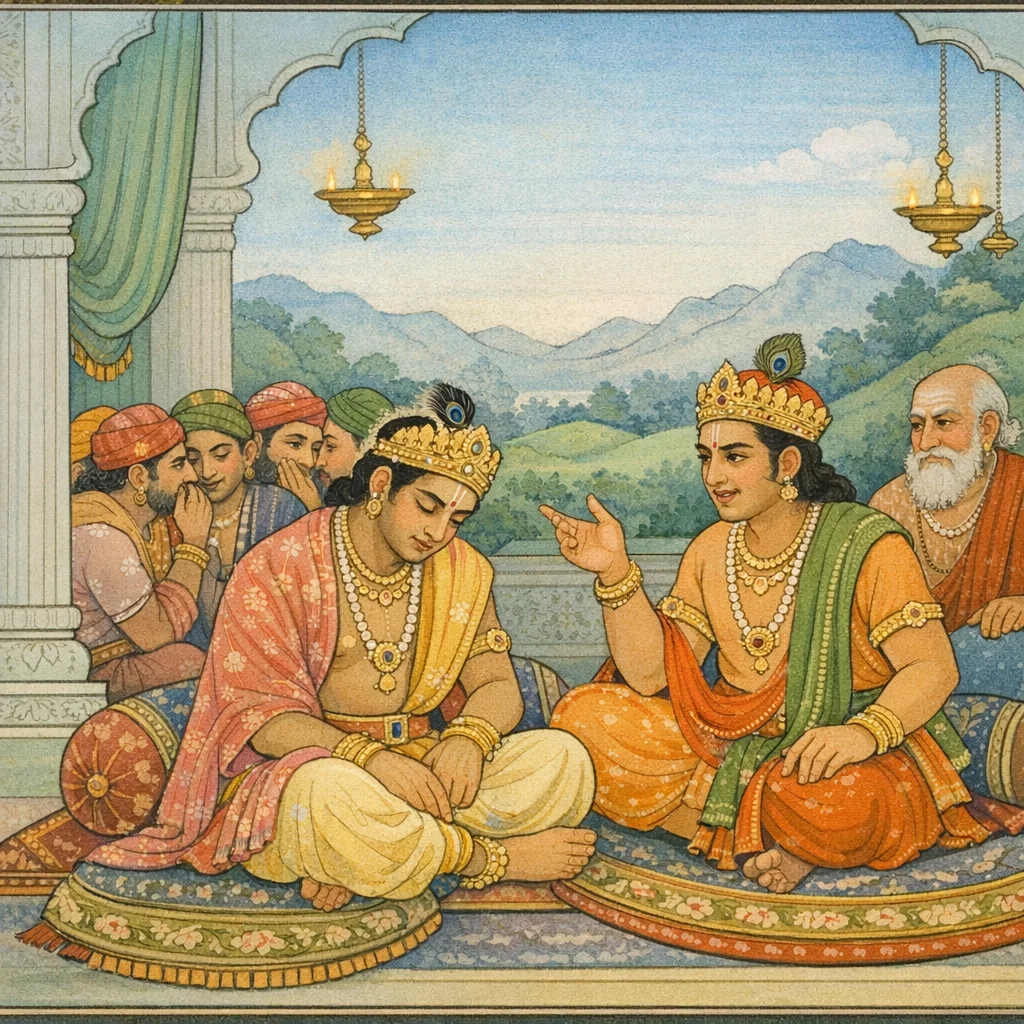
Adhyaya 26
Droṇācārya’s Assessment of the Pāṇḍavas: Nīti, Kāla, and Intelligence (विराटपर्व, अध्याय २६)
Upa-parva: Pāṇḍava-pracchanna-vāsa (Incognito Residence in Matsya) — Nīti-vicāra Episode
Vaiśaṃpāyana reports a policy-oriented statement attributed to Droṇa. The discourse asserts that individuals of the Pandavas’ type do not readily perish nor succumb to decisive defeat (1.0). Their profile is enumerated: heroic, educated, intelligent, self-controlled, dharma-knowing, grateful, and devoted to Dharmarāja (Yudhiṣṭhira) (2.0). Yudhiṣṭhira is characterized as versed in nīti, dharma, and artha, steady like a father-figure, established in dharma, truth-bearing, respectful to elders, and worthy of deference (3.0). The brothers’ mutual loyalty is emphasized: they follow the great-souled elder, who is described as ajātaśatru (one without born enmity) and modest, and he in turn is devoted to them (4.0). On this basis, the speaker argues it is improbable that a prudent Pārtha would fail to secure their welfare (5.0). The recommended posture is vigilant waiting for the proper rise of time (kāla), with the assessment that destruction is unlikely (6.0). Yet immediate tasks should be performed swiftly and without delay; plans for their lodging/residence should be considered carefully (7.0). The Pandavas are described as difficult to discern due to their disciplined conduct and austerity, being courageous and free from vice (8.0). Pārtha is further praised as pure-minded, virtuous, truthful, prudent, and radiant (9.0). The chapter concludes with an operational recommendation: ascertain facts and continue the search through brāhmaṇas, scouts (cārakas), accomplished agents, and other informed persons (10.0).
Chapter Arc: दूतों की बात सुनकर दुर्योधन देर तक मौन में डूबा रहता है—पाण्डवों के अज्ञातवास का समय लगभग पूरा हो चला है, और सभा में अनिश्चितता की छाया फैलती है। → कौरव-सभा में यह भय उभरता है कि यदि पाण्डव तेरहवाँ वर्ष भी सुरक्षित निकाल ले गए तो वे नागेन्द्रों-से क्रुद्ध होकर लौटेंगे और कौरवों पर अनिवार्य विपत्ति टूटेगी; इसलिए सबको शीघ्र निर्णय लेकर खोज/पता लगाने की चेष्टा तेज करने को कहा जाता है। → दुःशासन उठकर दुर्योधन को उकसाता है: अनेक लोग देश-देश खोज चुके, फिर भी पाण्डवों की गति, वास और प्रवृत्ति का पता नहीं—या तो वे अत्यन्त गुप्त हैं, समुद्र-पार चले गए हैं, या किसी विषम परिस्थिति में नष्ट हो गए; अतः मन को स्थिर कर ‘महोत्साह’ से कोई निर्णायक कार्य करो। → सभा का स्वर एक दिशा पकड़ता है—अज्ञातवास की समाप्ति से पहले पाण्डवों की स्थिति का भेदन ही कौरव-हित का उपाय है; दुर्योधन को सक्रिय, साहसी और निर्णायक कदम उठाने के लिए मानसिक रूप से तैयार किया जाता है। → दुर्योधन अब किस उपाय से पाण्डवों को उजागर करेगा—और किस राज्य/प्रदेश में यह खोज निर्णायक मोड़ लेगी?
Shlokas
Verse 1
वैशम्पायनजी कहते हैं--जनमेजय! तदनन्तर राजा दुर्योधन उस समय दूतोंकी बातपर विचार करके बहुत देरतक मन-ही-मन कुछ सोचता रहा। उसके बाद उसने सभासदोंसे कहा--
Vaiśampāyana said: “O Janamejaya, thereafter King Duryodhana, reflecting on the messengers’ words, remained for a long time absorbed in silent deliberation. Then he addressed the members of the assembly.”
Verse 2
५ )), 2 हे पा हे # पर एल ५200 222 00 27 # ४ है ८०० 0 2 0 ० आल 377 | मना 9०० ८63५ सुदु:ःखा खलूु कार्याणां गतिर्विज्ञातुमन्तत: । तस्मात् सर्वे निरीक्षध्वं क्व नु ते पाण्डवा गता: २ ।। 'कार्योंके अन्तिम परिणामको ठीक-ठीक समझ लेना अत्यन्त कठिन है; अतः आप सब लोग इस बातको समझें कि पाण्डव कहाँ चले गये?
Vaiśampāyana said: “Indeed, it is exceedingly difficult to discern the final outcome of undertakings. Therefore, all of you look carefully and determine where those Pāṇḍavas have gone.”
Verse 3
अल्पावशिष्टं कालस्य गतभूयिष्ठमन्तत: । तेषामज्ञातचर्यायामस्मिन् वर्षे त्रयोदशे,“इस तेरहवें वर्षमें पाण्डवोंके अज्ञातवासका अधिकांश समय बीत चुका है और थोड़े ही दिन शेष हैं
Vaiśampāyana said: In this thirteenth year of their incognito exile, most of the allotted time has passed; only a little remains at the end. The Pāṇḍavas’ concealment is nearing completion, and the dharmic strain of keeping their vow unbroken until the final moment grows ever sharper.
Verse 4
अस्य वर्षस्य शेषं चेद् व्यतीयुरिह पाण्डवा: । निवृत्तसमयास्ते हि सत्यव्रतपरायणा:,“यदि शेष समय भी पाण्डव इसी प्रकार यहाँ व्यतीत कर लें, तो वे प्रतिज्ञापालनके भारसे मुक्त हो जायँगे। फिर तो वे सत्यव्रती पाण्डव मदकी धारा बहानेवाले गजराजों और विषधर सर्पोके समान क्रोधमें भरकर निश्चय ही कौरवोंके लिये दुःखदायी हो जायूँगे
Vaiśampāyana said: “If the Pāṇḍavas pass the remaining part of this year here in the same manner, their appointed term will be fully completed; for they are steadfast in vows of truth. Having fulfilled their pledge, they will be released from the burden of their promise—and, inflamed with righteous wrath, they will surely become a source of suffering for the Kauravas.”
Verse 5
क्षरन्त इव नागेन्द्रा: सर्वे ह्याशीविषोपमा: । दुःखा भवेयु: संरब्धा: कौरवान् प्रति ते ध्रुवम्,“यदि शेष समय भी पाण्डव इसी प्रकार यहाँ व्यतीत कर लें, तो वे प्रतिज्ञापालनके भारसे मुक्त हो जायँगे। फिर तो वे सत्यव्रती पाण्डव मदकी धारा बहानेवाले गजराजों और विषधर सर्पोके समान क्रोधमें भरकर निश्चय ही कौरवोंके लिये दुःखदायी हो जायूँगे
Vaiśampāyana said: “All of them, like lordly elephants streaming with rut and like venomous serpents, would surely become a source of suffering to the Kauravas when inflamed with wrath.”
Verse 6
सर्वे कालस्य वेत्तार: कृच्छरूपधरा: स्थिता: । प्रविशेयुर्जितक्रोधास्तावदेव पुनर्वनम्,“वे सब समयकी नियत अवधिको जानते हैं; अतः कही ऐसा वेष धारण करके छिपे होंगे, जिससे उन्हें पहचानना कठिन हो गया है; इसलिये आपलोग शीघ्र उनका पता लगानेकी चेष्टा करें, जिससे वे क्रोधको दबाकर उतने ही समयके लिये अर्थात् बारह वर्षोके लिये फिर वनमें चले जायँ। ऐसा होनेपर ही मेरा यह राज्य दीर्घकाल-तकके लिये निर्दन्द्ध, व्यग्रताशून्य तथा निष्कण्टक हो जायगा”
Vaiśampāyana said: “They all know the fixed limit of time. Therefore they must be staying in concealment, having assumed a difficult-to-recognize disguise. Hence you should quickly strive to discover them, so that—restraining their anger—they may return to the forest for exactly that remaining term, namely the twelve years. Only then will my kingdom remain secure for a long time, free from anxiety and without thorns (that is, without trouble or threat).”
Verse 7
तस्मात् क्षिप्रं बुभूषध्वं यथा तेडत्यन्तमव्ययम् | राज्य निर्द्धन्द्धमव्यग्रं निःसपत्नं चिरं भवेत्,“वे सब समयकी नियत अवधिको जानते हैं; अतः कही ऐसा वेष धारण करके छिपे होंगे, जिससे उन्हें पहचानना कठिन हो गया है; इसलिये आपलोग शीघ्र उनका पता लगानेकी चेष्टा करें, जिससे वे क्रोधको दबाकर उतने ही समयके लिये अर्थात् बारह वर्षोके लिये फिर वनमें चले जायँ। ऐसा होनेपर ही मेरा यह राज्य दीर्घकाल-तकके लिये निर्दन्द्ध, व्यग्रताशून्य तथा निष्कण्टक हो जायगा”
Vaiśampāyana said: “Therefore act quickly and seek them out, so that your rule may become utterly secure. Only then will this kingdom remain for a long time free from internal strife, free from anxiety, and without rivals.”
Verse 8
अथाब्रवीत् तत: कर्ण: क्षिप्रं गच्छन्तु भारत । अन््ये धूर्ता नरा दक्षा निभूृता: साधुकारिण:,यह सुनकर कर्णने कहा--“भरतनन्दन! तब शीघ्र ही दूसरे कार्यकुशल गुप्तचर भेजे जायूँ, जो धूर्त होनेके साथ ही छिपे रहकर अपना कार्य अच्छी तरह कर सकें
Then Karṇa said, “O descendant of Bharata, let others go quickly—men who are shrewd and capable, who can remain concealed and carry out their task effectively.”
Verse 9
चरन्तु देशान् संवीता: स्फीताञज्जनपदाकुलान् । तत्र गोष्ठीषु रम्यासु सिद्धप्रत्रजितेषु च,*वे गुप्तरूपसे धन-धान्यसम्पन्न एवं जनसमुदायसे भरे हुए देशोंमें जायेँ और वहाँ सुरम्य सभाओंमें, सिद्ध-संन्यासी महात्माओंके आश्रमोंमें, राजनगरोंमें, नाना प्रकारके तीर्थों और सर्वोत्तम स्थानोंमें, वहाँ निवास करनेवाले मनुष्योंसे विनयपूर्ण युक्तिसे पूछकर उनका पता लगावें
Vaiśaṃpāyana said: “Let them, well-disguised, move through regions crowded with prosperous and thriving settlements. There, in delightful assemblies and in places frequented and protected by accomplished ascetics and renunciants, they should make careful inquiries.”
Verse 10
परिचारेषु तीर्थेषु विविधेष्वाकरेषु च । विज्ञातव्या मनुष्यैस्तैस्तर्कया सुविनीतया,*वे गुप्तरूपसे धन-धान्यसम्पन्न एवं जनसमुदायसे भरे हुए देशोंमें जायेँ और वहाँ सुरम्य सभाओंमें, सिद्ध-संन्यासी महात्माओंके आश्रमोंमें, राजनगरोंमें, नाना प्रकारके तीर्थों और सर्वोत्तम स्थानोंमें, वहाँ निवास करनेवाले मनुष्योंसे विनयपूर्ण युक्तिसे पूछकर उनका पता लगावें
Vaiśampāyana said: “In places of service and attendance, at sacred fords, and in various mines and resource-sites as well, their whereabouts should be ascertained—by questioning the people who live there with well-trained, courteous reasoning.”
Verse 11
विविधैस्तत्परै: सम्यक् तज्जै्निपुणसंवृतै: । अन्वेष्टव्या: सुनिपुणै: पाण्डवाश्छन्नचवासिन:,'पाण्डव छिपकर किसी गुप्त स्थानमें निवास करते होंगे; अत: जो कार्यसाधनमें तत्पर, उन्हें अच्छी तरह पहचाननेवाले, बुद्धिमानीसे स्वयं भी छिपकर कार्य करनेवाले और अत्यन्त कुशल हों, ऐसे अनेक गुप्तचर नदी-तटवर्ती कुंजों, तीर्थों, गाँवों, नगरों, रमणीय आश्रमों, पर्वतों तथा गुफाओंमें जा-जाकर उनकी खोज करें”
Vaiśampāyana said: “The Pāṇḍavas, living in concealment, must be sought out by many agents—men of varied skills, fully intent on their task, well-versed in recognizing the signs of their quarry, and themselves adept at operating under cover. Let such highly capable spies search for them everywhere they might be hiding.”
Verse 12
नदीकुज्जेषु तीर्थेषु ग्रामेषु नगरेषु च । आश्रमेषु च रम्येषु पर्वतेषु गुहासु च,'पाण्डव छिपकर किसी गुप्त स्थानमें निवास करते होंगे; अत: जो कार्यसाधनमें तत्पर, उन्हें अच्छी तरह पहचाननेवाले, बुद्धिमानीसे स्वयं भी छिपकर कार्य करनेवाले और अत्यन्त कुशल हों, ऐसे अनेक गुप्तचर नदी-तटवर्ती कुंजों, तीर्थों, गाँवों, नगरों, रमणीय आश्रमों, पर्वतों तथा गुफाओंमें जा-जाकर उनकी खोज करें”
Vaiśampāyana said: “Let many secret agents—energetic in accomplishing their mission, intelligent, skilled at recognizing people, and themselves adept at working in concealment—go about searching for the Pāṇḍavas. They should look in riverbank groves, at sacred fords, in villages and cities, in pleasant hermitages, and also in mountains and caves.”
Verse 13
अथाग्रजानन्तरज: पापभावानुरागवान् | ज्येष्ठं दुःशासनस्तत्र भ्राता भ्रातरमब्रवीत्,तदनन्तर सदा पापभावनामें अनुरक्त रहनेवाला दुर्योधनसे छोटा भाई दुःशासन अपने बड़े भाईसे बोला--
Then Duḥśāsana—the younger brother born after the eldest, ever attached to a sinful disposition—addressed his elder brother there. The narration highlights how habitual moral corruption and partiality within kinship propel harmful counsel and deepen adharma.
Verse 14
येषु नः प्रत्ययो राजंश्वारेषु मनुजाधिप । ते यान्तु दत्तदेया वै भूयस्तान् परिमार्गितुम्,“राजन! नरेश्वर! जिन गुप्तचरोंपर हमारा अधिक विश्वास हो, उन्हें देनेयोग्य सब साधन देकर पुन: पाण्डवोंकी खोजके लिये भेजा जाय
Vaiśampāyana said: “O King, O lord of men, let those trusted secret agents—those in whom we have the greatest confidence—be dispatched again, fully supplied with whatever resources are to be given, to renew the search for the Pāṇḍavas.”
Verse 15
एतच्च कर्णो यत् प्राह सर्वमीहामहे तथा । यथोद्दिष्टं चरा: सर्वे मृगयन्तु यतस्तत:,“कर्णने जो बात कही है, वह सब हम करें। इनके बताये हुए स्थानोंमें जहाँ-तहाँ घूमकर सभी गुप्तचर उनका पता लगावें'
Vaiśampāyana said: “Let us do exactly all that Karṇa has proposed. Let all the spies, as instructed, roam about here and there and track down the matter (and the persons) wherever they may be.”
Verse 16
एते चान्ये च भूयांसो देशाद् देशं यथाविधि । नतु तेषां गतिर्वासः प्रवृत्तिश्नोपलभ्यते,“ये तथा और भी बहुत-से लोग एक देशसे दूसरे देशमें विधिपूर्वक खोज करें। अभीतक तो पाण्डवोंके गन्तव्य स्थान, निवास तथा प्रवृत्तिका कुछ भी पता नहीं लग रहा है
Vaiśampāyana said: “Let these and many other men also search, moving from region to region in the proper manner. Yet, even now, no trace is found of the Pāṇḍavas’ destination, their place of residence, or any sign of their activities.”
Verse 17
अत्यन्तं वा निगूढास्ते पारं चोर्मिमतो गता: । व्यालैश्वापि महारण्ये भक्षिता: शूरमानिन:,'या तो वे अधिक गुप्त स्थानमें छिपे हैं या समुद्रके उस पार चले गये हैं। यह भी सम्भव है कि अपनेको शूरवीर माननेवाले इन पाण्डवोंको उस महान् वनमें अजगर निगल गये हों
Vaiśampāyana said: “Either they are hidden away in some extremely secret place, or they have crossed beyond the far shore of the wave-tossed sea. It is also possible that, thinking themselves mighty heroes, those Pāṇḍavas have been devoured by great serpents in that vast forest.”
Verse 18
अथवा विषमं प्राप्प विनष्टा: शाश्वती: समा: । तस्मान्मानसमपव्यग्रं कृत्वा त्वं कुरुनन्दन । कुरु कार्य महोत्साहं मन्यसे यन्नराधिप,“अथवा वे किसी विषम परिस्थितिमें पड़कर सदाके लिये नष्ट हो गये हों। अतः कुरुनन्दन! मनुजेश्वर! आप अपने चित्तको स्वस्थ करके जो ठीक समझमें आवे, वह कार्य पूर्ण उत्साहके साथ करें"
“Or else, having fallen into some dire calamity, they may have perished for good through the passing of many long years. Therefore, O delight of the Kurus, O king of men, steady your mind and, with great resolve, carry out whatever course of action you judge to be right.”
Verse 26
इति श्रीमहा भारते विराटपर्वणि गोहरणपर्वणि कर्णदुः:शासनवाक्ये षड्विंशो5ध्याय:
Thus ends the twenty-sixth chapter in the Virāṭa Parva of the Śrī Mahābhārata, within the section concerning the cattle-raid, specifically in the passage narrating the words spoken by Karṇa and Duḥśāsana. The colophon signals a transition: the narrative frame (Vaiśampāyana’s recitation) closes this unit, marking the completion of a discrete episode in which counsel, provocation, and martial intent shape the unfolding conflict.
Frequently Asked Questions
That disciplined, educated, self-controlled leaders devoted to dharma are structurally resilient—less likely to be destroyed or to suffer enduring defeat—making patience and verification more rational than panic.
Act promptly on immediate necessities, plan secure residence arrangements, and reduce uncertainty by systematic fact-finding through scouts, learned intermediaries, and other competent informants.
No explicit phalaśruti is stated in these verses; the meta-function is operational and evaluative—linking character assessment (guṇa, dharma) to strategic recommendations (kāla, cāraka, planning).