Adhyaya 44
Āraṇyaka-parva Adhyāya 44 — Arjuna’s Entry into Nandana and Audience with Indra
Upa-parva: Indraloka-darśana / Nandana-vana-praveśa (Arjuna’s celestial audience)
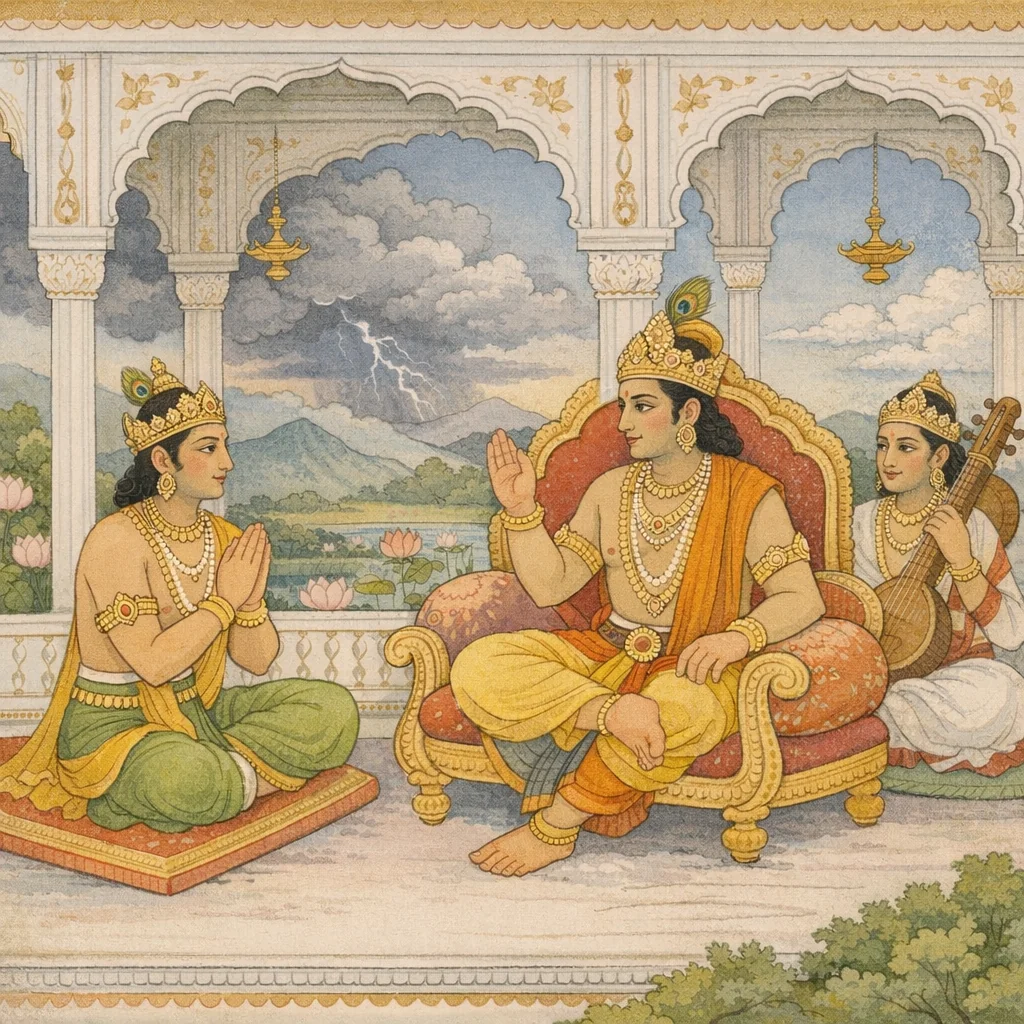
Vaiśaṃpāyana describes Arjuna’s vision of a radiant celestial city attended by siddhas and cāraṇas, ornamented with ever-blooming, fragrant trees. The narrative establishes a moral gatekeeping doctrine: the realm is not accessible to those lacking tapas, proper sacrificial orientation, truthfulness, Vedic learning, and disciplined conduct, and it excludes various transgressive behaviors. Arjuna then enters the divine forest Nandana, resonant with celestial music, and proceeds into Śakra’s beloved city. He observes innumerable wish-moving vimānas and receives praise from gandharvas and apsarases amid perfumed winds. Devas, siddhas, and great ṛṣis honor him; by Indra’s command he travels the expansive Suravīthī (the ‘nakṣatra-mārga’). In the assembly he encounters classes of gods (Ādityas, Vasus, Rudras, Maruts, Aśvins), brahmarṣis, and royal sages, as well as famed gandharvas such as Tumburu and Nārada. Arjuna approaches Indra, dismounts, bows, and is embraced; Indra seats him near, shows paternal affection (touching, embracing), and the two appear as paired luminaries. The chapter closes with courtly performance: gandharvas sing Sāman melodies and apsarases dance, presenting a stylized portrait of celestial culture and sanctioned hero-recognition.
Chapter Arc: देव-गन्धर्वों सहित इन्द्र अर्जुन का दिव्य सत्कार करते हैं—अर्घ्य, पाद्य, आचमनीय देकर उसे पुरन्दर के निवास में प्रवेश कराया जाता है। → इन्द्रलोक में रहते हुए अर्जुन महास्त्रों का अभ्यास करता है—अस्त्रों के ‘संहार’ सहित पूर्ण विद्या; वज्र और अशनि-सम महानाद अस्त्रों का वर्णन उसकी साधना की कठोरता बढ़ाता है। साथ ही, पृथ्वी पर भाइयों और माता कुन्ती की स्मृति उसके मन में युद्ध-प्रतिज्ञा की आग को जीवित रखती है। → अस्त्र-शिक्षा पूर्ण होने पर इन्द्र आदेश देता है कि अब चित्रसेन से नृत्य-गीत-गान्धर्व विद्या भी ग्रहण करो—युद्धवीर के जीवन में कला-शिक्षा का अप्रत्याशित मोड़। → इन्द्र चित्रसेन को अर्जुन का सखा-गुरु बनाकर सौंपता है; अर्जुन गान्धर्व नृत्य, वाद्य और गीत के अनेक गुण सीखता है, पर भीतर से वह लज्जित/विचलित नहीं होता—भाइयों, कुन्ती और शत्रुओं (दुःशासन, शकुनि) के वध-संकल्प को स्मरण कर स्थिर रहता है। → अर्जुन की कला-विद्या का यह संचय आगे किस प्रयोजन (सभा-जीवन/अज्ञातवास/रणनीति) में रूपांतरित होगा—यह संकेत देकर अध्याय विराम लेता है।
Shlokas
Verse 1
#2:8 #:23:.7 () ह २ 7 चतुश्नत्वारिशो< ध्याय: अर्जुनको अस्त्र और संगीतकी शिक्षा वैशम्पायन उवाच ततो देवा: सगन्धर्वा: समादायार्घ्यमुत्तमम् । शक्रस्य मतमाज्ञाय पार्थमानर्चुरञ्जसा,वैशम्पायनजी कहते हैं--जनमेजय! तदनन्तर देवराज इन्द्रका अभिप्राय जानकर देवताओं और गन्धर्वोने उत्तम अर्घ्य लेकर कुन्तीकुमार अर्जुनका यथोचित पूजन किया
Vaiśampāyana said: Thereafter, the gods, together with the Gandharvas, took up an excellent arghya-offering and—having understood Indra’s intention—promptly and fittingly honored Pārtha (Arjuna).
Verse 2
पाद्यमाचमनीयं च प्रतिग्राह्म नृपात्मजम् । प्रवेशयामासुरथो पुरन्दरनिवेशनम्,राजकुमार अर्जुनको पाद्य, (अर्घ्य)) आचमनीय आदि उपचार अर्पित करके देवताओं ने उन्हें इन्द्रभवनमें पहुँचा दिया
Vaiśampāyana said: Having accepted the customary offerings of water for washing the feet and water for sipping, the gods then conducted the king’s son into Purandara’s (Indra’s) celestial abode.
Verse 3
एवं सम्पूजितो जिष्णुरुवास भवने पितु: । उपशि क्षन् महास्त्राणि ससंहाराणि पाण्डव:,इस प्रकार देवसमुदायसे पूजित हो पाण्डुकुमार अर्जुन अपने पिताके घरमें रहने और उनसे उपसंहारसहित महान् अस्त्रोंकी शिक्षा ग्रहण करने लगे
Thus honored by the assembly of the gods, Arjuna (the Pāṇḍava), called Jiṣṇu, took up residence in his father’s dwelling. There he diligently learned the great celestial weapons—together with their methods of withdrawal and restraint.
Verse 4
शक्रस्य हस्ताद् दयितं वज्रमस्त्रं च दुः:सहम् । अशनीक्ष महानादा मेघबहिणलक्षणा:,उन्होंने इन्द्रके हाथसे उनके प्रिय एवं दुःसह अस्त्र वज्॑ और भारी गड़गड़ाहट पैदा करनेवाली उन अशनियोंको ग्रहण किया, जिनका प्रयोग करनेपर जगतमें मेघोंकी घटा घिर आती और मयूर नृत्य करने लगते हैं
Vaiśaṃpāyana said: From Śakra’s own hand he received the beloved thunderbolt—an irresistible weapon—and those lightning-bolts of mighty roar, whose very discharge makes storm-clouds mass across the sky and sets peacocks to dance.
Verse 5
गृहीतास्त्रस्तु कौन्तेयो भ्रातृून् सस्मार पाण्डव: । पुरन्दरनियोगाच्च पञठ्चाब्दानवसत् सुखी,सब अस्त्रोंकी शिक्षा ग्रहण कर लेनेपर पाण्डुपुत्र पार्थने अपने भाइयोंका स्मरण किया। परंतु पुरन्दरके विशेष अनुरोधसे वे (मानव-गणनाके अनुसार) पाँच वर्षोतक वहाँ सुखपूर्वक ठहरे रहे
After mastering the use of celestial weapons, the son of Kuntī—Pāṇḍava Arjuna—remembered his brothers. Yet, at Purandara’s (Indra’s) special request and command, he remained there contentedly for five years, as counted in human time.
Verse 6
तत: शक्रो<ब्रवीत् पार्थ कृतास्त्रं काल आगते । नृत्यं गीत॑ च कौन्तेय चित्रसेनादवाप्रुहि,तदनन्तर इन्द्रने अस्त्रशिक्षामें निपुण कुन्ती-कुमारसे उपयुक्त अवसर आनेपर कहा --कुन्तीनन्दन! तुम चित्रसेनसे नृत्य और गीतकी शिक्षा ग्रहण कर लो”
Then Śakra (Indra) said to Pārtha: “When the proper time arrives and you have completed your training in divine weapons, O son of Kuntī, learn dance and song from Citraseṇa.”
Verse 7
वादित्रं देवविहितं नूलोके यन्न विद्यते । तदर्जयस्व कौन्तेय श्रेयो वै ते भविष्यति,'कुन्तीनन्दन! मनुष्यलोकमें जो अबतक प्रचलित नहीं है, देवताओंकी उस वाद्यकलाका ज्ञान प्राप्त कर लो। इससे तुम्हारा भला होगा'
Vaiśampāyana said: “O son of Kuntī, acquire that divine art of instrumental music which is ordained by the gods and is not yet known among men. By mastering it, your welfare and higher good will surely be secured.”
Verse 8
सखायं प्रददौ चास्य चित्रसेनं पुरन्दर: । स तेन सह संगम्य रेमे पार्थो निरामय:,पुरन्दरने अर्जुनको संगीतकी शिक्षा देनेके लिये उन्हींके मित्र चित्रसेनको नियुक्त कर दिया। मित्रसे मिलकर दुःख-शोकसे रहित अर्जुन बड़े प्रसन्न हुए
Vaiśampāyana said: Indra (Purandara) appointed his own friend, Citraseṇa, to be Arjuna’s companion and guide. Meeting and staying with him, Pārtha lived joyfully, free from grief and affliction.
Verse 9
गीतवादित्रनृत्यानि भूय एवादिदेश ह । तथापि नालभच्छर्म तपस्वी द्यूतकारितम्,चित्रसेनने उन्हें गीत, वाद्य और नृत्यकी बार-बार शिक्षा दी तो भी द्यूतजनित अपमानका स्मरण करके तपस्वी अर्जुनको तनिक भी शान्ति नहीं मिली
Vaiśampāyana said: Chitrasena repeatedly instructed him again and again in singing, instrumental music, and dance; yet the ascetic Arjuna found no peace at all, for the humiliation brought about by the dice-game still burned in his memory.
Verse 10
दुःशासनवधामर्षी शकुने: सौबलस्य च । ततस्तेनातुलां प्रीतिमुपागम्य क्वचित् क्वचित् । गान्धर्वमतुल नृत्यं वादित्रं चोपलब्धवान्,उन्हें दुःशासन तथा सुबलपुत्र शकुनिके वधके लिये मनमें बड़ा रोष होता था तथा चित्रसेनके सहवाससे कभी-कभी उन्हें अनुपम प्रसन्नता प्राप्त होती थी, जिससे उन्होंने गीत, नृत्य और वाद्यकी उस अनुपम कलाको (पूर्णरूपसे) उपलब्ध कर लिया
Vaiśampāyana said: He burned with fierce resentment at the thought of killing Duḥśāsana and Śakuni, the son of Subala. Yet, at times, by associating with Citraseṇa, he would attain an incomparable joy; and through that companionship he fully mastered the exquisite Gandharva arts—song, dance, and instrumental music.
Verse 11
स शिक्षितो नृत्यगुणाननेकान् वादित्रगीतार्थगुणांश्व॒ सर्वान् । न शर्म लेभे परवीरहन्ता भ्रातृन् स्मरन् मातरं चैव कुन्तीम्,शत्रुवीरोंका हनन करनेवाले वीर अर्जुनने नृत्य-सम्बन्धी अनेक गुणोंकी शिक्षा पायी। वाद्य और गीत-विषयक सभी गुण सीख लिये। तथापि भाइयों और माता कुन्तीका स्मरण करके उन्हें कभी चैन नहीं पड़ता था
Vaiśampāyana said: Arjuna—the slayer of enemy heroes—was trained in many arts of dance, and he mastered all the refinements of instrumental music and song. Yet he found no peace; remembering his brothers and his mother Kuntī, his heart could not rest.
Verse 44
इति श्रीमहाभारते वनपर्वणि इन्द्रलोकाभिगमनपर्वणि चतुश्नत्वारिंशोडध्याय: ।। ४४ || इस प्रकार श्रीमह्ाभारत वनपवके अन्तर्गत इन्रलोकाभिगमनपर्वमें अर्जुनकी अख्रादिशिक्षासे सम्बन्ध रखनेवाला चौवालीसवाँ अध्याय पूरा हुआ
Thus, in the Śrī Mahābhārata, within the Vana Parva, in the section concerning the journey to Indra’s world, the forty-fourth chapter comes to an end. Here concludes the chapter connected with Arjuna’s training in celestial weapons—marking a transition from disciplined acquisition of power toward its rightful, dharmic use.
Frequently Asked Questions
Rather than a single choice-point, the chapter presents an eligibility filter: access to the divine realm is conditioned on tapas, yajña-alignment, satya, Vedic learning, and restrained conduct, while specific transgressions are listed as disqualifying.
The narrative teaches that higher realms and higher knowledge are not merely inherited privileges but are represented as outcomes of disciplined action (karma), merit (puṇya), and ethical formation (dharma) sustained over time.
No explicit phalaśruti formula is stated here; the meta-commentary is implicit in the access-criteria verses, which function as a doctrinal frame linking conduct and tapas to cosmological ascent.