Adhyaya 275
अरण्यकपर्व — मार्कण्डेयकथिते रामविजयः, सीताशुद्धिः, अयोध्याप्रत्यागमनवर्णनम् (Rāma’s victory, Sītā’s vindication, and return to Ayodhyā as told by Mārkaṇḍeya)
Upa-parva: Mārkaṇḍeya-ākhyāna (Rāma–Sītā narrative within Āraṇyaka-parva)
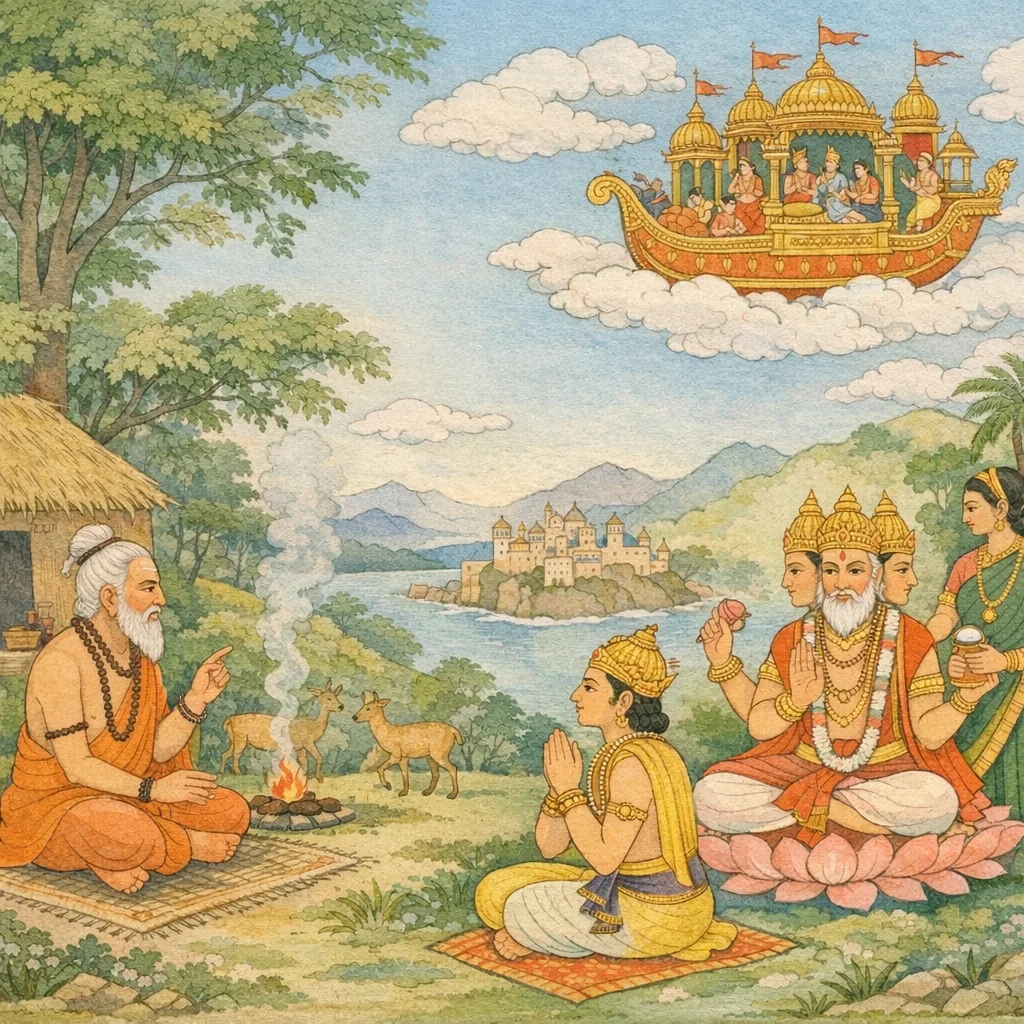
Mārkaṇḍeya narrates events following Rāma’s defeat of Rāvaṇa: celestial beings and Gandharvas praise Rāma, and Laṅkā is entrusted to Vibhīṣaṇa. Sītā is brought forward; Rāma, concerned with legitimacy and public perception, states that his task was to remove the threat and that he cannot readily accept a spouse who has been held in another’s custody, employing a ritual-purity analogy. Sītā collapses in distress, and the assembled allies become stunned. A divine assembly appears—Brahmā, major deities, the Saptarṣis, and Daśaratha—transforming the sky into a festival-like scene. Sītā speaks publicly, invoking elemental and cosmic witnesses (Vāyu, Agni, Varuṇa, and others) to affirm her blamelessness; the deities explicitly testify to her innocence and explain protective conditions placed upon her. Brahmā confirms Rāma’s accomplishment and offers boons; Rāma requests steadfastness in dharma, invincibility against adversaries, and restoration of those lost in the campaign. Sītā grants Hanumān a boon linking his longevity to Rāma’s fame. The narrative concludes with orderly demobilization, return journeys (including Puṣpaka-vimāna), reunions, Rāma’s installation in Ayodhyā, honors to allies, and subsequent royal rites.
Chapter Arc: मार्कण्डेय ऋषि युधिष्ठिर की जिज्ञासा को थामकर रामोपाख्यान में प्रवेश कराते हैं—राम और रावण के जन्म-प्रसंग, तथा कुबेर (वैश्रवण) की उत्पत्ति और ऐश्वर्य-प्राप्ति की कथा का सूत्रपात होता है। → कथा दो धाराओं में बढ़ती है: एक ओर रावण की दुरात्मता का संकेत (माया से जटायु-वध और सीता-हरण की पृष्ठभूमि), दूसरी ओर कुबेर के उदय का विस्तार—पुलस्त्य से वैश्रवण का जन्म, ब्रह्मा की प्रसन्नता, और लंका सहित लोकपालत्व का वरदान। → ब्रह्मा द्वारा वैश्रवण को अमरत्व, धनेशत्व, लोकपालत्व, शिव-मित्रता, नलकूबर-पुत्र, लंका-राजधानी, राक्षस-गण-संयुक्त वैभव और कामगामी पुष्पक-विमान का दान—कुबेर के ‘राजराज’ रूप का निर्णायक प्रतिष्ठापन। → अध्याय कुबेर के ऐश्वर्य-स्थापन और लंका-निवेश के साथ कथा-भूमि तैयार करता है, जिससे आगे रावण द्वारा उसी वैभव के अपहरण/विघटन की संभावना स्वाभाविक रूप से उभरती है। → कुबेर को प्राप्त लंका और पुष्पक जैसे दिव्य साधनों पर रावण की दृष्टि कैसे पड़ेगी, और यह वैभव किस प्रकार संघर्ष का कारण बनेगा—यह प्रश्न अगले प्रसंग के लिए छोड़ दिया जाता है।
Shlokas
Verse 1
हि >> आय ० () है 7 चतुःसप्तत्याधिकद्विशततमो<ध्याय: श्रीराम आदिका जन्म तथा कुबेरकी उत्पत्ति और उन्हें ऐश्वर्यकी प्राप्ति मार्कण्डेय उवाच प्राप्तमप्रतिमं दु:खं रामेण भरतर्षभ । रक्षसा जानकी तस्य हृता भार्या बलीयसा,मार्कण्डेयजीने कहा--भरतश्रेष्ठ! श्रीरामचन्द्रजीको भी वनवास तथा स्त्रीवियोगका अनुपम दु:ख सहन करना पड़ा था। दुरात्मा राक्षसराज महाबली रावण अपना मायाजाल बिछाकर आश्रमसे उनकी पत्नी सीताको वेगपूर्वक हर ले गया था और अपने कार्यमें बाधा डालनेवाले गृध्रराज जटायुको उसने वहीं मार गिराया था
Mārkaṇḍeya said: “O bull among the Bharatas, even Rāma had to endure incomparable sorrow. His wife Jānakī (Sītā) was abducted by a powerful rākṣasa.”
Verse 2
आश्रमाद् राक्षसेन्द्रेण रावणेन दुरात्मना । मायामास्थाय तरसा हत्वा गृध्रं जटायुषम्,मार्कण्डेयजीने कहा--भरतश्रेष्ठ! श्रीरामचन्द्रजीको भी वनवास तथा स्त्रीवियोगका अनुपम दु:ख सहन करना पड़ा था। दुरात्मा राक्षसराज महाबली रावण अपना मायाजाल बिछाकर आश्रमसे उनकी पत्नी सीताको वेगपूर्वक हर ले गया था और अपने कार्यमें बाधा डालनेवाले गृध्रराज जटायुको उसने वहीं मार गिराया था
Mārkaṇḍeya said: “O best of the Bharatas, the wicked Rāvaṇa, lord of the Rākṣasas, resorting to deception, swiftly carried Sītā away from the hermitage; and after killing the vulture Jaṭāyus—who tried to obstruct his deed—he departed.”
Verse 3
प्रत्याजहार तां राम: सुग्रीवबलमाश्रित: । बद्ध्वा सेतुं समुद्रस्य दग्ध्वा लड़कां शितै: शरै:,फिर श्रीरामचन्द्रजी भी सुग्रीवकी सेनाका सहारा ले समुद्रपर पुल बाँधकर लंकामें गये और अपने तीखे (आग्नेय आदि) बाणोंसे उसको भस्म करके वहाँसे सीताको वापस लाये
Mārkaṇḍeya said: Rāma, relying on the strength of Sugrīva’s forces, recovered her—having built a bridge across the ocean, entered Laṅkā, and burned it down with his keen arrows. Thus, after overcoming the stronghold of wrongdoing through disciplined effort and righteous force, he brought Sītā back from there.
Verse 4
युधिछिर उवाच कस्मिन् राम: कुले जात: किंवीर्य: किम्पराक्रम: । रावण: कस्य पुत्रो वा कि वैरं तस्य तेन ह,युधिष्ठिरने पूछा--भगवन्! श्रीरामचन्द्रजी किस कुलमें प्रकट हुए थे? उनका बल और पराक्रम कैसा था? रावण किसका पुत्र था और उसका रामचन्द्रजीसे क्या वैर था?
Yudhiṣṭhira said: “In which lineage was Rāma born? What was his strength, and what was the measure of his valor? And Rāvaṇa—whose son was he? For what reason did enmity arise between him and Rāma?”
Verse 5
एतन्मे भगवन् सर्व सम्यगाख्यातुमरहसि । श्रोतुमिच्छामि चरितं रामस्याक्लिष्टकर्मण:,भगवन! ये सभी बातें मुझे अच्छी प्रकार बताइये। मैं अनायास ही महान् कर्म करनेवाले भगवान् श्रीरामका चरित्र सुनना चाहता हूँ
Yudhiṣṭhira said: “O venerable one, you should relate all this to me correctly and in full. I wish to hear the life-story of Rāma, whose deeds are accomplished without strain—so that I may understand the right course of conduct through his example.”
Verse 6
मार्कण्डेय उवाच अजो नामाभवद् राजा महानिक्ष्वाकुवंशज: । तस्य पुत्रो दशरथ: शश्रृत्स्वाध्यायवाउछुचि:,मार्कण्डेयजीने कहा--राजन्! इक्ष्वाकुवंशमें अज नामसे प्रसिद्ध एक महान् राजा हो गये हैं। उनके पुत्र थे दशरथ, जो सदा स्वाध्यायमें संलग्न रहनेवाले और पवित्र थे
Mārkaṇḍeya said: “O king, in the Ikṣvāku line there was a great ruler famed as Aja. His son was Daśaratha, ever devoted to sacred study and of spotless purity.”
Verse 7
अभवंस्तस्य चत्वार: पुत्रा धर्मार्थकोविदा: । रामलक्ष्मणशत्रुघ्ना भरतश्न महाबल:,उनके चार पुत्र हुए। वे सब-के-सब धर्म और अर्थके तत्त्वको जाननेवाले थे। उनके नाम इस प्रकार हैं--राम, लक्ष्मण, महाबली भरत और शत्रुघ्न
He had four sons, all well-versed in the principles of dharma and artha. Their names were Rāma, Lakṣmaṇa, the mighty Bharata, and Śatrughna.
Verse 8
रामस्य माता कौसल्या कैकेयी भरतस्य तु । सुतौ लक्ष्मणशत्रुघ्नौ सुमित्राया: परंतपौ,श्रीरामचन्द्रजीकी माताका नाम कौसल्या था, भरतकी माता कैकेयी थी तथा शत्रुओंको संताप देनेवाले लक्ष्मण और शत्रुघ्न सुमित्राके पुत्र थे
Mārkaṇḍeya said: Rāma’s mother was Kauśalyā; Bharata’s mother was Kaikeyī. And the two sons of Sumitrā—Lakṣmaṇa and Śatrughna—were mighty heroes, tormentors of their foes.
Verse 9
विदेहराजो जनक: सीता तस्यात्मजा विभो | यां चकार स्वयं त्वष्टा रामस्य महिषीं प्रियाम्,राजन! विदेहदेशके राजा जनककी एक पुत्री थी, जिसका नाम था सीता। उसे स्वयं विधाताने ही भगवान् श्रीरामकी प्यारी रानी होनेके लिये रचा था
Mārkaṇḍeya said: O mighty one, the king of Videha was Janaka, and Sītā was his daughter. She was fashioned by the divine Creator himself to become the beloved chief queen of Rāma.
Verse 10
एतदू रामस्य ते जन्म सीतायाश्न प्रकीर्तितम् । रावणस्यापि ते जन्म व्याख्यास्यामि जनेश्वर,जनेश्वर! इस प्रकार मैंने तुम्हें श्रीराम और सीताके जन्मका वृत्तान्त बताया है। अब रावणके भी जन्मका प्रसंग सुनाऊँगा
“Thus I have recounted to you the birth and origin of Rāma and of Sītā. Now, O lord of men, I shall also explain to you the birth and origin of Rāvaṇa.”
Verse 11
पितामहो रावणस्य साक्षाद् देव: प्रजापति: । स्वयम्भू: सर्वलोकानां प्रभु: स्रष्टा महातपा:,सम्पूर्ण जगत्के स्वामी, सबकी सृष्टि करनेवाले, प्रजापालक, महातपस्वी और स्वयम्भू साक्षात् भगवान् ब्रह्माजी ही रावणके पितामह थे
Mārkaṇḍeya said: “Rāvaṇa’s grandsire was none other than the divine Prajāpati—Svayambhū Brahmā himself—the lord of all worlds, the great ascetic, and the creator.”
Verse 12
पुलस्त्यो नाम तस्यासीन्मानसो दयित: सुतः । तस्य वैश्रवणो नाम गवि पुत्रो5भवत् प्रभु:,ब्रह्माजीके एक परम प्रिय मानसपुत्र पुलस्त्यजी थे। उनसे उनकी गौ नामकी पत्नीके गर्भसे वैश्रवण नामक शक्तिशाली पुत्र उत्पन्न हुआ
Mārkaṇḍeya said: “From him was born a beloved mind-born son named Pulastya. And from Pulastya, through his wife named Gāu, there arose a powerful son named Vaiśravaṇa.”
Verse 13
पितरं स समुत्सृज्य पितामहमुपस्थित: । तस्य कोपात् पिता राजन् ससर्जात्मानमात्मना,राजन! वैश्रवण अपने पिताको छोड़कर पितामहकी सेवामें रहने लगे। इससे उनपर क्रोध करके पिता पुलस्त्यने स्वयं अपने-आपको ही दूसरे रूपमें प्रकट कर लिया। पुलस्त्यके आधे शरीरसे जो दूसरा द्विज प्रकट हुआ, उसका नाम विश्रवा था। विश्रवा वैश्रवणसे बदला लेनेके लिये उनके ऊपर सदा कुपित रहा करते थे
Mārkaṇḍeya said: “Abandoning his father, Vaiśravaṇa devoted himself to serving his grandfather. Because of this, his father—angered, O king—brought forth another manifestation of himself by his own power.”
Verse 14
स जज्ञे विश्रवा नाम तस्यात्मार्थेन वै द्विज: । प्रतीकाराय सक्रोधस्ततो वैश्रवणस्य वै,राजन! वैश्रवण अपने पिताको छोड़कर पितामहकी सेवामें रहने लगे। इससे उनपर क्रोध करके पिता पुलस्त्यने स्वयं अपने-आपको ही दूसरे रूपमें प्रकट कर लिया। पुलस्त्यके आधे शरीरसे जो दूसरा द्विज प्रकट हुआ, उसका नाम विश्रवा था। विश्रवा वैश्रवणसे बदला लेनेके लिये उनके ऊपर सदा कुपित रहा करते थे
Mārkaṇḍeya said: “From him there was born a brahmin named Viśravā, brought forth for his own purpose. And, O king, being inflamed with anger, he came into being for the sake of retaliation against Vaiśravaṇa.”
Verse 15
पितामहस्तु प्रीतात्मा ददौ वैश्रवणस्यथ ह । अमरत्वं धनेशत्वं लोकपालत्वमेव च,परंतु पितामह ब्रह्माजी उनपर प्रसन्न थे; अतः उन्होंने वैश्रवणको अमरत्व प्रदान किया और धनका स्वामी तथा लोकपाल बना दिया
Mārkaṇḍeya said: The Grandsire (Brahmā), pleased at heart, then granted Vaiśravaṇa immortality, made him the Lord of Wealth, and appointed him as a Guardian of the World.
Verse 16
ईशानेन तथा सख्यं पुत्र च नलकूबरम् । राजधानीनिवेशं च लड्कां रक्षोगणान्विताम्,पितामहने उनकी महादेवजीसे मैत्री करायी, उन्हें नलकूबर नामक पुत्र दिया तथा राक्षसोंसे भरी हुई लंकाको उनकी राजधानी बनायी
Mārkaṇḍeya said: “Further, he was brought into friendship with Īśāna (Śiva); he was granted a son named Nalakūbara; and Laṅkā—teeming with hosts of rākṣasas—was established for him as his royal capital.”
Verse 17
विमान पुष्पकं नाम कामगं च ददौ प्रभु: । यक्षाणामाधिपत्यं च राजराजत्वमेव च,साथ ही उन्हें इच्छानुसार विचरनेवाला पुष्पक नामका एक विमान दिया। इसके सिवा ब्रह्माजीने कुबेरको यक्षोंका स्वामी बना दिया और उन्हें 'राजराज'की पदवी प्रदान की
Mārkaṇḍeya said: The Lord granted him the aerial car named Puṣpaka, able to move wherever one wished. He also bestowed upon him sovereignty over the Yakṣas and the very status of ‘Rājarāja’—king among kings—thus establishing Kubera’s divinely sanctioned authority and prosperity.
Verse 273
इस प्रकार श्रीमह्याभारत वनपर्वके अन्तर्गत रामोपाख्यानपर्वमें युधिष्ठिरप्रश्नविषयक दो सौ तिहत्तरवाँ अध्याय पूरा हुआ ॥/
Thus ends the two-hundred-and-seventy-third chapter of the Rāmopākhyāna section within the Vana Parva of the sacred Mahābhārata, a chapter centered on Yudhiṣṭhira’s questions.
Verse 274
इति श्रीमहा भारते वनपर्वणि रामोपाख्यानपर्वणि रामरावणयोर्जन्मक थने चतु:सप्तत्यधिकद्विशततमो<5ध्याय:
Thus, in the revered Mahābhārata, within the Forest Book (Vana Parva), in the sub-narrative known as the Rāmopākhyāna, in the account describing the births and origins of Rāma and Rāvaṇa, ends the two-hundred-and-seventy-fourth chapter.
Frequently Asked Questions
The dilemma concerns how a ruler reconciles marital fidelity and personal trust with the public standards of legitimacy: Rāma frames acceptance of Sītā as contingent upon verifiable integrity given her involuntary captivity.
Truth-claims in ethically sensitive disputes are portrayed as requiring transparent verification and accountable speech; the narrative elevates witnessed testimony and principled restraint over impulse, emphasizing that dharma must remain defensible in the public domain.
Rather than a discrete phalaśruti formula, the chapter’s meta-function is exemplary: it positions divine attestation, boons aligned with dharma, and the restoration of order as narrative validation that ethical governance depends on publicly intelligible standards of proof and responsibility.