Adhyaya 251
Jayadratha Approaches Draupadī in the Forest (Hospitality, Persuasion, and Reproach)
Upa-parva: Draupadī-haraṇa / Jayadratha Episode (Forest Encounter Sub-cycle)
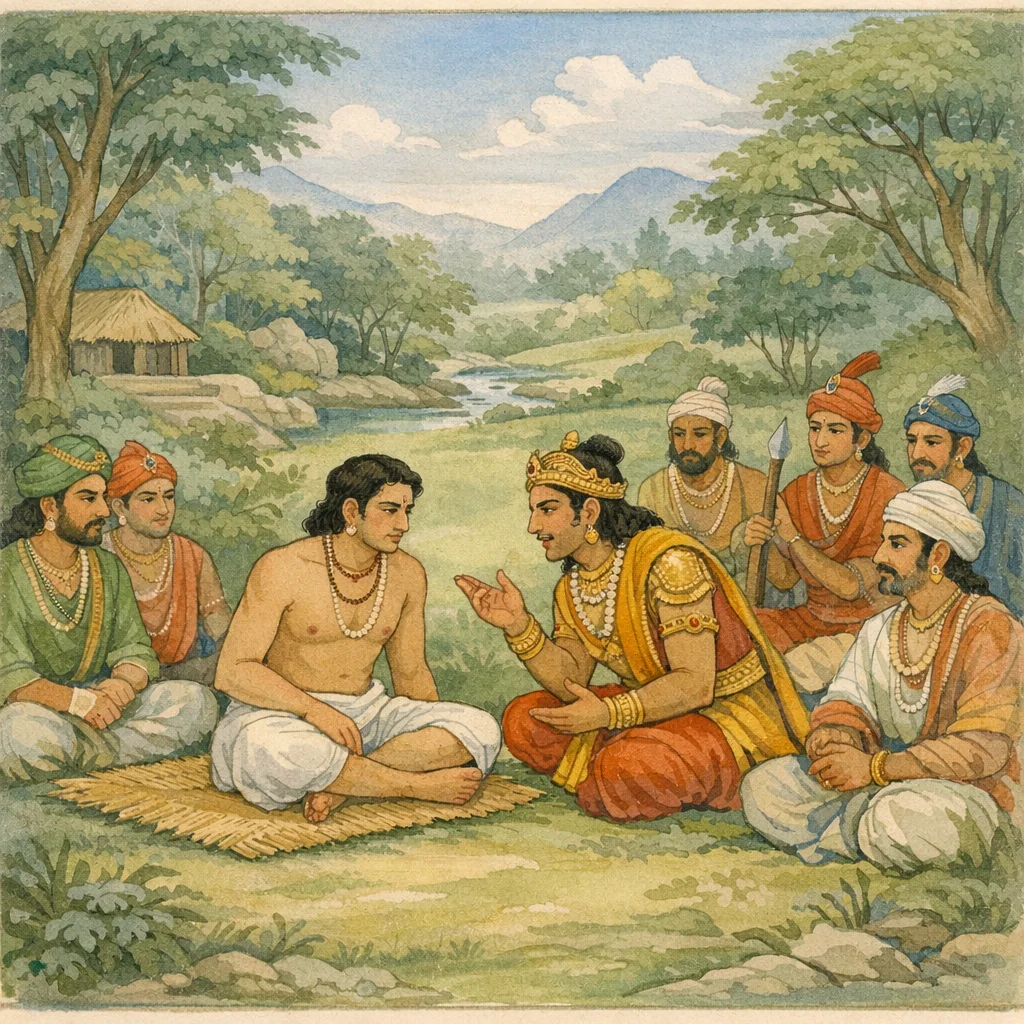
Vaiśaṃpāyana narrates a courtly-forest encounter: after kings are seated, a ruler (identified as Jayadratha, lord of Sindhu and Sauvīra) inquires about a woman whose speech and appearance have captivated him. Koṭikāśya identifies her as Draupadī (Kṛṣṇā), the honored wife of the five sons of Pāṇḍu and beloved among the Pārthas. Jayadratha enters the (momentarily) unoccupied hermitage and addresses Draupadī with formal inquiries about welfare. Draupadī responds with composed etiquette, affirming Yudhiṣṭhira’s well-being and extending hospitality: water for washing, a seat, and provisions, including an enumerated list of forest game typically associated with sustenance and guest-offerings. Jayadratha acknowledges the meal courtesies but pivots to persuasion, asserting that the exiled Pandavas are diminished in fortune and advising her not to remain attached to those living in hardship. He advances a prosperity-based argument—claiming that prudence avoids a husband who has lost royal splendor—and proposes that Draupadī become his wife to obtain comfort and status. The narration records Draupadī’s rejection: she withdraws with visible displeasure, censures his words, and instructs him to feel shame. The chapter closes with Draupadī verbally countering inducement while awaiting her husbands’ return, emphasizing fidelity and moral boundary-setting.
Chapter Arc: दुर्योधन अपमान और विफलता से जर्जर होकर प्रायोपवेश (आमरण अनशन) का निश्चय करता है; राजसभा के ‘सेनाजीवी’ और राज्यवासी स्तब्ध हैं कि राजा स्वयं को त्यागने चला है। → कर्ण आगे बढ़कर दुर्योधन को रोकता है और कठोर यथार्थ सुनाता है—राजा के राज्य में रहने वाले, राजकीय सेना पर जीविका चलाने वाले, और ‘प्रधाना: पुरुषा:’ (प्रभावशाली जन) यदि क्षुब्ध हों तो शत्रु-वाहिनी तक को हिला सकते हैं; इसलिए राजा का आत्मत्याग राज्य-धर्म के विरुद्ध है। वह कहता है कि पाण्डवों को तुच्छ समझकर बैठना उचित नहीं, पर उन्हें परास्त करने का उपाय पुरुषार्थ, संगठन और नीति से है, न कि आत्मविनाश से। → कर्ण का भावनात्मक और राजनीतिक दबाव चरम पर पहुँचता है—वह दुर्योधन के चरणों में बैठकर प्रतिज्ञा करता है कि यदि राजा उसकी बात न माने तो वह वहीं शुश्रूषा करता रहेगा; यहाँ तक कहता है कि ‘त्वद्विहीनो’ वह जी नहीं सकता। साथ ही वह राज्य के सभी आश्रितों/सेनाजीवियों को एकजुट होकर राजा-हित में यत्न करने का आह्वान करता है और पाण्डवों के शौर्य को स्वीकारते हुए भी उन्हें पराजित करने का संकल्प जगाता है। → दुर्योधन का प्रायोपवेश डगमगाता है; कर्ण उसे राजधर्म—प्रजा, सेना, आश्रितों और मित्रों के प्रति उत्तरदायित्व—की ओर लौटाता है। अध्याय का स्वर आत्मघात से हटकर प्रतिशोध-नीति, संगठन और आगामी संघर्ष की तैयारी पर टिक जाता है। → पाण्डवों को ‘बहुत पहले से दास’ कहकर कर्ण जो दर्पपूर्ण आश्वासन देता है, वह अगले घटनाक्रम की ओर संकेत करता है—क्या दुर्योधन इस उकसावे को नीति में बदलेगा या विनाशकारी हठ में?
Shlokas
Verse 2
सेनाजीवैश्व कौरव्य तथा विषयवासिभि:
O Kauravya, the livelihood of the army and likewise that of the inhabitants of the realm depends upon this; therefore it must be managed with foresight, so that the king’s policy sustains both the fighting force and the people who dwell in the country.
Verse 3
प्राय: प्रधाना: पुरुषा: क्षोभयन्त्यरिवाहिनीम्
Karna said: “More often than not, it is the foremost men—those of commanding ability and resolve—who throw an enemy host into confusion.”
Verse 4
सेनाजीवाश्र ये राज्ञां विषये सन्ति मानवा:
Karna said: “Within a king’s realm there are people whose livelihood depends upon the army.”
Verse 5
यद्येवं पाण्डवै राजन् भवद्विषयवासिभि:
Karna said: “If this is so, O king, then with the people dwelling in your own realm—those under your authority—let the matter concerning the Pāṇḍavas be dealt with accordingly.”
Verse 6
न चैतत् साधु यद् राजन् पाण्डवास्त्वां नृपोत्तमम्
Karna said: “O King, this is not proper—that the Pāṇḍavas should treat you, the foremost of rulers, in this manner.”
Verse 7
शूराश्ष बलवन्तश्न संयुगेष्वपलायिन:
Karna declares that they are true heroes—strong and steadfast—who do not turn their backs in the clash of battle.
Verse 8
पाण्डवेयानि रत्नानि त्वमद्याप्युपभुज्जसे
Karna said: “Even today you continue to enjoy the jewels that belong to the Pāṇḍavas.”
Verse 9
सत्त्वस्थान् पाण्डवान् पश्य न ते प्रायमुपाविशन् । (तदलं ते महाबाहो विषादं कर्तुमीदृूशम् ।) उत्तिष्ठ राजन् भद्रं ते न चिरं कर्तुमहसि
“Look at the Pāṇḍavas, steadfast in courage: they have not sat down to fast unto death. Therefore, O mighty-armed one, it does not befit you to sink into such despair. Rise up, O king—may good be yours; you ought not to remain thus for long.”
Verse 10
पाण्डवोंके पास जितने रत्न थे, उन सबका उपभोग आज तुम्हीं कर रहे हो; तथापि देखो, पाण्डव कितने धैर्यवान् हैं कि उन्होंने कभी आमरण अनशन नहीं किया। अतः महाबाहो! तुम्हारे इस प्रकार विषाद करनेसे कोई लाभ नहीं है। राजन! उठो, तुम्हारा कल्याण हो। अब यहाँ अधिक विलम्ब नहीं करना चाहिये ।। अवश्यमेव नृपते राज्ञो विषयवासिभि: । प्रियाण्याचरितव्यानि तत्र का परिदेवना,नरेश्वर! राजाके राज्यमें निवास करनेवाले लोगोंको अवश्य ही उसके प्रिय कार्य करने चाहिये। अत: इसके लिये पछताने या विलाप करनेकी क्या बात है?
Karna said: “All the treasures that once belonged to the Pandavas are being enjoyed by you today; and yet, look at the Pandavas’ steadfastness—they have never resorted to fasting unto death. Therefore, mighty-armed king, there is no gain in this kind of despair. Rise, O king; may good come to you. We should not delay here any longer. Indeed, O lord of men, those who live within a king’s realm must act in ways that are pleasing to their ruler; so what is there to lament about?”
Verse 11
मद्वाक्यमेतद् राजेन्द्र यद्येवं न करिष्यसि । स्थास्यामीह भवत्पादौ शुश्रूषन्नरिमर्दन,शत्रुओंका मान मर्दन करनेवाले महाराज! यदि तुम मेरी यह बात नहीं मानोगे तो मैं भी तुम्हारे चरणोंकी सेवा करता हुआ यहीं रह जाऊँगा
Karna said: “O best of kings, if you do not act in accordance with this counsel of mine, then I shall remain here, O crusher of foes, staying at your feet and serving you.”
Verse 12
नोत्सहे जीवितुमहं त्वद्विहीनो नररषभ । प्रायोपविष्टस्तु नृप राज्ञां हास्यो भविष्यसि,नरश्रेष्ठ! तुमसे अलग होकर मैं जीवित नहीं रहना चाहता। राजन! आमरण अनशनके लिये बैठ जानेपर तुम समस्त राजाओंके उपहासपात्र हो जाओगे
Karna said: “I cannot bear to live separated from you, O bull among men. O king, if you sit down resolved on fasting unto death, you will become a subject of ridicule among the assembled rulers.”
Verse 13
वैशम्पायन उवाच एवमुक्तस्तु कर्णेन राजा दुर्योधनस्तदा । नैवोत्थातुं मनश्नक्रे स्वर्गाय कृतनिश्चय:,वैशम्पायनजी कहते हैं--राजन्! कर्णके ऐसा कहनेपर राजा दुर्योधनने स्वर्गलोकमें ही जानेका निश्चय करके उस समय उठनेका विचार नहीं किया
Vaiśampāyana said: When Karṇa had spoken thus, King Duryodhana, having at that moment fixed his resolve upon going to heaven, did not even set his mind on rising.
Verse 16
सद्यो वशं समापन्नः शत्रूणां शत्रुकर्शन | कर्ण बोला--राजन्! आज तुम जो यहाँ इतनी लघुताका अनुभव कर रहे हो, इसका कोई कारण मेरी समझमें नहीं आता। शत्रुनाशक वीर! यदि एक बार शत्रुओंके वशमें पड़ जानेपर पाण्डवोंने तुम्हें छुड़ाया है, तो इसमें कौन अद्भुत बात हो गयी?
Karna said: “O King, I do not understand why you feel such humiliation here and now. O hero who crushes enemies! If, after you once fell into the enemies’ power, the Pandavas rescued you, what is so astonishing in that?”
Verse 33
निगृहान्ते च युद्धेषु मोक्ष्यन्ते चैव सैनिकै: । प्राय: देखा जाता है कि प्रधान पुरुष लड़ते-लड़ते शत्रुओंकी सेनाको व्याकुल कर देते हैं। फिर उसी युद्धमें वे बंदी बना लिये जाते हैं और साधारण सैनिकोंकी सहायतासे छूट भी जाते हैं
Karna said: “In battles, leading men often press the enemy hard and throw their ranks into confusion. Yet it is commonly seen that, in that very same fighting, those leaders may be seized as captives—and then, with the help of ordinary soldiers, they are freed again.”
Verse 46
तैः सड़म्य नृपार्थाय यतितव्यं यथातथम् | जो मनुष्य सेनाजीवी हैं अथवा राजाके राज्यमें निवास करते हैं, उन सबको मिलकर अपने राजाके हितके लिये यथोचित प्रयत्न करना चाहिये
Karna said: “Together with them, one must strive—appropriately and as circumstances require—for the king’s welfare. All who live by the army, or who dwell within a king’s realm, should unite and make the proper effort for their ruler’s good.”
Verse 53
यदृच्छया मोक्षितो5सि तत्र का परिदेवना | राजन! यदि तुम्हारे राज्यमें निवास करनेवाले पाण्डवोंने इसी नीतिके अनुसार दैववश तुम्हें शत्रुओंके हाथसे छुड़ा दिया है, तो इसमें खेद करनेकी क्या बात है?
Karna said: “If you have been released by mere chance, what is there to lament? O King, if the Pāṇḍavas—dwelling within your realm—have, in accordance with this policy and by the turn of fate, freed you from the hands of your enemies, then what cause is there for regret?”
Verse 63
स्वसेनया सम्प्रयान्तं नानुयान्ति सम पृष्ठतः । राजन! आप श्रेष्ठ नरेश हैं और अपनी सेनाके साथ वनमें पधारे हैं, ऐसी दशामें यहाँ रहनेवाले पाण्डव यदि आपके पीछे-पीछे न चलते--आपकी सहायता न करते तो यह उनके लिये अच्छी बात न होती
Karna says: “When a king advances with his own army, those who are behind him should not fail to follow in his rear. O King, you are an excellent ruler and have come into the forest with your forces; in such a situation, if the Pāṇḍavas dwelling here did not march behind you and render you assistance, it would not be proper for them.”
Verse 73
भवतस्ते सहाया वै प्रेष्यतां पूर्वमागता: । पाण्डव शौर्यसम्पन्न, बलवान् तथा युद्धमें पीठ न दिखानेवाले हैं। वे आपके दास तो बहुत पहले ही हो चुके हैं, अतः उन्हें आपका सहायक होना ही चाहिये
Karna said: “Let those allies of yours who have come earlier be dispatched first. The Pāṇḍavas are endowed with valor and strength, and in battle they do not turn their backs. Since they have long ago become, as it were, bound to your service, it is only right that they should stand as your support.”
Verse 236
अज्ञातैर्यदि वा ज्ञातै: कर्तव्यं नूपते: प्रियम् | कुरुश्रेष्ठ॒ जो राजकीय सेनामें रहकर जीविका चलाते हैं तथा राजाके राज्यमें निवास करते हैं, वे ज्ञात हों या अज्ञात; उनका कर्तव्य है कि वे सदा राजाका प्रिय करें
Karna said: “Whether known or unknown, whoever earns his living by serving in the king’s forces and dwells within the king’s realm must do what pleases the ruler. Such men, O best of the Kurus, are bound by duty to act so as to uphold the king’s favor and the order of the state.”
Verse 250
इति श्रीमहाभारते वनपर्वणि घोषयात्रापर्वणि दुर्योधनप्रायोपवेशे कर्णवाक्ये पजञ्चाशदधिकद्धिशततमो<्ध्याय:
Thus, in the Śrī Mahābhārata, within the Vana Parva—specifically in the Ghoṣa-yātrā section—ends the chapter on Duryodhana’s resolve to fast unto death and the counsel spoken by Karna: the two-hundred-and-fiftieth chapter (250).
Frequently Asked Questions
The dilemma centers on whether power and prosperity can justify violating marital and protective norms; Jayadratha frames comfort as prudence, while Draupadī treats the proposal as an ethical breach irrespective of changing fortune.
The chapter underscores that dharma is not contingent upon external success: fidelity, restraint, and respect for social obligations remain binding even when political status and wealth fluctuate.
No explicit phalaśruti appears in the cited verses; the chapter’s function is primarily narrative-ethical, establishing character positions and the normative critique that frames subsequent repercussions.