Adhyaya 103
समुद्रपानम् (Samudra-pānam) — Maitrāvaruṇi Drains the Ocean; Devas Seek a Means to Refill It
Upa-parva: Lomāśa-kathita Samudra-śoṣaṇa Upākhyāna (Ocean-drinking episode of Maitrāvaruṇi)
Lomāśa reports that the revered sage Vāruṇi/Maitrāvaruṇi approaches the ocean and declares an intention to drink Varuṇa’s abode for the welfare of the worlds, urging the assembled devas and ṛṣis to promptly execute what must follow. He then drinks the sea in full view, leaving the great ocean without water. The devas respond with astonishment, honoring him with hymns and acknowledging his protective, world-sustaining role. With the sea emptied, the devas seize divine weapons and conduct a rapid strategic engagement against the daṇavas (identified as Kāleyas), who are overpowered; some survivors rupture the earth and retreat to the subterranean regions. After the hostile forces are neutralized, the devas praise the sage and request that he restore the ocean by releasing the water he drank. The sage replies that the water has already been digested, advising that another method be devised; the devas, unsettled, depart and later approach Pitāmaha (Brahmā) together with Viṣṇu to deliberate repeatedly on how to refill the ocean.
Chapter Arc: देवताओं के लोक में भय का अंधकार उतरता है—रात्रि में ब्राह्मण-ऋषि रहस्यमय ढंग से मारे जा रहे हैं, और किसी को ज्ञात नहीं कि यह पाप किसके द्वारा हो रहा है। → देवता स्मरण करते हैं कि वृत्र-वध के बाद दानव समुद्र-आश्रय लेकर नक्र-ग्राहों से भरे घोर जल में छिप गए हैं और वहीं से रातों-रात ऋषियों का संहार कर लोक-उत्सादन का प्रयत्न करते हैं। समुद्र-गर्भ में स्थित होने से उनका नाश साधारण उपायों से असंभव प्रतीत होता है। → विष्णु का निर्देश निर्णायक बनता है—देवता ब्रह्मा की आज्ञा लेकर महर्षि अगस्त्य के आश्रम की ओर जाते हैं, क्योंकि समुद्र-आश्रित दानवों के विनाश हेतु समुद्र-क्षय (या समुद्र को वश में करने) का उपाय अगस्त्य-तप से ही संभव जान पड़ता है। → देवता अगस्त्य के तेजस्वी आश्रम में पहुँचकर उन्हें शरण-स्वरूप मानते हैं और वरदाता ऋषि से भय-निवारण का वर माँगते हैं—यहीं से ‘अगस्त्य-माहात्म्य’ का प्रसंग औपचारिक रूप से आरम्भ होता है। → अगस्त्य देवताओं की प्रार्थना पर क्या उपाय करेंगे—क्या वे समुद्र को पीकर दानवों को अनावृत करेंगे या कोई अन्य धर्मसम्मत मार्ग बताएँगे?
Shlokas
Verse 1
हि आय न [हुक हि 7 >> ग>र्योाधिकशततमो< ध्याय: भगवान् विष्णुके आदेशसे देवताओंका महर्षि अगस्त्यके आश्रमपर जाकर उनकी स्तुति करना देवा ऊचु: तव प्रसादाद् वर्धन्ते प्रजा: स्वश्षितुर्विधा: । ता भाविता भावयन्ति हव्यकव्यैर्दिवौकस:,देवता कहते हैं--प्रभो! जरायुज, अण्डज, स्वेदज और उद्धिज्ज--इन चार भेदोंवाली सम्पूर्ण प्रजा आपकी कृपासे ही वृद्धिको प्राप्त होती है। अभ्युदयशील होनेपर वे (मानव) प्रजाएँ ही हव्य और कदव्योंद्वारा देवताओंका भरण-पोषण करती हैं
The gods said: “By your gracious favor all creatures—of the various kinds embodied in the world—grow and flourish. When thus sustained, those beings in turn sustain the dwellers of heaven by offerings of oblations for gods and for ancestors.”
Verse 2
लोका होवं विवर्धन्ते ह्ुन्योन्यं समुपाश्रिता: । त्वत्प्रसादान्निरुद्धिग्नास्त्वयैव परिरक्षिता:,इसी प्रकार सब लोग एक-दूसरेके सहारे उन्नति करते हैं। आपकी ही कृपासे सब प्राणी उद्वेगरहित जीवन बिताते और आपके द्वारा ही सर्वथा सुरक्षित रहते हैं। भगवन्! मनुष्योंके समक्ष यह बड़ा भारी भय उपस्थित हुआ है। न जाने कौन रातमें आकर इन ब्राह्मणोंका वध कर रहा है
Lomasha said: “People prosper only by relying upon one another. By your grace, all beings live without distress, and by you alone they are completely protected. O Blessed Lord, a grave fear has arisen before mankind: someone comes by night and kills these Brahmins—yet we do not know who it is.”
Verse 3
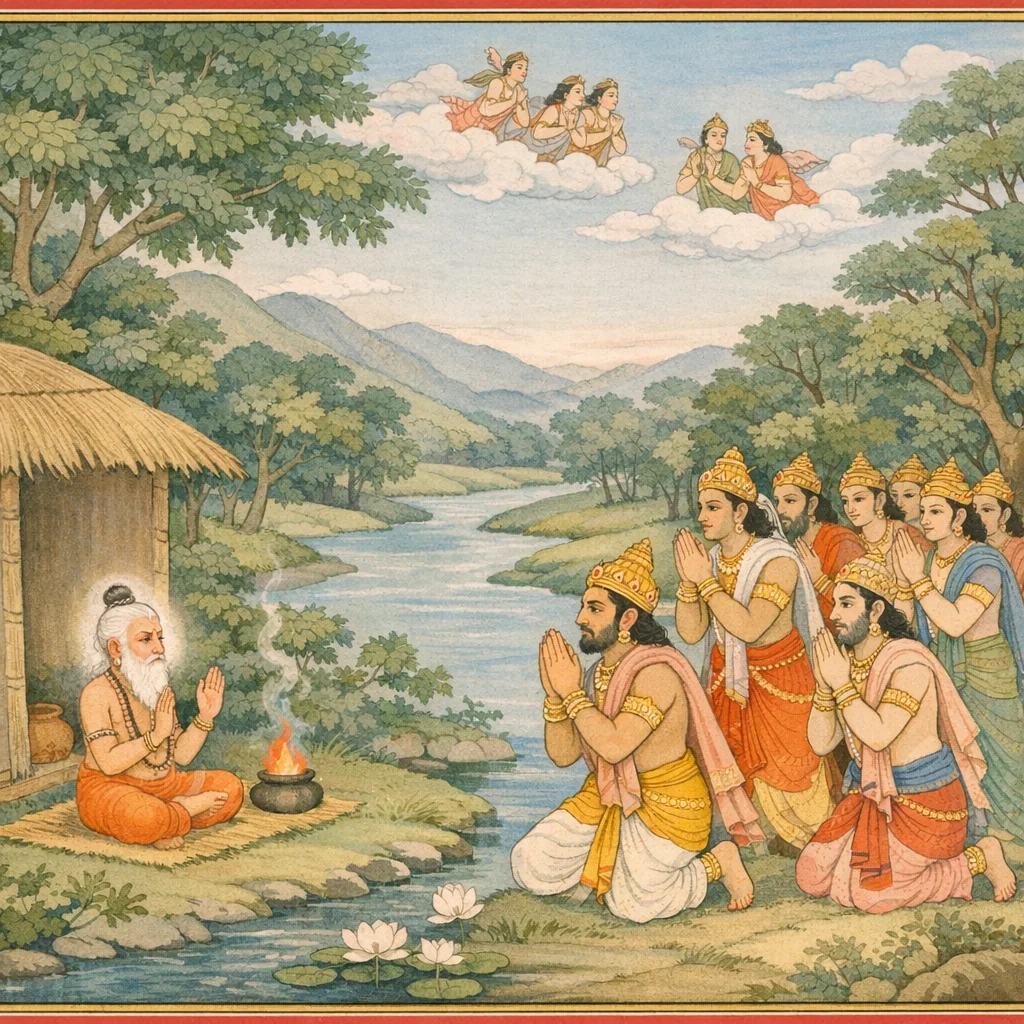
इदं च समनुप्राप्तं लोकानां भयमुन्तमम् | न च जानीम केनेमे रात्रौ वध्यन्ति ब्राह्मणा:,इसी प्रकार सब लोग एक-दूसरेके सहारे उन्नति करते हैं। आपकी ही कृपासे सब प्राणी उद्वेगरहित जीवन बिताते और आपके द्वारा ही सर्वथा सुरक्षित रहते हैं। भगवन्! मनुष्योंके समक्ष यह बड़ा भारी भय उपस्थित हुआ है। न जाने कौन रातमें आकर इन ब्राह्मणोंका वध कर रहा है
“And now a most dreadful fear has come upon the people. We do not know by whom these brāhmaṇas are being slain at night.”
Verse 4
क्षीणेषु च ब्राह्मणेषु पृथिवी क्षयमेष्यति । ततः पृथिव्यां क्षीणायां त्रिदिवं क्षयमेष्यति,ब्राह्मणोंके नष्ट होनेपर सारी पृथ्वी नष्ट हो जायगी और पृथ्वीका नाश होनेपर स्वर्ग भी नष्ट हो जायगा
Lomaśa declares that when the Brahmins are diminished, the very earth will fall into ruin; and when the earth is thus ruined, even the heavenly world will likewise decline.
Verse 5
त्वत्प्रसादान्महाबाहो लोका: सर्वे जगत्पते । विनाशं नाधिगच्छेयुस्त्वया वै परिरक्षिता:,महाबाहो! जगत्पते! आप ऐसी कृपा करें, जिससे आपके द्वारा सुरक्षित होकर सब लोग विनाशको न प्राप्त हों
O mighty-armed Lord of the world, by your gracious favor may all beings, protected by you, never fall into ruin.
Verse 6
विष्णुरुवाच विदितं मे सुरा: सर्व प्रजानां क्षयकारणम् । भवतां चापि वक्ष्यामि शृणुध्वं विगतज्वरा:,भगवान् विष्णु बोले--देवताओ! प्रजाके विनाशका जो कारण उपस्थित हुआ है वह सब मुझे ज्ञात है। मैं तुमलोगोंको भी बता रहा हूँ; निश्चिन््त होकर सुनो
Viṣṇu said: “O gods, I fully know the cause that has arisen for the destruction of living beings. I shall also explain it to you; listen with minds free from agitation and fear.”
Verse 7
कालेय इति विख्यातो गण: परमदारुण: । तैश्व वृत्रं समाश्रित्य जगत् सर्व प्रमाथितम्,दैत्योंका एक अत्यन्त भयंकर दल है जो कालेय नामसे विख्यात है। उन दैत्योंने वृत्रासुरका सहारा लेकर सारे संसारमें तहलका मचा दिया था
There is a host of Dānavas famed by the name “Kāleyas,” exceedingly dreadful. Taking refuge in Vṛtra, they threw the entire world into turmoil, violently oppressing all beings.
Verse 8
ते वृत्र निहतं दृष्टवा सहस्राक्षेण धीमता । जीवितं परिरक्षन्त: प्रविष्टा वरुणालयम्,(॥॥/ 7 0, है का ॥॥ परम बुद्धिमान् इन्द्रके द्वारा वृत्रासुरको मारा गया देख वे अपने प्राण बचानेके लिये समुद्रमें जाकर छिप गये हैं
Seeing Vṛtra slain by the wise Sahasrākṣa (Indra), they—anxious to preserve their own lives—fled and hid themselves in Varuṇa’s abode, the ocean.
Verse 9
ते प्रविश्योदर्धि घोरं नक्रग्राहसमाकुलम् | उत्सादनार्थ लोकानां रात्रौ घ्नन्ति ऋषीनिह,नाक और ग्राहोंसे भरे हुए भयंकर समुद्रमें घुसकर वे सम्पूर्ण जगत्का संहार करनेके लिये रातमें निकलते तथा यहाँ ऋषियोंकी हत्या करते हैं
Entering the dreadful ocean teeming with crocodiles and sea-monsters, they come forth at night with the intent to devastate the worlds, and here they slay the sages.
Verse 10
न तु शक्या: क्षयं नेतुं समुद्राभ्रयगा हि ते । समुद्रस्य क्षये बुद्धिर्भवद्धि: सम्प्रधार्यताम्,उन दानवोंका संहार नहीं किया जा सकता; क्योंकि वे दुर्गम समुद्रके आश्रयमें रहते हैं। अतः तुम-लोगोंको समुद्रको सुखानेका विचार करना चाहिये
“But they cannot be brought to destruction, for they dwell under the protection of the hard-to-reach ocean. Therefore, you should deliberate on the plan of drying up the sea.”
Verse 11
अगस्त्येन विना को हि शक्तोडन्योडर्णवशोषणे । अन्यथा हि न शक््यास्ते विना सागरशोषणम्,महर्षि अगस्त्यके सिवा दूसरा कौन है जो समुद्रका शोषण करनेमें समर्थ हो। समुद्रको सुखाये बिना वे दानव काबूमें नहीं आ सकते
Lomaśa said: “Who, apart from Agastya, is capable of drying up the ocean? For otherwise those beings cannot be subdued—without draining the sea there is no way to bring them under control, except through the great sage Agastya.”
Verse 12
हक कक विष्णुना समुदाह्तम् । अगस्त्यस्याश्रमं ययु:
Thus, in the manner proclaimed by Viṣṇu, they proceeded to the hermitage of Agastya—moving forward in accordance with the divine injunction and toward the counsel of a revered sage.
Verse 13
भगवान् विष्णुकी कही हुई यह बात सुनकर देवता ब्रह्माजीकी आज्ञा ले अगस्त्यके आश्रमपर गये ।। तत्रापश्यन् महात्मानं वारुणिं दीप्ततेजसम् | उपास्यमानमृषिभिर्देवैरिव पितामहम्,वहाँ उन्होंने मित्रावरुणके पुत्र महात्मा अगस्त्यजीको देखा। उनका तेज उद्धासित हो रहा था। जैसे देवतालोग ब्रह्माजीके पास बैठते हैं, उसी प्रकार बहुत-से ऋषि-मुनि उनके निकट बैठे थे
There they beheld the great-souled son of Mitra and Varuṇa—Agastya—radiant with blazing spiritual splendor. He was being attended and revered by many sages, just as the gods sit in reverence before the Grandsire Brahmā.
Verse 14
तेडभिगम्य महात्मान॑ मैत्रावरुणिमच्युतम् । आश्रमस्थं तपोराशिं कर्मभि: स्वैरभिष्टवन्,अपनी महिमासे कभी च्युत न होनेवाले मित्रावरुण नन््दन तपोराशि महात्मा अगस्त्य आश्रममें ही विराजमान थे। देवताओंने समीप जाकर उनके अद्भुत कर्मोंका वर्णन करते हुए स्तुति प्रारम्भ की
Approaching the great-souled Agastya—son of Mitra and Varuṇa, unfailing in his spiritual stature—the gods found him seated in his hermitage, a very treasury of austerity. Drawing near, they began to praise him, recounting his extraordinary deeds.
Verse 15
देवा ऊचु नहुषेणाभितप्तानां त्वं लोकानां गति: पुरा । भ्रंशितश्न सुरैश्चर्यात् स््वलॉकाल्लोककण्टक:,देवता बोले--भगवन्! पूर्वकालमें राजा नहुषके अन्यायसे संतप्त हुए लोकोंकी आपने ही रक्षा की थी। आपने ही उस लोककण्टक नरेशको देवेन्द्रपद तथा स्वर्गसे नीचे गिरा दिया था
The gods said: “O Blessed One! In former times, when the worlds were scorched by King Nahusha’s injustice, you alone were their refuge and deliverance. You cast down that thorn of the world from Indra’s rank and from heaven itself.”
Verse 16
क्रोधात् प्रवृद्ध;/ सहसा भास्करस्य नगोत्तम: | वचस्तवानतिक्रामन् विन्ध्य: शैलो न वर्धते,पर्वतोंमें श्रेष्ठ विन्ध्य सूर्यदेवपर क्रोध करके जब सहसा बढ़ने लगा तब आपने ही उसे रोका था। आपकी आज्ञाका उल्लंघन न करते हुए विन्ध्यगिरि आज भी बढ़ नहीं रहा है
Once, the Vindhya—foremost among mountains—swelled up suddenly in anger against the Sun. Yet, not transgressing your command, the Vindhya range does not continue to grow even today.
Verse 17
तमसा चावृते लोके मृत्युनाभ्यर्दिता: प्रजा: । त्वामेव नाथमासाद्य निर्व॒तिं परमां गता:,विन्ध्यगिरिके बढ़नेसे जब सारे जगत्में अन्धकार छा गया और सारी प्रजा मृत्युसे पीड़ित होने लगी। उस समय आपको ही अपना रक्षक पाकर सबने अत्यन्त हर्षका अनुभव किया था
When the world was shrouded in darkness and the people were tormented by death, they found you alone as their protector; reaching you as their refuge, they attained the highest relief and joy.
Verse 18
अस्माकं भयभीतानां नित्यशो भगवान् गति: । ततत्त्वार्ता: प्रयाचामो वरं त्वां वरदो हासि,सदा आप ही हम भयभीत देवताओंके लिये आश्रय होते आये हैं। अत: इस समय भी संकटमें पड़कर हम आपसे वर माँग रहे हैं; क्योंकि आप ही वर देनेके योग्य हैं
O Blessed Lord, you have ever been the refuge and final recourse of us who are struck with fear. Therefore, pressed by this peril and seeking the true remedy, we now beg a boon from you—for you alone are truly able to grant boons.
Verse 102
इस प्रकार श्रीमहाभारत वनपर्वके अन्तर्गत तीर्थयात्रापर्वमें लोमशती ्थयात्राके प्रसंगमें विष्णुस्तुतिविषयक एक सौ दोवाँ अध्याय पूरा हुआ
Thus ends the one hundred and second chapter of the Mahābhārata’s Vana Parva, within the Tīrtha-yātrā section, in the context of Lomasha’s pilgrimage narrative, dealing with the praise of Viṣṇu.
Verse 103
इति श्रीमहाभारते वनपर्वणि तीर्थयात्रापर्वणि लोमशतीर्थयात्रायामगस्त्यमाहात्म्यकथने ->यधिकशततमो<ध्याय:
Thus, in the Śrī Mahābhārata, within the Vana Parva—specifically the section on pilgrimage—during Lomāśa’s account of the sacred journey, in the narration of the greatness of Agastya, this is the one-hundred-and-third chapter.
Frequently Asked Questions
The tension lies between decisive emergency intervention (draining the ocean to expose threats) and the obligation to restore ecological/cosmic order afterward, revealing that crisis solutions can generate secondary duties.
Extraordinary capability should be directed toward loka-hita, but sustainable resolution requires planning for reversibility, shared execution, and consultation when an action’s consequences cannot be simply undone.
No explicit phalaśruti is present in the provided passage; the chapter’s significance is conveyed through narrative exemplification—linking tapas, praise, and counsel to maintaining cosmic stability.