Adhyaya 70
उद्योगपर्व — अध्याय 70: युधिष्ठिरस्य शान्त्युपायविचारः (Yudhiṣṭhira’s Deliberation on Peace-Means)
Upa-parva: Kṛṣṇa–Yudhiṣṭhira Saṃvāda (Peace Strategy and Envoy Deliberation)
Chapter 70 records a sustained policy-and-ethics discourse between Yudhiṣṭhira and Kṛṣṇa in the immediate aftermath of Sañjaya’s report. Yudhiṣṭhira frames the crisis as an ‘arrived time’ requiring Kṛṣṇa’s guidance, asserting that Dhṛtarāṣṭra—bound by attachment to Duryodhana—seeks a false peace through denying the Pāṇḍavas their rightful share. He recalls the completed exile terms and advances a minimal settlement request: five villages (named in the text) as a pragmatic compromise to avoid systemic ruin. The chapter then expands into a reflective critique of greed, shame (hrī), and the social-psychological effects of loss: how deprivation can produce anger, moral confusion, and cycles of retaliation. Yudhiṣṭhira evaluates war as structurally tragic—victory and defeat both entail depletion, and vengeance perpetuates hostility—yet he also acknowledges kṣatriya social realities and the danger that rejected conciliation can precipitate unavoidable escalation. Kṛṣṇa responds by accepting the embassy role, stating that his going will not be purposeless: it may secure peace or, failing that, clarify responsibility before the world. Yudhiṣṭhira expresses concern about Kṛṣṇa entering a hostile assembly but ultimately endorses the mission, requesting speech aligned with dharma and beneficial counsel, whether through gentle persuasion or firmer address.
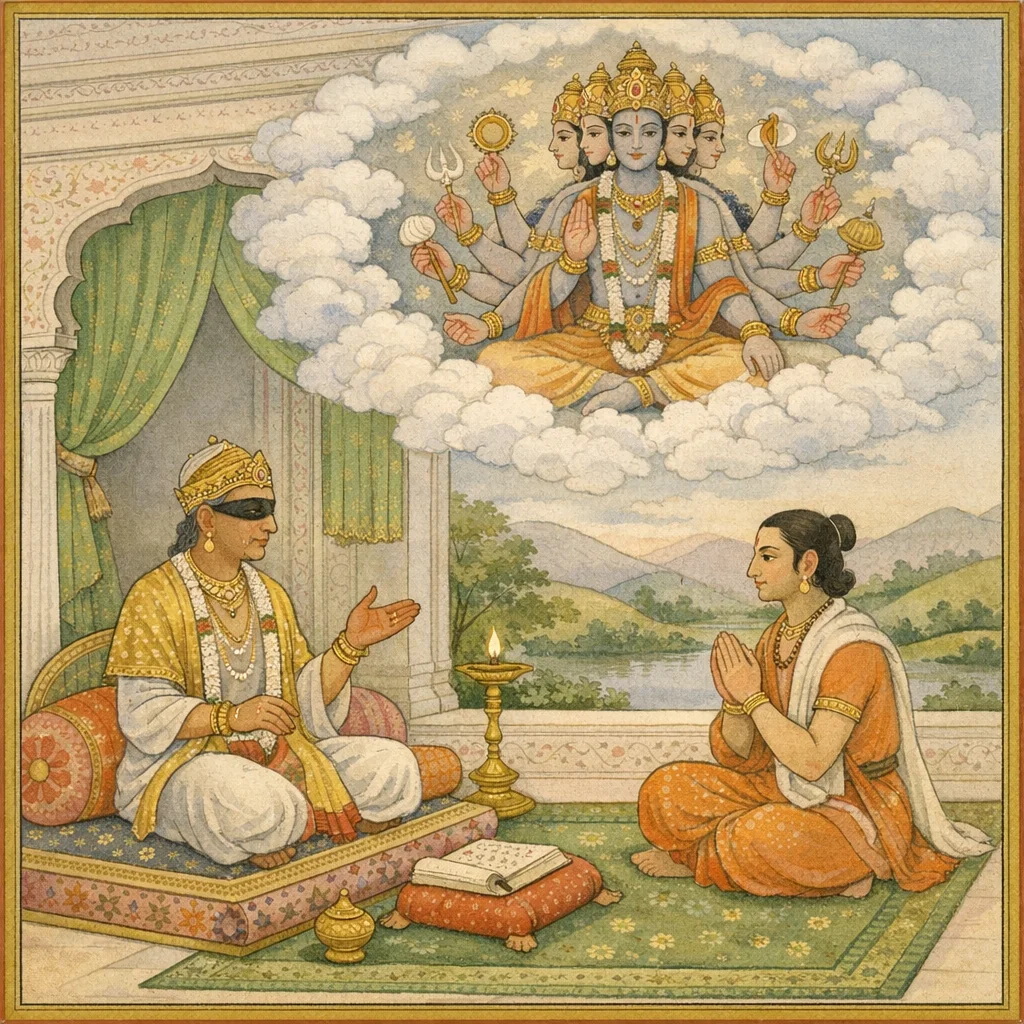
Chapter Arc: धृतराष्ट्र संजय से कहते हैं कि वे उन भाग्यशालियों से ईर्ष्या करते हैं जो वासुदेव कृष्ण को निकट से देखेंगे—और उसी क्षण उनका मन कृष्ण-स्तुति में बह निकलता है। → राजनीतिक संकट (कुरु-पाण्डव संघर्ष) की पृष्ठभूमि में धृतराष्ट्र का अंतर्मन भय, आशा और अपराध-बोध से डोलता है; वे कृष्ण को केवल दूत नहीं, त्रैलोक्य-नायक, शत्रु-हन्ता और धर्म-प्रवर्तक के रूप में स्मरण करते हैं। → धृतराष्ट्र का स्तोत्र-शिखर: वे कृष्ण को ‘सहस्रशीर्ष पुरुष’, ‘पुराण’, ‘अनादि-मध्य-अन्त’, ‘त्रैलोक्य-निर्माणकर्ता’, देव-दानव-नाग-राक्षसों के जनक, और ‘परं शरणं’ कहकर पूर्ण शरणागति व्यक्त करते हैं। → स्तुति के माध्यम से धृतराष्ट्र का मन क्षणिक रूप से स्थिर होता है—वे स्वीकारते हैं कि कृष्ण की वाणी और उपस्थिति ही इस संकट में एकमात्र आश्रय और दिशा है। → कृष्ण जिनको ‘मोहयन्तं मदीयान्’—मेरे पुत्रों को भ्रम से निकालने वाले—कहा गया, क्या वे दुर्योधन के हठ को तोड़ पाएँगे या युद्ध अवश्यंभावी होगा?
Shlokas
Verse 1
#फ्जआ+ (0) आफ अत+- एकसप्ततितमो< ध्याय: धृतराष्ट्रके द्वारा भावद्गुणगान धृतराष्ट उवाच चक्षुष्मतां वै स्पृहयामि संजय द्रक्ष्यन्ति ये वासुदेव॑ समीपे । विभ्राजमानं वपुषा परेण प्रकाशयन्तं प्रदिशो दिशश्ष॒,धृतराष्ट्र बोले--संजय! जो लोग परम उत्तम श्रीअंगोंसे सुशोभित तथा दिशा- विदिशाओंको प्रकाशित करते हुए वसुदेवनन्दन भगवान् श्रीकृष्णका निकटसे दर्शन करेंगे, उन सफल नेत्रोंवाले मनुष्योंके सौभाग्यको पानेकी मैं भी अभिलाषा रखता हूँ
Dhṛtarāṣṭra said: “Sañjaya, I truly long for the fortune of those blessed with eyes who will behold Vāsudeva from close at hand—him who shines with a transcendent radiance, illuminating the quarters and all directions.”
Verse 2
ईरयन्तं भारतीं भारताना- मभ्यर्चनीयां शड़करीं सृंजयानाम् । बुभूषद्धिग्ग्रहणीयामनिन्द्यां परासूनामग्रहणीयरूपाम्,भगवान् अत्यन्त मनोहर वाणीमें जो प्रवचन करेंगे, वह भरतवंशियों तथा सूंजयोंके लिये कल्याणकारी तथा आदरणीय होगा। ऐश्वर्यकी इच्छा रखनेवाले पुरुषोंके लिये भगवान्की वह वाणी अनिन्द्य और शिरोधार्य होगी; परंतु जो मृत्युके निकट पहुँच चुके हैं, उन्हें वह अग्राह्म प्रतीत होगी
Dhṛtarāṣṭra said: “The discourse that the Blessed Lord is about to utter—stirring and setting in motion this sacred speech—will be auspicious and worthy of reverent acceptance for the Bhāratas and the Sṛñjayas. For those who seek prosperity and well-being, that divine utterance will be blameless and fit to be held upon the head (accepted as supreme counsel); but to those already near death and ruin, it will appear unacceptable and impossible to take in.”
Verse 3
समुद्यन्तं सात्वतमेकवीरं प्रणेतारमृषभं यादवानाम् | निहन्तारं क्षोभणं शात्रवाणां मुछ्चन्तं च द्विषतां वै यशांसि,संसारके अद्वितीय वीर, सात्वतकुलके श्रेष्ठ पुरुष, यदुवंशियोंके माननीय नेता, शत्रुपक्षके योद्धाओंको क्षुब्ध करके उनका संहार करनेवाले तथा वैरियोंके यशको बलपूर्वक छीन लेनेवाले वे भगवान् श्रीकृष्ण यहाँ उदित होंगे (और नेत्रवाले लोग उनका दर्शन करके धन्य हो जायाँगे)
Dhṛtarāṣṭra said: “Kṛṣṇa is rising into view here—peerless hero of the Sātvatas, the honored leader and foremost bull among the Yādavas; the one who shakes the enemy host, destroys the opposing warriors, and forcibly strips away the fame of those who hate him. Those with eyes will be blessed to behold him.”
Verse 4
द्रष्टारो हि कुरवस्तं समेता महात्मानं शत्रुहणं वरेण्यम् । ब्रुवन्तं वाचमनृशंसरूपां वृष्णिश्रेष्ठ मोहयन्तं मदीयान्,महात्मा, शत्रुहन्ता तथा सबके वरण करनेयोग्य वे वृष्णिकुलभूषण श्रीकृष्ण यहाँ आकर कृपापूर्ण कोमल वाक्य बोलेंगे और हमारे पक्षवर्ती राजाओंको मोहित करेंगे; इस अवस्थामें समस्त कौरव उन्हें देखेंगे
Dhṛtarāṣṭra said: “When all the Kurus have assembled and behold Kṛṣṇa—the great-souled, foe-slaying, most excellent one, foremost of the Vṛṣṇis—he will speak words shaped by compassion and gentleness; and by that very gracious speech he will win over (bewilder) those who stand on my side.”
Verse 5
ऋषिं सनातनतमं विपफक्षितं वाच: समुद्र कलशं यतीनाम् । अरिष्टनेमिं गरुडं सुपर्ण हरिं प्रजानां भुवनस्य धाम,जो अत्यन्त सनातन ऋषि, ज्ञानी, वाणीके समुद्र और प्रयत्नशील साधकोंको कलशके जलकी भाँति सुलभ होनेवाले हैं, जिनके चरण समस्त विघ्नोंका निवारण करनेवाले हैं, सुन्दर पंखोंसे युक्त गरुड़ जिनके स्वरूप हैं, जो प्रजाजनोंके पाप-ताप हर लेनेवाले तथा जगतके आश्रय हैं, जिनके सहस्रों मस्तक हैं, जो पुराणपुरुष हैं, जिनका आदि, मध्य और अन्त नहीं है, जो अक्षय कीर्तिसे सुशोभित, बीज एवं वीर्यको धारण करनेवाले, अजन्मा, नित्य तथा परात्पर परमेश्वर हैं, उन भगवान् श्रीकृष्णकी मैं शरण लेता हूँ
Dhṛtarāṣṭra said: “I take refuge in Śrī Kṛṣṇa—an eternally ancient seer, an ocean-treasury of sacred speech, easily accessible to striving ascetics like water in a vessel; whose feet remove all obstacles; whose form is like Garuḍa, the beautiful-winged Suparṇa; who takes away the sins and burning sufferings of beings and is the abiding refuge of the world.”
Verse 6
सहस्रशीर्ष पुरुषं पुराण- मनादिमध्यान्तमनन्तकीर्तिम् । शुक्रस्थ धातारमजं च नित्यं परं परेषां शरणं प्रपद्ये,जो अत्यन्त सनातन ऋषि, ज्ञानी, वाणीके समुद्र और प्रयत्नशील साधकोंको कलशके जलकी भाँति सुलभ होनेवाले हैं, जिनके चरण समस्त विघ्नोंका निवारण करनेवाले हैं, सुन्दर पंखोंसे युक्त गरुड़ जिनके स्वरूप हैं, जो प्रजाजनोंके पाप-ताप हर लेनेवाले तथा जगतके आश्रय हैं, जिनके सहस्रों मस्तक हैं, जो पुराणपुरुष हैं, जिनका आदि, मध्य और अन्त नहीं है, जो अक्षय कीर्तिसे सुशोभित, बीज एवं वीर्यको धारण करनेवाले, अजन्मा, नित्य तथा परात्पर परमेश्वर हैं, उन भगवान् श्रीकृष्णकी मैं शरण लेता हूँ
Dhṛtarāṣṭra said: “I take refuge in that primeval Supreme Person of a thousand heads—without beginning, middle, or end—whose fame is limitless; who is the sustainer and ordainer, abiding in the vital seed, unborn and eternal; the highest of the high, the ultimate refuge of all.”
Verse 7
त्रैलेक्यनिर्माणकरं जनित्रं देवासुराणामथ नागरक्षसाम् | नराधिपानां विदुषां प्रधान- मिन्द्रानुजं तं शरणं प्रपद्ये
Dhṛtarāṣṭra said: “I seek refuge in that Indra’s younger brother—him who is the generative source and effective maker of the three worlds; the progenitor of gods and asuras, and also of nāgas and rākṣasas; the foremost among kings and among the wise. To him I surrender for protection.”
Verse 73
जो तीनों लोकोंका निर्माण करनेवाले हैं, जिन्होंने देवताओं, असुरों, नागों तथा राक्षसोंको भी जन्म दिया है तथा जो ज्ञानी नरेशोंके प्रधान हैं, इन्द्रके छोटे भाई वामन- स्वरूप उन भगवान् श्रीकृष्णकी मैं शरण ग्रहण करता हूँ ।। इति श्रीमहाभारते उद्योगपर्वणि यानसंधिपर्वणि धृतराष्ट्रवाक्ये एकसप्ततितमो<ध्याय:
Dhṛtarāṣṭra said: “I take refuge in that Lord Śrī Kṛṣṇa—who is the creator of the three worlds, who brought forth the gods, the asuras, the nāgas, and the rākṣasas, who stands foremost among wise kings, and who, as Indra’s younger brother, assumed the form of Vāmana.”
Frequently Asked Questions
How to uphold justice without triggering collective destruction: Yudhiṣṭhira seeks a minimal lawful settlement to avoid escalation, yet confronts the possibility that persistent refusal makes conflict unavoidable despite its ethical and social costs.
Greed and partiality corrode judgment and social order; cycles of retaliation rarely yield true peace. Therefore, ethically structured negotiation and public accountability are necessary, even when success is uncertain.
No formal phalaśruti is stated. The chapter’s meta-function is evidentiary and normative: it records the good-faith pursuit of śama and frames Kṛṣṇa’s embassy as an act that may secure peace or, at minimum, establish moral responsibility within the epic’s broader dharma-architecture.