Adhyaya 69
Udyoga-parva Adhyāya 69: Dhṛtarāṣṭra’s Reverential Address to Sañjaya on Vāsudeva
Upa-parva: Sanjaya–Dhritarashtra Dialogue on Vasudeva (Contextual Hymnic Praise Episode)
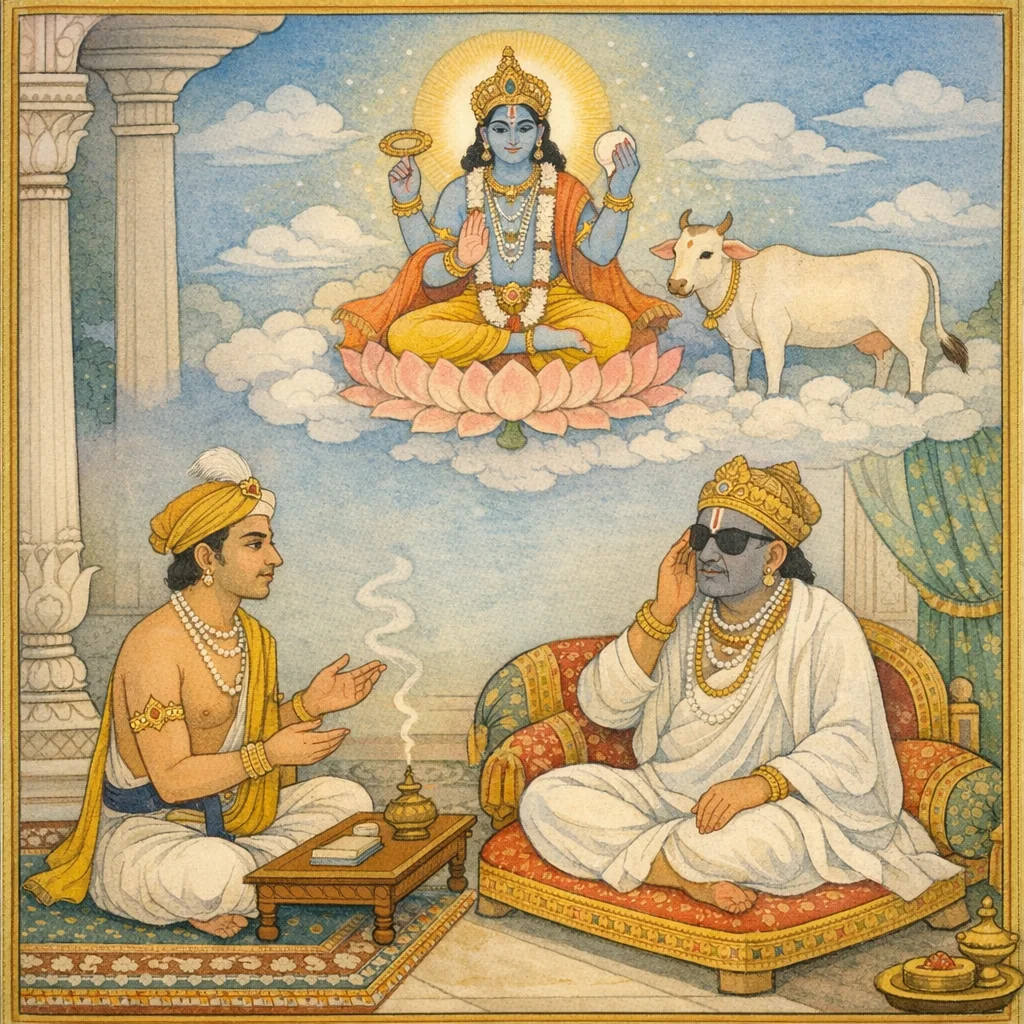
This chapter presents Dhṛtarāṣṭra’s speech to Sañjaya in which he expresses yearning for those able to behold Vāsudeva nearby, described as radiant and direction-illuminating. The discourse proceeds through a sequence of elevated descriptors: Vāsudeva as the stirring voice and revered speech among the Bhāratas; as the singular hero and leader of the Yādavas; as a disruptor of adversarial confidence and a remover of opponents’ fame; and as a figure whose compassionate, non-cruel speech can ‘bewilder’ or morally disarm Dhṛtarāṣṭra’s party. The language culminates in cosmological identifications—Vāsudeva as ancient seer, ocean of speech, refuge beyond refuges, creator-like principle associated with the ordering of the three worlds, and a supreme shelter invoked through explicit acts of taking refuge (śaraṇa-prapatti). The thematic lesson is the fusion of political anticipation with theological recognition: Kṛṣṇa’s authority is framed as simultaneously rhetorical (ethical speech), strategic (leadership and deterrence), and metaphysical (cosmic ground).
Chapter Arc: धृतराष्ट्र, संजय से पुनः पूछते हैं—‘पुण्डरीकाक्ष’ श्रीकृष्ण के विविध नामों की व्युत्पत्ति और उनका रहस्य मुझे विस्तार से सुनाओ; जिन नामों में स्वयं धर्म का प्रकाश छिपा है, वे कैसे बने? → संजय कहता है कि उसने वासुदेव के शुभ नाम-निर्वचन को सुना है; फिर एक-एक नाम के अर्थ खोलते हुए वह कृष्ण की सर्वव्यापकता, अविनाशिता और लोक-व्यापी सत्ता का संकेत देता है—मानो राजसभा में युद्ध-पूर्व क्षणों में ईश्वर-परिचय का दीपक जल रहा हो। → नामों की व्युत्पत्ति के माध्यम से कृष्ण का ‘सत्य’ से अभिन्न होना उभरता है—‘गोविन्द’ सत्य में प्रतिष्ठित हैं और सत्य उनमें; साथ ही ‘अधोक्षज’, ‘नारायण’, ‘विष्णु’, ‘जिष्णु’ आदि नामों से उनका अजेय, अवनत न होने वाला, और त्रिलोकी-विक्रमी स्वरूप चरम पर पहुँचता है। → संजय नामों के अर्थों को समेटकर यह स्थापित करता है कि ये नाम केवल संबोधन नहीं, बल्कि भगवान् के गुण, कर्म और तत्त्व का संक्षिप्त वेद हैं—जिससे धृतराष्ट्र को कृष्ण-तत्त्व का बोध और आगामी निर्णयों के लिए नैतिक आलोक मिलता है। → कृष्ण के नामों से सत्य और धर्म का मानदण्ड तो स्पष्ट हो गया—अब प्रश्न यह रह जाता है कि धृतराष्ट्र और कौरव उस मानदण्ड के सामने झुकेंगे या उसे अनसुना कर युद्ध की ओर बढ़ेंगे।
Shlokas
Verse 1
ऑपन--माजल बछ। अकाल सप्ततितमो<ध्याय: भगवान् श्रीकृष्णके विभिन्न नामोंकी व्युत्पत्तियोंका कथन धृतराष्ट उवाच भूयो मे पुण्डरीकाक्षं संजयाचक्ष्व पृच्छत: । नामकर्मार्थिवित् तात प्राप्तुयां पुरुषोत्तमम्,धृतराष्ट्र बोले--संजय! तुम भगवान् श्रीकृष्णके नाम और कर्मोका अभिप्राय जानते हो, अतः मेरे प्रश्नके अनुसार एक बार पुनः कमलनयन भगवान् श्रीकृष्णका वर्णन करो
Dhṛtarāṣṭra said: “Sañjaya, once again describe to me the lotus-eyed Lord, as I ask. Dear one, you understand the inner meaning of his names and deeds; therefore, explain how one may attain that Supreme Person.”
Verse 2
संजय उवाच श्रुतं मे वासुदेवस्य नामनिर्वचनं शुभम् | यावत् तत्राभिजाने5हमप्रमेयो हि केशव:,संजयने कहा--राजन्! मैंने वसुदेवनन्दन श्रीकृष्णके नामोंकी मंगलमयी व्युत्पत्ति सुन रखी है, उसमें जितना मुझे स्मरण है, उतना बता रहा हूँ। वास्तवमें तो भगवान् श्रीकृष्ण समस्त प्राणियोंकी पहुँचसे परे हैं
Sañjaya said: “I have heard the auspicious derivation and significance of the names of Vāsudeva. As far as I can recall it, I shall relate it; for Keśava is truly immeasurable—beyond the full reach of all beings.”
Verse 3
वसनात् सर्वभूतानां वसुत्वाद् देवयोनित: । वासुदेवस्ततो वेद्यो बृहत्त्वाद् विष्णुरुच्यते,भगवान् समस्त प्राणियोंके निवासस्थान हैं तथा वे सब भूतोंमें वास करते हैं, इसलिये “वसु' हैं एवं देवताओंकी उत्पत्तिके स्थान होनेसे और समस्त देवता उनमें वास करते हैं, इसलिये उन्हें 'देव” कहा जाता है। अतएव उनका नाम “वासुदेव” है, ऐसा जानना चाहिये। बृहत् अर्थात् व्यापक होनेके कारण वे ही “विष्णु' कहलाते हैं
Sañjaya said: Because the Lord is the dwelling-place of all beings and also abides within all beings, He is known as “Vasu.” And because He is the source from which the gods arise—and because all the gods dwell in Him—He is called “Deva.” Therefore He is to be understood by the name “Vāsudeva.” And because He is vast and all-pervading, He is called “Viṣṇu.”
Verse 4
मौनाद् ध्यानाच्च योगाच्च विद्धि भारत माधवम् | सर्वतत्त्वमयत्वाच्च मधुहा मधुसूदन:,भारत! मौन, ध्यान और योगसे उनका बोध अथवा साक्षात्कार होता है; इसलिये आप उन्हें “माधव” समझें। मधु शब्दसे प्रतिपादित पृथ्वी आदि सम्पूर्ण तत्त्वोंके उपादान एवं अधिष्ठान होनेके कारण मधुसूदन श्रीकृष्णको “मधुहा' कहा गया है
Sañjaya said: O Bhārata, know him as Mādhava—he is realized through silence, meditation, and yoga. And because he pervades and embodies all principles of reality, Madhusūdana is also called Madhuhā, the one who is the very ground and support of all elements.
Verse 5
कृषिर्भूवाचक: शब्दो णश्न निर्वतिवाचक: । विष्णुस्तद्भधावयोगाच्च कृष्णो भवति सात्वत:,“कृष' धातु सत्ता अर्थका वाचक है और “ण” शब्द आनन्द अर्थका बोध कराता है, इन दोनों भावोंसे युक्त होनेके कारण यदुकुलमें अवतीर्ण हुए नित्य आनन्दस्वरूप श्रीविष्णु “कृष्ण” कहलाते हैं
Sañjaya said: The sound “kṛṣ” denotes being and existence, and the syllable “ṇa” conveys bliss (ānanda). United in meaning, therefore, Viṣṇu—eternal bliss itself, who descended in the Yadu line—is called “Kṛṣṇa.”
Verse 6
पुण्डरीकं परं धाम नित्यमक्षयमव्ययम् । तद्धभावात् पुण्डरीकाक्षो दस्युत्रासाज्जनार्दन:
Sañjaya said: “Puṇḍarīka is the supreme abode—everlasting, imperishable, and undecaying. Because his being is established in that reality, he is called Puṇḍarīkākṣa; and because he terrifies and subdues the lawless, he is Janārdana.”
Verse 7
नित्य, अक्षय, अविनाशी एवं परम भगवद्धामका नाम पुण्डरीक है। उसमें स्थित होकर जो अक्षतभावसे विराजते हैं, वे भगवान् 'पुण्डरीकाक्ष' कहलाते हैं। (अथवा पुण्डरीक-- कमलके समान उनके अक्षि--नेत्र हैं, इसलिये उनका नाम पुण्डरीकाक्ष है)। दस्युजनोंको त्रास (अर्दन या पीड़ा) देनेके कारण उनको “जनार्दन” कहते हैं ।। यतः सत्त्वान्न च्यवते यच्च सत्त्वान्न हीयते । सत्त्वतः सात्वतस्तस्मादार्षभाद् वृषभेक्षण:
Sañjaya said: Because he never swerves from sattva—true goodness—and because that goodness never diminishes in him, he is called Sātvata, one established in sattva. And since he is foremost among the righteous, like a bull among the herd, he is also known as Vṛṣabhekṣaṇa, “the bull-eyed one.”
Verse 8
वे सत्यसे कभी च्युत नहीं होते और न सत्त्वसे अलग ही होते हैं, इसलिये सद्भावके सम्बन्धसे उनका नाम 'सात्वत” है। आर्ष कहते हैं वेदको, उससे भासित होनेके कारण भगवानका एक नाम “आर्षभ' है। आर्षभके योगसे ही वे “वृषभेक्षण” कहलाते हैं (वृषभका अर्थ है वेद, वही ईक्षण--नेत्रके समान उनका ज्ञापक है; इस व्युत्पत्तिके अनुसार वृषभेक्षण नामकी सिद्धि होती है) ।। न जायते जनित्रायमजस्तस्मादनीकजित् । देवानां स्वप्रकाशत्वाद् दमाद् दामोदरो विभु:,शत्रुसेनाओंपर विजय पानेवाले ये भगवान् श्रीकृष्ण किसी जन्मदाताके द्वारा जन्म ग्रहण नहीं करते हैं, इसलिये “अज” कहलाते हैं। देवता स्वयंप्रकाशरूप होते हैं, अतः उत्कृष्ट रूपसे प्रकाशित होनेके कारण भगवान् श्रीकृष्णको “उदर' कहा गया है और दम (इन्द्रियसंयम) नामक गुणसे सम्पन्न होनेके कारण उनका नाम “दाम” है। इस प्रकार दाम और उदर--इन दोनों शब्दोंके संयोगसे वे 'दामोदर' कहलाते हैं
Sañjaya said: He never falls away from truth, nor is he ever apart from sattva; therefore, by his bond with noble being (sadbhāva), he is called Sātvata. The seers call the Veda “Ārṣa”; and because the Lord shines forth through it, one of his names is Ārṣabha. Through that Ārṣabha connection he is also called Vṛṣabhekṣaṇa (taking vṛṣabha to mean the Veda, which, like an eye, makes knowledge known). The all-pervading Lord, conqueror of hostile armies, is not born through any begetter; therefore he is called Aja, “Unborn.” And since the divine is self-luminous, he is spoken of as Udar, “the supremely manifest”; and because he possesses dama, mastery over the senses, he is called Dāma. From the union of these two—Dāma and Udar—he is known as Dāmodara.
Verse 9
हर्षात् सुखात् सुखैश्वर्याद्धूषीकेशत्वम श्रुते । बाहुभ्यां रोदसी बिश्रन्महाबाहुरिति स्मृतः,वे हर्ष अर्थात् सुखसे युक्त होनेके कारण हृषीक हैं और सुख-ऐश्वर्यसे सम्पन्न होनेके कारण “ईश' कहे गये हैं। इस प्रकार वे भगवान् 'हृषीकेश” नाम धारण करते हैं। अपनी दोनों बाहुओंद्वारा भगवान् इस पृथ्वी और आकाशको धारण करते हैं, इसलिये उनका नाम “महाबाहु' है
Sañjaya said: “From joy and happiness, and from the possession of happiness and sovereign prosperity, he is heard of as bearing the name Hṛṣīkeśa. And because with his two arms he upholds the two worlds—earth and sky—he is remembered as Mahābāhu.”
Verse 10
अधो न क्षीयते जातु यस्मात् तस्मादधोक्षज: । नराणामयनाच्चापि ततो नारायण: स्मृत:,श्रीकृष्ण कभी नीचे गिरकर क्षीण नहीं होते, अतः (“अधो न क्षीयते जातु'--इस व्युत्पत्तिके अनुसार) “अधोक्षज' कहलाते हैं। वे नरों (जीवात्माओं)-के अयन (आश्रय) हैं, इसलिये उन्हें “नारायण” भी कहते हैं
Sañjaya said: Krishna never falls downward and is never diminished; therefore, by the etymology “adhō na kṣīyate jātu,” he is called Adhokṣaja. And because he is the āyana—the refuge—of the nara (living souls), he is also remembered as Nārāyaṇa.
Verse 11
पूरणात् सदनाच्चापि ततो$सौ पुरुषोत्तम: | असतश्न सतश्वैव सर्वस्य प्रभवाप्ययात्
Sañjaya said: From fullness and from dissolution as well, that Supreme Person stands beyond; for from him arise and into him return both the unreal and the real—indeed, the entire universe.
Verse 12
सर्वस्य च सदा ज्ञानात् सर्वमेतं प्रचक्षते । वे सर्वत्र परिपूर्ण हैं तथा सबके निवासस्थान हैं, इसलिये 'पुरुष' हैं और सब पुरुषोंमें उत्तम होनेके कारण उनकी पुरुषोत्तम" संज्ञा है। वे सत् और असत् सबकी उत्पत्ति और लयके स्थान हैं तथा सर्वदा उन सबका ज्ञान रखते हैं; इसलिये उन्हें “सर्व” कहते हैं ।। ११ ६ || सत्ये प्रतिष्ठित: कृष्ण: सत्यमत्र प्रतिष्ठितम्
Sañjaya said: Because he ever possesses knowledge of all, the wise declare him to be “the All.” Kṛṣṇa stands firmly established in Truth, and in him Truth itself is established. The passage frames Kṛṣṇa not merely as a political ally in the coming war, but as the ethical ground of reality—one whose omniscience and truthfulness make him the reliable refuge when dharma is under strain.
Verse 13
विष्णुविक्रमणाद् देवो जयनाज्जिष्णुरुच्यते
Sañjaya said: Because he took the mighty strides of Viṣṇu, he is called ‘Deva’; and because he is victorious in battle, he is called ‘Jiṣṇu’—names that praise divine power expressed through righteous triumph.
Verse 14
अतत्त्वं कुरुते तत्त्व तेन मोहयते प्रजा:,वे अपनी सत्ता-स्फूर्ति देकर असत्यको भी सत्य-सा कर देते हैं और इस प्रकार सारी प्रजाको मोहमें डाल देते हैं
Sañjaya said: He makes what is untrue appear as truth; by that very power he deludes the people. In the ethical frame of the episode, this is a warning about how authority and charisma can lend falsehood the sheen of legitimacy, leading society into confusion and moral error.
Verse 15
एवंविधो धर्मनित्यो भगवान् मधुसूदन: । आगन्ता हि महाबाहुरानृशंस्यार्थमच्युत:,निरन्तर धर्ममें तत्पर रहनेवाले उन भगवान् मधुसूदनका स्वरूप ऐसा ही है। अपनी मर्यादासे कभी च्युत न होनेवाले महाबाहु श्रीकृष्ण कौरवोंपर कृपा करनेके लिये यहाँ पधारनेवाले हैं
Such indeed is the nature of the Blessed Madhusūdana—ever constant in dharma. The mighty-armed Acyuta will surely come here, moved by compassion, in order to show mercy to the Kauravas and uphold what is right.
Verse 70
इति श्रीमहाभारते उद्योगपर्वणि यानसंधिपर्वणि संजयवाक्ये सप्ततितमो< ध्याय: ।। ७० || इस प्रकार श्रीमहाभारत उद्योगपर्वके अन्तर्गत यानसंधिपर्वमें संजयवाक्यविषयक सत्तरवाँ अध्याय पूरा हुआ
Thus, in the Śrī Mahābhārata, within the Udyoga Parva—specifically the Yāna–Saṃdhi section—ends the seventieth chapter, consisting of Sañjaya’s narration. This closing colophon marks the completion of the chapter and frames the discourse as an authoritative report, emphasizing the gravity of counsel, diplomacy, and the moral stakes surrounding the impending conflict.
Verse 126
सत्यात् सत्यं तु गोविन्दस्तस्मात् सत्योडपि नामतः । श्रीकृष्ण सत्यमें प्रतिष्ठित हैं और सत्य उनमें प्रतिष्ठित है। वे भगवान् गोविन्द सत्यसे भी उत्कृष्ट सत्य हैं। अतः उनका एक नाम “सत्य” भी है
Sañjaya said: Govinda is Truth beyond ordinary truth; therefore he is also known by the name “Satya” (Truth). In him truth is firmly established, and he himself is established in truth—making him the very ground and measure of ethical reliability.
Verse 136
शाश्वतत्वादनन्तश्न गोविन्दो वेदनाद् गवाम् | विक्रमण (वामनावतारमें तीनों लोकोंको आक्रान्त) करनेके कारण वे भगवान् “विष्णु' कहलाते हैं। वे सबपर विजय पानेसे “जिष्णु', शाश्वत (नित्य) होनेसे 'अनन्त' तथा गौओं (इन्द्रियों)-के ज्ञाता और प्रकाशक होनेके कारण (गां विन्दति) इस व्युत्पत्तिके अनुसार 'गोविन्द' कहलाते हैं
Sanjaya explains the sacred names of the Lord: because He is eternal, He is called Ananta; because He knows and makes manifest the ‘cows’—understood here as the senses—He is called Govinda. Because, in the Vāmana incarnation, He strode across and encompassed the three worlds, He is called Viṣṇu. Because He conquers all, He is called Jiṣṇu. Thus, the names are presented as ethical and devotional pointers to His timelessness, all-pervading power, and guiding illumination of the inner faculties.
Frequently Asked Questions
The implicit dilemma is whether the Kuru court can remain committed to its current course when confronted with an authority portrayed as both ethically compelling (non-cruel, truth-oriented speech) and strategically decisive.
Legitimate leadership and counsel are depicted as grounded in moral speech and discernment, and the text frames recognition of higher ethical authority as integral to sound political judgment.
No explicit phalaśruti is stated in the provided verses; the chapter’s meta-function is devotional-ethical framing—positioning Vāsudeva as a refuge principle that reorients interpretation of the surrounding political narrative.