Adhyaya 186
भीष्म–रामसंयुगनिवृत्तिः (Bhishma and Rama: Restraint and Withdrawal in the Engagement)
Upa-parva: Bhishma–Rama (Parashurama) Samyuga-Nivritti Episode (Udyoga Parva, Adhyaya 186 context)
Bhīṣma narrates that a great celestial outcry arises warning him not to release the “prasvāpa/svāpana” weapon. As he prepares its use against Rāma Jāmadagnya (Paraśurāma), Nārada and a group of divine beings/sages intervene, urging restraint and emphasizing that Rāma is his guru and a brahminical ascetic deserving honor. Bhīṣma observes eight brahmavādin sages in the sky endorsing Nārada’s counsel as beneficial for the worlds. Bhīṣma then retracts the sleep-weapon and kindles the Brahmāstra according to rule. Paraśurāma, seeing the weapon withdrawn, reacts with anger and a spoken admission of being overcome, after which ancestral figures and sages surround and pacify him, repeatedly advising him not to persist against Bhīṣma—who is described as Śāntanu’s son and a Vasu—while also noting that Bhīṣma’s death is ordained at the proper time and associated with Arjuna’s destiny. Paraśurāma asserts his vow not to retreat from battle, rejecting motives like greed, fear, or gain as reasons to abandon dharma. Further sages and Bhāgīrathī (Gaṅgā) enter the battlefield to restrain him; the brahmins’ firm resolve is emphasized, and they induce Paraśurāma to lay down arms. Bhīṣma again sees the eight sages, who instruct him to approach and honor his guru for the sake of lokahita. Bhīṣma bows, and Paraśurāma responds with praise, declaring Bhīṣma unmatched among kṣatriyas and expressing satisfaction; the chapter closes with Paraśurāma summoning a maiden (kanyā) and speaking to her in the presence of ascetics, setting up the next narrative movement.
Chapter Arc: तपस्वी महर्षियों के बीच अपमानित अम्बा अपना व्रत उद्घोषित करती है—भीष्म द्वारा ठुकराई गई मैं अब पतिधर्म से भ्रष्ट हुई; मेरा तप स्वर्ग के लिए नहीं, केवल भीष्म-वध के लिए है। → महर्षियों के समक्ष वह प्रतिज्ञा को कठोर बनाती जाती है: शांति तभी मिलेगी जब भीष्म का अंत होगा। उसी तपोवन में देवताओं की उपस्थिति का संकेत बढ़ता है और अम्बा अपने प्रश्न को नियति के द्वार तक ले जाती है—स्त्री होकर युद्ध में विजय कैसे? → उमापति शूलपाणि शिव साक्षात प्रकट होकर वर देते हैं: अम्बा रणभूमि में भीष्म का वध करेगी; आवश्यक होने पर उसे पुरुषत्व प्राप्त होगा और अगले देह में भी उसे सब स्मरण रहेगा। → शिव-वाणी को सत्य मानकर अम्बा क्रोधदीप्त चित्त से विशाल चिता रचती है, अग्नि प्रज्वलित करती है और ‘भीष्मवध’ का उच्चारण कर हुताशन में प्रवेश करती है—अपने अगले जन्म की दिशा स्वयं चुनती हुई। → अग्नि में समर्पण के बाद प्रश्न अधूरा रह जाता है—अम्बा किस रूप में, किस कुल में, और किस समय लौटेगी कि भीष्म के अजेय कवच को तोड़ सके?
Shlokas
Verse 1
इस प्रकार श्रीमहाभारत उद्योगपर्वके अन्तर्गत अम्बोपाख्यानपर्वमें अग्बाका तपस्याविषयक एक सौ छियासीवाँ अध्याय पूरा हुआ ॥/ १८६ ॥/ अपन क्रा बछ। अऑ-्-क्ाज सप्ताशीर्त्याधिकशततमोब< ध्याय: अम्बाका द्वितीय जन्ममें पुन: तप करना और महादेवजीसे अभीष्ट वरकी प्राप्ति तथा उसका चिताकी आगमें प्रवेश भीष्म उवाच ततस्ते तापसा: सर्वे तपसे धृतनिश्चयाम् । दृष्टवा न्यवर्तयंस्तात कि कार्यमिति चाब्रुवन्,भीष्मजी कहते हैं--तात! उस जन्ममें भी उसे तपस्या करनेका ही दृढ़ निश्चय लिये देख सब तपस्वी महात्माओंने उसे रोका और पूछा--“तुझे क्या करना है?”
Bhishma said: Then all the ascetics, seeing her firmly resolved to undertake austerities, tried to restrain her and asked, “Dear one, what is it that you intend to accomplish?”
Verse 2
तानुवाच ततः कन्या तपोवृद्धानृषींस्तदा । निराकृतास्मि भीष्मेण भ्रंशिता पतिधर्मत:ः,तब उस कन्याने उन तपोवृद्ध महर्षियोंसे कहा--'भीष्मने मुझे ठुकराया है और मुझे पतिकी प्राप्ति एवं उसकी सेवारूप धर्मसे वंचित कर दिया है
Then the maiden addressed those ascetics, mature through austerity: “Bhīṣma has rejected me; I have been deprived of the dharma of a wife—both the attainment of a husband and the duty of devoted service that follows.”
Verse 3
वधार्थ तस्य दीक्षा मे न लोकार्थ तपोधना: । निहत्य भीष्म गच्छेयं शान्तिमित्येव निश्चय:,“तपोधनो! मेरी यह तपकी दीक्षा पुण्यलोकोंकी प्राप्तिके लिये नहीं, भीष्मका वध करनेके लिये है। मेरा यह निश्चय है कि भीष्मको मार देनेपर मेरे हृदयको शान्ति मिल जायगी
She said: “O ascetics rich in austerity, this vow of disciplined penance that I have undertaken is not for attaining meritorious worlds; it is for the purpose of killing him. My resolve is fixed: only after slaying Bhīṣma shall I go to peace.”
Verse 4
यत्कृते दुःखवसतिमिमां प्राप्तास्मि शाश्वतीम् । पतिलोकाद् विहीना च नैव स्त्री न पुमानिह,“जिसके कारण मैं सदाके लिये इस दुःखमयी परिस्थितिमें पड़ गयी हूँ और पतिलोकसे वंचित होकर इस जगतमें न तो स्त्री रह गयी हूँ न पुरुष ही। उस गंगापुत्र भीष्मको युद्धमें मारे बिना तपस्यासे निवृत्त नहीं होऊँगी। तपोधनो! यही मेरे हृदयका संकल्प है, जिसे मैंने स्पष्ट बता दिया
“Because of him I have fallen into this everlasting abode of suffering; and, cut off from the world of a husband, in this life I am neither truly woman nor man. Until I slay Bhīṣma, the son of Gaṅgā, in battle, I will not cease from my austerities. O ascetics rich in penance, this is the resolve of my heart, and I have declared it plainly.”
Verse 5
नाहत्वा युधि गाड़ेयं निवर्तिष्ये तपोधना: । एष मे हृदि संकल्पो यदिदं कथितं मया,“जिसके कारण मैं सदाके लिये इस दुःखमयी परिस्थितिमें पड़ गयी हूँ और पतिलोकसे वंचित होकर इस जगतमें न तो स्त्री रह गयी हूँ न पुरुष ही। उस गंगापुत्र भीष्मको युद्धमें मारे बिना तपस्यासे निवृत्त नहीं होऊँगी। तपोधनो! यही मेरे हृदयका संकल्प है, जिसे मैंने स्पष्ट बता दिया
“O rich in austerity, I will not turn back until I have slain him in the thick of battle. This is the resolve lodged in my heart—this is exactly what I have declared.”
Verse 6
स्त्रीभावे परिनिर्विण्णा पुंस्त्वार्थ कृतनिश्चया । भीष्मे प्रतिचिकीर्षामि नास्मि वार्येति वै पुन:,“मुझे स्त्रीके स्वरूपसे विरक्ति हो गयी है, अतः पुरुषशरीरकी प्राप्तिके लिये दृढ़ निश्चय लेकर तपस्यामें प्रवृत्त हुई हूँ। भीष्मसे अवश्य बदला लेना चाहती हूँ, अतः आपलोग मुझे रोकें नहीं!
“Disgusted with the condition of womanhood, I have resolved firmly to obtain manhood and have therefore undertaken austerities. I am determined to exact vengeance upon Bhīṣma; do not try to restrain me—indeed, I am not to be held back.”
Verse 7
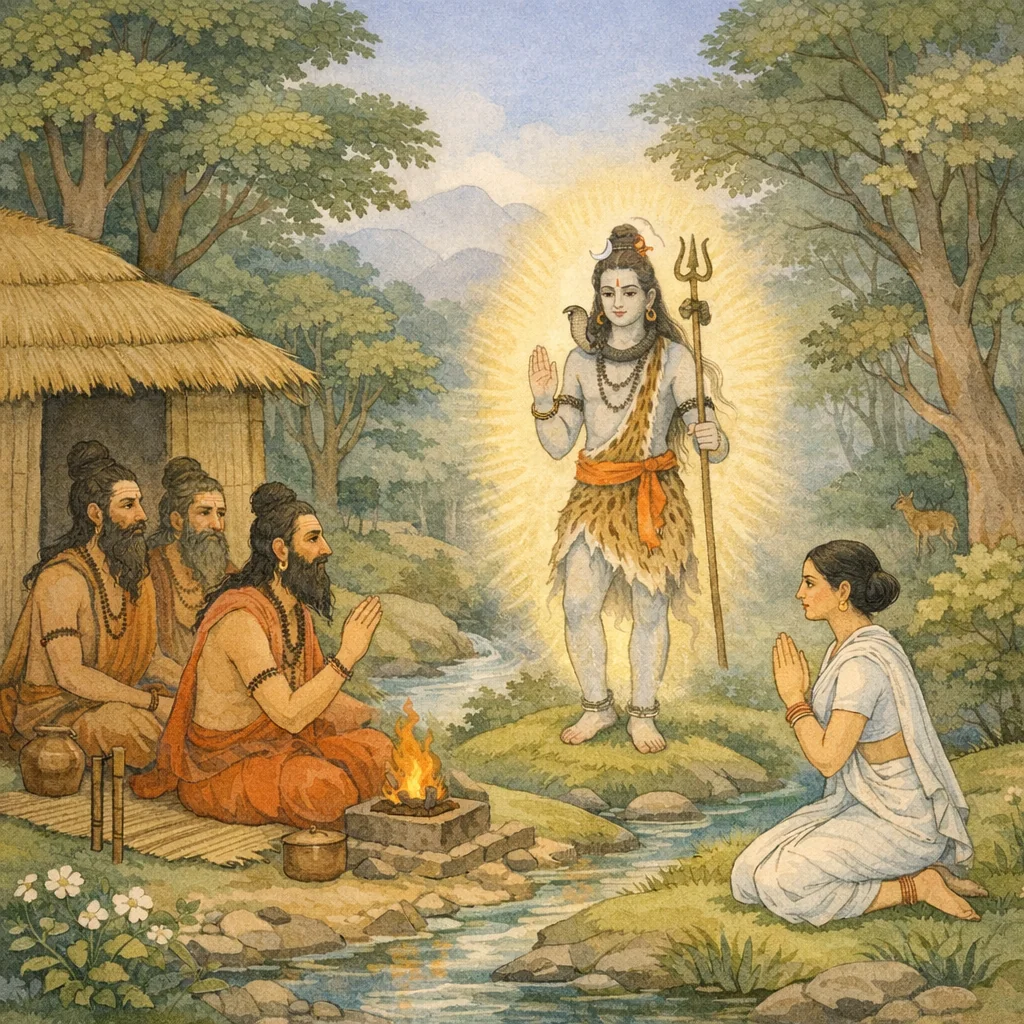
तां देवो दर्शयामास शूलपाणिरुमापति: । मध्ये तेषां महर्षीणां स्वेन रूपेण तापसीम्,तब शूलपाणि उमावल्लभ भगवान् शिवने उन महर्षियोंके बीचमें अपने साक्षात् स्वरूपसे प्रकट होकर उस तपस्विनीको दर्शन दिया
Bhīṣma said: Then the god Śiva—bearing the trident, the lord of Umā—revealed himself. In the midst of those great seers, he appeared in his own true form and granted a direct vision to that ascetic woman.
Verse 8
छन््द्यमाना वरेणाथ सा वव्रे मत्पराजयम् । हनिष्यसीति तां देव: प्रत्युवाच मनस्विनीम्,फिर इच्छानुसार वर माँगनेका आदेश देनेपर उसने मेरी पराजयका वर माँगा। तब महादेवजीने उस मनस्विनीसे कहा--“तू अवश्य भीष्मका वध करेगी”
Bhīṣma said: When she was invited to choose a boon, she asked for my defeat. Then the Lord (Mahādeva), replying to that resolute woman, declared: “You will indeed bring about Bhīṣma’s death.”
Verse 9
ततः सा पुनरेवाथ कन्या रुद्रमुवाच ह । उपपसद्येत कथं देव स्त्रिया युधि जयो मम,यह सुनकर उस कन्याने भगवान् रुद्रसे पुनः पूछा--'देव! मैं तो स्त्री हूँ। मुझे युद्धमें विजय कैसे प्राप्त हो सकती है?
Then that maiden again addressed Rudra: “O Lord, I am a woman—how can victory in battle come to me?”
Verse 10
स्त्रीभावेन च मे गाढं मन: शान्तमुमापते । प्रतिश्रुतश्न भूतेश त्वया भीष्मपराजय:,“उमापते! भूतनाथ! स्त्रीरूप होनेके कारण मेरा मन बहुत निस्तेज है। इधर आपने मेरे द्वारा भीष्मके पराजित होनेका वरदान दिया है
Bhīṣma said: “O Lord of Umā, O Lord of beings! Because I am in a woman’s state, my mind has become deeply subdued and powerless. Moreover, you have already promised that Bhīṣma would be defeated.”
Verse 11
यथा स सत्यो भवति तथा कुरु वृषध्वज । यथा हन्यां समागम्य भीष्म शान्तनवं युधि,“वृषध्वज! आपका यह वरदान जिस प्रकार सत्य हो, वैसा कीजिये; जिससे मैं युद्धमें शान्लनुपुत्र भीष्मका सामना करके उन्हें मार सकूँ”
Bhīṣma said: “O Vṛṣadhvaja, act in such a way that this boon of yours becomes true—so that, meeting Śāntanu’s son Bhīṣma on the battlefield, I may be able to strike him down.”
Verse 12
तामुवाच महादेव: कन््यां किल वृषध्वज: । न मे वागनृतं प्राह सत्यं भद्रे भविष्यति,तब वृषभध्वज महादेवजीने उन कन्यासे कहा--'भद्रे! मेरी वाणीने कभी झूठ नहीं कहा है; अतः मेरी बात सत्य होकर रहेगी
Bhīṣma said: Then Mahādeva, the Lord whose banner bears the bull, addressed that maiden: “My speech has never uttered falsehood. Therefore, dear one, what I have spoken will surely come to pass as truth.”
Verse 13
हनिष्यसि रणे भीष्म॑ पुरुषत्वं च लप्स्यसे । स्मरिष्यसि च तत् सर्व देहमन्यं गता सती,तू रणक्षेत्रमें भीष्मको अवश्य मारेगी और इसके लिये आवश्यकतानुसार पुरुषत्व भी प्राप्त कर लेगी। दूसरे शरीरमें जानेपर तुझे इन सब बातोंका स्मरण भी बना रहेगा
Bhīṣma said: “In battle you will indeed slay Bhīṣma, and, as the situation requires, you will also obtain manhood. Even after departing to another body, you will retain the memory of all these events.”
Verse 14
ट्रुपदस्य कुले जाता भविष्यसि महारथ: । शीघ्रास्त्रश्चित्रयोधी च भविष्यसि सुसम्मत:,"तु ट्रपदके कुलमें उत्पन्न हो महारथी वीर होगी। तुझे शीघ्रतापूर्वक अस्त्र चलानेकी कलामें निपुणता प्राप्त होगी। साथ ही तू विचित्र प्रकारसे युद्ध करनेवाली सम्मानित योद्धा होगी
“Born in the line of Drupada, you will become a mahāratha, a great chariot-warrior. You will gain mastery in swiftly wielding weapons, and you will be an honored fighter, renowned for wondrous and varied ways of battle.”
Verse 15
यथोक्तमेव कल्याणि सर्वमेतद् भविष्यति । भविष्यसि पुमान् पश्चात् कस्माच्चित्कालपर्ययात्,“कल्याणि! मैंने जो कुछ कहा है, वह सब पूरा होगा। तू पहले तो कन्यारूपमें ही उत्पन्न होगी; फिर कुछ कालके पश्चात् पुरुष हो जायगी'
Bhīṣma said: “Auspicious one, everything will happen exactly as I have stated. You will first be born in the form of a maiden; then, after the turning of some time, you will become a man.”
Verse 16
एवमुक्त्वा महादेव: कपर्दी वृषभध्वज: । पश्यतामेव विप्राणां तत्रैवान्तरधीयत,ऐसा कहकर जटाजूटधारी वृषभध्वज महादेवजी उन सब ब्राह्मणोंके देखते-देखते वहीं अन्तर्धान हो गये
Having spoken thus, Mahādeva—matted-haired, bearing the bull as his emblem—vanished on the very spot, even as the brāhmaṇas looked on.
Verse 17
ततः सा पश्यतां तेषां महर्षीणामनिन्दिता । समाहृत्य वनात् तस्मात् काष्ठानि वरवर्णिनी
Then, before the very eyes of those great seers, the blameless, fair-complexioned lady entered that forest and gathered firewood.
Verse 18
चितां कृत्वा सुमहतीं प्रदाय च हुताशनम् । प्रदीप्तेडगनौ महाराज रोषदीप्तेन चेतसा
Bhīṣma said: “Having built a very large funeral pyre and then kindled the fire, O great king, he cast (the offering) into the blazing flames—his mind inflamed with wrath.”
Verse 19
उक्त्वा भीष्मवधायेति प्रविवेश हुताशनम् । ज्येष्ठा काशिसुता राजन् यमुनामभितो नदीम्
Having declared, “This is for the slaying of Bhīṣma,” the eldest princess of Kāśī, O King, entered the sacrificial fire on the bank of the river Yamunā.
Verse 187
तदनन्तर उन महर्षियोंके देखते-देखते उस साध्वी एवं सुन्दरी कन्याने उस वनसे बहुत- सी लकड़ियोंका संग्रह किया और एक विशाल चिता बनाकर उसमें आग लगा दी। महाराज! जब आग प्रज्वलित हो गयी, तब वह क्रोधसे जलते हुए हृदयसे भीष्मके वधका संकल्प बोलकर उस आगममें प्रवेश कर गयी। राजन! इस प्रकार काशिराजकी वह ज्येष्ठ पुत्री अम्बा दूसरे जन्ममें यमुनानदीके किनारे चिताकी आगमें जलकर भस्म हो गयी ।। १७ 7१९ || इति श्रीमहाभारते उद्योगपर्वणि अम्बोपाख्यानपर्वणि अम्बाहुताशनप्रवेशे सप्ताशीत्यधिकशततमो<ध्याय:
Thereafter, before the very eyes of those great seers, that virtuous and beautiful maiden gathered much firewood from the forest, built a vast pyre, and set it ablaze. When the fire flared up, O King, her heart burning with wrath, she spoke her vow for Bhīṣma’s death and entered the flames. Thus Ambā, the eldest daughter of the king of Kāśī, was consumed to ashes on the bank of the Yamunā.
Frequently Asked Questions
Whether battlefield success justifies deploying a debilitating weapon against one’s guru-figure: the chapter resolves the dilemma in favor of restraint, honoring guru-dharma and broader social order over tactical expediency.
Legitimate power is bounded by ethical governance: even when one is capable of decisive force, dharma may require withdrawal, reverence, and de-escalation when higher obligations (guru, sages, lokahita) intervene.
No explicit phalaśruti is stated; instead, meta-commentary appears as authoritative counsel—Nārada and the brahmavādins frame restraint as “paramaṃ śreyaḥ” (the highest good) for the worlds, positioning ethical limitation as spiritually and socially salutary.