Adhyaya 163
Bhīṣma’s Appraisal of Kaurava-Aligned Mahārathas (Warrior Roster and Motivations)
Upa-parva: Sainyodyoga Parva (Army-Mustering and War Readiness Episode)
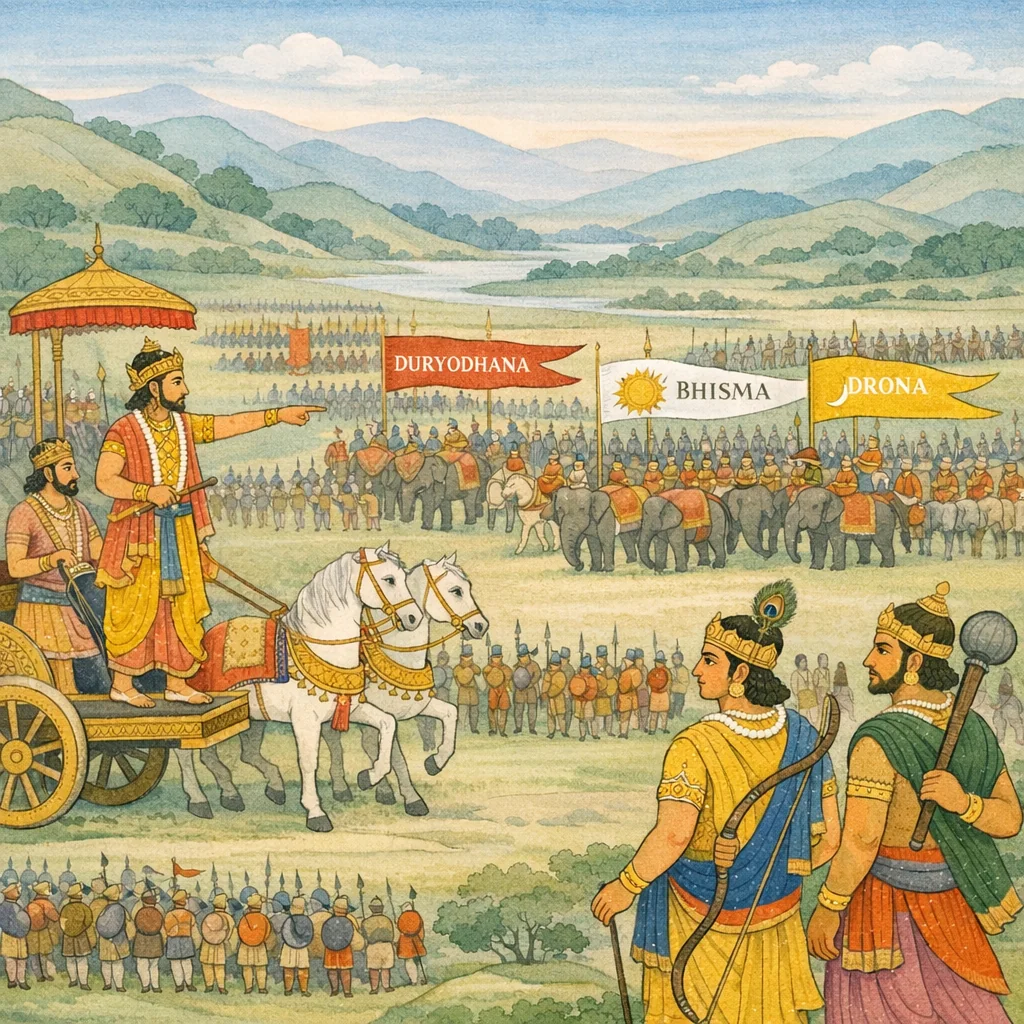
Bhīṣma addresses the Kuru ruler in a concise strategic appraisal, presenting a roster of prominent fighters and projecting their anticipated performance. He first names Sudakṣiṇa of Kāmboja as a distinguished chariot-warrior who seeks the addressee’s objectives and will engage opponents in battle. He then describes the renowned Kāmboja chariot-lineage as swift and forceful, followed by Nīla of Māhiṣmatī, characterized by his distinctive armor and capacity for enemy suppression through chariot warfare. Bhīṣma notes Nīla’s prior hostility with Sahadeva, reframing it as a motive for persistent engagement. He proceeds to Vindānuvinda of Avanti, depicted as firm in strength and valor, and then to the five Trigarta brothers, whose earlier grievance with the Pāṇḍavas (linked to the Virāṭa episode) is recalled; their assault is likened to aquatic force agitating a river, emphasizing disruptive momentum. The chapter continues with mention of Lakṣmaṇa (son of Duryodhana) and Duḥśāsana’s son as youthful, trained, and unwavering in combat roles. Finally, Bhīṣma lists Daṇḍadhāra, Bṛhadbala of Kosala, and especially Kṛpa Śāradvata—introduced with birth and pedigree details—portrayed as an authoritative chariot-commander who will range through diverse armed formations and press opponents with disciplined intensity. Overall, the discourse integrates capability assessment, lineage prestige, and motivational history to support war-readiness messaging.
Chapter Arc: उलूक-दूत के प्रसंगों की छाया में, पाण्डव-सेना युद्धभूमि की ओर बढ़ती है—चारों अंगों से युक्त, पृथ्वी-सी अचल और समुद्र-सी दुर्गम। → धृष्टद्युम्न सेनापति-भाव से सेना को देखता है: पदाति, गज, रथ, अश्व—सब अपने-अपने स्थान पर; अर्जुन, भीम आदि महारथी रक्षा-घेरा बनाते हैं। फिर वह प्रत्येक रथी के बल-उत्साह को तौलकर ‘किसे किसके सामने’ उतारना है, यह कठोर गणना आरम्भ करता है। → धृष्टद्युम्न द्वारा प्रतिद्वन्द्वियों का निर्णायक विभाजन—अर्जुन को सूतपुत्र (कर्ण) के लिए, भीम को दुर्योधन के लिए; सहदेव को शकुनि के लिए; चेकितान को शल के लिए; द्रौपदेयों को त्रिगर्तों के लिए; अभिमन्यु को वृषसेन तथा अन्य राजाओं के लिए—और अंततः स्वयं को द्रोण के समकक्ष ठहराना। → विभाजन के बाद धृष्टद्युम्न विधिपूर्वक व्यूह-रचना करता है और पाण्डव-सेनाओं को ‘जय’ के संकल्प के साथ रणाजिर में यथोद्दिष्ट स्थानों पर स्थापित कर देता है। → व्यूह सज चुका है; अब प्रश्न केवल यह है कि जिन नामों को आमने-सामने रखा गया है, उनमें पहला प्रहार किसका होगा—और कौन-सा संकल्प सबसे पहले टूटेगा।
Shlokas
Verse 1
ऑपन--माज बक। अकाल चतुःषष्टर्याधिकशततमो< ध्याय: पाण्डव-सेनाका युद्धके मैदानमें जाना और धृष्टद्युम्नके द्वारा योद्धाओंकी अपने-अपने योग्य विपक्षियोंके साथ युद्ध करनेके लिये नियुक्ति संजय उवाच उलूकस्य वच: श्रुत्वा कुन्तीपुत्रो युधिष्ठिर: । सेनां निर्यापयामास धृष्टद्युम्नपुरोगमाम्,संजय कहते हैं--राजन्! इधर उलूककी बातें सुनकर कुन्तीनन्दन युधिष्ठिरने भी धष्टद्युम्नके नेतृत्वमें अपनी सेनाका युद्धके लिये प्रस्थान कराया
Sañjaya said: O King, having heard the words of Ulūka, Yudhiṣṭhira—the son of Kuntī—ordered his army to march out for battle, with Dhṛṣṭadyumna leading the advance. The moment signals a deliberate, duty-bound transition from counsel and message-bearing to the unavoidable execution of war, undertaken under command and discipline rather than impulse.
Verse 2
पदातिनीं नागवतीं रथिनीम श्ववृन्दिनीम् चतुर्विधबलां भीमामकम्पां पृथिवीमिव,उसमें पैदल, हाथी, रथ और अश्वसमूह भी थे। इस प्रकार वह चतुरंगिणी सेना बड़ी भयंकर और पृथ्वीके समान अविचल थी
Sañjaya said: “It was a fourfold host—infantry, elephants, chariots, and masses of horses—terrible in its might, and as unshakable as the earth itself.”
Verse 3
भीमसेनादिभिर्गुप्तां सार्जुनैश्न महारथै: । धृष्टद्युम्नवशां दुर्गा सागरस्तिमितोपमाम्,अर्जुन और भीमसेन आदि महारथी उसकी रक्षा करते थे। वह दुर्गम सेना धृष्टद्युम्नके अधीन थी और प्रशान्त एवं स्थिर समुद्रके समान जान पड़ती थी
Sañjaya said: That formidable host was well-protected by Bhīmasena and other great warriors, with Arjuna among them. Under the command of Dhṛṣṭadyumna it appeared unassailable—calm, steady, and deep like a motionless ocean—suggesting disciplined strength held in restraint before the coming clash.
Verse 4
तस्यास्त्वग्रे महेष्वास: पाज्चाल्यो युद्धदुर्मदः । द्रोणप्रेप्सुरनीकानि धृष्टद्युम्नो व्यकर्षत,उसके आगे-आगे रणदुर्मद पांचालराजकुमार महाथनुर्धर धृष्टद्युम्न चल रहे थे, जो सदा आचार्य द्रोणसे युद्ध करनेकी इच्छा रखते थे। वे सारी सेनाको अपने पीछे खींचे लिये जाते थे
Sañjaya said: At the very front of that host marched Dhṛṣadyumna, the Pāñcāla prince, a great archer intoxicated with the ardor of battle. Ever intent on meeting Droṇa in combat, he drew the battle-formations along after him, pulling the entire army in his wake toward the clash he sought.
Verse 5
यथाबलं यथोत्साहं रथिन: समुपादिशत् | अर्जुन सूतपुत्राय भीम॑ दुर्योधनाय च,उन्होंने जिस वीरका जैसा बल और उत्साह था, उसका विचार करते हुए अपने रथियोंको योग्य प्रतिपक्षीके साथ युद्ध करनेका आदेश दिया। अर्जुनको सूतपुत्र कर्णका और भीमसेनको दुर्योधनका सामना करनेके लिये नियुक्त किया
Sañjaya said: Weighing each warrior’s strength and ardor, he assigned the chariot-fighters to opponents fit to meet them. Thus Arjuna was appointed to face Karṇa, the charioteer’s son, and Bhīma to confront Duryodhana—an ordering of battle that shows calculated strategy and the grave moral weight of setting kinsmen against one another.
Verse 6
धृष्टकेतुं च शल्याय गौतमायोत्तमौजसम् । अश्वत्थाम्ने च नकुलं शैब्यं च कृतवर्मणे,धृष्टकेतुको शल्यसे, उत्तमौजाको कृपाचार्यसे, नकुलको अअभ्रवत्थामासे, शैब्यको कृतवर्मासे, वृष्णिवंशी सात्यकिको सिन्धुराज जयद्रथसे और शिखण्डीको भीष्मसे मुख्यतः युद्ध करनेका आदेश दिया
Sañjaya said: Duryodhana assigned specific opponents for the coming battle—Dhṛṣṭaketu to face Śalya, Uttamaujā to face Gautama (Kṛpācārya), Nakula to face Aśvatthāmā, and Śaibya to face Kṛtavarmā. The verse shows a strategic yet morally weighty ordering of combat, as leaders name who must confront whom and bind warriors to their pledged roles amid the war’s dharma-crisis.
Verse 7
सैन्धवाय च वार्ष्णेयं युयुधानं समादिशत् । शिखण्डिनं च भीष्माय प्रमुखे समकल्पयत्,धृष्टकेतुको शल्यसे, उत्तमौजाको कृपाचार्यसे, नकुलको अअभ्रवत्थामासे, शैब्यको कृतवर्मासे, वृष्णिवंशी सात्यकिको सिन्धुराज जयद्रथसे और शिखण्डीको भीष्मसे मुख्यतः युद्ध करनेका आदेश दिया
Sañjaya said: He assigned Yuyudhāna (Sātyaki), the Vārṣṇeya hero, to confront Jayadratha, king of Sindhu, and he placed Śikhaṇḍin at the very forefront against Bhīṣma. Likewise he arranged the other champions in matched opposition—Dhṛṣṭaketu against Śalya, Uttamaujā against Kṛpācārya, Nakula against Aśvatthāmā, and Śaibya against Kṛtavarman—thus setting the battle in deliberate pairings where strategy, duty, and the moral weight of each rivalry would be tested in war.
Verse 8
सहदेवं शकुनये चेकितानं शलाय वै | द्रौपदेयांस्तथा पउ्च त्रिगर्तेभ्य:ः समादिशत्,सहदेवको शकुनिका, चेकितानको शलका और द्रौपदीके पाँचों पुत्रोंको त्रिगर्तोंका सामना करनेके लिये नियत कर दिया
Sañjaya said: He assigned Sahadeva to face Śakuni, Cekitāna to confront Śala, and likewise appointed the five sons of Draupadī to meet the Trigartas. The arrangement reflects deliberate battlefield ethics: each warrior is directed toward a fitting opponent, emphasizing disciplined command and responsibility rather than impulsive combat.
Verse 9
वृषसेनाय सौभद्रं शेषाणां च महीक्षिताम् | स समर्थ हि त॑ मेने पार्थादभ्यधिकं रणे,कर्णपुत्र बृषसेन तथा शेष राजाओंके साथ युद्ध करने-का काम सुभद्राकुमार अभिमन्युको सौंपा, क्योंकि वे उसे युद्धमें अर्जुनसे भी अधिक शक्तिशाली समझते थे
Sañjaya said: He assigned Vṛṣasena the task of engaging Saubhadra (Abhimanyu), and to the remaining kings their respective opponents; for he considered Abhimanyu fully capable—indeed, in battle he judged him even superior to Pārtha (Arjuna).
Verse 10
एवं विभज्य योधांस्तान् पृथक् च सह चैव ह । ज्वालावर्णो महेष्वासो द्रोणममंशमकल्पयत्,धष्टद्युम्नो महेष्वास: सेनापतिपतिस्तत: । इस प्रकार समस्त योद्धाओंका पृथकू-पृूथक् और एक साथ विभाजन करके सेनापतियोंके प्रति प्रजजलित अग्निके समान कान्तिमान् महाथनुर्थर धृष्टद्युम्नने द्रोणाचार्यको अपने हिस्सेमें रखा
Sañjaya said: Having thus apportioned those warriors—some separately and some in combined groups—Dhṛṣṭadyumna, the great archer whose splendor was like a blazing fire, assigned Droṇa to his own share (as the opponent to be faced). Thereafter, that mighty bowman Dhṛṣṭadyumna stood as the commander-in-chief of the army.
Verse 11
विधिवद् व्यूह[ मेधावी युद्धाय धृतमानस:,उनके मनमें युद्धके लिये दृढ निश्चय था। मेधावी धृष्टद्युम्नने पाण्डवोंकी पूर्वोक्त सेनाओंकी विधिपूर्वक व्यूहरचना करके उन सबको युद्धके लिये नियुक्त किया। तत्पश्चात् वे पाण्डवोंकी विजयके लिये संनद्ध होकर समरांगणमें खड़े हुए
Sañjaya said: With his mind firmly resolved for battle, the intelligent Dhṛṣṭadyumna arranged the Pāṇḍavas’ previously described forces in proper battle formation according to rule and assigned each division to its combat role. Then, fully armed and prepared for the Pāṇḍavas’ victory, they stood ready upon the field of war.
Verse 12
यथोद्दिष्टानि सैन्यानि पाण्डवानामयोजयत् | जयाय पाण्बुपुत्राणां यत्तस्तस्थौ रणाजिरे,उनके मनमें युद्धके लिये दृढ निश्चय था। मेधावी धृष्टद्युम्नने पाण्डवोंकी पूर्वोक्त सेनाओंकी विधिपूर्वक व्यूहरचना करके उन सबको युद्धके लिये नियुक्त किया। तत्पश्चात् वे पाण्डवोंकी विजयके लिये संनद्ध होकर समरांगणमें खड़े हुए
Sañjaya said: As previously directed, Dhṛṣṭadyumna duly arranged the Pāṇḍavas’ forces into proper battle formations and assigned each division to its post. With firm resolve for war and intent on securing the sons of Pāṇḍu’s victory, they stood ready and armed upon the battlefield.
Verse 164
इति श्रीमहाभारते उद्योगपर्वणि उलूकदूतागमनपर्वणि सेनापतिनियोगे चतुःषष्टयधिकशततमो<ध्याय:
Thus, in the Śrī Mahābhārata, within the Udyoga Parva—specifically the section describing the arrival of Ulūka as an envoy—and in the episode concerning the appointment of the commander of the army, ends the one-hundred-and-sixty-fourth chapter.
Frequently Asked Questions
The tension lies in aligning kṣātra-duty and coalition loyalty with the instrumental logic of mobilization—where reputations, prior grievances, and political objectives are framed as justifications for organized violence.
Effective leadership requires calibrated appraisal: naming assets, clarifying motivations (including past enmities), and translating lineage prestige and capability into coordinated readiness without rhetorical ambiguity.
No explicit phalaśruti is present in the provided passage; the chapter operates primarily as strategic counsel and cataloging within the epic’s mobilization framework rather than as a devotional or soteriological colophon.