Adhyaya 14
Upaśruti Guides Indrāṇī to Indra; Indrāṇī Reports Nahuṣa’s Misconduct (उपश्रुति-इन्द्राणी-इन्द्रदर्शन प्रसङ्गः)
Upa-parva: Nahuṣa–Indra Episode (Embedded Akhyāna within Udyoga Parva)
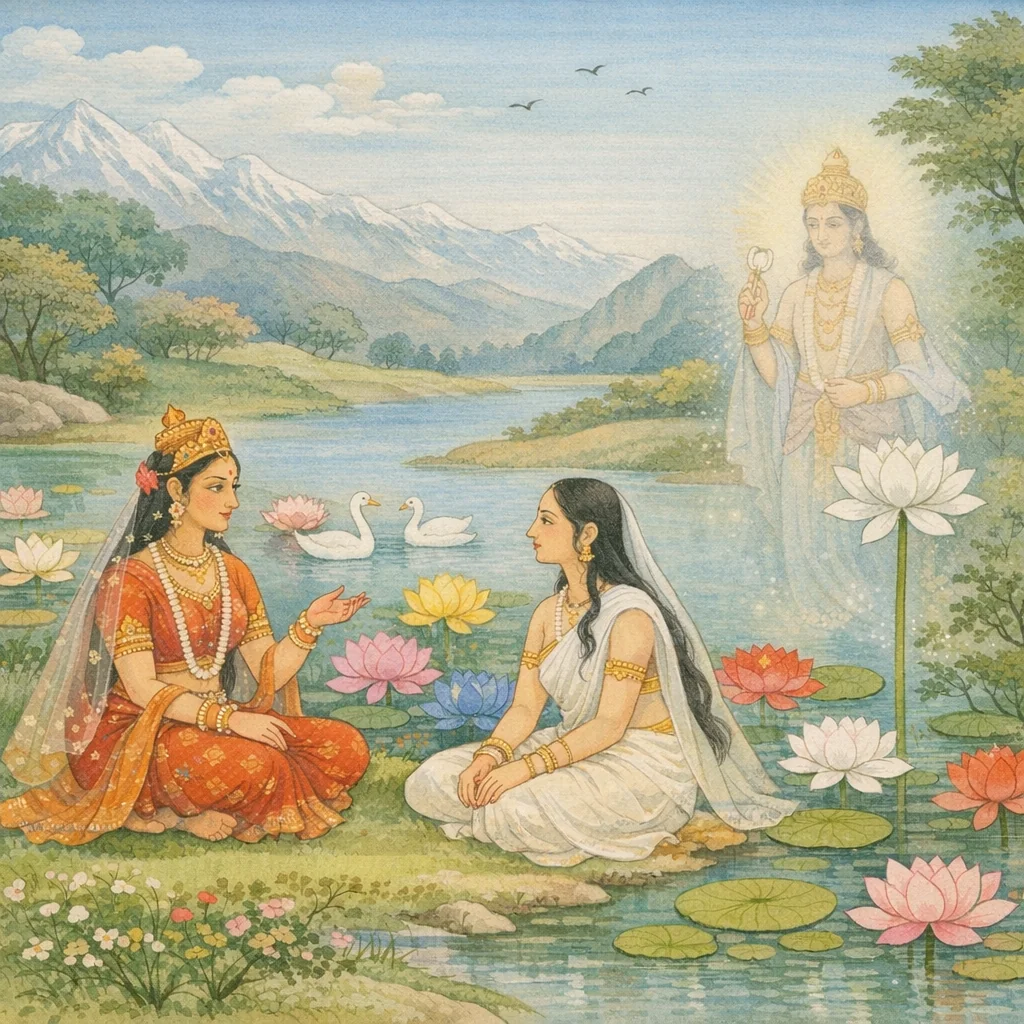
Śalya narrates an episode in which the divine figure Upaśruti approaches Indrāṇī (Śacī), who honors her and asks her identity. Upaśruti identifies herself and, noting Indrāṇī’s disciplined fidelity, offers to show her Indra (Śakra), the slayer of Vṛtra. They travel across divine forests, mountains, beyond Himavat, and to a vast ocean and great island, arriving at a luminous lake filled with multicolored lotuses and birds. Entering through a lotus stalk and its filaments, they behold Indra in an extremely subtle form; Upaśruti also assumes subtlety. Indrāṇī praises Indra, who then asks why she has come and how he was found. Indrāṇī recounts that Nahuṣa, having obtained Indra’s status, became intoxicated with power and arrogance, coercively commanding her attendance and setting a deadline. Distressed, she appeals to Indra to reveal himself, regain his splendor, resume governance, and neutralize Nahuṣa’s wrongful intent—an ethical appeal to restore legitimate order against abusive authority.
Chapter Arc: शल्य युधिष्ठिर को एक दिव्य प्रसंग सुनाते हैं—देवी उपश्रुति सत्य-भाव से इन्द्राणी के निकट आती हैं, मानो स्वर्ग के भीतर कोई गुप्त संकट दस्तक दे रहा हो। → इन्द्राणी प्रसन्न होकर उपश्रुति से उसका परिचय पूछती हैं। उपश्रुति अपना कारण बताती है: नहुष ने इन्द्र-पद पाकर अहंकार में अन्धा होकर इन्द्राणी को वश में करने का क्रूर आदेश दिया है; भय और अपमान का बादल स्वर्ग पर छा गया है। → उपश्रुति इन्द्र को पुकारती है—‘प्रकाशय आत्मानम्… तेजः समाप्नुहि… देवराज्यं प्रशाधि’—और नहुष के पाप-निश्चय को रोकने हेतु इन्द्र से अपने तेज को प्रकट कर पुनः देव-राज्य संभालने की निर्णायक विनती करती है। → इन्द्राणी-उपश्रुति का संवाद संकट की जड़ स्पष्ट कर देता है: स्वर्ग का सिंहासन अस्थायी हाथों में गया तो धर्म डगमगाता है; समाधान का संकेत इन्द्र के पुनः प्रकट होकर अधिकार ग्रहण करने में है। → इन्द्र क्या अपने सूक्ष्म/गुप्त रूप से प्रकट होकर नहुष के दर्प का दमन करेंगे, या स्वर्ग का अपमान और बढ़ेगा?
Shlokas
Verse 1
अफ्--छक+ चतुर्दशो 5 ध्याय: उपश्रुति देवीकी सहायतासे इन्द्राणीकी इन्द्रसे भेंट शल्य उवाच अथीैनां रूपिणी साध्वीमुपातिष्ठदुपश्रुति: । तां वयोरूपसम्पन्नां दृष्टवा देवीमुपस्थिताम्,शल्य कहते हैं--युधिष्ठिर! तदनन्तर उपश्रुति देवी मूर्तिमती होकर साध्वी शचीदेवीके पास आयीं। नूतन वय तथा मनोहर रूपसे सुशोभित उपश्रुति देवीको उपस्थित हुई देख इन्द्राणीका मन प्रसन्न हो गया। उन्होंने उनका पूजन करके कहा--'सुमुखि! मैं आपको जानना चाहती हूँ, बताइये, आप कौन हैं?”
Śalya said: “Then Upāśruti, assuming a visible form, approached the virtuous goddess (Śacī/Indrāṇī). Seeing the goddess Upāśruti standing before her—endowed with fresh youth and a pleasing beauty—Indrāṇī’s mind became glad.”
Verse 2
इन्द्राणी सम्प्रहृष्टात्मा सम्पूज्यैनाम थाब्रवीत् । इच्छामि त्वामहं ज्ञातुं का त्वं ब्रूहि वरानने,शल्य कहते हैं--युधिष्ठिर! तदनन्तर उपश्रुति देवी मूर्तिमती होकर साध्वी शचीदेवीके पास आयीं। नूतन वय तथा मनोहर रूपसे सुशोभित उपश्रुति देवीको उपस्थित हुई देख इन्द्राणीका मन प्रसन्न हो गया। उन्होंने उनका पूजन करके कहा--'सुमुखि! मैं आपको जानना चाहती हूँ, बताइये, आप कौन हैं?”
Indrāṇī, her heart filled with delight, duly honored her and then spoke: “I wish to know you. Tell me—who are you, O fair-faced lady?”
Verse 3
उपश्रुतिर्वाच उपश्रुतिरहं देवि तवान्तिकमुपागता । दर्शन चैव सम्प्राप्ता तव सत्येन भाविनि,उपश्रुति बोलीं--देवि! मैं उपश्रुति हूँ और तुम्हारे पास आयी हूँ। भामिनि! तुम्हारे सत्यसे प्रभावित होकर मैंने तुम्हें दर्शन दिया है
Upaśruti said: “O goddess, I am Upaśruti, and I have come into your presence. O fair lady, moved by the power of your truthfulness, I have granted you my audience.”
Verse 4
पतिव्रता च युक्ता च यमेन नियमेन च । दर्शयिष्यामि ते शक्रं देवं वृत्रनिषूदनम्,तुम पतिव्रता होनेके साथ ही यम और नियमसे संयुक्त हो, अतः मैं तुम्हें वृत्रासुरनिषूदन इन्द्रदेवका दर्शन कराऊँगी
“Since you are a devoted wife and are disciplined through the restraints of yama and niyama, I shall grant you the vision of Śakra—Indra, the god who slew Vṛtra.”
Verse 5
क्षिप्रमन्वेहि भद् ते द्रक्ष्यसे सुरसत्तमम् । ततस्तां प्रहितां देवीमिन्द्राणी सा समन्वगात्,तुम्हारा कल्याण हो। तुम शीघ्र मेरे पीछे-पीछे चली आओ। तुम्हें सुरश्रेष्ठ देवराजके दर्शन होंगे। ऐसा कहकर उपश्रुति देवी वहाँसे चल दीं; फिर इन्द्राणी भी उनके पीछे हो लीं
“Come quickly after me—may it be well with you. You will behold the best among the gods, the lord of the devas.” Having spoken thus, the goddess Upaśruti set out from there; and Indrāṇī, sent along, followed after her.
Verse 6
देवारण्यान्यतिक्रम्य पर्वतांश्व बहुंस्तत: । हिमवन्तमत्तिक्रम्य उत्तरं पार्श्वमागमत्,देवताओंके अनेकानेक वन, बहुतसे पर्वत तथा हिमालयको लाँघकर उपश्रुति देवी उसके उत्तर भागमें जा पहुँचीं। तदनन्तर अनेक योजनोंतक फैले हुए समुद्रके पास पहुँचकर उन्होंने एक महाद्वीपमें प्रवेश किया, जो नाना प्रकारके वृक्षों और लताओंसे सुशोभित था
“Passing beyond the divine forests and then many mountains, and crossing the Himālaya, she reached the northern region. Thereafter, arriving at the shore of an ocean stretching for many yojanas, she entered a great continent adorned with many kinds of trees and creepers.”
Verse 7
समुद्रं च समासाद्य बहुयोजनविस्तृतम् । आससाद महाद्वीपं नानाद्रुमलतावृतम्,देवताओंके अनेकानेक वन, बहुतसे पर्वत तथा हिमालयको लाँघकर उपश्रुति देवी उसके उत्तर भागमें जा पहुँचीं। तदनन्तर अनेक योजनोंतक फैले हुए समुद्रके पास पहुँचकर उन्होंने एक महाद्वीपमें प्रवेश किया, जो नाना प्रकारके वृक्षों और लताओंसे सुशोभित था
Having reached the ocean, spread out for many yojanas, she then came upon a great island-continent, adorned with many kinds of trees and creepers.
Verse 8
तत्रापश्यत् सरो दिव्यं नानाशकुनिभिर्व॒तम् । शतयोजनविस्तीर्ण तावदेवायतं शुभम्,वहाँ एक दिव्य सरोवर दिखायी दिया, जिसमें अनेक प्रकारके जल-पक्षी निवास करते थे। वह सुन्दर सरोवर सौ योजन लंबा और उतना ही चौड़ा था
There he beheld a celestial lake, thronged with many kinds of birds. That auspicious and beautiful expanse of water stretched a hundred yojanas in breadth and the same in length—an otherworldly landscape that for a moment stood in contrast to the tense currents of diplomacy and war in the Udyoga Parva.
Verse 9
तत्र दिव्यानि पद्मानि पञ्चवर्णानि भारत । षट्पदैरुपगीतानि प्रफुल्लानि सहस्रश:,भारत! उसके भीतर सहस्रों कमल खिले हुए थे, जो पाँच रंगके दिखायी देते थे। उनपर मँडराते हुए भौंरे गुनगुना रहे थे
There, O Bhārata, thousands upon thousands of celestial lotuses were in full bloom, appearing in five hues; and over them the bees hovered, as though singing in accompaniment—an image of abundance, beauty, and auspicious order within that wondrous place.
Verse 10
सरसस्तस्य मध्ये तु पद्मिनी महती शुभा । गौरेणोन्नतनालेन पद्मेन महता वृता,उक्त सरोवरके मध्यभागमें एक बहुत बड़ी सुन्दर कमलिनी थी, जिसे एक ऊँची नालवाले गौर वर्णके विशाल कमलने घेर रखा था
Śalya said: “In the middle of that lake there was a vast and beautiful lotus-grove, encircled by a great pale lotus whose stalk rose high.” The image heightens the scene’s auspiciousness and suggests a protected, elevated center—an emblem of beauty and order set within the wider landscape, often used in the epic to frame counsel and moral reflection before conflict.
Verse 11
पद्मस्य भित्त्वा नालं च विवेश सहिता तया । बिसतन्तुप्रविष्टं च तत्रापश्यच्छतक्रतुम्,उपश्रुति देवीने उस कमलनालको चीरकर इन्द्राणी सहित उस कमलके भीतर प्रवेश किया और वहीं एक तन््तुमें घुसकर छिपे हुए शतक्रतु इन्द्रको देखा
Having split open the lotus-stalk, she entered inside along with it; and there she saw Śatakratu (Indra) hidden after slipping into a lotus-fibre. The episode underscores how concealment and evasive conduct, even by the powerful, can be exposed by determined inquiry, and it frames the ethical tension between desire, secrecy, and accountability.
Verse 12
त॑ दृष्टवा च सुसूक्ष्मेण रूपेणावस्थितं प्रभुम् सूक्ष्मरूपधरा देवी बभूवोपश्रुतिश्चव सा,अत्यन्त सूक्ष्म रूपसे अवस्थित भगवान् इन्द्रको वहाँ देखकर देवी उपश्रुति तथा इन्द्राणीने भी सूक्ष्म रूप धारण कर लिया
Seeing that lord Indra stationed there in an exceedingly subtle form, the goddess Upaśruti too assumed a subtle body; and Indrāṇī likewise took on a minute form. The scene underscores a discreet, non-intrusive mode of action—power choosing concealment and restraint rather than display, in order to observe and act without disturbing the moral and strategic balance of events.
Verse 13
इन्द्रं तुष्टाव चेन्द्राणी विश्रुतै: पूर्वकर्मभि: । स्तूयमानस्ततो देव: शचीमाह पुरन्दर:,इन्द्राणीने पहलेके विख्यात कर्मोंका बखान करके इन्द्रदेवका स््तवन किया। अपनी स्तुति सुनकर इन्द्रदेवने शचीसे कहा--
Indrāṇī praised Indra by recounting his renowned deeds of old. Hearing her hymn of praise, the god Purandara (Indra), thus extolled, spoke to Śacī.
Verse 14
किमर्थमसि सम्प्राप्ता विज्ञातश्न॒ कथं त्वहम् । ततः सा कथयामास नहुषस्य विचेष्टितम्,::223/म*%7 आया: खो न “देवि! तुम किसलिये यहाँ आयी हो और तुम्हें कैसे मेरा पता लगा है?” तब इन्द्राणीने नहुषकी कुचेष्टाका वर्णन किया इति श्रीमहाभारते उद्योगपर्वणि सेनोद्योगपर्वणि इन्द्राणीन्द्रस्तवे चतुर्दशो 5ध्याय: ।। १४ ।। इस प्रकार श्रीमहाभारत उद्योगपर्वके अन्तर्गत येनोट्रोगपर्वमें इन्द्राणीद्वारा इन्द्रका स्चुतिविषयक चौदहवाँ अध्याय पूरा हुआ
Indra asked, “For what purpose have you come here, and how did you come to know of me?” Then Indrāṇī proceeded to recount the improper conduct of Nahūṣa.
Verse 15
इन्द्रत्वं त्रिषु लोकेषु प्राप्प वीर्यसमन्वित: । दर्पाविष्ट श्न दुष्टात्मा मामुवाच शतक्रतो,“शतक्रतो! तीनों लोकोंके इन्द्रका पद पाकर नहुष बल-पराक्रमसे सम्पन्न हो घमंडमें भर गया है। उस दुष्टात्माने मुझसे भी कहा है कि तू मेरी सेवामें उपस्थित हो। उस क्रूर नरेशने मेरे लिये कुछ समयकी अवधि दी है। प्रभो! यदि आप मेरी रक्षा नहीं करेंगे तो वह पापी मुझे अपने वशमें कर लेगा
“O Śatakratu! Nahūṣa has attained the sovereignty of Indra over the three worlds and is endowed with strength and prowess; yet, intoxicated with pride, he has become wicked at heart. He even said to me, ‘Present yourself in my service.’”
Verse 16
उपतिषछेति स क्रूर: कालं॑ च कृतवान् मम । यदि न त्रास्यसि विभो करिष्यति स मां वशे,“शतक्रतो! तीनों लोकोंके इन्द्रका पद पाकर नहुष बल-पराक्रमसे सम्पन्न हो घमंडमें भर गया है। उस दुष्टात्माने मुझसे भी कहा है कि तू मेरी सेवामें उपस्थित हो। उस क्रूर नरेशने मेरे लिये कुछ समयकी अवधि दी है। प्रभो! यदि आप मेरी रक्षा नहीं करेंगे तो वह पापी मुझे अपने वशमें कर लेगा
“‘Attend upon me!’—so commands that cruel one; he has even fixed a time-limit for me. O Lord, if you do not protect me, he will bring me under his control.”
Verse 17
एतेन चाहं सम्प्राप्ता द्रुतं शक्र तवान्तिकम् | जहि रौद्रं महाबाहो नहुषं पापनिश्चयम्,“महाबाहु इन्द्र! इसी कारण मैं शीघ्रतापूर्वक आपके निकट आयी हूँ। पापपूर्ण विचार रखनेवाले उस भयानक नहुषको आप मार डालिये
“For this very reason I have come swiftly into your presence, O Śakra. O mighty-armed one, slay the fierce Nahūṣa, whose resolve is set on sin.”
Verse 18
प्रकाशयात्मना55त्मानं॑ दैत्यदानवसूदन । तेज: समाप्रुहि विभो देवराज्यं प्रशाधि च,'दैत्यदानवसूदन प्रभो! अब आप अपने आपको प्रकाशमें लाइये, तेज प्राप्त कीजिये और देवताओंके राज्यका शासन अपने हाथमें लीजिये”
Śalya urges the mighty slayer of Daityas and Dānavas: “Reveal yourself in your own radiance; gather your tejas, O all-pervading lord, and take up the governance of the gods’ realm.”
Frequently Asked Questions
The dilemma concerns how a threatened individual responds when a newly empowered ruler uses status to issue coercive demands: whether to acquiesce under pressure or seek lawful protection and restoration of legitimate authority.
Authority without self-discipline becomes self-undermining; ethical governance requires restraint, respect, and protection, while arrogance and coercion are portrayed as deviations that justify corrective reassertion of order.
No explicit phalaśruti is stated in these verses; the chapter operates as an exemplum, embedding a governance-ethics lesson within the larger pre-war discourse of Udyoga-parva.