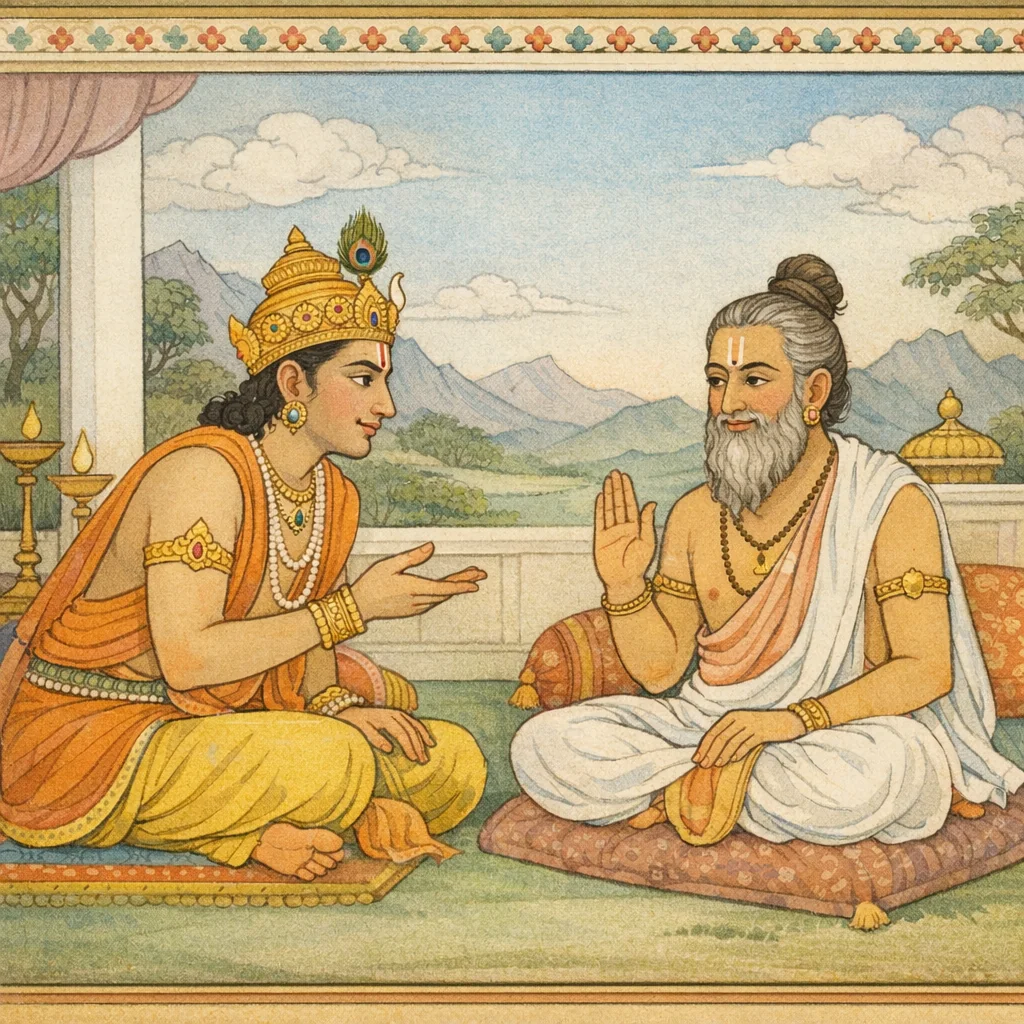
Adhyaya 85
सान्त्व-निति: (Sāntva-Nīti) — The One-Word Principle of Conciliation
Upa-parva: Rājadharmānuśāsana (Instruction on Kingly Governance) — Bṛhaspati–Śakra Saṃvāda exemplum
Bhīṣma introduces an ancient itihāsa to Yudhiṣṭhira: the dialogue of Śakra and Bṛhaspati. Śakra asks for a single, concise principle (ekapada) by which a person, practicing correctly, becomes a standard (pramāṇa) for all beings and attains great renown. Bṛhaspati answers that the one-word principle is sāntva—conciliatory, gentle address. He characterizes it as universally beneficial and as a means to become consistently dear to all beings when practiced toward everyone. The chapter contrasts harsh or silent scowling demeanor with proactive, smiling, respectful speech: one who never speaks and remains perpetually frowning becomes disliked, whereas one who looks first, speaks first, and speaks with a prior smile gains social approval. It further argues that even generosity, if unaccompanied by sāntva, fails to please—likened to food without seasoning—while even a non-giver can bring the world under influence through sweet speech. The counsel culminates in a governance-oriented application: those intending to apply punishment should first employ sāntva, which yields results while reducing public fear. Bhīṣma closes by stating that Śakra acted accordingly upon his priest’s advice, and instructs Yudhiṣṭhira to practice the same principle properly.
Chapter Arc: युधिष्ठिर के सामने भीष्म एक प्राचीन दृष्टान्त खोलते हैं—देवराज इन्द्र स्वयं पूछते हैं कि ऐसा कौन-सा ‘एक-पद’ धर्म है, जिसे साध लेने पर मनुष्य सब प्राणियों में मान-प्रतिष्ठा और यश पा ले। → इन्द्र का प्रश्न केवल नीति नहीं, शासन-कला का भी है: दान, दण्ड, अधिकार—इन सबके बीच कौन-सा एक गुण है जो लोगों के हृदय को जीत ले? भीष्म इस जिज्ञासा को बृहस्पति के उत्तर की ओर ले जाते हैं, जहाँ शब्द-व्यवहार को राजधर्म का सूक्ष्म अस्त्र बताया जाता है। → बृहस्पति का निर्णायक वचन—‘सान्त्व’ ही वह एक-पद ब्रह्म है: जो पहले देखकर, मुस्कान सहित, मधुर और स्निग्ध वाणी से बोलता है, वह लोक को वश में कर लेता है; यहाँ तक कि किसी की वस्तु लेते समय भी मधुर वाणी विरोध को शान्त कर देती है। → उपदेश का सार दृढ़ किया जाता है: बिना सान्त्व के दान भी वैसा ही नीरस है जैसे बिना व्यंजन का भोजन; सान्त्वयुक्त, श्लक्ष्ण, मधुर वचन का कोई तुल्य नहीं। भीष्म बताते हैं कि इन्द्र ने पुरोहित के कहे अनुसार आचरण किया—और युधिष्ठिर को भी वही सम्यक् आचरण करने की प्रेरणा देते हैं।
Shlokas
Verse 1
अत चतुरशीतितमो< ध्याय: इन्द्र और बृहस्पतिके संवादमें सान्त्वनापूर्ण मधुर वचन बोलनेका महत्त्व भीष्म उवाच अत्राप्युदाहरन्तीममितिहासं पुरातनम् । बृहस्पतेश्न संवादं शक्रस्य च युधिछ्िर,भीष्मजी कहते हैं--युधिष्ठिर! इस विषयमें मनस्वी पुरुष इन्द्र और बृहस्पतिके संवादरूप एक प्राचीन इतिहासका उदाहरण दिया करते हैं, वह सुनो
Bhishma said: “Here too, O Yudhishthira, people cite an ancient historical example—namely, the dialogue between Brihaspati and Shakra (Indra).”
Verse 2
शक्र उवाच कि स्विदेकपदं ब्रह्मन् पुरुष: सम्यगाचरन् । प्रमाणं सर्वभूतानां यशश्रैवाप्रुयान्महत्,इन्द्रने पूछा--ब्रह्मन! वह कौन-सी ऐसी एक वस्तु है, जिसका नाम एक ही पदका है और जिसका भलीभाँति आचरण करनेवाला पुरुष समस्त प्राणियोंका प्रिय होकर महान् यश प्राप्त कर लेता है
Śakra (Indra) said: “O Brahman, what is that single-word principle which, when a man practices it rightly, makes him a standard for all beings and enables him to attain great renown?”
Verse 3
ब॒हस्पतिरुवाच सान्त्वमेकपदं शक्र पुरुष: सम्यगाचरन् । प्रमाणं सर्वभूतानां यशश्वैवाप्रुयान्महत्,बृहस्पतिजीने कहा--इन्द्र! जिसका नाम एक ही पदका है, वह एकमात्र वस्तु है सान्त्वना (मधुर वचन बोलना)। उसका भलीभाँति आचरण करनेवाला पुरुष समस्त प्राणियोंका प्रिय होकर महान् यश प्राप्त कर लेता है
Bṛhaspati said: “O Śakra (Indra), ‘sāntva’—gentle conciliation through sweet, reassuring speech—is a single, simple principle. A person who practices it rightly becomes dear to all beings, serves as a standard of conduct among them, and attains great renown.”
Verse 4
एतदेकपदं शक्र सर्वतलोकसुखावहम् । आचरनू् सर्वभूतेषु प्रियो भवति सर्वदा,शक्र! यही एक वस्तु सम्पूर्ण जगत्के लिये सुखदायक है। इसको आचरणमें लानेवाला मनुष्य सदा समस्त प्राणियोंका प्रिय होता है
Śakra said: “This single principle is a source of happiness for all the worlds. One who puts it into practice toward all living beings becomes, at all times, dear to everyone.”
Verse 5
यो हि नाभाषते किंचित् सर्वदा भ्रुकुटीमुख: । द्वेष्यो भवति भूतानां स सान्त्वमिह नाचरन्,जो मनुष्य सदा भौंहें टेढ़ी किये रहता है, किसीसे कुछ बातचीत नहीं करता, वह शान्तभाव (मृदुभाषी होनेके गुण) को न अपनानेके कारण सब लोगोंके द्वेषका पात्र हो जाता है
He who never speaks a word and always wears a frowning, knitted-brow expression becomes disliked by living beings, for in this world he does not practice sāntva—gentle, conciliatory speech and a soothing manner.
Verse 6
यस्तु सर्वमभिप्रेक्ष्य पूर्वमेवाभिभाषते । स्मितपूर्वाभिभाषी च तस्य लोक: प्रसीदति,जो सभीको देखकर पहले ही बात करता है और सबसे मुसकराकर ही बोलता है, उसपर सब लोग प्रसन्न रहते हैं
He who, after observing everyone, is the first to speak—addressing others with a smile beforehand—wins the goodwill of people; the world around him becomes pleased and favorably disposed toward him.
Verse 7
दानमेव हि सर्वत्र सान्त्वेनानभिजल्पितम् | न प्रीणयति भूतानि निर्व्यजजनमिवाशनम्,जैसे बिना व्यज्जन (साग-दाल आदि) का भोजन मनुष्यको संतुष्ट नहीं कर सकता, उसी प्रकार मधुर वचन बोले बिना दिया हुआ दान भी प्राणियोंको प्रसन्न नहीं कर पाता है
Indeed, in every setting, a gift that is offered without gentle, kindly speech does not gladden living beings—just as a meal without side-dishes and seasoning fails to satisfy a person.
Verse 8
आदानादपि भूतानां मधुरामीरयन् गिरम् | सर्वलोकमिमं शक्र सान्त्वेन कुरुते वशे,शक्र! मधुर वचन बोलनेवाला मनुष्य लोगोंकी कोई वस्तु लेकर भी अपनी मधुर वाणीद्वारा इस सम्पूर्ण जगत्को वशमें कर लेता है
Śakra said: “Even when taking something from others, a person who utters sweet speech can, by gentle conciliation, bring this entire world under influence. Such is the power of courteous, pleasing words in winning hearts and securing compliance without harshness.”
Verse 9
तस्मात् सान्त्व॑ प्रयोक्तव्यं दण्डमाधित्सतो5पि हि । फल॑ं च जनयत्येवं न चास्योद्धिजते जन:,अतः किसीको दण्ड देनेकी इच्छा रखनेवाले राजाको भी उससे सान्त्वनापूर्ण मधुर वचन ही बोलना चाहिये। ऐसा करके वह अपना प्रयोजन तो सिद्ध कर ही लेता है और उससे कोई मनुष्य उद्विग्न भी नहीं होता है
Therefore, even a king who intends to impose punishment should first employ conciliatory, gentle speech. By acting in this way he accomplishes his purpose, and no one becomes agitated or fearful on his account.
Verse 10
सुकृतस्य हि सान्त्वस्य श्लक्षणस्थ मधुरस्य च । सम्यगासेव्यमानस्य तुल्यं जातु न विद्यते,यदि अच्छी तरहसे सान्त्वनापूर्ण, मधुर एवं स्नेहयुक्त वचन बोला जाय और सदा सब प्रकारसे उसीका सेवन किया जाय तो उसके समान वशीकरणका साधन इस जगत्में नि:संदेह दूसरा कोई नहीं है
Śakra said: “For well-meant words of consolation—gentle, smooth, and sweet—when they are rightly practiced and consistently employed, there is truly nothing in the world equal to them as a means of winning others over. Such speech, grounded in goodwill, becomes the foremost instrument for bringing hearts under harmony rather than force.”
Verse 11
भीष्म उवाच इत्युक्त: कृतवान् सर्व यथा शक्र: पुरोधसा । तथा त्वमपि कौन्तेय सम्यगेतत् समाचर,भीष्मजी कहते हैं--कुन्तीनन्दन! अपने पुरोहित बृहस्पतिके ऐसा कहनेपर इन्द्रने सब कुछ उसी तरह किया। इसी प्रकार तुम भी इस सान्त्वनापूर्ण वचनको भलीभाँति आचरणमें लाओ
Bhishma said: “When his priest had spoken thus, Śakra (Indra) carried out everything exactly as instructed. In the same way, O son of Kuntī, you too should rightly put this consoling counsel into practice.”
Verse 83
इस प्रकार श्रीमह्ाभारत शान्तिपर्वके अन्तर्गत राजधर्मानुशासनपर्वमें सभासद् आदिके लक्षणोंका कथनविषयक तिरासीवाँ अध्याय पूरा हुआ
Thus ends the eighty-third chapter in the Rājadharmānuśāsana section of the Śānti Parva of the Śrī Mahābhārata, dealing with the characteristics of assembly members and related officials. The narrative closes this unit of instruction on royal duty by marking the completion of the chapter’s teaching on who is fit to advise and serve in governance.
Verse 84
इति श्रीमहा भारते शान्तिपर्वणि राजधर्मानुशासनपर्वणि इन्द्रबृूहस्पतिसंवादे चतुरशीतितमो<ध्याय:
Thus ends the eighty-fourth chapter of the Indra–Bṛhaspati dialogue in the Mahābhārata, within the Śānti Parva—specifically in the section of instruction on the dharma of kings. This colophon marks the completion of a unit of teaching on righteous governance and ethical statecraft as conveyed through this dialogue.
Frequently Asked Questions
How to secure cooperation and social harmony without escalating fear or hostility—by prioritizing conciliatory communication before resorting to coercive measures.
The ekapada principle is sāntva: speak gently, proactively, and with a pleasant demeanor toward all beings, since such conduct generates goodwill, influence, and stable compliance.
Yes. Bhīṣma explicitly links the exemplum to practice: Śakra implemented the counsel, and Yudhiṣṭhira is instructed to adopt the same disciplined approach, integrating the teaching into rāja-dharma application.