Adhyaya 365
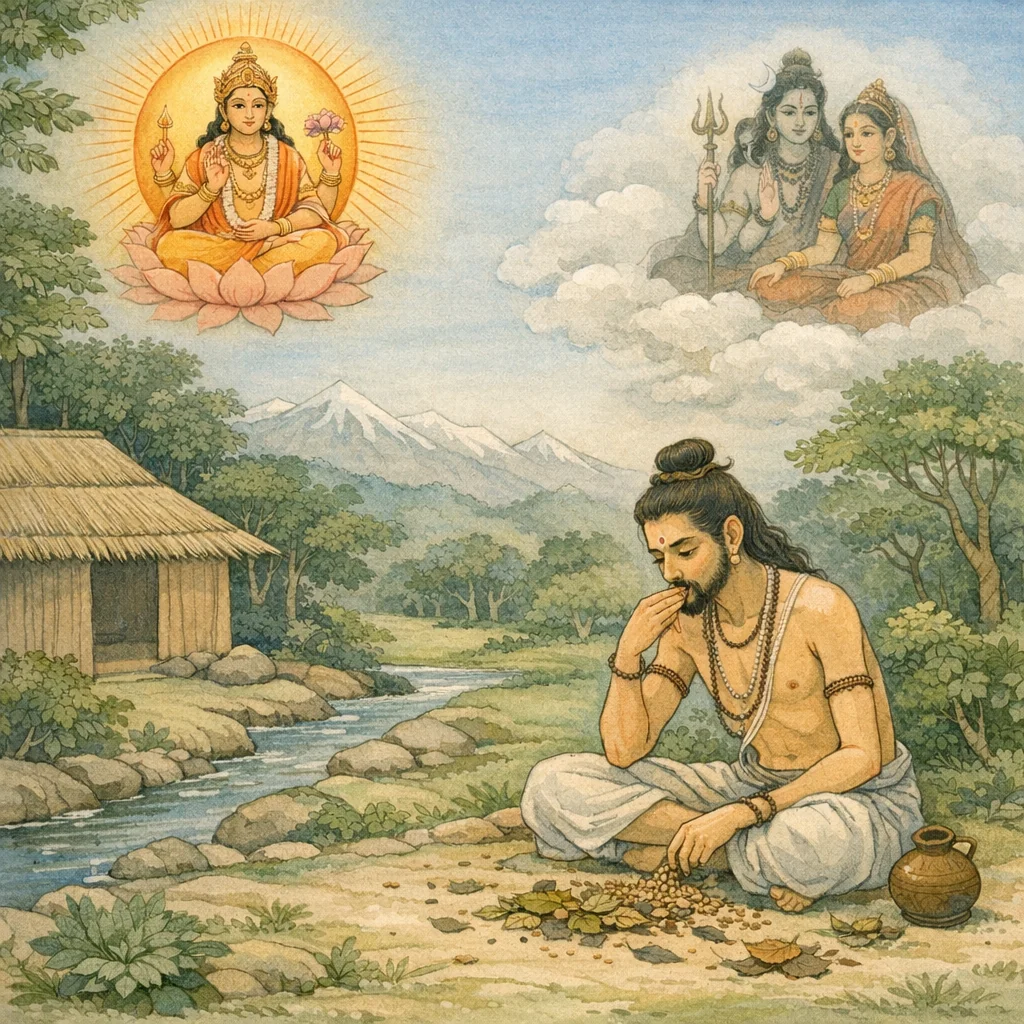
Chapter Arc: सूर्यदेव एक अद्भुत सत्य उद्घाटित करते हैं—एक ऐसा ब्राह्मण, जो उच्छ-वृत्ति और शिल-वृत्ति से जीवन चलाता था, दिव्य गति को प्राप्त हुआ; और वह गति देव, गन्धर्व, असुर, या नागों के लिए भी सहज नहीं। → श्रोता के मन में विस्मय और संशय बढ़ता है: जो केवल मूल-फल, सूखे पत्ते, जल या वायु-आहार पर स्थित, असंग और समाहित है—वह कैसे ‘स्वर्ग-द्वार’ पर अधिकार-सा कर लेता है? सूर्यदेव उसके कठोर व्रत, निरासक्ति और सर्वभूत-हित की साधना का क्रमशः वर्णन करते हैं। → निर्णायक क्षण तब आता है जब सूर्यदेव स्पष्ट कहते हैं कि ऐसी ‘उत्तम गति’ पर देव-गन्धर्व-असुर-नाग किसी का भी स्वाभाविक अधिकार नहीं—यह केवल सिद्ध पुरुष की निरासक्ति, उच्छवृत्ति-निष्ठा और मंत्र-स्तुति (शंकर-स्तवन) से अर्जित होती है। → उच्छवृत्ति-परायण ब्राह्मण की साधना का फल सिद्धि और त्रिदिव-गमन के रूप में स्थापित होता है; संदेश दृढ़ होता है कि बाह्य ऐश्वर्य नहीं, बल्कि त्याग, असंगता और सर्वभूत-हित ही मोक्ष/उत्तम गति का मार्ग है।
Shlokas
Verse 1
/ ऑपन-माज बछ। डे त्रिषष्ट्याधिकत्रिशततमो< ध्याय: उज्छ एवं शिलवृत्तिसे सिद्ध हुए पुरुषकी दिव्य गति सूर्य उवाच नैष देवोडनिलसखो नासुरो न च पन्नग: । उज्छवृत्तिव्रते सिद्धो मुनिरेष दिवं गत:,सूर्यदेवने कहा--से न तो वायुके सखा अग्निदेव थे, न कोई असुर थे और न नाग ही थे। ये उज्छवृत्तिसे जीवननिर्वाहके व्रतका पालन करनेसे सिद्धिको प्राप्त हुए एक मुनि थे, जो दिव्यधाममें आ पहुँचे हैं
Surya said: “This one is neither a god—nor the friend of the Wind—nor an asura, nor even a serpent-being. He is a sage who, perfected by the vow of living on gleanings (ucchiṣṭa-vṛtti), has attained spiritual accomplishment and has now reached the heavenly realm.”
Verse 2
एष मूलफलाहार: शीर्णपर्णाशनस्तथा । अब्भक्षो वायुभक्षश्न आसीद् विप्र: समाहित:,ये ब्राह्मगदेवता फल-मूलका आहार करते, सूखे पत्ते चबाते अथवा पानी या हवा पीकर रह जाते थे और सदा एकाग्रचित्त होकर ध्यानमग्न रहते थे
Sūrya said: “This brahmin lived on roots and fruits; at times he subsisted on withered leaves. Sometimes he took only water, and sometimes he lived as though feeding on air. Thus restrained and self-controlled, he remained collected in mind, absorbed in inner concentration.”
Verse 3
भवश्नानेन विप्रेण संहिताभिरभिष्टत: । स्वर्गद्वारे कृतोद्योगो येनासौ त्रिदिवं गत:,इन श्रेष्ठ ब्राह्मणने संहिताके मन्त्रोंद्वारा भगवान् शंकरका स्तवन किया था। इन्होंने स्वर्गलोक पानेकी साधना की थी, इसलिये ये स्वर्गमें गये हैं
Sūrya said: “That learned brāhmaṇa, having performed the Bhava-bath (a Śaiva rite) and having praised Lord Śaṅkara with the hymns of the Saṃhitās, strove at the very ‘gate of heaven’ through disciplined spiritual effort; therefore he attained the world of the gods (Svarga).”
Verse 4
असज्तिरनाकाडुशक्षी नित्यमुछछशिलाशन: । सर्वभूतहिते युक्त एष विप्रो भुजड्रम,नागराज! ये ब्राह्मण असंग रहकर लौकिक कामनाओंका त्याग कर चुके थे और सदा उउज्छ- एवं शिलवृत्तिसे प्राप्त हुए अन्नको ही खाते थे। ये निरन्तर समस्त प्राणियोंके हितसाधनमें संलग्न रहते थे
Sūrya said: “Detached and free from craving, he lives always on what is obtained by the gleaner’s and stone-gatherer’s ways of subsistence. Ever devoted to the welfare of all beings, this brahmin—O lord of serpents—embodies the true ideal.”
Verse 5
न हि देवा न गन्धर्वा नासुरा न च पन्नगा: । प्रभवन्तीह भूतानां प्राप्तानामुत्तमां गतिम्
Sūrya said: “Neither the gods, nor the Gandharvas, nor the Asuras, nor even the serpent-beings have any power here to obstruct those living beings who have attained the highest state. When one reaches that supreme goal through right conduct and inner realization, no celestial or non-celestial order can hinder that consummation.”
Verse 6
ऐसे लोगोंको जो उत्तम गति प्राप्त होती है, उसे न देवता, न गन्धर्व, न असुर और न नाग ही पा सकते हैं ।। एतदेवंविध॑ दृष्टमाश्नर्य तत्र मे द्विज । संसिद्धों मानुष: कार्म योडसौ सिद्धगतिं गत: । सूर्येण सहितो ब्रह्मन् पृथिवीं परिवर्तते,विप्रवर! सूर्यमण्डलमें मुझे यह ऐसा ही आश्चर्य दिखायी दिया था कि उज्छवृत्तिसे सिद्ध हुआ वह मनुष्य इच्छानुसार सिद्ध-गतिको प्राप्त हुआ। ब्रह्म! अब वह सूर्यके साथ रहकर समूची पृथ्वीकी परिक्रमा करता है
Such people attain a supreme destiny—one that neither gods, nor Gandharvas, nor Asuras, nor Nāgas can reach. O twice-born one, I witnessed there a wonder of this very kind: a human being, perfected through his conduct and deeds, attained the power of a ‘fulfilled course’ at will. O Brahmin, now, accompanying the Sun, he circles the entire earth—an emblem of how disciplined living can elevate a mortal beyond even celestial ranks.
Verse 363
इति श्रीमहाभारते शान्तिपर्वणि मोक्षधर्मपर्वणि उज्छवृत्त्युपाख्याने त्रिषष्ट्यधिकत्रिशततमो<ध्याय:
Thus, in the Śrī Mahābhārata, within the Śānti Parva—specifically the Mokṣa-dharma section—ends the narrative episode known as the Upākhyāna of Ujjha-vṛtti; this marks the conclusion of the three-hundred-and-sixty-third chapter (the 363rd adhyāya).