Adhyaya 354
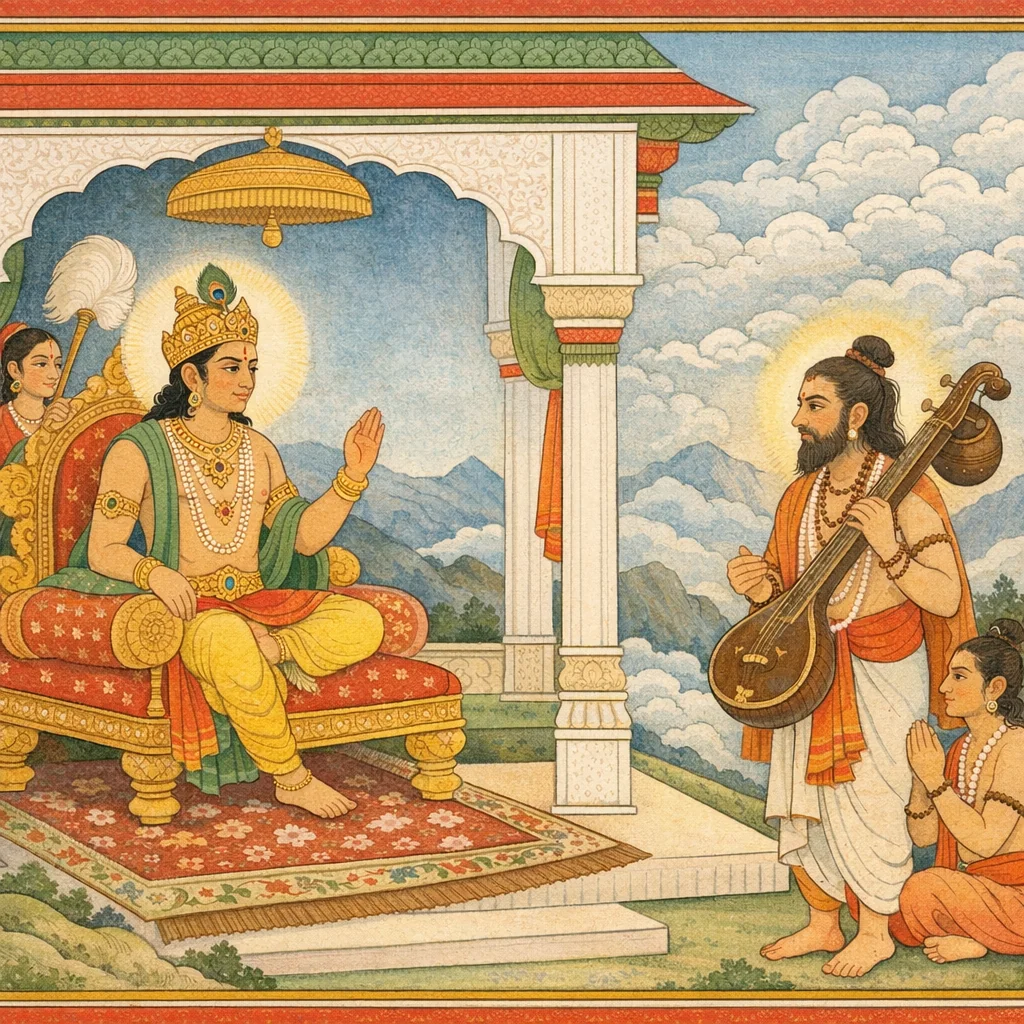
Chapter Arc: युधिष्ठिर के धर्म-प्रश्नों की पृष्ठभूमि में भीष्म धर्म की सर्वव्यापकता और ‘बहुद्वार’ (अनेक मार्गों) वाले धर्म का संकेत देते हैं—और फिर एक दिव्य कथा का द्वार खोलते हैं: नारद द्वारा इन्द्र को सुनाई गई ‘उच्छवृत्ति’ ब्राह्मण की कथा। → भीष्म प्रतिपादित करते हैं कि धर्म का फल सत्य-स्वरूप है और कोई भी धर्मकर्म निष्फल नहीं जाता। साथ ही वे यह भी जोड़ते हैं कि मनुष्य जिस विषय में जैसा निश्चय करता है, वही उसे सत्य प्रतीत होता है—इससे दृष्टियों की बहुलता और निर्णयों की सीमाएँ उभरती हैं। इसी बीच नारद के त्रैलोक्य-पर्यटन और इन्द्र के जिज्ञासु प्रश्न से कथा-प्रवाह तेज होता है। → शचीपति इन्द्र, नारद से ‘कुछ अद्भुत’ देखने-सुनने की उत्कंठा प्रकट करते हैं और कहते हैं कि देवर्षि से अज्ञात कुछ भी नहीं—यहीं कथा का केंद्र इन्द्र की जिज्ञासा और नारद के ‘विपुल आख्यान’ के आरम्भ पर टिक जाता है। → नारद, इन्द्र के प्रश्न के उत्तर में कथा कहने को प्रस्तुत होते हैं; भीष्म उसी क्रम और शैली में युधिष्ठिर को सुनाने का वचन देते हैं—अध्याय का समापन ‘कथा-आरम्भ’ की औपचारिक स्थापना के साथ होता है। → नारद द्वारा इन्द्र को सुनाई जाने वाली उच्छवृत्ति ब्राह्मण की कथा अब आरम्भ होने ही वाली है—उस ब्राह्मण का आचरण और उससे निकले धर्म-निष्कर्ष अगले अध्याय में उद्घाटित होंगे।
Shlokas
Verse 1
अपन क्राता बछ। आर: द्विपज्चाशर्दाधिकत्रिशततमो< ध्याय: नारदके द्वारा इन्द्रको उज्छवृत्तिवाले ब्राह्णकी कथा सुनानेका उपक्रम युधिछिर उवाच धर्मा: पितामहेनोक्ता मोक्षधर्माश्रिता: शुभा: | धर्ममाश्रमिणां श्रेष्ठ वक्तुमहति मे भवान्,युधिष्ठिरने कहा--पितामह! आपके बतलाये हुए कल्याणमय मोक्षसम्बन्धी धर्मोका मैंने श्रवण किया। अब आप आश्रमधर्मोंका पालन करनेवाले मनुष्योंके लिये जो सबसे उत्तम धर्म हो, उसका उपदेश करें
Yudhiṣṭhira said: “Grandfather, I have heard the auspicious teachings on dharma that you have expounded—teachings grounded in the path of liberation. Now, please instruct me on the highest dharma for those who live according to the disciplines of the āśramas (stages of life).”
Verse 2
भीष्म उवाच सर्वत्र विहितो धर्म: स्वर्ग: सत्यफलं महत् | बहुद्वारस्य धर्मस्य नेहास्ति विफला क्रिया,भीष्मजीने कहा--राजन्! सभी आश्रमोंमें स्वरर्भपालनका विधान है, सबमें स्वर्गका तथा महान् सत्यफल-मोक्षका भी साधन है। धर्मके यज्ञ, दान, तप आदि बहुत-से द्वार हैं; अतः इस जगतमें धर्मकी कोई भी क्रिया निष्फल नहीं होती
Bhishma said: O King, dharma is enjoined everywhere (in every station of life). It leads to heaven, and it also yields the great fruit of truth—liberation. Since dharma has many gateways—such as sacrifice, charity, and austerity—no act performed in accordance with dharma in this world is ever fruitless.
Verse 3
यस्मिन् यस्मिंश्व विषये यो यो याति विनिश्चयम् । स तमेवाभिजानाति नान््यं भरतसत्तम,भरतश्रेष्ठ! जो-जो मनुष्य जिस-जिस विषय-स्वर्ग या मोक्षके लिये साधन करके उसमें सुनिश्चित सफलताको प्राप्त कर लेता है, उसी साधन या धर्मको वह श्रेष्ठ समझता है, दूसरेको नहीं
O best of the Bharatas, whatever aim a man fixes upon—be it heaven or liberation—when he reaches firm conviction and attains sure success by some means, he deems that very means, that dharma, to be the highest, and not another.
Verse 4
इमां च त्वं नरव्याप्र श्रोतुमहसि मे कथाम् । पुरा शक्रस्य कथितां नारदेन महर्षिणा,पुरुषसिंह! इस विषयमें मैं तुम्हें एक कथा सुना रहा हूँ, उसे सुनो। पूर्वकालमें महर्षि नारदने इन्द्रको यह कथा सुनायी थी
O tiger among men, you should also listen to this tale of mine. Long ago, the great sage Nārada narrated this very story to Śakra (Indra).
Verse 5
महर्षिनरिदो राजन् सिद्धस्त्रैलोक्यसम्मत: । पर्येति क्रमशो लोकान् वायुरव्याहतो यथा,राजन! महर्षि नारद तीनों लोकोंद्वारा सम्मानित सिद्ध पुरुष हैं। वायुके समान उनकी सर्वत्र अबाधित गति है। वे क्रमश: सभी लोकोंमें घूमते रहते हैं
Bhīṣma said: “O King, the great sage Nārada is a perfected being, honored throughout the three worlds. Like the wind, his movement is unobstructed everywhere; he travels in due order through all the realms.”
Verse 6
स कदाचिन्महेष्वास देवराजालयं गत: । सत्कृतश्च महेन्द्रेण प्रत्यासन्नगतो5भवत्,महाधनुर्धर नरेश! एक समय वे नारदजी देवराज इन्द्रके यहाँ पधारे। इन्द्रने उन्हें अपने समीप ही बिठाकर उनका बड़ा आदर-सत्कार किया
Bhishma said: “O great archer, once Nārada went to the abode of the king of the gods. Indra (Mahendra) honored him with due reverence and had him sit close by, treating him with exceptional respect.”
Verse 7
तं॑ कृतक्षणमासीन पर्यपृच्छच्छचीपति: । महर्षे किंचिदाश्नर्यमस्ति दृष्टं त्वयानघ,जब नारदजी थोड़ी देर बैठकर विश्राम ले चुके, तब शचीपति इन्द्रने पूछा-“निष्पाप महर्षे! इधर आपने कोई आश्वर्यजनक घटना देखी है क्या?
When Nārada had sat for a short while and taken rest, Śacī’s lord Indra questioned him: “O sinless great seer, have you seen anything wondrous anywhere?”
Verse 8
यदा त्वमपि विदप्रर्षे त्रैलोक्यं सचराचरम् । जातकौतूहलो नित्यं सिद्धश्चरसि साक्षिवत्,“ब्रह्मर्ष। आप सिद्ध पुरुष हैं और कौतूहलवश चराचर प्राणियोंसे युक्त तीनों लोकोंमें सदा साक्षीकी भाँति विचरते रहते हैं
Bhīṣma said: “O brahmarṣi, you too—being a perfected sage—move through the three worlds filled with all moving and unmoving beings. Ever curious to know the truth of things, you wander continually like a witness, observing without attachment.”
Verse 9
न ह्स्त्यविदितं लोके देवर्षे तव किंचन । श्रुतं वाप्यनुभूतं वा दृष्ट वा कथयस्व मे,*देवर्ष! जगतमें कोई भी ऐसी बात नहीं है, जो आपको ज्ञात न हो। यदि आपने कोई अदभुत बात देखी हो, सुनी हो अथवा अनुभव की हो तो वह मुझे बताइये'
Bhishma said: “O divine seer, there is nothing in this world that is unknown to you. If you have heard of any wondrous matter, or personally experienced it, or seen it with your own eyes—tell it to me.”
Verse 10
तस्मै राजन सुरेन्द्राय नारदो वदतां वर: । आसीनायोपपन्नाय प्रोक्तवान् विपुलां कथाम्,राजन्! उनके इस प्रकार पूछनेपर वक्ताओंमें श्रेष्ठ नारदजीने अपने पास ही बैठे हुए सुरेन्द्रको एक विस्तृत कथा सुनायी
Bhishma said: “O King, to that Surendra, Narada—the foremost among speakers—recounted a long and detailed narrative, addressing him as he sat nearby in a fitting and attentive manner.”
Verse 11
यथा येन च कल्पेन स तस्मै द्विजसत्तम: । कथां कथितवान् पृष्टस्तथा त्वमपि मे शृणु
Bhishma said: “In whatever manner and by whatever method that foremost of twice-born ones, when questioned, narrated the account to him—so too, listen from me as I relate it to you.”
Verse 352
इन्द्रके पूछनेपर द्विजश्रेष्ठ नारदने उन्हें जैसे और जिस ढंगसे वह कथा कही थी, वैसे ही मैं भी कहूँगा। तुम भी मेरी कही हुई उस कथाको ध्यान देकर सुनो ।। इति श्रीमहाभारते शान्तिपर्वणि मोक्षधर्मपर्वणि उज्छवृत्त्युपाख्याने द्विपज्चाशदधिकत्रिशततमो<ध्याय:
Bhishma said: “Since Indra asked, the best of Brahmins—Narada—recounted that tale to him exactly as it happened and in the very manner it was told. In the same way, I too shall relate it. You also, with attentive mind, listen carefully to the story as I speak it.”